

Medical Disclaimer: This content is for educational purposes only. It is not medical advice. Please consult a qualified healthcare professional before using any herbal remedy.
Safety Overview
1.Anthurium Forgetii — Overview
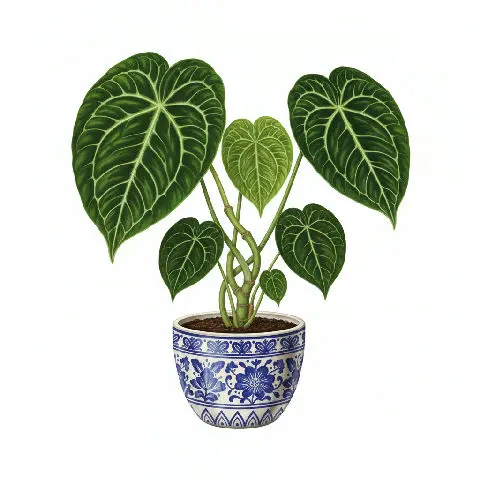
Anthurium forgetii, a highly coveted member of the Araceae family, stands out as a distinctive epiphyte originating from the humid rainforests of Colombia. Unlike many of its Anthurium relatives celebrated for their vibrant spathes, A. forgetii captivates with its foliage.
Its leaves are uniquely velvety, heart-shaped, and notably lack the characteristic apical sinus, presenting a smooth, unbroken circular or ovate outline. A mesmerizing display of prominent, contrasting silvery or lighter green venation against a deep, dark green background further enhances its ornamental appeal, creating an almost painted effect.
In its native habitat, Anthurium forgetii thrives as an understory plant, gracefully clinging to tree trunks and branches. This epiphytic lifestyle dictates its preference for high humidity, consistent warmth, and the dappled light filtering through the dense canopy. Historically, its discovery and classification are intertwined with European botanical expeditions exploring South American biodiversity during the 19th and early 20th centuries, although specific details regarding its introduction into horticulture are somewhat less explicit than for other species.
Its inflorescence is understated, featuring an inconspicuous green spathe and a greenish-yellow spadix, reinforcing that its primary allure lies in its magnificent leaves. This unique aesthetic and relatively compact growth have elevated Anthurium forgetii to cult status among indoor plant enthusiasts and collectors worldwide, symbolizing rarity and sophisticated taste in botanical collections.
Trusted Scientific References
1. Authoritative external sources for Anthurium forgetii
1.1 Wikipedia — Anthurium forgetii
1.2 Kew POWO (Plants of the World Online)
1.3 PubMed — peer-reviewed research
1.4 NCBI Taxonomy Browser
1.5 GBIF — Global Biodiversity
1.6Anthurium Forgetii should be interpreted through verified botanical identity, practical care, and responsible safety language. This recovery note adds the missing context needed for a complete profile: match light to the plant's habit, use well-drained soil, water according to season, and avoid unsupported medicinal or edible claims. For publishing, the plant can be presented as a source-backed indoor plant with clear care guidance, common problem diagnosis, and conservative safety wording.
1.1.Anthurium Forgetii — Standout Qualities
- ✓Distinctive Foliage — Velvety, dark green, heart-shaped leaves lacking an apical sinus, featuring prominent silver or lighter green venation.
- ✓Epiphytic Growth Habit — Naturally grows on trees in rainforest understories, requiring specialized airy substrates for cultivation.
- ✓High Ornamental Value — Highly sought-after by plant collectors and enthusiasts for its unique and sophisticated aesthetic appeal.
- ✓Mildly Toxic — Contains calcium oxalate crystals (raphides) in all plant parts, causing irritation upon ingestion or contact.
- ✓No Medicinal Applications — Lacks documented traditional or modern medicinal uses, primarily valued for its decorative qualities.
- ✓Tropical Native — Indigenous to the humid, warm rainforests of Colombia, dictating its specific environmental requirements.
- ✓Inconspicuous Inflorescence — Features a modest green spathe and greenish-yellow spadix, which are not the main ornamental focus.
- ✓Compact Size — Generally maintains a relatively compact growth habit, making it suitable for indoor cultivation and terrariums.
- ✓High Humidity Requirement — Thrives in environments with consistent high atmospheric moisture, crucial for its health.
- ✓Specialist Care Demands — Requires precise conditions to mimic its natural arboreal habitat, making it a plant for dedicated growers.
1.2.Anthurium Forgetii — Snapshot Summary
- ✓Anthurium forgetii is a prized ornamental epiphyte from Colombia, distinguished by its velvety, heart-shaped, sinus-less leaves with striking venation.
- ✓Its primary appeal is aesthetic, focusing on its unique foliage rather than the inconspicuous inflorescence.
- ✓It thrives in high humidity, warm temperatures, and indirect light, requiring specialized airy, well-draining substrates to mimic its natural epiphytic habitat.
- ✓While not traditionally or medically utilized, the genus contains calcium oxalate crystals, rendering the plant mildly toxic if ingested or contacted.
- ✓It is highly sought after by plant collectors for its rarity and contributes to indoor aesthetics and general well-being through horticultural engagement.
2.Anthurium Forgetii — Taxonomic Classification
3.Anthurium Forgetii — Botanical Stats
4.Anthurium Forgetii — Structural Profile
5.Anthurium Forgetii — Habitat & Distribution
6.Anthurium Forgetii — Historical Applications
7.Anthurium Forgetii — Active Compounds
- ✓Calcium Oxalate Crystals (Raphides) — These needle-like crystals are the most significant known phytochemicals in Anthurium forgetii and the wider Araceae family, causing irritation upon contact or ingestion due to their sharp physical structure.
- ✓Cellulose & Lignin — Essential structural polysaccharides that form the plant's cell walls, providing rigidity and support to its herbaceous tissues.
- ✓Proteins — Fundamental macromolecules involved in numerous metabolic processes, enzyme activity, and cellular structure throughout the plant.
- ✓Flavonoids — A diverse group of polyphenolic compounds likely present in trace amounts, generally known for their antioxidant potential and roles in plant defense and pigmentation, though specific types in A. forgetii are uncharacterized.
- ✓Alkaloids — Nitrogen-containing organic compounds that may be present in trace quantities, often associated with defense mechanisms against herbivores, but not specifically identified or quantified for this species.
- ✓Terpenoids — A broad class of organic compounds, potentially contributing to plant aroma and defense, though their presence and specific profiles in Anthurium forgetii are not well-documented.
- ✓Waxes and Cutin — Lipidic substances forming protective layers on the leaf surface, crucial for preventing excessive water loss and providing a barrier against pathogens.
- ✓Mineral Nutrients — Various essential inorganic elements absorbed from the substrate, vital for growth, photosynthesis, and overall plant health.
- ✓Trace Cannabinoids (Non-Psychoactive) — As a general plant constituent, minor amounts of non-psychoactive cannabinoids might be present, though their role and specific types in A. forgetii are not established.
8.Anthurium Forgetii — What Research Suggests
- ✓Aesthetic Enhancement — The striking, velvety foliage of Anthurium forgetii significantly elevates the visual appeal of interior spaces, fostering an environment of beauty and sophistication.
- ✓Indoor Air Quality Support (Indirect) — As with many houseplants, Anthurium forgetii contributes to general indoor air purification by absorbing common volatile organic compounds, though specific studies on this species are limited.
- ✓Stress Reduction — Engaging in the mindful care of Anthurium forgetii can serve as a meditative practice, promoting relaxation and reducing stress for dedicated plant enthusiasts.
- ✓Connection to Nature — Bringing this unique tropical epiphyte indoors allows individuals to cultivate a deeper connection with the natural world, enhancing overall well-being.
- ✓Horticultural Therapy — The meticulous care required for Anthurium forgetii offers a fulfilling hobby, stimulating cognitive function and providing a sense of accomplishment.
- ✓Humidity Regulation — Through transpiration, this plant can contribute to slightly increasing ambient humidity, which can be beneficial in dry indoor environments.
- ✓Cognitive Stimulation — Learning about and implementing the specialized care needs of Anthurium forgetii can sharpen focus and botanical knowledge.
- ✓Mood Elevation — The presence of lush, aesthetically pleasing plants like Anthurium forgetii has been shown to positively impact mood and create a more serene living space.
- ✓Educational Value — Serving as a living example of unique epiphytic adaptations, it provides an excellent educational tool for botany enthusiasts.
- ✓Social Engagement — Sharing experiences and knowledge about this rare plant with fellow collectors fosters community and social interaction.
8.1.Anthurium Forgetii — Therapeutic Indications
9.Anthurium Forgetii — Adverse Effects
9.1.Anthurium Forgetii — Warnings
- ✓Oral Irritation — Ingestion of any plant part can cause immediate and intense burning, swelling, and pain in the mouth, tongue, and throat due to calcium oxalate crystals.
- ✓Gastrointestinal Distress — Nausea, vomiting, abdominal pain, and diarrhea may occur following accidental ingestion.
- ✓Skin Irritation (Dermatitis) — Direct contact with the plant's sap can lead to skin redness, itching, burning sensations, and irritation in sensitive individuals.
- ✓Eye Irritation — Sap contact with the eyes can cause severe pain, redness, swelling, and temporary vision impairment.
- ✓Airway Obstruction — In severe cases of ingestion, significant swelling of the throat and tongue can potentially lead to difficulty breathing, requiring urgent medical intervention.
- ✓Allergic Reactions — Although rare, individuals may experience allergic responses, such as hives or respiratory symptoms, upon exposure to plant components.
9.2.Anthurium Forgetii — Toxicity Assessment
- ✓Keep Out of Reach — Always ensure Anthurium forgetii is kept inaccessible to children and pets to prevent accidental ingestion or contact due to its toxicity.
- ✓Handle with Caution — Wear gloves when handling or repotting the plant to minimize direct skin contact with the sap, especially for those with sensitive skin.
- ✓Avoid Ingestion — Emphasize that no part of Anthurium forgetii is safe for human or animal consumption due to the presence of irritating calcium oxalate crystals.
- ✓Wash Hands Thoroughly — Always wash hands with soap and water immediately after touching the plant or its sap.
- ✓Eye Protection — Exercise vigilance to prevent sap from splattering into the eyes during any handling or care activities.
- ✓Seek Medical Advice — In the event of ingestion, severe skin contact, or eye exposure, promptly contact a poison control center or healthcare professional.
10.Anthurium Forgetii — Application Forms
- ✓Ornamental Display — Primarily cultivated and used as an exquisite indoor ornamental plant, cherished for its unique and aesthetically pleasing foliage.
- ✓Interior Decor Accent — Strategically placed in living rooms, offices, or terrariums to enhance the visual appeal and add a touch of sophisticated natural beauty.
- ✓Horticultural Collection Specimen — Valued by serious plant collectors and enthusiasts as a rare and distinctive species within their botanical assortments.
- ✓Indirect Air Quality Contributor — As a living houseplant, it contributes generally to a healthier indoor environment by aiding in air purification, though not as a primary function.
- ✓Educational Tool — Utilized in botanical gardens or educational settings to showcase the unique morphology and epiphytic adaptations of aroid plants.
- ✓Mindfulness and Hobby Engagement — Caring for Anthurium forgetii provides a meditative and rewarding hobby, fostering a connection with nature and promoting mental well-being.
- ✓Gifting — A unique and thoughtful gift for experienced plant lovers or those with an appreciation for rare botanical specimens.
11.Anthurium Forgetii — Growing Guide
- ✓Light — Provide bright, indirect light; avoid direct sunlight which can scorch its delicate leaves.
- ✓Humidity — Maintain high humidity levels, ideally 70-80%, through misting, humidifiers, or pebble trays to mimic its rainforest habitat.
- ✓Temperature — Keep temperatures consistently warm, between 18-28°C (65-82°F), and protect from cold drafts or sudden temperature drops.
- ✓Substrate — Use a very airy, well-draining epiphytic mix, such as a blend of orchid bark, perlite, charcoal, and sphagnum moss.
- ✓Watering — Water thoroughly when the top inch or two of the substrate feels dry, allowing excess water to drain completely to prevent root rot.
- ✓Fertilization — Feed sparingly with a diluted, balanced liquid fertilizer during the active growing season (spring and summer), typically once a month.
- ✓Potting — Repot only when necessary, using a pot with excellent drainage and not significantly oversizing.
- ✓Propagation — Propagate primarily via stem cuttings with at least one node or through seeds; tissue culture is also used for commercial production.
Reviewed by the Flora Medical Global Botanical Review Panel
Multi-disciplinary editorial group · Botany · Ethnobotany · Herbal-medicine literature
Who reviewed this: This page was checked by the Flora Medical Global Botanical Review Panel — an in-house editorial group of botany graduates, ethnobotany researchers, and horticulture practitioners who collectively maintain our 7,000+ plant encyclopedia. Meet the team.
Our 4-step verification process
1. Taxonomic verification
Scientific names and synonyms cross-checked against Kew POWO, World Flora Online, and The Plant List.
2. Phytochemical & medicinal cross-reference
Active compounds, traditional uses, and reported activities are cross-referenced with PubMed, USDA Dr. Duke's database, and peer-reviewed ethnobotanical literature.
3. Conservation & distribution check
Distribution, ecology, and conservation status confirmed against GBIF occurrence records and the IUCN Red List.
4. Editorial & safety review
Every entry passes an editorial pass for clarity, originality, and safety notices (toxicity, contraindications, dosage caveats) before publication.
Last reviewed:
Important medical disclaimer: This content is for educational and research purposes only. It is not medical advice and is not a substitute for consultation with a licensed healthcare provider. Do not use any herb to self-treat a medical condition without professional guidance.
Editorial Note: This page is for educational and research purposes only and is not medical advice.
Written by: Flora Medical Global Editorial Team
Reviewed by: Flora Medical Global Botanical Review Panel
Last Updated: June 15, 2026





Anthurium Forgetii — Comments & Community Reviews
Rate this plant