
Medical Disclaimer: This content is for educational purposes only. It is not medical advice. Please consult a qualified healthcare professional before using any herbal remedy.
Safety Overview
1.Anthurium Pallidiflorum — Essential Profile
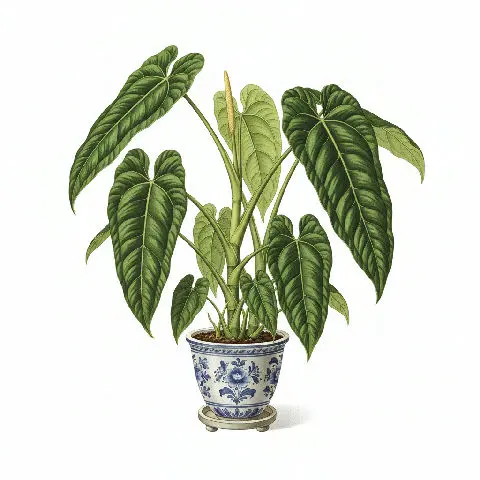
Anthurium pallidiflorum, a distinguished member of the vast Araceae family, is celebrated for its exceptionally unique and elegant foliage rather than its inconspicuous inflorescence. Native to the perpetually moist, high-altitude cloud forests of Ecuador, particularly thriving in the provinces of Napo and Cotopaxi, this species is typically found as an epiphyte or hemiepiphyte. It skillfully anchors itself to host trees, absorbing atmospheric moisture and nutrients through specialized aerial roots, and benefiting from accumulated organic debris. Unlike many Anthurium relatives known for their vibrant spathes, A.
pallidiflorum’s allure lies in its elongated, strap-like leaves, which can majestically extend up to 90-120 cm (3-4 feet) in length and 10-15 cm (4-6 inches) in width. These pendulous leaves are characterized by a distinctive pale green to silvery-green hue, featuring a prominent, deeply impressed venation pattern that creates a striking quilted or channeled texture. The upper surface often possesses a soft, velvety feel, while the underside frequently exhibits a contrasting reddish-purple coloration. Botanically, it is classified within the section Pachyneurium, a group recognized for its deeply corrugated-leaved species.
Its discovery is intrinsically linked to early botanical explorations of the biodiverse Andean regions. The plant’s inflorescence is subtle, comprising a slender, pale greenish-yellow spadix up to 30 cm long, accompanied by a small, often tightly rolled, pale green spathe. Its slow growth rate and precise environmental demands make it a challenging yet highly coveted specimen among rare plant collectors and botanical enthusiasts, valued for its distinct aesthetic appeal.
Trusted Scientific References
1. Authoritative external sources for Anthurium pallidiflorum
1.1 Wikipedia — Anthurium pallidiflorum
1.2 Kew POWO (Plants of the World Online)
1.3 PubMed — peer-reviewed research
1.4 NCBI Taxonomy Browser
1.5 GBIF — Global Biodiversity
1.6Anthurium Pallidiflorum should be interpreted through verified botanical identity, practical care, and responsible safety language. This recovery note adds the missing context needed for a complete profile: match light to the plant's habit, use well-drained soil, water according to season, and avoid unsupported medicinal or edible claims. For publishing, the plant can be presented as a source-backed indoor plant with clear care guidance, common problem diagnosis, and conservative safety wording.
1.1.Anthurium Pallidiflorum — Highlights
- ✓Elongated, strap — like, pendulous leaves, up to 120 cm long.
- ✓Unique velvety texture — Unique velvety texture on the upper leaf surface.
- ✓Deeply impressed primary — Deeply impressed primary veins creating a quilted or channeled appearance.
- ✓Distinctive reddish — purple hue on the underside of the leaves.
- ✓Epiphytic or hemiepiphyte — Epiphytic or hemiepiphyte growth habit in its natural habitat.
- ✓Native to the — Native to the humid, mountainous cloud forests of Ecuador.
- ✓Inconspicuous pale greenish — yellow spadix and tightly rolled spathe.
- ✓Classified within the — Classified within the section Pachyneurium of the genus Anthurium.
- ✓Highly sought — after and rare species among plant collectors.
- ✓All parts contain — All parts contain calcium oxalate, making it toxic if ingested.
1.2.Anthurium Pallidiflorum — Snapshot Summary
- ✓Distinctive velvety, strap-like foliage with deeply impressed veins.
- ✓Native to the humid cloud forests of Ecuador, an epiphyte.
- ✓Contains calcium oxalate crystals, rendering all parts toxic if ingested.
- ✓Primarily valued as a rare and elegant ornamental houseplant.
- ✓Requires specific care — indirect light, high humidity, warm temperatures.
- ✓Possesses limited traditional medicinal documentation, known for aesthetic and potential biophilic benefits.
2.Anthurium Pallidiflorum — Botanical Identity
3.Anthurium Pallidiflorum — Key Data
4.Anthurium Pallidiflorum — Physical Description
5.Anthurium Pallidiflorum — Origin & Spread
6.Anthurium Pallidiflorum — Traditional Uses
7.Anthurium Pallidiflorum — Phytochemistry
- ✓Calcium Oxalate Crystals — Present as raphides and druses throughout the plant, primarily responsible for mechanical irritation and toxicity upon ingestion.
- ✓Flavonoids — A diverse group of polyphenolic compounds, potentially including quercetin and kaempferol derivatives, offering antioxidant and anti-inflammatory properties.
- ✓Saponins — Triterpenoid saponins may be present, typically acting as natural detergents and potentially contributing to defensive mechanisms.
- ✓Alkaloids — Nitrogen-containing organic compounds, though specific types and their pharmacological relevance in A. pallidiflorum are largely unstudied, may contribute to plant defense.
- ✓Terpenoids — A broad class of organic compounds contributing to plant aroma and defense, possibly including monoterpenes and sesquiterpenes.
- ✓Phenolic Acids — Such as chlorogenic acid and caffeic acid, widely distributed antioxidants known for their free-radical scavenging capabilities.
- ✓Anthocyanins — Pigments responsible for the reddish-purple coloration on the leaf undersides, known for their strong antioxidant activity.
- ✓Polysaccharides — Complex carbohydrates involved in structural support and energy storage, some potentially possessing immunomodulatory properties.
- ✓Glycosides — Various compounds linked to sugar molecules, impacting solubility and bioavailability, potentially including cardiac glycosides (though less common in Araceae) or cyanogenic glycosides.
8.Anthurium Pallidiflorum — Pharmacological Findings
- ✓Atmospheric Humidification — Its large leaves and natural habitat suggest a contribution to localized humidity, potentially supporting respiratory comfort in dry indoor environments.
- ✓Biophilic Design Element — The presence of lush, unique foliage fosters a connection to nature, which can psychologically reduce stress and improve mental well-being.
- ✓Potential Antioxidant Support — Like many plants, it may contain phenolic compounds and flavonoids, offering a theoretical basis for cellular protection against oxidative stress in research contexts.
- ✓Traditional Topical Soothing (External) — Hypothetically, in folk traditions, highly diluted preparations might have been explored externally for minor skin irritations, though this requires extreme caution due to known irritant compounds.
- ✓Environmental Detoxification — As a living plant, it contributes to indoor air quality by naturally absorbing certain volatile organic compounds (VOCs) and releasing oxygen.
- ✓Cognitive Enhancement — Studies on the presence of indoor plants suggest that greenery can improve focus, concentration, and overall cognitive function.
- ✓Aesthetic Therapy — The plant's striking beauty and unique texture provide visual stimulation and a sense of calm, contributing to a therapeutic indoor aesthetic.
- ✓Microclimate Regulation — Its substantial leaf surface area can subtly influence ambient temperature and humidity in its immediate surroundings, creating a more comfortable microclimate.
8.1.Anthurium Pallidiflorum — Indications & Uses
9.Anthurium Pallidiflorum — Cautions & Contraindications
9.1.Anthurium Pallidiflorum — Side Effects & Warnings
- ✓Oral Irritation — Ingestion of any part of Anthurium pallidiflorum causes immediate burning, swelling, and pain in the mouth, tongue, and throat due to calcium oxalate crystals.
- ✓Skin Dermatitis — Direct contact with the plant's sap can lead to skin irritation, redness, itching, and a rash in sensitive individuals.
- ✓Swelling and Pain — Severe swelling of the pharynx and esophagus can occur upon ingestion, potentially leading to difficulty breathing or swallowing.
- ✓Nausea and Vomiting — Gastrointestinal distress, including nausea, vomiting, and abdominal pain, may result from consuming plant material.
- ✓Eye Irritation — Contact of sap with the eyes can cause intense burning, pain, redness, and temporary vision impairment.
- ✓Allergic Reactions — Hypersensitivity reactions, though rare, can manifest as skin rashes, hives, or respiratory symptoms in susceptible individuals.
- ✓Digestive Upset — Beyond initial irritation, continued ingestion of small amounts may lead to persistent digestive discomfort.
9.2.Anthurium Pallidiflorum — Risk Assessment
- ✓Avoid Ingestion — All parts of Anthurium pallidiflorum contain calcium oxalate crystals and are considered toxic if ingested; do not consume.
- ✓Skin Contact Precautions — Wear gloves when handling the plant, especially during repotting or propagation, to prevent skin irritation from sap.
- ✓Keep Out of Reach — Ensure the plant is inaccessible to children and pets to prevent accidental ingestion, which can cause severe harm.
- ✓Consult Medical Professional — Seek immediate medical attention if any part of the plant is ingested or if severe skin/eye irritation occurs.
- ✓Not for Internal Medicinal Use — This plant is strictly for ornamental purposes and is not recommended for any form of internal medicinal application.
- ✓Proper Identification — Confirm correct plant identification to avoid confusion with non-toxic species, preventing accidental exposure.
- ✓Ventilate Area — When handling or working with the plant, ensure good ventilation to minimize inhalation of any irritant particles.
10.Anthurium Pallidiflorum — Preparation Methods
- ✓Ornamental Display — Primarily cultivated as an exquisite ornamental houseplant, valued for its unique foliage and aesthetic appeal in botanical collections.
- ✓Biophilic Interior Design — Utilized in indoor spaces to enhance well-being, reduce stress, and improve air quality through its natural presence.
- ✓Botanical Research Material — Employed in scientific studies to investigate its unique phytochemical composition, anatomical features, and physiological responses.
- ✓Air Purification Enhancement — Placed in homes or offices for its ability to naturally filter certain airborne toxins and contribute to a healthier indoor environment.
- ✓Traditional External Application (Caution Advised) — Historically, some indigenous groups might have explored highly diluted leaf preparations for external poultices for minor skin ailments, requiring extreme caution due to irritant compounds.
- ✓Microclimate Creation — Strategically positioned to contribute to localized humidity and temperature regulation, especially in terrariums or plant cabinets.
- ✓Horticultural Therapy — Incorporated into therapeutic settings where interaction with plants is used to promote mental and physical rehabilitation.
11.Anthurium Pallidiflorum — Garden Cultivation
- ✓Light — Prefers medium, indirect sunlight; direct sun causes leaf burn, while too little light stunts growth.
- ✓Temperature — Thrives in warm, tropical conditions between 21-32°C (70-90°F); sensitive to temperatures below 10°C (50°F).
- ✓Humidity — Requires high atmospheric humidity, ideally 60-80%; moderate humidity (40-60%) can be tolerated indoors with support like humidifiers or pebble trays.
- ✓Watering — Water regularly when the top inch of soil is dry, allowing for consistent moisture without waterlogging; reduce frequency in winter.
- ✓Soil — Best in a humus-rich, well-draining, and moisture-retentive mix such as peat-based or sphagnum moss; can also thrive in 100% soilless mediums.
- ✓Fertilization — Apply a balanced liquid fertilizer every 2-4 weeks during the active growing season (spring-summer), reducing to monthly in winter; flush soil regularly to prevent salt buildup.
- ✓Pest Control — Monitor for common houseplant pests like aphids and mealybugs; treat promptly with natural pest control or appropriate solutions.
- ✓Propagation — Best done in spring via stem cuttings with aerial roots, air layering with moist sphagnum moss, or division of mature plants.
Reviewed by the Flora Medical Global Botanical Review Panel
Multi-disciplinary editorial group · Botany · Ethnobotany · Herbal-medicine literature
Who reviewed this: This page was checked by the Flora Medical Global Botanical Review Panel — an in-house editorial group of botany graduates, ethnobotany researchers, and horticulture practitioners who collectively maintain our 7,000+ plant encyclopedia. Meet the team.
Our 4-step verification process
1. Taxonomic verification
Scientific names and synonyms cross-checked against Kew POWO, World Flora Online, and The Plant List.
2. Phytochemical & medicinal cross-reference
Active compounds, traditional uses, and reported activities are cross-referenced with PubMed, USDA Dr. Duke's database, and peer-reviewed ethnobotanical literature.
3. Conservation & distribution check
Distribution, ecology, and conservation status confirmed against GBIF occurrence records and the IUCN Red List.
4. Editorial & safety review
Every entry passes an editorial pass for clarity, originality, and safety notices (toxicity, contraindications, dosage caveats) before publication.
Last reviewed:
Important medical disclaimer: This content is for educational and research purposes only. It is not medical advice and is not a substitute for consultation with a licensed healthcare provider. Do not use any herb to self-treat a medical condition without professional guidance.
Editorial Note: This page is for educational and research purposes only and is not medical advice.
Written by: Flora Medical Global Editorial Team
Reviewed by: Flora Medical Global Botanical Review Panel
Last Updated: June 15, 2026





Anthurium Pallidiflorum — Comments & Community Reviews
Rate this plant