

Medical Disclaimer: This content is for educational purposes only. It is not medical advice. Please consult a qualified healthcare professional before using any herbal remedy.
Safety Overview
1.Anthurium Papillilaminum — At a Glance
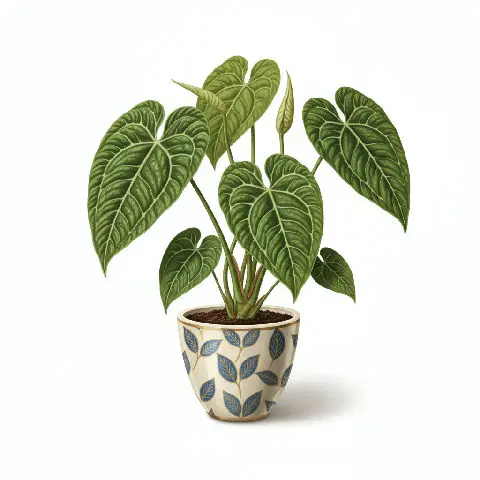
Anthurium papillilaminum, a highly coveted species within the diverse genus Anthurium and belonging to the Araceae family, is celebrated for its exceptionally textured, dark green foliage. This neotropical aroid is indigenous to the primary lowland and premontane wet forests of Central and South America, with notable distribution across Costa Rica, Panama, and Colombia. First documented and formally described by Adolf Engler in 1898, its scientific name 'papillilaminum' precisely references the distinctive papillate, or minutely bumpy, texture of its leaf blade (lamina), a characteristic that readily differentiates it from other Anthurium species. Unlike many of its relatives, which are admired for their vibrant inflorescences, the allure of Anthurium papillilaminum resides predominantly in its velvety, coriaceous (leathery) leaves.
These can attain substantial sizes, typically measuring between 30-60 cm in length and 15-30 cm in width, exhibiting a profound, almost black-green coloration, often accentuated by prominent, lighter-colored veins that create a striking visual contrast. The adaxial (upper) surface of the leaf presents a distinct velvety feel due to microscopic papillae, imparting a unique light-reflecting quality that shifts with viewing angles. Conversely, the abaxial (lower) surface is generally a paler green, frequently displaying deep red or violet tinges in specific ecotypes. Its growth habit is typically hemiepiphytic or terrestrial, often found rooting on the forest floor or climbing the trunks of trees, anchored by robust aerial roots.
Historically, its primary role has been ornamental, gaining significant traction among aroid collectors for its dramatic foliage and a relatively compact growth habit compared to some other large-leaved Anthuriums. Not extensively documented in traditional medicinal systems like Ayurveda, TCM, or Unani, its close relatives in the Araceae family have been employed for various purposes, from treating skin ailments to use as toxic components in indigenous practices, largely due to calcium oxalate crystals.
Trusted Scientific References
1. Authoritative external sources for Anthurium papillilaminum
1.1 Wikipedia — Anthurium papillilaminum
1.2 Kew POWO (Plants of the World Online)
1.3 PubMed — peer-reviewed research
1.4 NCBI Taxonomy Browser
1.5 GBIF — Global Biodiversity
1.1.Anthurium Papillilaminum — Distinguishing Points
- ✓Velvety, Dark Green Foliage — Distinctive leaf texture and deep, almost black-green coloration.
- ✓Papillate Leaf Surface — Microscopic bumps on the adaxial surface create a unique, light-reflecting quality.
- ✓Prominent Veination — Often features lighter-colored veins that strikingly contrast against the dark lamina.
- ✓Hemiepiphytic Growth Habit — Capable of growing terrestrially on the forest floor or climbing on tree trunks.
- ✓Neotropical Aroid — Indigenous to the humid rainforests of Central and South America.
- ✓High Humidity Requirement — Thrives in environments replicating its natural tropical habitat, requiring consistent moisture in the air.
- ✓Calcium Oxalate Content — Contains irritating crystals, making all parts toxic if ingested.
- ✓Collector's Item — Highly sought after by aroid enthusiasts and plant collectors for its aesthetic appeal and rarity.
- ✓Distinct Ecotypes — Noted variations exist, such as 'Lago Gatun' and 'Canal' types, exhibiting differing morphological characteristics.
- ✓Relatively Easy Care (for a velvet Anthurium) — More adaptable to ambient indoor conditions than some other fussy velvet Anthurium species.
1.2.Anthurium Papillilaminum — Concise Overview
- ✓Prized ornamental Anthurium species recognized for its unique velvety, dark green, and papillate leaves.
- ✓Native to the humid rainforests of Central and South America, thriving in high humidity and indirect light.
- ✓Contains calcium oxalate crystals throughout all parts, rendering it toxic if ingested and irritating upon contact.
- ✓Lacks specific documented traditional medicinal uses for Anthurium papillilaminum itself; related species may have historical external applications.
- ✓Requires specific care for optimal growth, including a well-draining substrate, warm temperatures, and consistent moisture.
2.Anthurium Papillilaminum — Botanical Identity
3.Anthurium Papillilaminum — Fact Sheet
4.Anthurium Papillilaminum — Physical Description
5.Anthurium Papillilaminum — Native Range & Habitat
6.Anthurium Papillilaminum — Traditional Uses
7.Anthurium Papillilaminum — Phytochemistry
- ✓Calcium Oxalate Crystals — Raphides (needle-like crystals) are abundant throughout the Araceae family, including Anthurium papillilaminum, causing immediate and intense irritation upon ingestion or contact, serving as a primary defense mechanism.
- ✓Saponins — These glycosides are common in many Araceae species, potentially contributing to foam formation and exhibiting antimicrobial or anti-inflammatory properties in other plant contexts.
- ✓Alkaloids — Various nitrogen-containing compounds may be present, often responsible for potent pharmacological effects in other plant species.
- ✓Flavonoids — A class of polyphenolic compounds widely distributed in plants, known for their antioxidant, anti-inflammatory, and potentially antiviral activities.
- ✓Tannins — Astringent compounds that can bind to proteins, offering protective effects against herbivores and possessing potential antimicrobial properties.
- ✓Phenolic Acids — Simple phenolic compounds with antioxidant and anti-inflammatory attributes, contributing to the plant's overall defense system.
- ✓Glycosides — A broad category of compounds where a sugar molecule is bonded to a non-sugar component, often influencing various physiological processes.
- ✓Terpenoids — A diverse group of organic compounds, including monoterpenes and sesquiterpenes, which can contribute to plant aroma and possess various biological activities.
- ✓Anthocyanins — Pigments responsible for the red or violet hues observed on the abaxial leaf surfaces and spathe, known for their antioxidant properties.
- ✓Proteins and Enzymes — Essential for metabolic functions, some of which may have specific physiological roles or contribute to the plant's defensive arsenal.
8.Anthurium Papillilaminum — Evidence-Based Benefits
- ✓Potential Anti-inflammatory Action (related species) — Many plants within the Araceae family contain compounds that may modulate inflammatory pathways, though specific research on Anthurium papillilaminum itself is currently absent.
- ✓Traditional Topical Applications (related species) — Some Anthurium relatives have historically been used externally by indigenous communities for skin irritations, often prepared as poultices, attributed to general plant saponins or alkaloids.
- ✓Potential Antimicrobial Properties (related species) — Extracts from various aroids have demonstrated in vitro activity against certain bacteria and fungi, suggesting a broad-spectrum defense mechanism within the family.
- ✓Detoxification Support (related species) — Certain Araceae plants are utilized in traditional medicine for purported body purification, though the exact mechanisms and direct relevance to Anthurium papillilaminum are not established.
- ✓Respiratory Support (related species) — Historically, some members of the Araceae family have been employed for respiratory ailments, possibly due to expectorant or bronchodilatory effects from unidentified compounds.
- ✓Pain Relief (related species, topical) — Indigenous communities have utilized specific Araceae plants for analgesic purposes, often through topical application, due to local irritant or numbing effects.
- ✓Diuretic Properties (related species) — Some members of the broader Araceae family are reported to possess diuretic effects, potentially aiding in fluid balance and kidney function.
- ✓Anti-parasitic Uses (related species) — Traditional practices in certain regions include using Araceae species to combat internal or external parasites.
- ✓Antioxidant Potential (general plant compounds) — While not directly studied in Anthurium papillilaminum, many plants, including close relatives, contain polyphenols and flavonoids that offer antioxidant benefits.
- ✓Immunomodulatory Effects (related species) — Some plant extracts from the Araceae family have been shown to influence immune responses, though specific compounds and effects vary widely.
8.1.Anthurium Papillilaminum — Health Applications
9.Anthurium Papillilaminum — Safety Considerations
9.1.Anthurium Papillilaminum — Reported Side Effects
- ✓Oral Irritation — Ingestion of any part of Anthurium papillilaminum can cause immediate and intense burning, swelling, and pain in the mouth, tongue, and throat due to calcium oxalate raphides.
- ✓Gastrointestinal Distress — If ingested, symptoms may progress to nausea, vomiting, abdominal pain, and diarrhea due to the irritating effect on the digestive tract lining.
- ✓Skin Irritation — Direct contact with the plant's sap or crushed leaves can cause contact dermatitis, characterized by redness, itching, and localized swelling, particularly in sensitive individuals.
- ✓Eye Irritation — Contact with the sap can lead to burning sensations, redness, and pain if it enters the eyes; immediate and thorough flushing with water is crucial.
- ✓Airway Swelling — Severe ingestion can potentially lead to swelling of the pharynx and larynx, creating a risk of airway obstruction and requiring urgent medical intervention.
- ✓Allergic Reactions — Although less common, some individuals may experience allergic reactions to other plant compounds beyond calcium oxalates, manifesting as hives or respiratory symptoms.
9.2.Anthurium Papillilaminum — Toxicity Assessment
- ✓Keep Out of Reach of Children and Pets — Due to its toxic nature, Anthurium papillilaminum should be placed in locations that are completely inaccessible to young children and household animals.
- ✓Wear Protective Gear — Always use gloves when handling, repotting, or pruning this plant to prevent direct skin contact with its sap and irritating calcium oxalate crystals.
- ✓Avoid Ingestion — Under no circumstances should any part of Anthurium papillilaminum be consumed, as it is known to cause severe oral and gastrointestinal irritation and swelling.
- ✓Handle with Caution — Exercise extreme care to avoid direct contact with eyes or open wounds when working with the plant, and wash hands thoroughly after handling.
- ✓Seek Medical Attention if Ingested — In the event of accidental ingestion, immediately contact poison control or emergency medical services, even if initial symptoms appear mild.
- ✓Not for Medicinal Internal Use — Despite the traditional uses of some related Araceae species, Anthurium papillilaminum itself is not recommended for any internal medicinal application due to its known toxicity.
10.Anthurium Papillilaminum — Usage Guide
- ✓Ornamental Display — Primarily cultivated as a prized ornamental plant, valued for its unique velvety foliage in terrariums, greenhouses, or sophisticated indoor plant collections.
- ✓Handling Precautions — Always wear protective gloves when handling Anthurium papillilaminum, especially during pruning or repotting, to avoid skin irritation from its calcium oxalate-containing sap.
- ✓Avoid Ingestion — Emphasize that Anthurium papillilaminum is NOT safe for internal consumption due to the presence of irritating calcium oxalate crystals, which can cause severe oral and gastrointestinal discomfort.
- ✓Topical Poultices (related species, with extreme caution) — In some traditional practices, extracts or crushed leaves from certain Anthurium relatives are prepared as poultices for external application on skin issues, but this is not recommended for A. papillilaminum due to its irritant nature.
- ✓Decoctions for External Wash (related species, with extreme caution) — Historically, specific Anthurium species have been prepared as decoctions for external washes for cleansing, but A. papillilaminum should not be used this way.
- ✓Household Placement — Position the plant in a location inaccessible to curious children and pets to prevent accidental contact or ingestion.
- ✓Post-Contact Care — In case of accidental skin contact, wash the affected area thoroughly with soap and water; for eye contact, flush with copious amounts of water immediately.
11.Anthurium Papillilaminum — How to Grow
- ✓Light — Prefers low to moderate indirect light; avoid direct, harsh sunlight which can scorch its velvety leaves, though it is more tolerant than some other rare velvet Anthurium species.
- ✓Humidity — Requires consistently high humidity, ideally between 70-85%, to mimic its native rainforest environment; regular misting or use of a humidifier is beneficial.
- ✓Temperature — Thrives in warm, stable temperatures ranging from 65-80°F (18-27°C); protect it from cold drafts and sudden temperature fluctuations.
- ✓Watering — Keep the substrate consistently moist but never waterlogged; allow the top inch or two to dry out slightly between waterings, reducing frequency during cooler, dormant periods.
- ✓Substrate — Utilize a very well-draining, airy, and chunky potting mix rich in organic matter, such as a blend of orchid bark, perlite, coco coir, and sphagnum moss, to support its hemiepiphytic nature.
- ✓Fertilization — Feed sparingly during its active growing season (spring and summer) with a balanced liquid fertilizer diluted to half or quarter strength; reduce or cease feeding in autumn and winter.
- ✓Growth Habit — Exhibits a somewhat leggier growth habit and larger internodal spacing compared to other dark velvet Anthuriums, with significant changes in both size and leaf morphology as it matures.
- ✓Acclimation — This species can be acclimated to reasonable ambient indoor conditions more readily than some of its fussier velvet Anthurium cousins like Anthurium dressleri.
Reviewed by the Flora Medical Global Botanical Review Panel
Multi-disciplinary editorial group · Botany · Ethnobotany · Herbal-medicine literature
Who reviewed this: This page was checked by the Flora Medical Global Botanical Review Panel — an in-house editorial group of botany graduates, ethnobotany researchers, and horticulture practitioners who collectively maintain our 7,000+ plant encyclopedia. Meet the team.
Our 4-step verification process
1. Taxonomic verification
Scientific names and synonyms cross-checked against Kew POWO, World Flora Online, and The Plant List.
2. Phytochemical & medicinal cross-reference
Active compounds, traditional uses, and reported activities are cross-referenced with PubMed, USDA Dr. Duke's database, and peer-reviewed ethnobotanical literature.
3. Conservation & distribution check
Distribution, ecology, and conservation status confirmed against GBIF occurrence records and the IUCN Red List.
4. Editorial & safety review
Every entry passes an editorial pass for clarity, originality, and safety notices (toxicity, contraindications, dosage caveats) before publication.
Last reviewed:
Important medical disclaimer: This content is for educational and research purposes only. It is not medical advice and is not a substitute for consultation with a licensed healthcare provider. Do not use any herb to self-treat a medical condition without professional guidance.
Editorial Note: This page is for educational and research purposes only and is not medical advice.
Written by: Flora Medical Global Editorial Team
Reviewed by: Flora Medical Global Botanical Review Panel
Last Updated: June 15, 2026





Anthurium Papillilaminum — Comments & Community Reviews
Rate this plant