


Medical Disclaimer: This content is for educational purposes only. It is not medical advice. Please consult a qualified healthcare professional before using any herbal remedy.
Safety Overview
1.Anthurium Pedatoradiatum — At a Glance
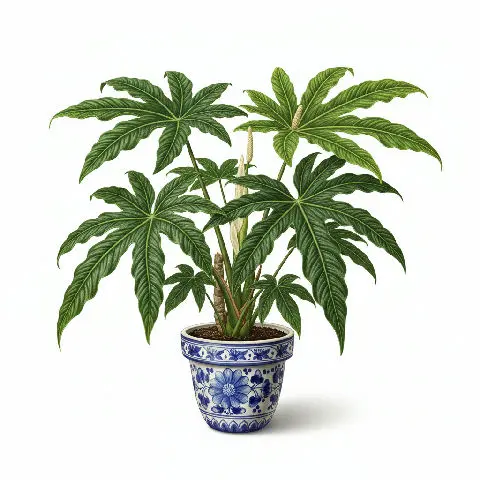
Anthurium pedatoradiatum, commonly known as the 'Fingered Anthurium' or 'Oak Leaf Anthurium', is a remarkable Neotropical aroid celebrated for its distinctively lobed, palmate foliage. This epiphytic or hemiepiphytic perennial thrives in the humid understories of Mexican rainforests, particularly across states such as Oaxaca and Chiapas, and is a proud member of the expansive Araceae family.
Its scientific epithet, 'pedatoradiatum', eloquently describes its 'foot-like' or 'pedate' leaf lobes that radiate outwards, reminiscent of an open hand. This species was first documented and classified by the English botanist William Botting Hemsley in 1879, following collections from its native Mexican range.
While Anthurium pedatoradiatum is predominantly valued for its ornamental appeal, especially as a unique collector's plant or interior décor piece, the broader Anthurium genus and Araceae family possess a history of ethnobotanical applications in various indigenous cultures. Its natural habitat, characterized by consistent warmth, high humidity, and dappled sunlight filtering through a dense canopy, directly informs its specific cultivation requirements as a houseplant. The plant's striking foliage is its main attraction, with leaves that can mature to a considerable size, developing more pronounced lobing over time.
Young leaves initially emerge as simpler, heart-shaped forms before progressively dividing into the characteristic 7-13 or more deeply incised lobes. Unlike many Anthurium species cultivated for their vibrant spathes, A. pedatoradiatum produces a relatively inconspicuous greenish-white inflorescence, featuring a spathe and spadix, which eventually yields small, berry-like fruits.
Its economic significance remains firmly rooted in the specialized horticulture trade.
Trusted Scientific References
1. Authoritative external sources for Anthurium pedatoradiatum
1.1 Wikipedia — Anthurium pedatoradiatum
1.2 Kew POWO (Plants of the World Online)
1.3 PubMed — peer-reviewed research
1.4 NCBI Taxonomy Browser
1.5 GBIF — Global Biodiversity
1.1.Anthurium Pedatoradiatum — Notable Characteristics
- ✓Deeply Lobed Foliage — Characteristic palmate leaves with 7-13 finger-like divisions.
- ✓Epiphytic/Hemiepiphytic Growth — Naturally grows on other plants or rocks in its habitat.
- ✓Neotropical Native — Indigenous to the humid rainforests of southern Mexico.
- ✓Glossy Green Leaves — Attractive, vibrant green foliage that adds a lush aesthetic.
- ✓Low Maintenance Houseplant — Relatively easy to care for with proper environmental conditions.
- ✓Air Purifying Qualities — Contributes to indoor air quality as a common houseplant.
- ✓Unique Collector's Plant — Highly sought after by plant enthusiasts for its distinct look.
- ✓Araceae Family Member — Belongs to a diverse family known for unique leaf forms.
- ✓Non — Showy Inflorescence — Flowers are inconspicuous, unlike many other Anthurium species.
1.2.Anthurium Pedatoradiatum — In Brief
- ✓Distinctive Appearance — Known for its unique, deeply lobed, palmate leaves.
- ✓Native to Mexico — Thrives in humid Neotropical rainforest understories.
- ✓Ornamental Value — Primarily cultivated as a prized houseplant and botanical specimen.
- ✓Toxic Plant — Contains calcium oxalate crystals, causing irritation upon contact or ingestion.
- ✓Specific Care Needs — Requires filtered light, high humidity, and consistent warmth.
- ✓Limited Medicinal Data — No established traditional medicinal uses for this specific species.
2.Anthurium Pedatoradiatum — Nomenclature & Classification
3.Anthurium Pedatoradiatum — Key Data
4.Anthurium Pedatoradiatum — Botanical Description
5.Anthurium Pedatoradiatum — Origin & Spread
6.Anthurium Pedatoradiatum — Folk Medicine Applications
7.Anthurium Pedatoradiatum — Key Phytochemicals
- ✓Calcium Oxalate Crystals — Predominantly present as needle-like raphides throughout the plant tissues, these crystals serve as a defense mechanism, causing irritation upon contact or ingestion.
- ✓Alkaloids — The Araceae family is known to contain various alkaloids, which can exhibit diverse pharmacological activities including neuroactivity, although specific types and concentrations in Anthurium pedatoradiatum require dedicated study.
- ✓Flavonoids — These phenolic compounds are common in plants, offering potential antioxidant, anti-inflammatory, and protective effects against cellular damage.
- ✓Saponins — Glycosidic compounds that can have hemolytic properties, but are also investigated for their potential anti-fungal and immune-modulating activities in some plant species.
- ✓Tannins — Astringent polyphenols that contribute to the plant's defense against herbivores and pathogens, and may possess antioxidant and antimicrobial properties.
- ✓Cyanogenic Glycosides — Present in some Araceae species, these compounds release hydrogen cyanide upon enzymatic hydrolysis, acting as a potent defense mechanism.
- ✓Terpenoids — A broad class of organic compounds, including mono-, sesqui-, and diterpenes, which can contribute to the plant's aroma and possess various bioactivities like anti-inflammatory or antimicrobial effects.
- ✓Volatile Oils — Although not a primary characteristic for Anthurium pedatoradiatum's inconspicuous flowers, some members of the genus may contain volatile compounds that contribute to defense or attract pollinators.
- ✓Steroids — Plant sterols and triterpenoids are often found in botanical extracts and are studied for potential hormonal or anti-inflammatory effects.
8.Anthurium Pedatoradiatum — Evidence-Based Benefits
- ✓Anti-inflammatory Potential — Extracts from certain related Araceae species have shown compounds with properties that may modulate inflammatory pathways, suggesting a speculative anti-inflammatory potential for the broader genus.
- ✓Antimicrobial Activity — Research on other Anthurium species indicates the presence of secondary metabolites that exhibit inhibitory effects against various bacteria and fungi, warranting further investigation for Anthurium pedatoradiatum.
- ✓Antioxidant Support — Many plants within the Araceae family contain phenolic compounds and flavonoids, which are known for their free-radical scavenging capabilities, thus offering hypothetical antioxidant benefits.
- ✓Wound Healing Properties — Some ethnobotanical records for other aroids suggest traditional uses in topical applications for minor skin abrasions, potentially due to astringent or antimicrobial components.
- ✓Analgesic Effects — Certain compounds found across the Araceae family have been explored for their pain-relieving properties, though specific data for Anthurium pedatoradiatum is absent and remains speculative.
- ✓Diuretic Action — Historically, some related plants have been used as diuretics in traditional medicine systems, a property that could be linked to specific phytochemical profiles.
- ✓Insecticidal Properties — Extracts from various aroids have demonstrated insecticidal or repellent activities, suggesting a potential bio-pesticide application if similar compounds are present.
- ✓Air Purification — As a common houseplant, Anthurium pedatoradiatum, like many indoor plants, is often credited with improving indoor air quality by absorbing certain volatile organic compounds, contributing to a healthier living environment. This is a general benefit for houseplants and not specific to medicinal use.
- ✓Cardiovascular Health Support — While highly speculative for this specific species, some general plant secondary metabolites, such as certain flavonoids, are researched for their potential role in supporting cardiovascular well-being.
- ✓Traditional Skin Care — In a broader ethnobotanical context, specific aroid preparations have been applied topically for skin conditions, though this requires extreme caution due to the irritant nature of calcium oxalate crystals.
8.1.Anthurium Pedatoradiatum — Indications & Uses
9.Anthurium Pedatoradiatum — Cautions & Contraindications
9.1.Anthurium Pedatoradiatum — Possible Adverse Reactions
- ✓Skin Irritation — Direct contact with the sap or broken plant parts can cause localized skin irritation, itching, or dermatitis due to calcium oxalate crystals.
- ✓Oral Irritation — Ingestion of any part of the plant will cause immediate and intense burning, swelling, and pain in the mouth, throat, and digestive tract.
- ✓Gastrointestinal Distress — Swallowing plant material can lead to nausea, vomiting, abdominal pain, and diarrhea.
- ✓Allergic Reactions — Individuals sensitive to Araceae plants may experience allergic contact dermatitis or other hypersensitivity reactions.
- ✓Swelling of Airways — Severe ingestion can potentially lead to swelling of the tongue and throat, posing a risk of airway obstruction.
- ✓Eye Irritation — Contact with the eyes can cause pain, redness, and temporary vision disturbances.
- ✓Toxicity to Pets — Highly toxic to cats, dogs, and other animals, causing similar oral and gastrointestinal distress upon ingestion.
9.2.Anthurium Pedatoradiatum — Toxicity Assessment
- ✓Not for Internal Consumption — Anthurium pedatoradiatum is toxic if ingested; it should never be consumed by humans or animals.
- ✓Handle with Care — Wear gloves when handling the plant, especially when pruning or repotting, to avoid skin irritation from the sap.
- ✓Keep Out of Reach — Ensure the plant is placed where children and pets cannot access or ingest any part of it.
- ✓Avoid Eye Contact — Prevent sap from coming into contact with eyes; rinse immediately and thoroughly with water if exposure occurs.
- ✓Seek Medical Attention — In case of accidental ingestion or severe skin/eye irritation, contact a poison control center or medical professional immediately.
- ✓Inform Others — Educate family members and visitors about the plant's toxic nature, especially if they have young children or pets.
- ✓No Traditional Medicinal Use — This species lacks documented traditional internal medicinal applications, reinforcing the importance of its ornamental-only status.
10.Anthurium Pedatoradiatum — Preparations & Uses
- ✓Ornamental Houseplant — The primary use of Anthurium pedatoradiatum is as a decorative indoor plant, valued for its unique foliage and tropical aesthetic.
- ✓Botanical Specimen — Cultivated in botanical gardens and private collections for its distinctive morphological features and as a representative of Neotropical flora.
- ✓Air Quality Enhancement — Placed indoors, it contributes to the general air purification benefits attributed to many houseplants, potentially absorbing common indoor pollutants.
- ✓Landscape Accent (Tropical Climates) — In its native tropical regions, it can be utilized in shaded garden beds, along walls, or as an isolated specimen in undergrowth.
- ✓Topical Application (Caution) — While not specifically for A. pedatoradiatum, some related Araceae have historical external uses for skin conditions; however, this species contains irritant calcium oxalate, making direct topical use highly discouraged without extensive processing and safety assurance.
- ✓Research Subject — Used in botanical and horticultural research to study plant physiology, taxonomy, and the potential for novel bioactive compounds within the Araceae family.
- ✓Bioactive Compound Extraction (Exploratory) — Hypothetically, its plant parts could be processed via solvent extraction to isolate specific phytochemicals for pharmacological investigation, though this is purely for research and not for personal use.
11.Anthurium Pedatoradiatum — Cultivation & Care
- ✓Light — Prefers semi-shade or filtered light; direct sun exposure can lead to leaf scorching and damage.
- ✓Temperature — Requires consistently warm conditions, ideally above 14°C (57°F), and is sensitive to cold drafts.
- ✓Soil — Thrives in a well-draining, peat-rich substrate, often amended with coarse sand or perlite to enhance aeration.
- ✓Watering — Water regularly with lime-free water, allowing the surface of the substrate to dry slightly between waterings to prevent root rot.
- ✓Humidity — Needs medium to high environmental humidity; regular misting of the leaves is beneficial to prevent yellowing and maintain vigor.
- ✓Fertilization — Apply a balanced mineral fertilizer for indoor plants once a month during the active growing seasons of spring and summer.
- ✓Pruning — Remove any dry or damaged leaves as needed to maintain plant health and aesthetic appeal.
- ✓Propagation — Easily propagated by separating suckers or offsets from the mother plant, typically performed in spring or summer.
Reviewed by the Flora Medical Global Botanical Review Panel
Multi-disciplinary editorial group · Botany · Ethnobotany · Herbal-medicine literature
Who reviewed this: This page was checked by the Flora Medical Global Botanical Review Panel — an in-house editorial group of botany graduates, ethnobotany researchers, and horticulture practitioners who collectively maintain our 7,000+ plant encyclopedia. Meet the team.
Our 4-step verification process
1. Taxonomic verification
Scientific names and synonyms cross-checked against Kew POWO, World Flora Online, and The Plant List.
2. Phytochemical & medicinal cross-reference
Active compounds, traditional uses, and reported activities are cross-referenced with PubMed, USDA Dr. Duke's database, and peer-reviewed ethnobotanical literature.
3. Conservation & distribution check
Distribution, ecology, and conservation status confirmed against GBIF occurrence records and the IUCN Red List.
4. Editorial & safety review
Every entry passes an editorial pass for clarity, originality, and safety notices (toxicity, contraindications, dosage caveats) before publication.
Last reviewed:
Important medical disclaimer: This content is for educational and research purposes only. It is not medical advice and is not a substitute for consultation with a licensed healthcare provider. Do not use any herb to self-treat a medical condition without professional guidance.
Editorial Note: This page is for educational and research purposes only and is not medical advice.
Written by: Flora Medical Global Editorial Team
Reviewed by: Flora Medical Global Botanical Review Panel
Last Updated: June 15, 2026





Anthurium Pedatoradiatum — Comments & Community Reviews
Rate this plant