
Medical Disclaimer: This content is for educational purposes only. It is not medical advice. Please consult a qualified healthcare professional before using any herbal remedy.
Safety Overview
1.Anthurium Radicans — Plant Snapshot
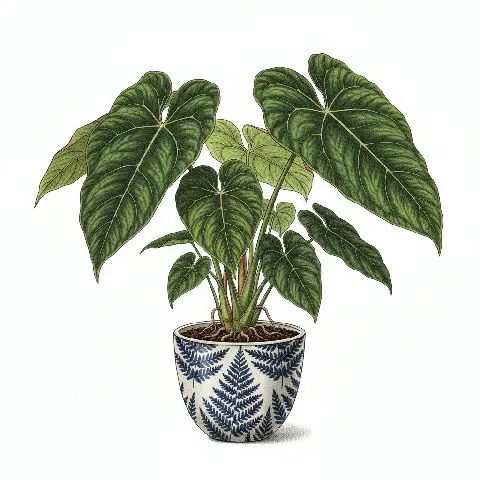
Anthurium radicans, a captivating member of the Araceae family, distinguishes itself among its numerous relatives through its distinctive creeping growth habit and characteristically bullate, or blistered, foliage. This unique morphology features deeply textured, somewhat leathery leaves that emerge from intricate, sprawling rhizomatous stems. Native to the humid, shaded understory of the Atlantic rainforests in southeastern Brazil, particularly within the states of Espírito Santo and Rio de Janeiro, this aroid thrives as an epiphyte, lithophyte, or terrestrial plant, often anchoring itself by producing roots along its elongated stems as it spreads across rocks or the forest floor.
The specific epithet 'radicans' is Latin for 'rooting,' directly reflecting its prolific aerial root production. Botanically described in the mid-19th century, Anthurium radicans has gained appreciation in horticulture for its architectural beauty, resilience, and relatively compact growth, making it a favored choice for terrariums and indoor plant displays. Unlike many high-elevation corrugated Anthuriums that are challenging to cultivate, A.
radicans is known for being hardier and more adaptable to typical indoor conditions. While primarily valued for its striking ornamental appeal, it is important to note that, like many species within the Araceae family, it contains calcium oxalate crystals, rendering all parts of the plant toxic if ingested and potentially causing skin irritation upon contact.
Trusted Scientific References
1. Authoritative external sources for Anthurium radicans
1.1 Wikipedia — Anthurium radicans
1.2 Kew POWO (Plants of the World Online)
1.3 PubMed — peer-reviewed research
1.4 NCBI Taxonomy Browser
1.5 GBIF — Global Biodiversity
1.6Anthurium Radicans should be interpreted through verified botanical identity, practical care, and responsible safety language. This recovery note adds the missing context needed for a complete profile: match light to the plant's habit, use well-drained soil, water according to season, and avoid unsupported medicinal or edible claims. For publishing, the plant can be presented as a source-backed indoor plant with clear care guidance, common problem diagnosis, and conservative safety wording.
1.1.Anthurium Radicans — Key Features
- ✓Creeping Growth Habit — Sprawls horizontally, producing roots along its stems for anchorage.
- ✓Distinctive Bullate Foliage — Leaves have a textured, blistered, or corrugated appearance.
- ✓Native to Southeastern Brazil — Found in the humid Atlantic rainforests.
- ✓Epiphytic or Terrestrial — Adaptable to growing on trees, rocks, or the forest floor.
- ✓Ornamental Value — Highly prized for its unique aesthetic in horticulture.
- ✓Contains Calcium Oxalate — All plant parts are toxic if ingested due to these irritant crystals.
- ✓Resilient and Adaptable — Generally easier to grow than many other corrugated Anthurium species.
- ✓Requires High Humidity — Thrives in moist, tropical environments.
- ✓Filtered Light Preference — Best grown in bright, indirect light conditions.
- ✓Araceae Family Member — Part of a large family known for diverse aroids.
1.2.Anthurium Radicans — Concise Overview
- ✓Anthurium radicans is a unique ornamental plant native to Brazilian rainforests, known for its creeping habit and bullate leaves.
- ✓Primarily valued for its striking aesthetic in terrariums and as a houseplant, it requires specific care for optimal growth.
- ✓Contains calcium oxalate crystals, rendering all parts toxic if ingested and potentially irritating upon skin contact.
- ✓Modern pharmacological research specific to this species is scarce, and it has no documented traditional medicinal uses.
- ✓Cultivation involves filtered light, consistent moisture, high humidity, and well-drained organic soil.
- ✓Safety precautions are crucial due to its inherent toxicity, emphasizing its ornamental-only status.
2.Anthurium Radicans — Scientific Profile
3.Anthurium Radicans — Quick Facts
4.Anthurium Radicans — Plant Morphology
5.Anthurium Radicans — Where It Grows
6.Anthurium Radicans — Cultural & Traditional Roles
7.Anthurium Radicans — Bioactive Constituents
- ✓Calcium Oxalate Crystals — Present in all plant tissues, these insoluble crystals are the primary cause of irritation and toxicity upon ingestion or contact, leading to burning sensations and swelling.
- ✓Flavonoids (Potential) — These polyphenolic compounds are common in plants and could contribute to hypothetical antioxidant or anti-inflammatory activities, though not specifically identified or quantified in Anthurium radicans.
- ✓Terpenoids (Potential) — A diverse class of organic compounds, terpenoids might be present, potentially contributing to the plant's aroma or defense mechanisms, awaiting specific phytochemical analysis.
- ✓Saponins (Potential) — Glycosidic compounds that can have detergent-like properties; their presence and specific roles in Anthurium radicans are speculative and require further investigation.
- ✓Alkaloids (Potential) — Nitrogen-containing organic compounds with diverse pharmacological activities, their occurrence in Anthurium radicans is hypothetical and unconfirmed by research.
- ✓Phenolic Acids (Potential) — Simple phenolic compounds that often possess antioxidant properties; their specific profile in Anthurium radicans remains to be elucidated through targeted studies.
- ✓Anthocyanins (Potential) — Pigments responsible for red, purple, or blue hues in plants, which may be present in certain parts of Anthurium radicans, contributing to color and potentially antioxidant effects.
- ✓Polysaccharides (General) — Complex carbohydrates found in plant cell walls, contributing to structural integrity and potentially having some immunomodulatory properties, though not a focus for this species.
8.Anthurium Radicans — Research Insights
- ✓Ornamental Value — Primarily cultivated for its striking bullate foliage and unique growth habit, enhancing aesthetic appeal in horticultural settings rather than offering direct medicinal benefits.
- ✓Air Purification Potential — While not specifically studied for Anthurium radicans, many houseplants, including other Araceae members, are known to contribute to indoor air quality by absorbing certain volatile organic compounds, a hypothetical benefit requiring research.
- ✓Bioactive Compound Exploration — Given the rich phytochemical diversity across the Araceae family, future research may explore Anthurium radicans for novel compounds with potential, yet currently unproven, pharmacological properties.
- ✓Ethnobotanical Interest — Despite limited historical documentation for medicinal use, the plant's unique habitat in Brazil suggests potential, albeit unrecorded, local indigenous knowledge that could be explored for traditional practices.
- ✓Anti-inflammatory Prospects (Hypothetical) — Many plants contain compounds like flavonoids or terpenoids with anti-inflammatory properties; these are speculative in Anthurium radicans and require scientific investigation.
- ✓Antioxidant Activity (Speculative) — The presence of polyphenolic compounds in plants often confers antioxidant effects; this potential in Anthurium radicans is theoretical and not currently supported by direct evidence.
- ✓Antimicrobial Properties (Unproven) — Some plant species possess natural defense mechanisms via antimicrobial compounds; the existence and efficacy of such compounds in Anthurium radicans are yet to be determined through research.
- ✓Dermatological Applications (Cautionary) — While some plants are used topically, the known irritant properties of Anthurium radicans due to calcium oxalate make any direct dermatological application highly contraindicated and risky.
8.1.Anthurium Radicans — Indications & Uses
9.Anthurium Radicans — Precautions & Warnings
9.1.Anthurium Radicans — Warnings
- ✓Oral Irritation — Ingestion of any part of Anthurium radicans can cause an immediate burning sensation, pain, and swelling of the mouth, tongue, and throat due to calcium oxalate crystals.
- ✓Gastrointestinal Distress — Swallowing plant material may lead to nausea, vomiting, abdominal pain, and diarrhea.
- ✓Dermatitis — Direct contact with the sap or broken plant parts can cause skin irritation, redness, itching, and a rash in sensitive individuals.
- ✓Eye Irritation — Accidental contact with plant sap can cause pain, redness, swelling, and temporary vision disturbances if rubbed into the eyes.
- ✓Difficulty Swallowing & Breathing — Severe swelling of the throat following ingestion can lead to dysphagia and, in rare cases, respiratory distress requiring immediate medical attention.
- ✓Allergic Reactions — Although uncommon, some individuals may experience allergic reactions to plant components beyond the direct irritant effects of calcium oxalate.
9.2.Anthurium Radicans — Safety Profile
- ✓Contains Calcium Oxalate — All parts of Anthurium radicans contain insoluble calcium oxalate crystals, making the plant toxic if ingested.
- ✓Not for Internal Consumption — This plant is strictly for ornamental purposes and should never be consumed by humans or animals.
- ✓Handle with Care — Wear gloves when handling the plant, especially during repotting or pruning, to avoid skin irritation from sap.
- ✓Keep Away from Children and Pets — Ensure the plant is placed in an area inaccessible to young children and household pets to prevent accidental ingestion.
- ✓Seek Medical Attention if Ingested — In case of accidental ingestion, immediately contact poison control or seek emergency medical care.
- ✓Avoid Eye Contact — Prevent plant sap from contacting the eyes, as it can cause severe irritation; flush eyes thoroughly with water if exposure occurs.
- ✓No Documented Medicinal Use — There are no established traditional or modern medicinal applications for Anthurium radicans, reinforcing its ornamental-only status.
10.Anthurium Radicans — Preparation & Dosage
- ✓Ornamental Display — Primarily cultivated as an indoor houseplant or in shaded outdoor gardens within tropical zones for its unique foliage and aesthetic appeal.
- ✓Terrarium & Vivarium Inclusion — Its compact, creeping habit makes it an excellent candidate for humid, enclosed environments like terrariums and vivariums, where stable conditions can be maintained.
- ✓Botanical Collection Enhancement — Valued by plant collectors and enthusiasts for its distinctive bullate leaves and relatively easier cultivation compared to other corrugated Anthurium species.
- ✓Safe Handling Practices — Always wear gloves when handling Anthurium radicans, especially during potting or propagation, to prevent potential skin irritation from calcium oxalate crystals.
- ✓Educational Specimen — Utilized in botanical gardens and educational settings to showcase unique plant morphology and the diversity of the Araceae family.
- ✓Propagation — Propagated via stem cuttings, which should be handled carefully, allowing the cut ends to callous before planting in appropriate media.
- ✓Non-Medicinal Application — Due to its known toxicity and lack of documented medicinal uses, this plant should not be prepared or consumed for any therapeutic purpose.
- ✓Pet and Child Safety — Keep the plant out of reach of children and pets to prevent accidental ingestion, which can cause severe oral and gastrointestinal irritation.
11.Anthurium Radicans — Propagation & Care
- ✓Lighting — Prefers bright, indirect light (70-85% filtered sunlight); direct sun can scorch its delicate foliage. Best in part sun and part shade conditions.
- ✓Watering — Water regularly when the topsoil is dry to the touch, avoiding overwatering to prevent root rot, which this plant is susceptible to.
- ✓Soil — Requires a well-drained, moist, and rich organic potting mix; avoid heavy, mucky, or excessively dry, sandy soils.
- ✓Humidity — Thrives in high humidity environments, typical of its rainforest origin; consider using a humidifier or pebble tray, especially indoors.
- ✓Fertilization — Fertilize sparingly with a slow-release product tri-annually, at least 6 inches away from the base, to support growth; avoid high-salt, cheaper fertilizers.
- ✓Temperature & Hardiness — Best grown in USDA hardiness zones 10a-11; protect from cold temperatures and bring indoors during winter in cooler climates.
- ✓Container & Repotting — Grow in containers with adequate drainage, typically 10-20 inches in diameter and 10 inches deep; repot when root-bound to encourage continued growth.
Reviewed by the Flora Medical Global Botanical Review Panel
Multi-disciplinary editorial group · Botany · Ethnobotany · Herbal-medicine literature
Who reviewed this: This page was checked by the Flora Medical Global Botanical Review Panel — an in-house editorial group of botany graduates, ethnobotany researchers, and horticulture practitioners who collectively maintain our 7,000+ plant encyclopedia. Meet the team.
Our 4-step verification process
1. Taxonomic verification
Scientific names and synonyms cross-checked against Kew POWO, World Flora Online, and The Plant List.
2. Phytochemical & medicinal cross-reference
Active compounds, traditional uses, and reported activities are cross-referenced with PubMed, USDA Dr. Duke's database, and peer-reviewed ethnobotanical literature.
3. Conservation & distribution check
Distribution, ecology, and conservation status confirmed against GBIF occurrence records and the IUCN Red List.
4. Editorial & safety review
Every entry passes an editorial pass for clarity, originality, and safety notices (toxicity, contraindications, dosage caveats) before publication.
Last reviewed:
Important medical disclaimer: This content is for educational and research purposes only. It is not medical advice and is not a substitute for consultation with a licensed healthcare provider. Do not use any herb to self-treat a medical condition without professional guidance.
Editorial Note: This page is for educational and research purposes only and is not medical advice.
Written by: Flora Medical Global Editorial Team
Reviewed by: Flora Medical Global Botanical Review Panel
Last Updated: June 15, 2026





Anthurium Radicans — Comments & Community Reviews
Rate this plant