


Medical Disclaimer: This content is for educational purposes only. It is not medical advice. Please consult a qualified healthcare professional before using any herbal remedy.
Safety Overview
1.Anthurium Superbum — Introduction & Highlights
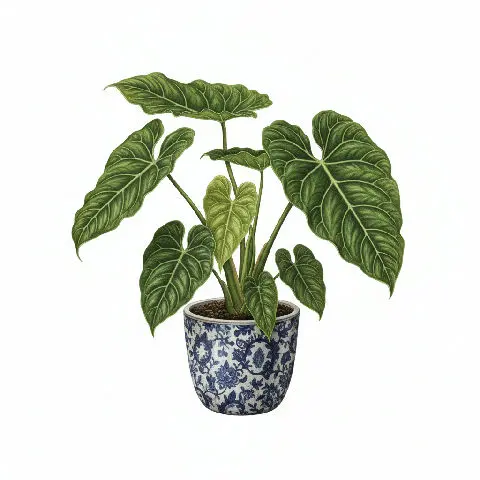
Anthurium superbum, often celebrated in horticulture for its strikingly corrugated, dark green foliage, is an exquisite species belonging to the Araceae family, commonly known as the Aroids. This captivating plant is native to the humid tropical rainforests of Ecuador, where it thrives in the dappled light of the Andean foothills. Unlike many of its Anthurium relatives, which are primarily admired for their vibrant spathes and spadices, A.
superbum's main appeal lies in its magnificent leaves. These leaves exhibit a distinctive plicate or pleated texture, giving them a unique, almost sculptural appearance that has earned it common names like 'Ribbed Anthurium' or 'Superb Anthurium.'
Botanically, Anthurium superbum is characterized by its short internodes and the clustered arrangement of its deeply ribbed, obovate leaves. These leaves can reach impressive sizes, often exceeding 60-90 cm in length, with prominently sunken venation that greatly amplifies the corrugated effect. The plant typically grows as an epiphyte, anchoring itself to host trees, but it can also be found growing lithophytically on rocks or terrestrially in the rich organic matter of the forest floor.
Its natural habitat demands consistent warmth, high humidity, and filtered light, conditions crucial for its robust growth. While its inflorescence is less flamboyant than those of florist's anthuriums, featuring a greenish to purplish-brown spathe and a creamy white to pale yellow spadix, it remains an essential feature for botanical identification and reproduction. The architectural beauty and rarity of Anthurium superbum have made it a highly prized specimen among plant collectors and enthusiasts, symbolizing sophisticated interior botanical design and highlighting the rich biodiversity of its native ecosystem.
Trusted Scientific References
1. Authoritative external sources for Anthurium superbum
1.1 Wikipedia — Anthurium superbum
1.2 Kew POWO (Plants of the World Online)
1.3 PubMed — peer-reviewed research
1.4 NCBI Taxonomy Browser
1.5 GBIF — Global Biodiversity
1.1.Anthurium Superbum — Defining Traits
- ✓Strikingly corrugated, dark — Strikingly corrugated, dark green, obovate leaves with prominent sunken venation, giving a unique pleated appearance.
- ✓Primarily an epiphyte, — Primarily an epiphyte, but also grows lithophytically or terrestrially in its native Ecuadorian rainforest habitat.
- ✓Contains needle — shaped calcium oxalate crystals (raphides), responsible for its irritant properties.
- ✓Inflorescence consists of — Inflorescence consists of a less showy greenish to purplish-brown spathe and a creamy white to pale yellow spadix.
- ✓Highly valued ornamental — Highly valued ornamental plant for its architectural form and unique foliage, making it a collector's item.
- ✓Requires consistent high — Requires consistent high humidity, warm temperatures, and dappled, indirect light to thrive.
- ✓Anecdotal traditional uses — Anecdotal traditional uses of related Anthurium species point to potential topical anti-inflammatory or analgesic effects.
- ✓Contributes to indoor — Contributes to indoor air quality by absorbing certain volatile organic compounds and releasing oxygen.
- ✓Exhibits a moderate — Exhibits a moderate growth habit, with leaves typically spreading wider than the stem height.
1.2.Anthurium Superbum — At-a-Glance Summary
- ✓Anthurium superbum is a highly prized ornamental plant known for its striking, deeply corrugated, dark green leaves from the Araceae family.
- ✓Native to the humid tropical rainforests of Ecuador, it thrives as an epiphyte and requires specific warm, high-humidity conditions.
- ✓The plant contains calcium oxalate crystals, making it mildly toxic if ingested and a skin irritant upon contact with sap.
- ✓While not extensively studied for its medicinal properties, anecdotal traditional uses of related Anthurium species suggest potential topical anti-inflammatory or analgesic effects.
- ✓Primarily valued for its unique aesthetic appeal and its contribution to indoor air quality as a decorative houseplant.
2.Anthurium Superbum — Taxonomic Classification
3.Anthurium Superbum — Reference Facts
4.Anthurium Superbum — Morphological Account
5.Anthurium Superbum — Geographic Distribution
6.Anthurium Superbum — Ethnobotanical Uses
7.Anthurium Superbum — Secondary Metabolites
- ✓Calcium Oxalate Crystals (Raphides) — These needle-shaped crystals are the primary defense mechanism found in Anthurium superbum, particularly in its leaves and stems, and are responsible for its immediate irritant properties upon contact or ingestion.
- ✓Flavonoids — Preliminary phytochemical screenings of generalized Anthurium species suggest the presence of flavonoids such as quercetin and kaempferol derivatives, which are known for their antioxidant, anti-inflammatory, and free-radical scavenging activities.
- ✓Phenolic Acids — Compounds like caffeic acid and p-coumaric acid may be present in trace amounts, contributing to the plant's overall antioxidant capacity and potential anti-inflammatory effects.
- ✓Saponins — Trace quantities of saponins might be found in Anthurium superbum, potentially contributing to various biological activities, although their specific role and concentration in this species are not well-established.
- ✓Alkaloids — While not extensively quantified for A. superbum, some Anthurium species may contain trace amounts of alkaloids, which are nitrogen-containing compounds with diverse pharmacological activities.
- ✓Terpenoids — These diverse organic compounds, including monoterpenes and sesquiterpenes, are often found in plants and may contribute to the plant's aroma, defense mechanisms, and potential biological activities, though specific data for this species is limited.
- ✓Glycosides — Various glycosides, compounds where a sugar is bound to a non-sugar molecule, could also be present in trace amounts, potentially influencing the plant's physiological and medicinal properties.
- ✓Tannins — Astringent compounds that may contribute to the plant's defense against herbivores and provide some antioxidant properties, though their presence in Anthurium superbum is not specifically documented.
8.Anthurium Superbum — Research Insights
- ✓Counter-irritant Action — The presence of calcium oxalate crystals in Anthurium superbum can induce a mild topical irritation, which in some traditional practices is leveraged as a counter-irritant to alleviate deeper muscle aches or localized pain through a diversion of sensory perception.
- ✓Topical Anti-inflammatory Support — Anecdotal reports from indigenous communities, though not extensively documented for Anthurium superbum specifically, suggest that poultices made from certain Anthurium leaves might offer localized anti-inflammatory effects, possibly due to the interaction of plant compounds with skin tissues.
- ✓Minor Analgesic Properties (Topical) — Similar to its anti-inflammatory potential, the topical application of Anthurium species has been anecdotally associated with minor pain relief, where the plant’s constituents might modulate local pain pathways or act as a mild anesthetic.
- ✓Wound Healing Adjunct — In some traditional contexts, plants with mild irritant properties are sometimes applied to minor wounds or skin conditions, aiming to stimulate blood flow and natural healing processes, though direct evidence for Anthurium superbum is lacking.
- ✓Respiratory Support (Anecdotal) — While not directly for Anthurium superbum, some Aroid family members have been used traditionally for respiratory ailments, potentially through expectorant or decongestant actions, though this is highly speculative for this species and requires extreme caution due to toxicity.
- ✓Aesthetic and Psychological Well-being — As a highly prized ornamental plant, Anthurium superbum contributes significantly to indoor aesthetics, and the presence of plants in living spaces is widely recognized to reduce stress, improve mood, and enhance overall psychological health.
- ✓Indoor Air Quality Enhancement — Like many houseplants, Anthurium superbum contributes to purifying indoor air by absorbing certain volatile organic compounds (VOCs) and releasing oxygen, fostering a healthier living environment.
- ✓Bio-indicator of Environmental Health — In its native habitat, the thriving presence of Anthurium superbum can serve as an indicator of a healthy, biodiverse rainforest ecosystem, signifying specific humidity and light conditions essential for other species.
8.1.Anthurium Superbum — Health Applications
9.Anthurium Superbum — Adverse Effects
9.1.Anthurium Superbum — Warnings
- ✓Skin Irritation — Direct contact with the sap or broken leaves can cause dermatitis, redness, itching, and swelling due to calcium oxalate crystals.
- ✓Oral Irritation — Ingestion, even in small amounts, causes immediate severe burning, irritation, and swelling of the mouth, tongue, and throat.
- ✓Gastrointestinal Distress — If ingested, symptoms can include nausea, vomiting, abdominal pain, and diarrhea.
- ✓Eye Irritation — Accidental contact of sap with the eyes can lead to severe pain, redness, irritation, and temporary vision impairment.
- ✓Allergic Reactions — Sensitive individuals may experience more severe allergic contact dermatitis or systemic reactions.
- ✓Airway Obstruction — Swelling of the throat and airways following ingestion can be severe enough to cause difficulty breathing and speech, requiring immediate medical attention.
- ✓Mucosal Damage — Prolonged contact or ingestion can lead to damage to the mucous membranes.
9.2.Anthurium Superbum — Clinical Safety Notes
- ✓Do Not Ingest — Anthurium superbum contains calcium oxalate crystals and is considered toxic if ingested. Never consume any part of this plant.
- ✓Avoid Skin Contact — Always wear gloves when handling or propagating Anthurium superbum to prevent direct contact with the sap, which can cause skin irritation.
- ✓Keep Away from Children and Pets — Place the plant in locations inaccessible to young children and household pets to prevent accidental ingestion or contact.
- ✓Patch Test for Topical Use — If considering any traditional topical application based on related species, always perform a small patch test on the skin first to assess for sensitivity or adverse reactions.
- ✓Seek Medical Attention for Ingestion — In case of accidental ingestion, immediately contact poison control or seek emergency medical care.
- ✓Pregnant and Breastfeeding Individuals — Due to insufficient safety data, pregnant and breastfeeding individuals should strictly avoid any medicinal or topical use of Anthurium superbum.
- ✓Eye Protection — Exercise caution to prevent sap from coming into contact with eyes; rinse immediately with plenty of water if exposure occurs.
10.Anthurium Superbum — How to Use
- ✓Ornamental Display — Primarily cultivated as a highly valued ornamental plant for its striking foliage, enhancing indoor aesthetics and contributing to psychological well-being.
- ✓Traditional Topical Poultices — In indigenous practices, though not extensively documented for A. superbum itself, leaves of related Anthurium species have been crushed and applied topically as poultices for minor aches, pains, or localized inflammation. Exercise extreme caution due to irritant properties.
- ✓Air Purification — Utilize as an indoor houseplant to naturally enhance air quality by absorbing certain volatile organic compounds and releasing oxygen.
- ✓Aesthetic Enhancement — Strategically place in living or office spaces to add a sophisticated, architectural botanical element that can reduce stress and improve mood.
- ✓Bio-monitoring — Observe its growth and health as an indicator of optimal indoor environmental conditions, particularly humidity and temperature.
- ✓Cautionary Display — Due to its irritant properties, display the plant in locations inaccessible to curious children and pets to prevent accidental contact or ingestion.
- ✓External Application (Limited) — If considering any traditional external use, always perform a patch test on a small skin area first and discontinue if irritation occurs. Internal use is strictly contraindicated.
11.Anthurium Superbum — Propagation & Care
- ✓Light — Provide bright, indirect light; avoid direct sunlight which can scorch the leaves. Dappled light conditions mimicking its natural rainforest understory are ideal.
- ✓Humidity — Maintain high humidity levels, ideally 70-80%. Use a humidifier, pebble tray, or regular misting to meet its needs.
- ✓Temperature — Keep temperatures consistently warm, ranging from 18-28°C (65-82°F). Protect from cold drafts and sudden temperature fluctuations.
- ✓Soil — Plant in a well-draining, airy, and rich organic substrate. A mix of orchid bark, perlite, coco coir, and a small amount of potting soil works well for its epiphytic nature.
- ✓Watering — Water thoroughly when the top inch of the soil feels dry. Ensure consistent moisture but avoid waterlogging, which can lead to root rot.
- ✓Fertilization — Feed with a balanced liquid fertilizer diluted to half strength every 2-4 weeks during the active growing season (spring and summer).
- ✓Potting — Choose a pot with excellent drainage. Repot only when root-bound, typically every 2-3 years, ensuring minimal root disturbance.
- ✓Propagation — Propagation is primarily by seed, which is slow, or through tissue culture. Stem cuttings are challenging due to its very short stem.
Reviewed by the Flora Medical Global Botanical Review Panel
Multi-disciplinary editorial group · Botany · Ethnobotany · Herbal-medicine literature
Who reviewed this: This page was checked by the Flora Medical Global Botanical Review Panel — an in-house editorial group of botany graduates, ethnobotany researchers, and horticulture practitioners who collectively maintain our 7,000+ plant encyclopedia. Meet the team.
Our 4-step verification process
1. Taxonomic verification
Scientific names and synonyms cross-checked against Kew POWO, World Flora Online, and The Plant List.
2. Phytochemical & medicinal cross-reference
Active compounds, traditional uses, and reported activities are cross-referenced with PubMed, USDA Dr. Duke's database, and peer-reviewed ethnobotanical literature.
3. Conservation & distribution check
Distribution, ecology, and conservation status confirmed against GBIF occurrence records and the IUCN Red List.
4. Editorial & safety review
Every entry passes an editorial pass for clarity, originality, and safety notices (toxicity, contraindications, dosage caveats) before publication.
Last reviewed:
Important medical disclaimer: This content is for educational and research purposes only. It is not medical advice and is not a substitute for consultation with a licensed healthcare provider. Do not use any herb to self-treat a medical condition without professional guidance.
Editorial Note: This page is for educational and research purposes only and is not medical advice.
Written by: Flora Medical Global Editorial Team
Reviewed by: Flora Medical Global Botanical Review Panel
Last Updated: June 15, 2026





Anthurium Superbum — Comments & Community Reviews
Rate this plant