


Medical Disclaimer: This content is for educational purposes only. It is not medical advice. Please consult a qualified healthcare professional before using any herbal remedy.
Safety Overview
1.Anthurium Veitchii — Essential Profile
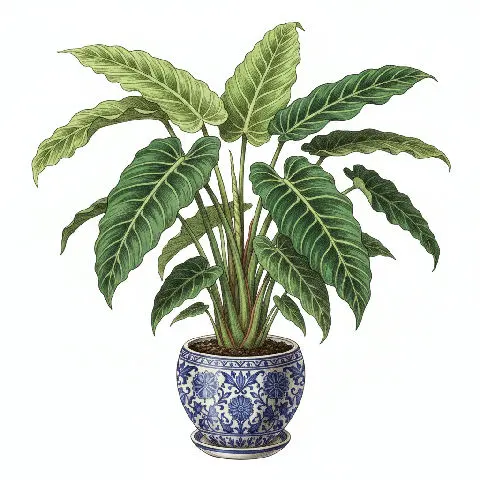
Anthurium veitchii, commonly revered as the King Anthurium, is a magnificent epiphytic aroid belonging to the Araceae family, indigenous to the lush, humid rainforests of Colombia. This species thrives in the shaded understory of tropical lowland and montane forests, where it typically anchors itself onto larger trees, absorbing moisture and nutrients from the ambient air and accumulated organic debris rather than from soil.
Its discovery in the late 19th century by English plant collector Pearce, working for Veitch Nurseries, rapidly established its reputation as a highly coveted botanical specimen due to its striking rarity and dramatic visual appeal.
Botanically, A. veitchii is characterized by its extraordinarily long, pendulous leaves, which can extend up to an impressive 2 meters (6 feet) in mature specimens. These leaves are deeply corrugated, presenting a unique, almost reptilian texture with prominent, deeply impressed veins running parallel to the central midrib, creating a distinctive pattern of ridges and valleys.
The adaxial (upper) surface of the leaf is a glossy, dark green, while the abaxial (underside) is typically a paler, matte green. This specialized morphology is believed to play a crucial role in efficient water collection and retention within its perpetually humid natural habitat. Unlike many Anthurium species famed for their vibrant spathes, the King Anthurium's inflorescence is relatively understated, featuring a slender, greenish-white or pale yellow spadix (the actual flower spike) enveloped by a small, similarly colored spathe that quickly recedes.
Consequently, the plant's allure is almost exclusively attributed to its breathtaking foliage.
Trusted Scientific References
1. Authoritative external sources for Anthurium veitchii
1.1 Wikipedia — Anthurium veitchii
1.2 Kew POWO (Plants of the World Online)
1.3 PubMed — peer-reviewed research
1.4 NCBI Taxonomy Browser
1.5 GBIF — Global Biodiversity
1.6Anthurium Veitchii should be interpreted through verified botanical identity, practical care, and responsible safety language. This recovery note adds the missing context needed for a complete profile: match light to the plant's habit, use well-drained soil, water according to season, and avoid unsupported medicinal or edible claims. For publishing, the plant can be presented as a source-backed indoor plant with clear care guidance, common problem diagnosis, and conservative safety wording.
1.1.Anthurium Veitchii — Highlights
- ✓King Anthurium — Common name reflecting its majestic appearance.
- ✓Spectacular Corrugated Leaves — Deeply ribbed, pendulous foliage up to 2 meters long.
- ✓Epiphytic Growth Habit — Naturally grows on trees, absorbing nutrients from air and debris.
- ✓Native to Colombian Rainforests — Thrives in high humidity and warm, consistent temperatures.
- ✓High Humidity Requirement — Needs 50-80% humidity for optimal growth and health.
- ✓Toxic (Calcium Oxalates) — Contains irritant crystals in all parts, dangerous if ingested.
- ✓Highly Sought — After Collector's Item — Valued for its rarity and unique aesthetic.
- ✓Inconspicuous Inflorescence — Flowers are small and green, not the primary ornamental feature.
- ✓Slow — Growing — Matures gradually, making large specimens particularly valuable.
- ✓Distinct Wide and Narrow Forms — Variations in leaf shape and ribbing exist within the species.
1.2.Anthurium Veitchii — Concise Overview
- ✓Rare and highly prized ornamental King Anthurium known for spectacular corrugated foliage.
- ✓Native epiphytic aroid from Colombian rainforests, requiring specific high-humidity care.
- ✓Contains abundant calcium oxalate crystals, making all parts toxic if ingested or contacted.
- ✓Valued exclusively for its aesthetic beauty and botanical interest, not for medicinal properties.
- ✓Thrives in bright, indirect light, chunky well-drained soil, and consistent warmth.
- ✓Essential to handle with care and keep away from children and pets due to toxicity.
2.Anthurium Veitchii — Botanical Identity
3.Anthurium Veitchii — Key Data
4.Anthurium Veitchii — Physical Description
5.Anthurium Veitchii — Native Range & Habitat
6.Anthurium Veitchii — Heritage Uses
7.Anthurium Veitchii — Phytochemistry
- ✓Calcium Oxalate Crystals — Abundant in all plant tissues, these insoluble crystals (raphides and druses) are responsible for the plant's irritant and toxic properties upon ingestion or contact.
- ✓Flavonoids — Present in the leaves, these compounds are known for their antioxidant potential in other plant species, though their specific roles in A. veitchii are largely unstudied.
- ✓Alkaloids — Some Anthurium species contain various alkaloids, suggesting their potential presence in A. veitchii, which could contribute to diverse biological activities, though specific compounds are not identified.
- ✓Phenolic Acids — These secondary metabolites contribute to plant defense mechanisms and often possess antioxidant properties, likely present in the foliage of A. veitchii.
- ✓Triterpenes — A diverse group of compounds found in many plants, triterpenes may be present, often playing roles in plant defense or structural integrity.
- ✓Saponins — While not specifically confirmed for A. veitchii, saponins are common in many plant families and could be part of its chemical makeup, potentially influencing its interactions with the environment.
- ✓Anthocyanins — Pigments that can contribute to leaf coloration, though less prominent in the dark green foliage of A. veitchii, they might be present in trace amounts or in specific developmental stages.
- ✓Carbohydrates — Essential structural and energy storage molecules like starches and sugars are fundamental components of all plant tissues.
8.Anthurium Veitchii — Pharmacological Findings
- ✓Ornamental Value — Primarily cultivated and prized for its exceptional aesthetic appeal, making it a highly sought-after ornamental plant and collector's item in horticulture.
- ✓Botanical Study — Serves as a significant specimen for botanical research, particularly in understanding epiphytic adaptations and the diverse morphology within the Araceae family.
- ✓Air Quality (Indirect) — As a live plant, it contributes to indoor environments by potentially improving air circulation and humidity, similar to other houseplants, though specific air-purifying properties are not scientifically documented for A. veitchii.
- ✓Stress Reduction (Indirect) — The presence of lush, striking foliage in living spaces can contribute to psychological well-being and stress reduction for some individuals, consistent with biophilic design principles.
- ✓Habitat Representation — Used in specialized terrariums and botanical displays to simulate and represent the rich biodiversity of its native Colombian rainforest ecosystem.
- ✓Educational Tool — Provides an excellent educational resource for demonstrating unique plant adaptations, such as epiphytism and specialized leaf structures, to students and enthusiasts.
- ✓Phytochemical Interest — While not traditionally used medicinally, the presence of various phytochemicals in the Anthurium genus, such as flavonoids, suggests a potential for future research into its chemical profile.
- ✓Humidity Regulation — Its large leaf surface area can contribute to localized humidity, benefiting other humidity-loving plants in close proximity in controlled indoor environments.
8.1.Anthurium Veitchii — Indications & Uses
9.Anthurium Veitchii — Cautions & Contraindications
9.1.Anthurium Veitchii — Possible Adverse Reactions
- ✓Oral Irritation — Ingestion causes immediate, intense burning, pain, and swelling of the mouth, tongue, and throat due to calcium oxalate crystals.
- ✓Gastrointestinal Distress — Symptoms like nausea, vomiting, abdominal pain, and diarrhea may occur if plant material is ingested.
- ✓Dermatitis — Skin contact with the sap can lead to localized irritation, redness, itching, and rash in sensitive individuals.
- ✓Swallowing Difficulty — Severe oral and pharyngeal swelling can impede swallowing (dysphagia) and, in extreme cases, breathing.
- ✓Pet Toxicity — Highly toxic to cats, dogs, and horses, causing similar oral irritation, excessive drooling, and gastrointestinal upset upon ingestion.
- ✓Eye Irritation — Direct contact of plant sap with eyes can result in pain, redness, irritation, and temporary vision disturbances.
- ✓Allergic Reactions — Though rare, some individuals may experience more pronounced allergic responses to plant components.
9.2.Anthurium Veitchii — Clinical Safety Notes
- ✓Ingestion Hazard — Anthurium veitchii is highly toxic and absolutely not safe for human or animal consumption due to high calcium oxalate content.
- ✓Handling Precautions — Always wear protective gloves when handling the plant, especially during pruning, repotting, or propagation, to prevent skin irritation.
- ✓Child and Pet Safety — Keep this plant strictly out of reach of children and all household pets to avoid accidental ingestion and severe adverse reactions.
- ✓Emergency Protocol — In case of accidental ingestion or severe contact, seek immediate medical attention or contact a poison control center promptly.
- ✓Eye Protection — Avoid direct contact of plant sap with eyes; if exposure occurs, flush thoroughly with copious amounts of water and seek medical advice.
- ✓No Medicinal Use — This plant has no documented traditional or modern medicinal uses and should never be prepared or consumed for therapeutic purposes.
- ✓Ventilation — Ensure good ventilation when working closely with the plant to minimize potential respiratory irritation from airborne particles if sensitive.
10.Anthurium Veitchii — Preparation Methods
- ✓Ornamental Cultivation — Primarily grown as a highly prized ornamental houseplant or botanical garden specimen for its spectacular, unique foliage.
- ✓Horticultural Display — Featured in specialist plant collections and exhibitions to showcase its unique aesthetic qualities and rarity.
- ✓Botanical Research Specimen — Utilized in academic and scientific studies focusing on aroid morphology, epiphytic adaptations, and tropical plant physiology.
- ✓Indoor Aesthetic Enhancement — Employed by interior designers and plant enthusiasts to add a touch of exotic, natural beauty to living and working spaces.
- ✓Terrarium and Paludarium Inclusion — Suitable for large, enclosed terrarium or paludarium setups that replicate high-humidity tropical rainforest environments.
- ✓Educational Resource — Serves as an excellent educational tool for learning about tropical epiphytes, the Araceae family, and specific plant care requirements.
- ✓Propagation for Collection — Propagated via division to expand personal collections or for sharing with other dedicated plant enthusiasts.
- ✓Photography Subject — Valued by plant photographers and artists for its dramatic form and texture, making it a captivating subject.
11.Anthurium Veitchii — How to Grow
- ✓Light — Provide bright, indirect light; avoid direct sunlight which can scorch the magnificent leaves of Anthurium veitchii.
- ✓Soil — Use a chunky, well-draining aroid potting mix, typically composed of orchid bark, perlite, sphagnum moss, and coconut coir to mimic its epiphytic habitat.
- ✓Watering — Water thoroughly when the top 1-2 inches of soil feel dry, ensuring the medium remains consistently moist but never waterlogged.
- ✓Humidity — Maintain high humidity levels, ideally between 50-80%, through humidifiers, pebble trays, or grouping plants.
- ✓Temperature — Keep temperatures consistently between 15-27°C (60-80°F), protecting from cold drafts or extreme fluctuations.
- ✓Fertilization — Feed with a diluted, balanced liquid houseplant fertilizer at half strength once or twice a month during the active growing season (spring and summer).
- ✓Repotting — Repot every 2-3 years, or when roots become pot-bound, into a pot only 1-2 inches larger, using fresh aroid mix.
- ✓Air Circulation — Ensure good air movement around the plant to prevent fungal issues, especially in high-humidity environments.
Reviewed by the Flora Medical Global Botanical Review Panel
Multi-disciplinary editorial group · Botany · Ethnobotany · Herbal-medicine literature
Who reviewed this: This page was checked by the Flora Medical Global Botanical Review Panel — an in-house editorial group of botany graduates, ethnobotany researchers, and horticulture practitioners who collectively maintain our 7,000+ plant encyclopedia. Meet the team.
Our 4-step verification process
1. Taxonomic verification
Scientific names and synonyms cross-checked against Kew POWO, World Flora Online, and The Plant List.
2. Phytochemical & medicinal cross-reference
Active compounds, traditional uses, and reported activities are cross-referenced with PubMed, USDA Dr. Duke's database, and peer-reviewed ethnobotanical literature.
3. Conservation & distribution check
Distribution, ecology, and conservation status confirmed against GBIF occurrence records and the IUCN Red List.
4. Editorial & safety review
Every entry passes an editorial pass for clarity, originality, and safety notices (toxicity, contraindications, dosage caveats) before publication.
Last reviewed:
Important medical disclaimer: This content is for educational and research purposes only. It is not medical advice and is not a substitute for consultation with a licensed healthcare provider. Do not use any herb to self-treat a medical condition without professional guidance.
Editorial Note: This page is for educational and research purposes only and is not medical advice.
Written by: Flora Medical Global Editorial Team
Reviewed by: Flora Medical Global Botanical Review Panel
Last Updated: June 15, 2026





Anthurium Veitchii — Comments & Community Reviews
Rate this plant