
Medical Disclaimer: This content is for educational purposes only. It is not medical advice. Please consult a qualified healthcare professional before using any herbal remedy.
Safety Overview
1.Anthurium Vittarifolium — Botanical Snapshot
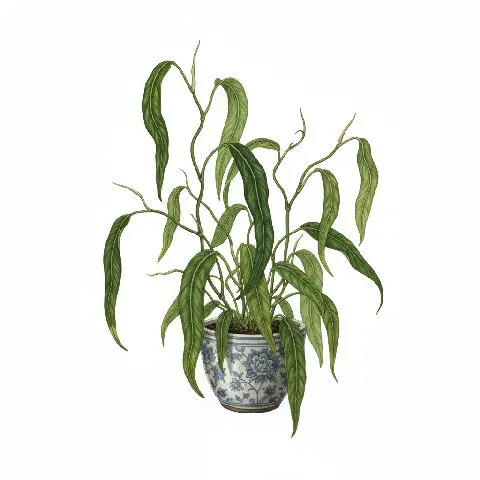
Anthurium vittarifolium, a truly distinctive and visually striking member of the Araceae family, is a captivating botanical marvel. Native to the humid tropical rainforests nestled in the Andean foothills of Ecuador and Peru, this species thrives as an epiphyte, gracefully anchoring itself to tree trunks and branches using specialized aerial roots. Its name, 'vittarifolium,' derived from Latin, aptly translates to 'ribbon-leaved,' a perfect descriptor for its most renowned feature: remarkably long, strap-like, pendant foliage.
These elegant leaves can cascade several feet from the plant's center, often reaching impressive lengths of up to 4 to 6 feet (1.2 to 1.8 meters) in mature specimens, while maintaining a narrow width of just 2-4 inches (5-10 cm). Unlike many of its flamboyant Anthurium relatives prized for their large, colorful spathes, A. vittarifolium's appeal lies predominantly in its dramatic architectural form and the understated beauty of its foliage.
The inflorescence, consisting of a subtle green to purplish spathe surrounding a cream to pale green spadix, is not particularly showy. Taxonomically, it belongs to the genus Anthurium, one of the largest within the Araceae, and is classified under the section Porphyrochitonium, known for species with unique leaf characteristics. In cultivation, it demands conditions that closely mimic its native understory habitat—consistent warmth, high humidity, and dappled, indirect light, making it a coveted specimen for aroid collectors and enthusiasts.
Trusted Scientific References
1. Authoritative external sources for Anthurium vittarifolium
1.1 Wikipedia — Anthurium vittarifolium
1.2 Kew POWO (Plants of the World Online)
1.3 PubMed — peer-reviewed research
1.4 NCBI Taxonomy Browser
1.5 GBIF — Global Biodiversity
1.6Anthurium Vittarifolium should be interpreted through verified botanical identity, practical care, and responsible safety language. This recovery note adds the missing context needed for a complete profile: match light to the plant's habit, use well-drained soil, water according to season, and avoid unsupported medicinal or edible claims. For publishing, the plant can be presented as a source-backed indoor plant with clear care guidance, common problem diagnosis, and conservative safety wording.
1.1.Anthurium Vittarifolium — Distinguishing Points
- ✓Botanical Marvel — A distinctive and visually striking member of the Araceae family.
- ✓Ribbon — Leaved — Its name 'vittarifolium' aptly translates to 'ribbon-leaved,' describing its unique foliage.
- ✓Dramatic Cascade — Features impressively long, strap-like leaves that can drape up to 6 feet.
- ✓Epiphytic Growth — Naturally grows on trees in its native rainforest habitat, absorbing airborne nutrients.
- ✓Tropical Native — Originates from the humid rainforests of Ecuador and Peru.
- ✓High Humidity Lover — Thrives in environments with consistently high relative humidity (above 60%).
- ✓Indirect Light — Requires bright, filtered light and is highly sensitive to direct sun exposure.
- ✓Collector's Plant — Highly sought after by aroid enthusiasts and rare plant collectors for its exotic appeal.
- ✓Foliage — Centric Appeal — Valued primarily for its unique leaf morphology rather than showy flowers.
- ✓Calcium Oxalate Content — Contains irritant crystals, making it toxic if ingested and requiring careful handling.
1.2.Anthurium Vittarifolium — In Brief
- ✓Striking Foliage — Prized for its long, ribbon-like, cascading leaves that can reach up to 6 feet.
- ✓Epiphytic Nature — Native to humid rainforests of Ecuador and Peru, growing on trees.
- ✓Ornamental Value — Primarily cultivated as a unique houseplant or collector's item for its aesthetic appeal.
- ✓Horticultural Focus — Requires high humidity, indirect light, consistent warmth, and a well-draining substrate.
- ✓Cautionary Plant — Contains calcium oxalate crystals, making it toxic if ingested and a potential skin irritant.
- ✓No Documented Medicinal Use — Lacks traditional or scientifically proven therapeutic applications for human health.
2.Anthurium Vittarifolium — Scientific Identity
3.Anthurium Vittarifolium — Vital Statistics
4.Anthurium Vittarifolium — Botanical Description
5.Anthurium Vittarifolium — Origin & Spread
6.Anthurium Vittarifolium — Heritage Uses
7.Anthurium Vittarifolium — Key Phytochemicals
- ✓Calcium Oxalate Crystals — Raphides and druses are common in Araceae, acting as a defense mechanism, causing irritation upon ingestion or contact; their presence in Anthurium vittarifolium is inferred.
- ✓Flavonoids — A broad class of polyphenolic compounds often found in plants, potentially offering antioxidant properties, though specific flavonoids in A. vittarifolium are not yet identified or quantified.
- ✓Alkaloids — Nitrogen-containing compounds with diverse pharmacological activities, sometimes present in Araceae, warranting investigation in this specific species, though currently uncharacterized.
- ✓Saponins — Glycosides that produce a frothing effect, potentially possessing hemolytic or anti-inflammatory properties, but their specific occurrence and activity in A. vittarifolium remain unconfirmed.
- ✓Phenolic Acids — Simple phenolic compounds contributing to antioxidant capacity and plant defense, likely present in A. vittarifolium but not yet isolated or thoroughly characterized.
- ✓Terpenoids — A vast group of natural products, including monoterpenes, sesquiterpenes, and diterpenes, which can have various biological roles; their presence in this species is speculative.
- ✓Cyanogenic Glycosides — Compounds that release hydrogen cyanide upon enzymatic hydrolysis, a defense mechanism present in some Araceae, requiring careful assessment if present in A. vittarifolium.
- ✓Glycoproteins — Proteins with attached carbohydrate chains, potentially involved in plant defense or structural integrity, but specific to A. vittarifolium are not documented.
- ✓Polysaccharides — Complex carbohydrates that play roles in energy storage and structural support; specific types and their potential bioactivity in A. vittarifolium are unstudied.
8.Anthurium Vittarifolium — Pharmacological Findings
- ✓Lack of Documented Traditional Use — Anthurium vittarifolium does not have widely recorded traditional medicinal applications in major systems like Ayurveda, TCM, or Unani, distinguishing it from many other botanicals with long histories of human use.
- ✓Nascent Scientific Investigation — Modern research on Anthurium vittarifolium primarily focuses on its horticultural characteristics and aesthetic appeal, with limited studies specifically exploring its pharmacological potential or therapeutic compounds.
- ✓Potential for Future Phytochemical Screening — Given its membership in the Araceae family, future scientific investigations might explore the presence of compounds common to the family, such as alkaloids or flavonoids, though their presence and activity in A. vittarifolium are currently unconfirmed.
- ✓Distinction from Related Species — While some other Anthurium species possess documented medicinal properties, such as cardiotonic effects in Anthurium scandens, these findings cannot be extrapolated to Anthurium vittarifolium without species-specific research.
- ✓Presence of Calcium Oxalate — Like many aroids, Anthurium vittarifolium likely contains calcium oxalate crystals, which are known irritants and underscore the need for careful handling and the absence of internal medicinal use.
- ✓Horticultural and Aesthetic Value — The primary "benefit" of Anthurium vittarifolium currently lies in its significant ornamental value, prized for its unique foliage and architectural form in botanical collections and indoor gardens.
- ✓Contribution to Biodiversity — As a unique species from the Amazonian rainforests, its existence contributes to global botanical diversity, offering ecological value rather than direct medicinal application.
- ✓Indicator of Ecosystem Health — Its presence in its native habitat can serve as an indicator of healthy, humid tropical ecosystems, highlighting its ecological importance.
- ✓Educational Value — Serves as an excellent specimen for botanical study, illustrating epiphytic growth habits and unique leaf morphology within the Araceae family.
- ✓Air Purification (Hypothetical) — Like many houseplants, it may contribute to minor indoor air quality improvements, though specific research for A. vittarifolium is lacking and not a primary medicinal benefit.
8.1.Anthurium Vittarifolium — Conditions Traditionally Used For
9.Anthurium Vittarifolium — Safety Considerations
9.1.Anthurium Vittarifolium — Reported Side Effects
- ✓Oral Irritation — Ingestion of any part of Anthurium vittarifolium can cause severe burning, intense pain, swelling, and numbness in the mouth, throat, and tongue due to calcium oxalate raphides.
- ✓Skin Contact Dermatitis — Direct contact with the plant sap may lead to skin irritation, redness, itching, burning sensation, or a rash in sensitive individuals.
- ✓Eye Irritation — Accidental contact of sap with eyes can result in significant pain, redness, tearing, and temporary blurred vision.
- ✓Gastrointestinal Distress — If ingested, beyond immediate oral irritation, symptoms may include nausea, vomiting, abdominal pain, and difficulty swallowing.
- ✓Allergic Reactions — Although rare, some individuals may experience more severe allergic responses, such as respiratory irritation or systemic reactions, if exposed to plant particles or sap.
- ✓Pet Toxicity — Highly toxic to pets; ingestion can cause intense oral irritation, excessive drooling, pawing at the mouth, vomiting, and loss of appetite, requiring immediate veterinary attention.
9.2.Anthurium Vittarifolium — Safety Overview
- ✓External Use Only — Anthurium vittarifolium is strictly an ornamental plant and is not safe for internal consumption by humans or animals under any circumstances.
- ✓Handle with Care — Always wear protective gloves when handling the plant, especially during repotting, pruning, or propagation, to prevent skin contact with the irritating sap.
- ✓Keep Out of Reach — Position plants securely where they are inaccessible to children, toddlers, and household pets to prevent accidental ingestion or contact.
- ✓First Aid for Exposure — In case of accidental ingestion, rinse the mouth thoroughly with water and seek immediate medical attention; for skin contact, wash the affected area thoroughly with soap and water.
- ✓No Therapeutic Dosing — There are no established safe or effective medicinal dosages or preparations for Anthurium vittarifolium, as it lacks documented therapeutic applications.
- ✓Avoid Mucous Membrane Contact — Prevent any plant parts or sap from coming into contact with eyes, nose, or other sensitive mucous membranes.
- ✓Inform Others — Educate family members and visitors about the plant's toxic nature and the necessary precautions for handling.
10.Anthurium Vittarifolium — Preparations & Uses
- ✓Ornamental Cultivation — Primarily grown as a decorative houseplant or in specialized botanical collections for its unique, cascading foliage.
- ✓Display as Epiphyte — Can be mounted on cork bark, driftwood, or sphagnum poles to authentically mimic its natural epiphytic growth habit.
- ✓Potted Specimen — Thrives in hanging baskets or tall planters where its dramatically long leaves can drape elegantly, showcasing its architectural form.
- ✓Not for Internal Use — Due to the confirmed presence of calcium oxalate crystals, Anthurium vittarifolium should never be ingested by humans or animals.
- ✓Topical Caution — Direct contact with the plant's sap may cause skin irritation or dermatitis in sensitive individuals; wear gloves when handling.
- ✓Propagation — Typically propagated by carefully taking stem cuttings with at least one node and rooting them in high humidity, or by dividing mature clumps.
- ✓Environmental Enhancement — Used in interior design to create a lush, tropical aesthetic and add vertical dimension to indoor spaces.
- ✓Educational Display — Valued in botanical gardens and educational settings to showcase unique epiphytic adaptations and Araceae diversity.
11.Anthurium Vittarifolium — How to Grow
- ✓Light — Requires bright, indirect light, mimicking its understory habitat; direct sunlight causes scorching and irreversible leaf damage.
- ✓Temperature — Thrives in warm tropical conditions, ideally between 18-29°C (65-85°F), and is highly sensitive to cold drafts and temperatures below 15°C (60°F).
- ✓Humidity — Critical for success, needing consistently high humidity (60%+); best achieved with humidifiers, grouping plants, or growing enclosures.
- ✓Growing Medium — Demands an extremely well-draining, aerated epiphytic aroid mix, typically composed of orchid bark, perlite, horticultural charcoal, and coco coir.
- ✓Watering — Water thoroughly when the top 1-2 inches (2.5-5 cm) of the substrate dry out, ensuring adequate drainage; reduce frequency slightly in cooler, dormant months.
- ✓PH Preferences — Prefers a slightly acidic to neutral growing medium with a pH range of 6.0-7.0; using rainwater or filtered water helps maintain optimal levels.
- ✓Fertilization — Feed sparingly with a balanced, diluted liquid fertilizer during the active growing season (spring and summer), typically every 2-4 weeks.
- ✓Air Circulation — Good air movement is beneficial to prevent fungal issues, especially in high humidity, but avoid strong, drying drafts.
Reviewed by the Flora Medical Global Botanical Review Panel
Multi-disciplinary editorial group · Botany · Ethnobotany · Herbal-medicine literature
Who reviewed this: This page was checked by the Flora Medical Global Botanical Review Panel — an in-house editorial group of botany graduates, ethnobotany researchers, and horticulture practitioners who collectively maintain our 7,000+ plant encyclopedia. Meet the team.
Our 4-step verification process
1. Taxonomic verification
Scientific names and synonyms cross-checked against Kew POWO, World Flora Online, and The Plant List.
2. Phytochemical & medicinal cross-reference
Active compounds, traditional uses, and reported activities are cross-referenced with PubMed, USDA Dr. Duke's database, and peer-reviewed ethnobotanical literature.
3. Conservation & distribution check
Distribution, ecology, and conservation status confirmed against GBIF occurrence records and the IUCN Red List.
4. Editorial & safety review
Every entry passes an editorial pass for clarity, originality, and safety notices (toxicity, contraindications, dosage caveats) before publication.
Last reviewed:
Important medical disclaimer: This content is for educational and research purposes only. It is not medical advice and is not a substitute for consultation with a licensed healthcare provider. Do not use any herb to self-treat a medical condition without professional guidance.
Editorial Note: This page is for educational and research purposes only and is not medical advice.
Written by: Flora Medical Global Editorial Team
Reviewed by: Flora Medical Global Botanical Review Panel
Last Updated: June 15, 2026





Anthurium Vittarifolium — Comments & Community Reviews
Rate this plant