


Medical Disclaimer: This content is for educational purposes only. It is not medical advice. Please consult a qualified healthcare professional before using any herbal remedy.
Safety Overview
1.Antirrhinum Majus — Introduction & Highlights
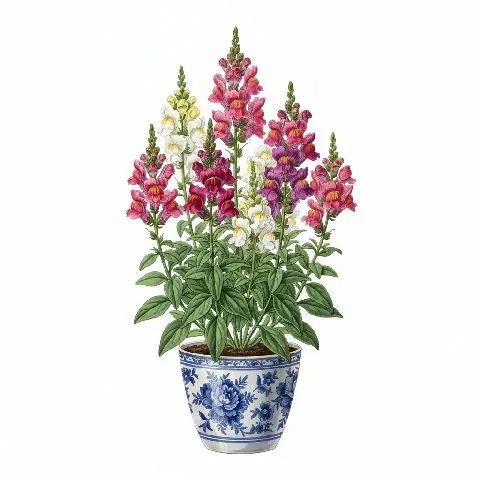
Antirrhinum majus, universally recognized as snapdragon, is a captivating herbaceous perennial often cultivated as an annual in temperate zones, celebrated for its uniquely structured, bilabiate flowers that strikingly resemble a dragon's mouth. Native to the sun-drenched, rocky landscapes of the Mediterranean basin, its natural range extends from Morocco and Portugal across to France, and eastwards into Turkey and Syria. The snapdragon boasts a rich tapestry of history, deeply interwoven with ornamental horticulture, cultural symbolism, and a fascinating, albeit often subtle, array of traditional folk applications. Taxonomically, it resides within the Plantaginaceae family, a reclassification from its historical placement in Scrophulariaceae.
Its genus name, Antirrhinum, is derived from the Greek words 'anti' (meaning like) and 'rhin' (meaning nose), a precise descriptor of its distinctive floral architecture. The species epithet 'majus' denotes 'larger,' differentiating it from other, typically smaller-flowered Antirrhinum species. Centuries of cultivation and selective breeding have given rise to an astonishing diversity of cultivars, showcasing a spectrum of flower colors, sizes, and growth habits, from compact varieties ideal for ground cover to towering specimens prized for cut flower arrangements. While its primary allure remains its aesthetic charm, historical texts and burgeoning modern pharmacological inquiry suggest intriguing medicinal potential.
Preliminary research indicates the presence of bioactive phytochemicals such as flavonoids, iridoid glycosides, and phenolic acids, known for their potential anti-inflammatory, antioxidant, and tissue-protective properties. This resilient plant thrives in full sun and well-drained soil, making it a perennial favorite in diverse garden settings, from cottage gardens to contemporary borders, and typically offers a long blooming season from late spring until the first frost.
Trusted Scientific References
1. Authoritative external sources for Antirrhinum majus
1.1 Wikipedia — Antirrhinum majus
1.2 Kew POWO (Plants of the World Online)
1.3 PubMed — peer-reviewed research
1.4 NCBI Taxonomy Browser
1.5 GBIF — Global Biodiversity
1.1.Antirrhinum Majus — Standout Qualities
- ✓Distinctive Bilabiate Flowers — Resembling a dragon's mouth, a unique botanical feature.
- ✓Mediterranean Origin — Native to rocky, dry areas of Southern Europe and North Africa.
- ✓Ornamental Value — Widely cultivated for its vibrant colors and long blooming season.
- ✓Rich Phytochemical Profile — Contains flavonoids, iridoid glycosides, and phenolic acids.
- ✓Traditional Medicinal Uses — Employed in folk medicine for inflammation, tumors, and ulcers.
- ✓Adaptable Growth — Thrives in full sun and well-drained soil, tolerates various conditions.
- ✓Self — Seeding Tendency — Often naturalizes in suitable environments.
- ✓Pollinator Attractor — Its unique floral structure attracts specific bee species for pollination.
- ✓Historical Reclassification — Moved from Scrophulariaceae to Plantaginaceae family.
1.2.Antirrhinum Majus — At-a-Glance Summary
- ✓Antirrhinum majus is a Mediterranean native, ornamental perennial with 'dragon's mouth' flowers.
- ✓Traditionally used for anti-inflammatory, resolvent, and digestive support.
- ✓Rich in flavonoids, iridoid glycosides, and phenolic acids.
- ✓Cultivated for beauty, but modern research explores its medicinal potential.
- ✓Best used topically for skin issues, inflammation, and digestive aid.
- ✓Exercise caution during pregnancy, lactation, and with known allergies.
2.Antirrhinum Majus — Systematic Position
3.Antirrhinum Majus — Reference Facts
4.Antirrhinum Majus — Plant Morphology
5.Antirrhinum Majus — Geographic Distribution
6.Antirrhinum Majus — Cultural & Traditional Roles
7.Antirrhinum Majus — Secondary Metabolites
- ✓Flavonoids — Key compounds include luteolin, apigenin, and their glycosides, which are potent antioxidants and anti-inflammatory agents, protecting against cellular damage.
- ✓Iridoid Glycosides — Such as aucubin and catalpol, common in Plantaginaceae, known for their anti-inflammatory, hepatoprotective, and antimicrobial activities.
- ✓Phenolic Acids — Including caffeic acid, chlorogenic acid, and ferulic acid, which contribute significantly to the plant's antioxidant capacity and exert anti-inflammatory effects.
- ✓Saponins — Triterpenoid saponins are present, which can have expectorant, anti-inflammatory, and immune-modulating properties, though their specific role in snapdragon is less studied.
- ✓Anthocyanins — Responsible for the vibrant colors of snapdragon flowers, these pigments are powerful antioxidants and may offer cardiovascular protective benefits.
- ✓Phytosterols — Plant sterols like beta-sitosterol are present, known for their potential cholesterol-lowering effects and anti-inflammatory actions.
- ✓Polysaccharides — Complex carbohydrates that can possess immunomodulatory effects, supporting the body's natural defense mechanisms.
- ✓Volatile Compounds — While not a primary essential oil plant, trace amounts of volatile compounds contribute to the plant's subtle fragrance and may have mild antimicrobial properties.
- ✓Tannins — Astringent compounds that can help tighten tissues, reduce inflammation, and possess mild antiseptic qualities, useful for topical applications.
8.Antirrhinum Majus — What Research Suggests
- ✓Anti-inflammatory Action — Flavonoids and iridoid glycosides contribute to reducing inflammation, potentially alleviating discomfort from internal and external inflammatory conditions.
- ✓Antioxidant Support — Phenolic acids and other polyphenols scavenge free radicals, protecting cells from oxidative stress and supporting overall cellular health.
- ✓Resolvent Properties — Traditionally applied to tumors and ulcers, suggesting an ability to aid in the dissolution or resolution of abnormal tissue growth and promote healing.
- ✓Digestive Stimulation — The bitter compounds present can stimulate digestive secretions, enhancing appetite and aiding in the breakdown and absorption of nutrients.
- ✓Wound Healing Aid — Its traditional use in poultices on ulcers implies properties that support tissue regeneration and accelerate the healing process of skin lesions.
- ✓Circulatory Stimulant — While not a direct cardiovascular stimulant, traditional 'stimulant' properties may refer to improved local circulation in affected areas when applied topically.
- ✓Pain Relief (Topical) — The anti-inflammatory effects, particularly when used in poultices, may contribute to localized pain reduction associated with swelling and irritation.
- ✓Antiseptic Qualities — Certain phytochemicals may possess mild antiseptic properties, helping to prevent infection in minor cuts, abrasions, and skin irritations.
- ✓Diuretic Effect — Some plant constituents, particularly certain flavonoids, can promote increased urine output, aiding in fluid balance and detoxification.
- ✓Detoxification Support — By potentially stimulating liver function and promoting diuresis, snapdragon may assist the body's natural detoxification pathways.
- ✓Skin Soothing — When applied topically, its anti-inflammatory and resolvent qualities can help soothe irritated skin, calm redness, and reduce swelling.
8.1.Antirrhinum Majus — Reported Uses
9.Antirrhinum Majus — Precautions & Warnings
9.1.Antirrhinum Majus — Side Effects & Warnings
- ✓Allergic Reactions — Potential for contact dermatitis or mild skin irritation in sensitive individuals, especially with topical application.
- ✓Gastrointestinal Upset — Rare reports of mild stomach upset or nausea if consumed in large quantities due to bitter compounds.
- ✓Photosensitivity — While uncommon, some plant compounds can increase skin sensitivity to sunlight in very susceptible individuals.
- ✓Drug Interactions — Possibility of interaction with blood-thinning medications or sedatives, though specific data for snapdragon is limited.
- ✓Bitter Taste — The pronounced bitter taste of infusions may be unpalatable for some, potentially causing mild gastric discomfort.
9.2.Antirrhinum Majus — Risk Assessment
- ✓Pregnancy & Lactation — Avoid use during pregnancy and breastfeeding due to insufficient research on safety in these populations.
- ✓Pediatric Use — Not recommended for infants or young children due to lack of safety data; consult a healthcare professional for pediatric use.
- ✓Allergic History — Individuals with known allergies to plants in the Plantaginaceae family should exercise caution.
- ✓Autoimmune Conditions — Use with caution in individuals with autoimmune diseases, as immunomodulatory effects are not fully understood.
- ✓Surgical Patients — Discontinue use at least two weeks prior to scheduled surgery due to potential interactions with anesthesia or clotting.
- ✓Topical Use — Perform a patch test on a small area of skin before extensive topical application to check for adverse reactions.
- ✓Dosage Adherence — Always adhere to recommended dosages; excessive consumption may increase the risk of side effects.
10.Antirrhinum Majus — Application Forms
- ✓Poultice Preparation — Crush fresh leaves and flowers, mix with a small amount of water or clay to form a paste, and apply directly to skin for inflammation or ulcers.
- ✓Infusion (Tea) — Steep 1-2 teaspoons of dried leaves and flowers in hot water for 5-10 minutes; strain and consume for digestive support or general well-being.
- ✓Tincture — Macerate dried plant material in high-proof alcohol for several weeks, then strain; use diluted drops internally or topically.
- ✓Decoction (External) — Simmer a handful of dried plant material in water for 15-20 minutes, then strain; use the cooled liquid as a wash for skin irritations or compresses.
- ✓Oil Infusion — Infuse fresh or dried flowers in a carrier oil (e.g., olive, almond) for several weeks in a sunny spot; excellent for topical application on sore muscles or skin.
- ✓Compress — Soak a cloth in a strong infusion or decoction, wring out excess liquid, and apply warm to affected areas such like hemorrhoids or inflamed joints.
- ✓Floral Water/Hydrosol — Steam distillation of fresh flowers yields a gentle floral water, suitable for facial toners or soothing skin sprays.
- ✓Salve/Balm — Combine an oil infusion of snapdragon with beeswax to create a topical balm for localized skin issues or minor wounds.
11.Antirrhinum Majus — Growing Guide
- ✓Soil Preference — Thrives in light to medium, well-drained loam; tolerant of clay, lime, and nutritionally poor soils.
- ✓Sun Exposure — Prefers full sun for optimal blooming, but can tolerate semi-shade, especially in hotter climates.
- ✓Hardiness Zones — Generally hardy in USDA zones 5-10; often grown as an annual in colder regions due to its tendency to degenerate after the first year.
- ✓Propagation — Primarily by seed; surface sow indoors in early spring (March) at 18°C, with cool nights aiding germination.
- ✓Planting — Prick out seedlings into individual pots once large enough, then transplant outdoors after the last frost.
- ✓Watering — Prefers dry to moist soil; avoid waterlogging, especially in heavy soils.
- ✓Maintenance — Deadhead spent flowers to encourage continuous blooming and prevent self-seeding, though it often self-sows readily.
- ✓Pest & Disease — Generally robust, but can be susceptible to rust fungus in humid conditions; good air circulation is key.
Reviewed by the Flora Medical Global Botanical Review Panel
Multi-disciplinary editorial group · Botany · Ethnobotany · Herbal-medicine literature
Who reviewed this: This page was checked by the Flora Medical Global Botanical Review Panel — an in-house editorial group of botany graduates, ethnobotany researchers, and horticulture practitioners who collectively maintain our 7,000+ plant encyclopedia. Meet the team.
Our 4-step verification process
1. Taxonomic verification
Scientific names and synonyms cross-checked against Kew POWO, World Flora Online, and The Plant List.
2. Phytochemical & medicinal cross-reference
Active compounds, traditional uses, and reported activities are cross-referenced with PubMed, USDA Dr. Duke's database, and peer-reviewed ethnobotanical literature.
3. Conservation & distribution check
Distribution, ecology, and conservation status confirmed against GBIF occurrence records and the IUCN Red List.
4. Editorial & safety review
Every entry passes an editorial pass for clarity, originality, and safety notices (toxicity, contraindications, dosage caveats) before publication.
Last reviewed:
Important medical disclaimer: This content is for educational and research purposes only. It is not medical advice and is not a substitute for consultation with a licensed healthcare provider. Do not use any herb to self-treat a medical condition without professional guidance.
Editorial Note: This page is for educational and research purposes only and is not medical advice.
Written by: Flora Medical Global Editorial Team
Reviewed by: Flora Medical Global Botanical Review Panel
Last Updated: June 15, 2026





Antirrhinum Majus — Comments & Community Reviews
Rate this plant