


Medical Disclaimer: This content is for educational purposes only. It is not medical advice. Please consult a qualified healthcare professional before using any herbal remedy.
Safety Overview
1.Apple Tree — At a Glance
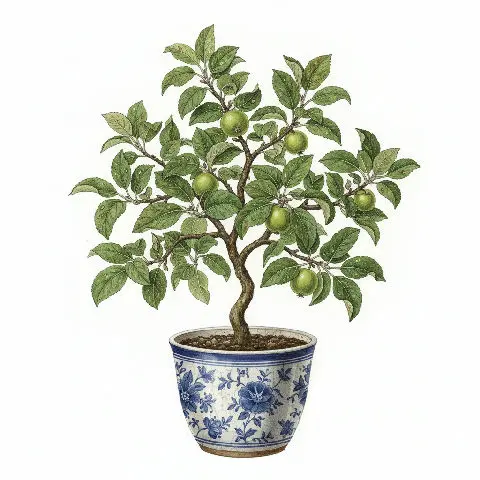
The Apple Tree, scientifically designated as Malus domestica, stands as one of the most extensively cultivated fruit trees globally, a prominent member of the Rosaceae family. Its evolutionary journey began in the mountainous regions of Central Asia, with its wild ancestor, Malus sieversii, thriving in Kazakhstan.
Over millennia, through domestication and selective breeding, the apple spread westward along ancient trade routes like the Silk Road, reaching Europe and eventually establishing its presence across all temperate zones worldwide. This deciduous tree is celebrated for its highly palatable fruit, a pome, which is renowned for its crisp texture and a flavor profile ranging from sweet to tart.
Botanically, Malus domestica is characterized by its simple, alternate leaves, which are typically ovate to elliptical, measuring between 5 and 12 cm in length, and feature finely serrated margins. The tree’s aesthetic appeal is heightened in spring by its abundant blossoms, which are generally white to delicate pink, composed of five distinct petals, and arranged in cymes. The fruit itself develops from the hypanthium, maturing in late summer or autumn.
Apple fruit exhibits remarkable diversity in size, coloration (encompassing shades of green, yellow, and red, often with bi-colored variations), and taste, largely dependent on the specific cultivar. Beyond its culinary significance, the Apple Tree contributes positively to ecosystems by supporting biodiversity, particularly pollinators, and its long lifespan aids in carbon sequestration, making it economically and ecologically vital.
Trusted Scientific References
1. Authoritative external sources for Malus domestica
1.1 Wikipedia — Malus domestica
1.2 Kew POWO (Plants of the World Online)
1.3 PubMed — peer-reviewed research
1.4 NCBI Taxonomy Browser
1.5 GBIF — Global Biodiversity
1.6Apple Tree should be interpreted through verified botanical identity, practical care, and responsible safety language. This recovery note adds the missing context needed for a complete profile: match light to the plant's habit, use well-drained soil, water according to season, and avoid unsupported medicinal or edible claims. For publishing, the plant can be presented as a source-backed garden plant with clear care guidance, common problem diagnosis, and conservative safety wording.
1.1.Apple Tree — Highlights
- ✓High in dietary — High in dietary fiber, particularly soluble pectin.
- ✓Abundant source of — Abundant source of potent antioxidants like quercetin and chlorogenic acid.
- ✓Supports healthy digestion — Supports healthy digestion and gut microbiota.
- ✓Contributes to cardiovascular — Contributes to cardiovascular health and cholesterol management.
- ✓Aids in blood — Aids in blood sugar regulation, beneficial for metabolic health.
- ✓Known for anti — inflammatory and potential anti-cancer activities.
- ✓Widely cultivated and — Widely cultivated and economically significant globally.
- ✓Diverse range of — Diverse range of cultivars offering varied flavors and textures.
- ✓Fruit, peel, and — Fruit, peel, and even cider vinegar offer distinct health advantages.
- ✓Integral part of — Integral part of traditional and modern nutritional approaches.
1.2.Apple Tree — Concise Overview
- ✓Globally cultivated fruit known for health benefits.
- ✓Rich in fiber (pectin), polyphenols (quercetin), and triterpenoids.
- ✓Supports digestive, cardiovascular, and metabolic health.
- ✓Exhibits antioxidant, anti-inflammatory, and potential anti-cancer properties.
- ✓Versatile in culinary and traditional medicinal applications.
2.Apple Tree — Botanical Identity
3.Apple Tree — Key Data
4.Apple Tree — Botanical Features
5.Apple Tree — Origin & Spread
6.Apple Tree — Folk Medicine Applications
7.Apple Tree — Chemical Profile
- ✓Polyphenols — This broad category includes flavonoids (quercetin, catechin, epicatechin, phloridzin) and phenolic acids (chlorogenic acid, caffeic acid). These compounds are potent antioxidants and anti-inflammatory agents, protecting cells from oxidative damage and supporting cardiovascular health.
- ✓Polysaccharides — Primarily pectin, a soluble dietary fiber. Pectin is crucial for digestive health, cholesterol regulation, and blood sugar management, acting as a prebiotic to support gut microbiota.
- ✓Triterpenoids — Compounds like ursolic acid, found predominantly in the apple peel. Ursolic acid is recognized for its anti-inflammatory, antioxidant, and potential anti-cancer properties.
- ✓Phytosterols — Plant sterols that can help reduce the absorption of dietary cholesterol in the gut, contributing to lower blood cholesterol levels.
- ✓Organic Acids — Malic acid, citric acid, and quinic acid give apples their characteristic tartness. These acids play roles in metabolic processes and have mild antimicrobial properties.
- ✓Vitamins — Apples contain a modest amount of Vitamin C (ascorbic acid), an essential antioxidant, along with smaller quantities of B-complex vitamins (e.g., B6) and Vitamin K.
- ✓Minerals — Essential trace elements such as potassium, manganese, and copper are present, contributing to electrolyte balance, bone health, and enzymatic functions.
- ✓Sugars — Fructose, glucose, and sucrose are the primary natural sugars, providing energy. Their absorption is tempered by the fruit's fiber content.
8.Apple Tree — Pharmacological Findings
- ✓Digestive Health Support — The high content of soluble fiber, especially pectin, aids in regulating bowel movements, preventing both constipation and certain types of diarrhea by forming a gel-like substance in the gut.
- ✓Cardiovascular Protection — Apple polyphenols, such as quercetin, contribute to reducing oxidative stress and inflammation, supporting arterial health, and potentially lowering the risk of heart disease.
- ✓Cholesterol Regulation — Pectin binds to cholesterol in the digestive tract, facilitating its excretion and thereby helping to lower LDL ('bad') cholesterol levels.
- ✓Blood Sugar Management — The fiber content slows down sugar absorption, leading to a more gradual rise in blood glucose levels, which is beneficial for managing type 2 diabetes and preventing spikes.
- ✓Antioxidant Powerhouse — Rich in flavonoids and phenolic acids, apples effectively neutralize free radicals, protecting cells from oxidative damage and contributing to overall cellular health.
- ✓Anti-inflammatory Effects — Specific compounds like quercetin exhibit potent anti-inflammatory properties, which can help mitigate chronic inflammation throughout the body.
- ✓Potential Anti-cancer Properties — Research indicates that various phytochemicals in apples, particularly in the peel, may inhibit the growth of certain cancer cells and induce apoptosis.
- ✓Neuroprotective Benefits — Apple polyphenols have been studied for their capacity to protect brain cells from oxidative damage and reduce neuroinflammation, potentially supporting cognitive function.
- ✓Gut Microbiota Modulation — Pectin acts as a prebiotic, nourishing beneficial gut bacteria and promoting a healthy microbiome, which is crucial for overall immunity and metabolic health.
- ✓Enhanced Immune Function — The combination of vitamins (like Vitamin C), antioxidants, and gut-supporting fiber contributes to a robust immune system, helping the body resist infections.
8.1.Apple Tree — Indications & Uses
9.Apple Tree — Cautions & Contraindications
9.1.Apple Tree — Caution Notes
- ✓Dental Erosion — The malic acid in apples can contribute to enamel erosion over time with frequent consumption, especially apple juice.
- ✓Digestive Discomfort — High fiber intake, particularly for individuals unaccustomed to it, can cause bloating, gas, or stomach upset.
- ✓Allergic Reactions — Some individuals may experience oral allergy syndrome (OAS) symptoms like itching or tingling in the mouth due to cross-reactivity with birch pollen.
- ✓Pesticide Residues — Non-organic apples may contain pesticide residues on their skin, necessitating thorough washing or peeling.
- ✓Cyanide in Seeds — Apple seeds contain amygdalin, which can release cyanide when metabolized; consuming large quantities of crushed seeds is toxic.
- ✓Medication Interactions — Certain apple compounds, especially in juice, may interfere with the absorption or metabolism of some medications.
9.2.Apple Tree — Safety Overview
- ✓General Consumption — Whole apples are generally safe and highly recommended for most individuals as part of a balanced diet.
- ✓Pregnant and Lactating Women — Apples are safe for consumption during pregnancy and lactation, offering beneficial nutrients.
- ✓Diabetics — While apples contain natural sugars, their high fiber content helps mitigate blood sugar spikes, making them a suitable fruit in moderation.
- ✓Seed Toxicity — Avoid consuming crushed or chewed apple seeds in large quantities due to their amygdalin content, which can release cyanide.
- ✓Allergies — Individuals with known allergies to Rosaceae family members or birch pollen should exercise caution and consult a healthcare professional.
- ✓Oral Hygiene — Rinse mouth with water after eating apples or apple products to minimize potential dental enamel erosion.
- ✓Pesticide Awareness — Opt for organic apples or thoroughly wash conventional apples to minimize exposure to pesticide residues.
10.Apple Tree — Usage Guide
- ✓Fresh Consumption — Eating whole, raw apples, with the skin, is the most common way to benefit from their full nutritional and fiber content.
- ✓Juices and Ciders — Freshly pressed apple juice or fermented cider provide a concentrated form of some nutrients, though fiber is largely removed.
- ✓Apple Cider Vinegar — Used for its potential metabolic benefits, including blood sugar regulation and digestive aid, often diluted in water.
- ✓Dried Apples — A convenient, shelf-stable snack that retains much of the fiber and concentrated nutrients.
- ✓Cooked Applications — Apples are used in compotes, sauces, pies, and baked goods, which can make nutrients more bioavailable but may reduce heat-sensitive vitamins.
- ✓Topical Applications — Apple extracts or apple cider vinegar are sometimes used in skin care for their astringent and exfoliating properties.
- ✓Herbal Teas — Dried apple pieces can be infused into teas for a flavorful and mildly beneficial beverage.
11.Apple Tree — How to Grow
- ✓Climate — Apple trees thrive in temperate climates, requiring a distinct chilling period (typically 800-1700 hours below 7°C) for proper dormancy and fruit set.
- ✓Soil — Well-drained, fertile loamy soil with a pH between 6.0 and 7.0 is ideal. Good aeration and moisture retention are crucial.
- ✓Planting — Grafted trees are commonly used, planted in late autumn or early spring. Proper spacing is essential for air circulation and light penetration.
- ✓Watering — Consistent moisture is needed, especially during fruit development. Drip irrigation is often employed to ensure steady supply without overwatering.
- ✓Pruning — Annual pruning in late winter is vital for maintaining tree shape, promoting fruit production, and improving air circulation to reduce disease.
- ✓Pest and Disease Management — Integrated Pest Management (IPM) strategies are used to control common issues like apple scab, powdery mildew, codling moth, and aphids.
- ✓Fertilization — Balanced nutrient application based on soil tests supports healthy growth and fruit yield, typically focusing on nitrogen, phosphorus, and potassium.
Reviewed by the Flora Medical Global Botanical Review Panel
Multi-disciplinary editorial group · Botany · Ethnobotany · Herbal-medicine literature
Who reviewed this: This page was checked by the Flora Medical Global Botanical Review Panel — an in-house editorial group of botany graduates, ethnobotany researchers, and horticulture practitioners who collectively maintain our 7,000+ plant encyclopedia. Meet the team.
Our 4-step verification process
1. Taxonomic verification
Scientific names and synonyms cross-checked against Kew POWO, World Flora Online, and The Plant List.
2. Phytochemical & medicinal cross-reference
Active compounds, traditional uses, and reported activities are cross-referenced with PubMed, USDA Dr. Duke's database, and peer-reviewed ethnobotanical literature.
3. Conservation & distribution check
Distribution, ecology, and conservation status confirmed against GBIF occurrence records and the IUCN Red List.
4. Editorial & safety review
Every entry passes an editorial pass for clarity, originality, and safety notices (toxicity, contraindications, dosage caveats) before publication.
Last reviewed:
Important medical disclaimer: This content is for educational and research purposes only. It is not medical advice and is not a substitute for consultation with a licensed healthcare provider. Do not use any herb to self-treat a medical condition without professional guidance.
Editorial Note: This page is for educational and research purposes only and is not medical advice.
Written by: Flora Medical Global Editorial Team
Reviewed by: Flora Medical Global Botanical Review Panel
Last Updated: June 15, 2026





Apple Tree — Comments & Community Reviews
Rate this plant