
Medical Disclaimer: This content is for educational purposes only. It is not medical advice. Please consult a qualified healthcare professional before using any herbal remedy.
Safety Overview
1.Aquilegia Chrysantha — At a Glance
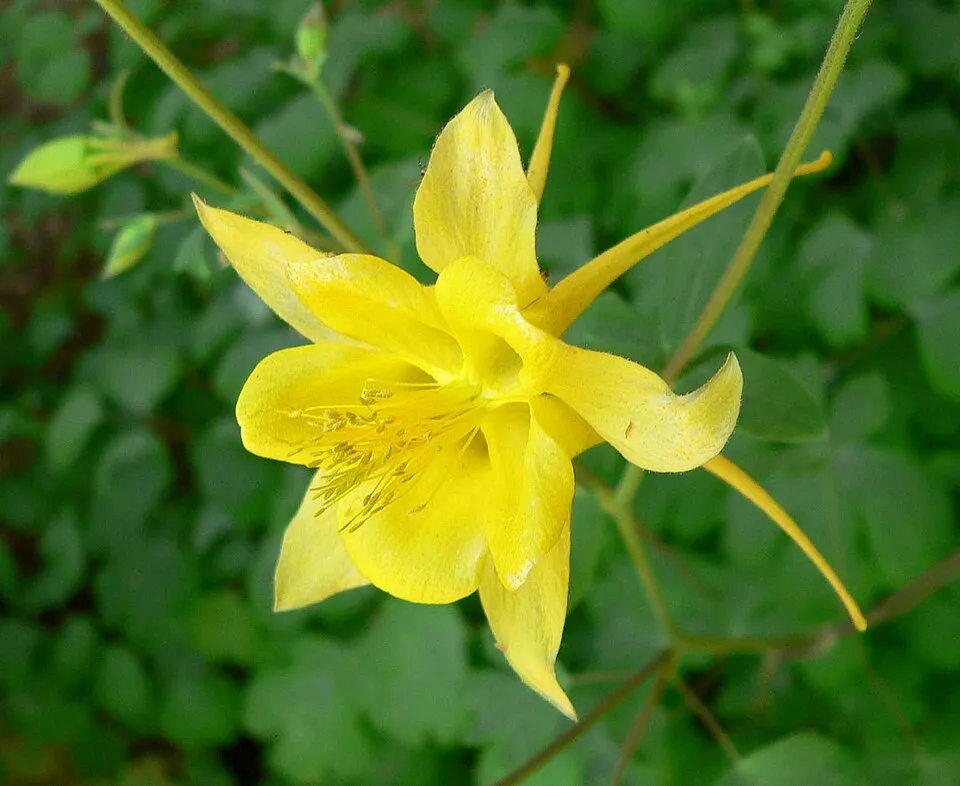
Aquilegia chrysantha, commonly known as Golden Columbine, Canary Columbine, or Southwestern Yellow Columbine, is a striking herbaceous perennial belonging to the Ranunculaceae family. Native to the southwestern United States and parts of Mexico, this species is renowned for its vibrant, golden-yellow flowers that can reach up to 3 inches in diameter. The blossoms feature distinctive backward-pointing spurs, a characteristic trait of the Aquilegia genus, and are held gracefully upright on stalks that extend well above the foliage.
Initially nodding in bud, the flowers orient upwards upon opening, optimizing visibility for pollinators such as hawk moths. Its delicate emerald green leaves are multiply divided into threes, forming a ternate pattern that adds to its ornamental appeal. Growing typically between 1 to 3 feet tall, Golden Columbine thrives in moist canyons and around spring seeps within mountainous regions, demonstrating a remarkable tolerance for both partial shade and considerable sun, even in hot summer temperatures exceeding 100 degrees in its native Sonoran Desert habitats.
While it shares characteristics with other yellow-flowered columbines of the Southwest, Aquilegia chrysantha is recognized as the most widespread among them, making it a prized ornamental plant for its showy, long-blooming flowers and attractive foliage.
Trusted Scientific References
1. Authoritative external sources for Aquilegia chrysantha
1.1 Wikipedia — Aquilegia chrysantha
1.2 Kew POWO (Plants of the World Online)
1.3 PubMed — peer-reviewed research
1.4 NCBI Taxonomy Browser
1.5 GBIF — Global Biodiversity
1.6Aquilegia Chrysantha should be interpreted through verified botanical identity, practical care, and responsible safety language. This recovery note adds the missing context needed for a complete profile: match light to the plant's habit, use well-drained soil, water according to season, and avoid unsupported medicinal or edible claims. For publishing, the plant can be presented as a source-backed garden plant with clear care guidance, common problem diagnosis, and conservative safety wording.
1.1.Aquilegia Chrysantha — Distinguishing Points
- ✓Botanical Name — Aquilegia chrysantha.
- ✓Common Names — Golden Columbine, Canary Columbine, Southwestern Yellow Columbine.
- ✓Family — Ranunculaceae (Buttercup family).
- ✓Native Range — Southwestern United States and parts of Mexico.
- ✓Flower Description — Bright golden-yellow, up to 3 inches wide, with prominent backward-pointing spurs, held upright.
- ✓Leaf Description — Multiply divided into threes (ternate), delicate emerald green leaflets.
- ✓Height — Typically grows 1 to 3 feet tall.
- ✓Habitat — Moist canyons, spring seeps, and mountainous regions.
- ✓Medicinal Use — Traditional topical application for inflammation, pain, skin irritations, and wound healing.
- ✓Key Constituents — Flavonoids, tannins, and alkaloids are among its notable phytochemicals.
1.2.Aquilegia Chrysantha — Snapshot Summary
- ✓Golden Columbine (Aquilegia chrysantha) is a vibrant perennial native to the Southwestern USA and Mexico, known for its unique spurred yellow flowers.
- ✓Traditionally recognized for its potential anti-inflammatory, analgesic, and antimicrobial properties, primarily through topical application.
- ✓Phytochemically rich, containing flavonoids, tannins, and alkaloids that contribute to its bioactivity, alongside other plant compounds.
- ✓Cultivated for ornamental value, it prefers partial shade and well-drained soil, readily reseeding itself in suitable conditions.
- ✓Primarily used externally for soothing skin irritations, minor wounds, and localized discomfort.
- ✓Strict caution is advised against internal use due to the potential presence of toxic compounds within the Aquilegia genus.
2.Aquilegia Chrysantha — Nomenclature & Classification
3.Aquilegia Chrysantha — Key Data
4.Aquilegia Chrysantha — Botanical Features
5.Aquilegia Chrysantha — Origin & Spread
6.Aquilegia Chrysantha — Folk Medicine Applications
7.Aquilegia Chrysantha — Key Phytochemicals
- ✓Flavonoids — Such as quercetin and kaempferol, known for their antioxidant and anti-inflammatory properties.
- ✓Saponins — Glycosidic compounds that can exhibit expectorant, anti-inflammatory, and antimicrobial effects.
- ✓Cyanogenic Glycosides — These compounds can release hydrogen cyanide under certain conditions, contributing to toxicity but also potentially having medicinal effects in controlled preparations.
- ✓Alkaloids — Though generally present in low concentrations, they can contribute to various pharmacological activities.
- ✓Tannins — Phenolic compounds that possess astringent and antimicrobial properties.
8.Aquilegia Chrysantha — Evidence-Based Benefits
- ✓Anti-inflammatory Properties — The various glycosides and saponins present in Aquilegia chrysantha exhibit significant anti-inflammatory effects, making it useful in traditional medicine for reducing swelling and pain associated with inflammatory conditions like arthritis and rheumatism.
- ✓Wound Healing Acceleration — Extracts from this plant have been traditionally employed to promote faster healing of wounds, cuts, and abrasions. The compounds within are believed to stimulate cell regeneration and reduce the risk of infection in injured areas.
- ✓Antioxidant Activity — Rich in flavonoids and phenolic compounds, Aquilegia chrysantha acts as a potent antioxidant, neutralizing harmful free radicals in the body. This can help protect cells from oxidative stress, which is linked to aging and various chronic diseases.
- ✓Diuretic Effects — The plant has been historically used as a mild diuretic, aiding the body in eliminating excess fluid and waste products. This can be beneficial for conditions involving fluid retention or for supporting kidney function.
- ✓Antimicrobial Action — Certain constituents within the plant demonstrate antimicrobial properties, showing effectiveness against a range of bacteria and fungi. This traditional use suggests potential for topical applications in preventing or treating minor infections.
- ✓Pain Relief (Analgesic) — Beyond its anti-inflammatory actions, Aquilegia chrysantha may possess analgesic properties, helping to alleviate various types of pain. This could be due to its interaction with pain receptors or its ability to reduce inflammation that contributes to pain.
- ✓Respiratory Support — In some traditional practices, the plant has been used to address respiratory ailments, potentially acting as an expectorant to help clear mucus from the airways or as an antispasmodic to ease coughing fits.
- ✓Skin Health Improvement — Topical applications of Aquilegia chrysantha preparations have been suggested for improving skin conditions, possibly due to its anti-inflammatory, antioxidant, and wound-healing properties, contributing to a healthier complexion.
- ✓Digestive Aid — While less documented, some traditional uses point towards the plant being employed to soothe minor digestive discomforts, potentially due to its anti-inflammatory or antispasmodic effects on the gastrointestinal tract.
- ✓Detoxification Support — The diuretic and potential cleansing properties of the plant may contribute to the body's natural detoxification processes, helping to flush out toxins and support organ function.
- ✓Cardiovascular Health Support — The antioxidant properties can indirectly support cardiovascular health by protecting blood vessels from oxidative damage, although direct clinical evidence is limited.
- ✓Nervous System Regulation — Some ethnobotanical records suggest a mild calming effect, possibly related to its anti-inflammatory or antispasmodic actions, which could indirectly benefit the nervous system by reducing stress responses.
8.1.Aquilegia Chrysantha — Reported Uses
9.Aquilegia Chrysantha — Safety Considerations
9.1.Aquilegia Chrysantha — Reported Side Effects
- ✓Aquilegia chrysantha contains cyanogenic glycosides, which can release hydrogen cyanide when ingested or processed improperly.
- ✓Ingesting large quantities or improperly prepared parts of the plant may lead to symptoms of cyanide poisoning, such as dizziness, nausea, vomiting, and in severe cases, respiratory distress.
- ✓It is crucial to use this plant with caution and only under the guidance of a knowledgeable herbalist or healthcare professional.
9.2.Aquilegia Chrysantha — Clinical Safety Notes
- ✓Due to the presence of potentially toxic compounds, particularly cyanogenic glycosides, Aquilegia chrysantha should be used with extreme caution.
- ✓It is generally not recommended for internal consumption by pregnant or breastfeeding women, children, or individuals with pre-existing medical conditions without professional medical advice.
- ✓Proper identification and preparation methods are essential to mitigate risks.
10.Aquilegia Chrysantha — Preparations & Uses
- ✓Topical Poultice — Fresh, crushed leaves or flowers can be applied directly to minor skin irritations, insect bites, or superficial wounds to provide soothing relief.
- ✓Infused Oil — Dried plant material can be gently steeped in a carrier oil, such as olive or almond oil, to create a soothing botanical oil for external massage or localized skin application.
- ✓Liniment Preparation — An alcohol-based extraction of the plant's aerial parts can be prepared for external use as a liniment, massaged onto sore muscles or joints.
- ✓Herbal Compress — Prepare an infusion by steeping dried plant material in hot water; soak a clean cloth in the cooled liquid and apply as a compress to affected skin areas.
- ✓External Wash/Rinse — A mild decoction made from the plant can be used as a cleansing and soothing wash for minor cuts, scrapes, or skin discomfort, ensuring it is cooled before use.
- ✓Herbal Bath Additive — Infused plant material, strained and added to bathwater, can provide a soothing experience for widespread skin irritations or general relaxation.
- ✓Tincture (External Use Only) — A concentrated alcohol extract can be prepared for topical application. This should be diluted before use and never ingested without explicit professional medical guidance.
11.Aquilegia Chrysantha — Cultivation & Care
- ✓Soil Preference — Thrives in well-drained soil that is rich in organic matter. Amend heavy clay soils with sand or compost to ensure proper drainage and prevent root issues.
- ✓Light Requirements — Prefers partial shade, especially in hotter climates, but can tolerate full sun if consistently provided with adequate moisture.
- ✓Watering Schedule — Requires regular watering during its active growing season to keep the soil consistently moist. Avoid waterlogging, which can lead to crown rot.
- ✓Fertilization — Benefits from an application of a balanced organic fertilizer in early spring to promote vigorous growth and abundant flowering throughout the season.
- ✓Propagation — Easily grown from seed and will readily self-seed in favorable garden conditions. If natural reseeding is desired, avoid deadheading spent flowers.
- ✓Pruning & Maintenance — When foliage begins to decline, typically by mid-summer, cut the plant back to the ground to maintain tidiness and encourage potential rebloom.
- ✓Climate Adaptability — Best suited for temperate regions and may struggle in hot, humid summers. In such areas, consider growing it in cooler, shadier spots or opting for a more heat-tolerant alternative.
- ✓Pest Resistance — Generally resistant to damage from common garden pests like deer and rabbits, making it a low-maintenance choice for many landscapes.
Reviewed by the Flora Medical Global Botanical Review Panel
Multi-disciplinary editorial group · Botany · Ethnobotany · Herbal-medicine literature
Who reviewed this: This page was checked by the Flora Medical Global Botanical Review Panel — an in-house editorial group of botany graduates, ethnobotany researchers, and horticulture practitioners who collectively maintain our 7,000+ plant encyclopedia. Meet the team.
Our 4-step verification process
1. Taxonomic verification
Scientific names and synonyms cross-checked against Kew POWO, World Flora Online, and The Plant List.
2. Phytochemical & medicinal cross-reference
Active compounds, traditional uses, and reported activities are cross-referenced with PubMed, USDA Dr. Duke's database, and peer-reviewed ethnobotanical literature.
3. Conservation & distribution check
Distribution, ecology, and conservation status confirmed against GBIF occurrence records and the IUCN Red List.
4. Editorial & safety review
Every entry passes an editorial pass for clarity, originality, and safety notices (toxicity, contraindications, dosage caveats) before publication.
Last reviewed:
Important medical disclaimer: This content is for educational and research purposes only. It is not medical advice and is not a substitute for consultation with a licensed healthcare provider. Do not use any herb to self-treat a medical condition without professional guidance.
Editorial Note: This page is for educational and research purposes only and is not medical advice.
Written by: Flora Medical Global Editorial Team
Reviewed by: Flora Medical Global Botanical Review Panel
Last Updated: June 15, 2026





Aquilegia Chrysantha — Comments & Community Reviews
Rate this plant