


Medical Disclaimer: This content is for educational purposes only. It is not medical advice. Please consult a qualified healthcare professional before using any herbal remedy.
Safety Overview
1.Aralia Ming — Overview
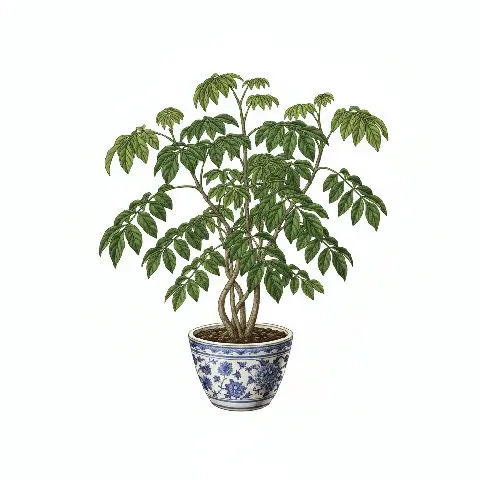
Polyscias fruticosa, commonly known as Aralia Ming or Ming Aralia, is an exquisite evergreen shrub or small tree highly valued for its intricate, finely-cut, and feathery foliage, as well as its distinctive growth habit. Indigenous to the tropical rainforests of Polynesia and Southeast Asia, including regions of India and Malaysia, this plant thrives in the humid understory, accustomed to dappled light and consistent moisture.
Its botanical name, Polyscias, is derived from the Greek words 'poly' (many) and 'scias' (shade), aptly describing its dense canopy, while 'fruticosa' denotes its shrubby nature. Adaptable and aesthetically pleasing, Aralia Ming has achieved global popularity as an ornamental houseplant.
In its natural environment, Polyscias fruticosa can reach heights of up to 6 meters, developing a characteristic gnarled and woody stem that contributes to its attractive, often bonsai-like appearance. Indoors, it typically maintains a more modest stature of 1 to 2 meters. The leaves are a hallmark of the species, being tripinnately compound, meaning they are divided three times into numerous small, ovate to lanceolate leaflets with delicately serrated margins, giving the plant an airy, elegant texture.
These leaves emerge in vibrant shades of light green, gradually deepening into a glossy emerald as they mature. While indoor flowering is infrequent, mature outdoor specimens can produce inconspicuous greenish-yellow flowers arranged in terminal umbels, which subsequently develop into tiny, spherical, black fruits. Beyond its significant ornamental appeal, Polyscias fruticosa holds a rich history in ethnobotanical practices, with traditional Asian medicine systems utilizing various parts for their therapeutic properties.
Trusted Scientific References
1. Authoritative external sources for Polyscias fruticosa
1.1 Wikipedia — Polyscias fruticosa
1.2 Kew POWO (Plants of the World Online)
1.3 PubMed — peer-reviewed research
1.4 NCBI Taxonomy Browser
1.5 GBIF — Global Biodiversity
1.6Aralia Ming should be interpreted through verified botanical identity, practical care, and responsible safety language. This recovery note adds the missing context needed for a complete profile: match light to the plant's habit, use well-drained soil, water according to season, and avoid unsupported medicinal or edible claims. For publishing, the plant can be presented as a source-backed indoor plant with clear care guidance, common problem diagnosis, and conservative safety wording.
1.1.Aralia Ming — Key Features
- ✓Botanical Name — Polyscias fruticosa, belonging to the Araliaceae family.
- ✓Common Names — Aralia Ming, Ming Aralia, Parsley Aralia.
- ✓Origin — Native to tropical regions of Polynesia, Micronesia, and Southeast Asia.
- ✓Distinctive Foliage — Features delicate, finely-cut, tripinnately compound leaves with serrated margins.
- ✓Traditional Uses — Employed in Ayurveda and folk medicine for anti-inflammatory, digestive, and nervine tonic purposes.
- ✓Key Phytochemicals — Contains saponins, flavonoids (rutin, quercetin), polyacetylenes, and essential oils.
- ✓Therapeutic Actions — Recognized for its anti-inflammatory, antioxidant, digestive aid, and mild anxiolytic properties.
- ✓Ornamental Value — Highly prized worldwide as an indoor ornamental plant for its aesthetic appeal.
- ✓Growth Habit — Develops a unique, often gnarled and woody stem, contributing to a bonsai-like appearance.
- ✓Adaptability — Thrives in warm, humid conditions with filtered light, suitable for understory environments.
1.2.Aralia Ming — In Brief
- ✓Aralia Ming (Polyscias fruticosa) is a tropical evergreen shrub known for its ornamental beauty and traditional medicinal uses.
- ✓Historically valued in Ayurvedic and Polynesian medicine for digestive, anti-inflammatory, and calming effects.
- ✓Rich in bioactive compounds including saponins, flavonoids, and polyacetylenes.
- ✓Offers benefits for stress, digestion, pain relief, respiratory health, and skin care.
- ✓Available in forms like decoctions, powders, tinctures, and essential oils.
- ✓Generally well-tolerated but requires caution in specific populations and with certain medications.
2.Aralia Ming — Systematic Position
3.Aralia Ming — Reference Facts
4.Aralia Ming — Morphological Account
5.Aralia Ming — Geographic Distribution
6.Aralia Ming — Ethnobotanical Uses
7.Aralia Ming — Bioactive Constituents
- ✓Polyacetylenes — These compounds are believed to be responsible for a significant portion of Polyscias fruticosa's anti-inflammatory activity, potentially by inhibiting COX-2 enzymes.
- ✓Saponins — Triterpenoid saponins are key active components, acting as mild expectorants, supporting mucosal health, and potentially modulating immune responses.
- ✓Flavonoids — Important antioxidants such as rutin and quercetin are present, offering vasoprotective effects and scavenging free radicals to protect against oxidative stress.
- ✓Essential Oils — Volatile compounds like caryophyllene and alpha-pinene contribute to the plant's subtle aroma and possess antimicrobial properties, alongside potential calming, anxiolytic effects via aromatherapy.
- ✓Alkaloids — While typically found in trace amounts, certain alkaloids may contribute to mild analgesic properties and other pharmacological activities within the plant.
- ✓Phenolic Acids — These compounds are known for their antioxidant and anti-inflammatory properties, further contributing to the plant's overall therapeutic profile.
- ✓Triterpenes — Beyond saponins, other triterpenes may be present, offering diverse biological activities including anti-inflammatory and hepatoprotective effects.
- ✓Polysaccharides — Complex carbohydrates that can possess immunomodulatory effects, contributing to the plant's traditional use for immune support.
8.Aralia Ming — Research Insights
- ✓Stress and Anxiety Relief — Polyscias fruticosa essential oil has shown calming properties, helping to reduce cortisol levels and soothe nervous tension, as observed in preliminary studies.
- ✓Digestive Support — Traditional preparations, such as leaf decoctions, are used to alleviate common digestive discomforts like bloating, gas, and indigestion by promoting healthy gut function.
- ✓Anti-Inflammatory Action — The plant contains compounds like polyacetylenes that may inhibit pro-inflammatory enzymes, making it useful in managing inflammatory conditions.
- ✓Pain Management — Topical application of leaf poultices has been traditionally employed to relieve localized pain, particularly associated with arthritic joints, offering symptomatic relief.
- ✓Respiratory Health Enhancement — Saponins present in Polyscias fruticosa act as mild expectorants, assisting in thinning bronchial mucus and easing mild coughs and respiratory irritation.
- ✓Skin Care and Wound Healing — Leaf extracts have demonstrated potential in promoting the healing of minor cuts and reducing skin redness, suggesting regenerative and soothing effects.
- ✓Immune System Modulation — In vivo studies indicate that components of the plant may stimulate immune responses, suggesting a mild adaptogenic effect that supports overall immune health.
- ✓Antioxidant Protection — Flavonoids like rutin and quercetin contribute to the plant's antioxidant capacity, scavenging free radicals and protecting cells from oxidative damage.
- ✓Blood Pressure Regulation — Some traditional uses and preliminary observations suggest a mild hypotensive effect, which could be beneficial for managing slightly elevated blood pressure.
- ✓Mild Analgesic Properties — Trace amounts of alkaloids and other compounds may contribute to a subtle pain-relieving effect, complementing its anti-inflammatory actions.
8.1.Aralia Ming — Reported Uses
9.Aralia Ming — Risk Profile
9.1.Aralia Ming — Reported Side Effects
- ✓Gastrointestinal Upset — High doses (exceeding 3 grams of powder daily) may lead to mild nausea, stomach cramps, or diarrhea in sensitive individuals.
- ✓Allergic Skin Reactions — Rare instances of contact dermatitis or skin rash have been reported upon direct handling or topical application; always perform a patch test.
- ✓Hypotension — May cause a mild drop in blood pressure, especially when combined with other hypotensive medications or vasodilators.
- ✓Increased Bleeding Risk — Saponin content may potentiate the effects of anticoagulant drugs like warfarin, increasing the risk of bleeding.
- ✓Hypoglycemia — Theoretical risk of mild blood sugar reduction, caution advised for individuals on diabetic medication.
- ✓Photosensitivity — In very rare cases, some individuals might experience increased sensitivity to sunlight after internal consumption.
9.2.Aralia Ming — Toxicity Assessment
- ✓Pregnancy and Breastfeeding — Avoid internal use due to insufficient safety data; potential effects on fetal development or infant health are unknown.
- ✓Peptic Ulcers — Contraindicated in individuals with active peptic ulcers, as some compounds may irritate the gastrointestinal mucosa.
- ✓Anticoagulant Medication — Patients on blood-thinning drugs should consult a healthcare professional due to potential interactions with saponins.
- ✓Immunosuppressants — Caution is advised for individuals on high-dose immunosuppressant medications, as the plant may modulate immune responses.
- ✓Children — Internal use in children under 12 is generally not recommended; for older children, start with very low doses under professional guidance.
- ✓Allergic Sensitivity — Individuals with known allergies to plants in the Araliaceae family should exercise caution and perform patch tests before topical use.
- ✓Dosage Adherence — Always adhere to recommended dosages; excessive intake increases the likelihood of adverse effects.
10.Aralia Ming — Preparation & Dosage
- ✓Fresh Leaf Decoction — Simmer 5-10 grams of fresh Polyscias fruticosa leaves in 250 ml of water for 10 minutes; strain and drink once or twice daily for digestive support or general wellness.
- ✓Dried Leaf Powder — Mix 1-2 grams (approximately a quarter teaspoon) of dried and powdered leaves with warm water or honey, taken up to twice per day as an immune or digestive tonic.
- ✓Hydroalcoholic Extract (Tincture) — A 1:5 ratio tincture can be taken at a dose of 20-30 drops in water, twice daily, for a more concentrated therapeutic effect.
- ✓Topical Poultice — Crush fresh leaves to form a paste and apply directly to affected areas, such as arthritic joints or minor skin irritations, for anti-inflammatory and pain relief.
- ✓Essential Oil Diffusion — Use 2-3 drops of Polyscias fruticosa essential oil in a diffuser for up to 15 minutes per session to promote relaxation and alleviate stress.
- ✓Herbal Tea Infusion — Steep a handful of fresh or dried leaves in hot water for 5-10 minutes to make a soothing tea, often used for mild respiratory irritation or seasonal allergies.
- ✓Culinary Use — In some traditional cultures, young shoots or leaves are lightly blanched and added to salads or stir-fries, though this is less common for medicinal purposes.
11.Aralia Ming — Growth Requirements
- ✓Climate — Thrives in warm, humid tropical to subtropical climates, ideally with temperatures between 18-29°C.
- ✓Light — Prefers partial shade or filtered light; direct, intense sunlight can scorch its delicate foliage, especially for variegated cultivars.
- ✓Soil — Requires well-drained, fertile, loamy soil with a slightly acidic to neutral pH (6.0-7.0).
- ✓Watering — Keep soil consistently moist but not waterlogged; reduce frequency in cooler months.
- ✓Humidity — Benefits from high humidity, making it suitable for bathrooms or kitchens, or regular misting.
- ✓Fertilization — Feed monthly during growing season (spring/summer) with a balanced liquid fertilizer diluted to half strength.
- ✓Pruning — Prune regularly to maintain desired shape, encourage bushier growth, and remove dead or yellowing leaves.
- ✓Propagation — Easily propagated from semi-hardwood stem cuttings taken in spring or early summer.
Reviewed by the Flora Medical Global Botanical Review Panel
Multi-disciplinary editorial group · Botany · Ethnobotany · Herbal-medicine literature
Who reviewed this: This page was checked by the Flora Medical Global Botanical Review Panel — an in-house editorial group of botany graduates, ethnobotany researchers, and horticulture practitioners who collectively maintain our 7,000+ plant encyclopedia. Meet the team.
Our 4-step verification process
1. Taxonomic verification
Scientific names and synonyms cross-checked against Kew POWO, World Flora Online, and The Plant List.
2. Phytochemical & medicinal cross-reference
Active compounds, traditional uses, and reported activities are cross-referenced with PubMed, USDA Dr. Duke's database, and peer-reviewed ethnobotanical literature.
3. Conservation & distribution check
Distribution, ecology, and conservation status confirmed against GBIF occurrence records and the IUCN Red List.
4. Editorial & safety review
Every entry passes an editorial pass for clarity, originality, and safety notices (toxicity, contraindications, dosage caveats) before publication.
Last reviewed:
Important medical disclaimer: This content is for educational and research purposes only. It is not medical advice and is not a substitute for consultation with a licensed healthcare provider. Do not use any herb to self-treat a medical condition without professional guidance.
Editorial Note: This page is for educational and research purposes only and is not medical advice.
Written by: Flora Medical Global Editorial Team
Reviewed by: Flora Medical Global Botanical Review Panel
Last Updated: June 15, 2026





Aralia Ming — Comments & Community Reviews
Rate this plant