


Medical Disclaimer: This content is for educational purposes only. It is not medical advice. Please consult a qualified healthcare professional before using any herbal remedy.
Safety Overview
1.Ardisia Crenata — Essential Profile
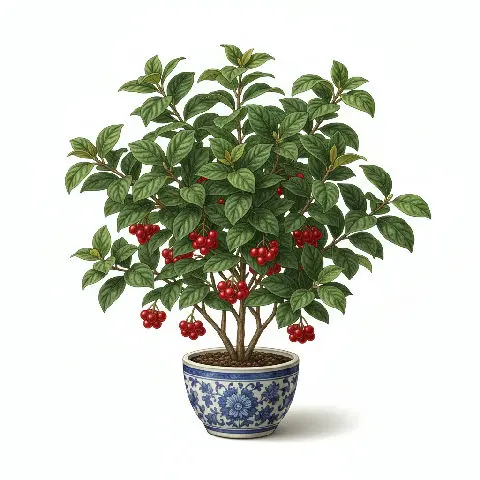
Ardisia crenata, commonly known as Coral Berry, Coral Ardisia, Christmas Berry, or Hen's-Eyes, is an elegant evergreen subshrub belonging to the Primulaceae family, though it was historically classified under Myrsinaceae. Native to the subtropical forests and hillsides of East Asia, including Japan, Korea, China, India, and the Philippines, this plant has adapted to thrive in the understory, preferring dappled light, consistent moisture, and well-draining, slightly acidic to neutral loam. Its introduction to Western horticulture in the 19th century was primarily due to its striking aesthetic, especially its vibrant, persistent red berries that adorn the plant throughout winter, making it a popular choice for festive decorations. Morphologically, Ardisia crenata typically grows between 0.5 to 1.5 meters (2 to 6 feet) tall, featuring glossy, dark green, leathery leaves.
A distinctive characteristic of its foliage is the wavy or 'crenate' margins, often punctuated by tiny, dark, symbiotic nodules. These nodules are crucial, housing nitrogen-fixing bacteria that contribute significantly to the plant's hardiness and ability to flourish in diverse soil conditions. Small, star-shaped flowers, ranging from white to pale pink, emerge in late spring to early summer, preceding the development of its iconic drupes. These berries gradually ripen from green to a brilliant, glossy coral-red by autumn, enduring on the shrub for many months.
While cherished as an ornamental, Ardisia crenata has demonstrated an aggressive and invasive nature in certain regions, notably in parts of Florida, Georgia, Alabama, and Texas, where it can dominate the understory and is classified as a noxious weed, making its management once established quite challenging. The genus name 'Ardisia' is derived from Greek, meaning 'point,' referring to the pointed anthers, while 'crenata' is Latin for 'with blunt teeth,' describing its unique leaf margins.
Trusted Scientific References
1. Authoritative external sources for Ardisia crenata
1.1 Wikipedia — Ardisia crenata
1.2 Kew POWO (Plants of the World Online)
1.3 PubMed — peer-reviewed research
1.4 NCBI Taxonomy Browser
1.5 GBIF — Global Biodiversity
1.1.Ardisia Crenata — Distinguishing Points
- ✓Evergreen ornamental shrub — Evergreen ornamental shrub with persistent red berries.
- ✓Native to East — Native to East Asia, thriving in subtropical understories.
- ✓Characterized by glossy, — Characterized by glossy, dark green leaves with crenate margins and symbiotic nodules.
- ✓Traditionally used in — Traditionally used in Traditional Chinese Medicine (TCM) for various ailments.
- ✓Contains significant bioactive — Contains significant bioactive compounds including triterpenoid saponins and flavonoids.
- ✓Exhibits anti — inflammatory, analgesic, and antioxidant properties.
- ✓Berries are visually — Berries are visually appealing but considered potentially toxic if consumed.
- ✓Classified as an — Classified as an invasive species in parts of the southeastern United States.
- ✓Prefers partial shade, consistent moisture, and well — draining, acidic to neutral soil.
- ✓Cultivated as a festive holiday plant due to its long — lasting winter berries.
1.2.Ardisia Crenata — Quick Summary
- ✓Ardisia crenata is an evergreen subshrub known for its vibrant red berries and traditional medicinal uses.
- ✓Traditionally employed in TCM for anti-inflammatory, analgesic, and antitussive properties.
- ✓Rich in bioactive compounds like ardisin, bergenin, flavonoids, and polyphenols.
- ✓Can be an invasive species in certain subtropical regions, requiring careful management.
- ✓Berries are attractive but potentially toxic if ingested, especially by children and pets.
- ✓Research continues to explore its antioxidant, antimicrobial, and potential anticancer activities.
2.Ardisia Crenata — Botanical Identity
3.Ardisia Crenata — Fact Sheet
4.Ardisia Crenata — Botanical Features
5.Ardisia Crenata — Origin & Spread
6.Ardisia Crenata — Heritage Uses
7.Ardisia Crenata — Chemical Profile
- ✓Triterpenoid Saponins — Key compounds include ardisin and ardisianin, known for their anti-inflammatory, cytotoxic, and hemolytic activities.
- ✓Flavonoids — Such as quercetin, kaempferol, and their glycosides, which contribute significantly to the plant's antioxidant, anti-inflammatory, and cardioprotective effects.
- ✓Benzoic Acid Derivatives — Bergenin is a prominent example, noted for its anti-inflammatory, analgesic, and hepatoprotective properties.
- ✓Polyphenols — A broad category including phenolic acids and tannins, responsible for potent antioxidant and astringent actions, supporting cellular protection.
- ✓Quinones — Compounds like ardisiaquinone and embelin, which have demonstrated antimicrobial, anti-inflammatory, and potential anticancer activities.
- ✓Steroids — Including phytosterols, which can influence hormonal balance and possess anti-inflammatory effects.
- ✓Volatile Oils — Present in smaller quantities, contributing to the plant's aroma and potentially offering mild antimicrobial or expectorant properties.
- ✓Fatty Acids — Essential and non-essential fatty acids found in the berries, providing nutritional value and potentially influencing membrane integrity and inflammatory responses.
- ✓Amino Acids — Building blocks of proteins, essential for various metabolic functions within the plant and potentially beneficial when consumed.
- ✓Sugars and Polysaccharides — Contribute to the plant's energy storage and may possess immunomodulatory properties.
8.Ardisia Crenata — Pharmacological Findings
- ✓Anti-inflammatory Properties — Ardisia crenata contains triterpenoid saponins like ardisin and flavonoids, which have been studied for their ability to modulate inflammatory pathways and reduce swelling and pain.
- ✓Analgesic Effects — Traditionally used for pain relief, the plant's compounds, including bergenin, may possess antinociceptive properties, helping to alleviate various types of discomfort.
- ✓Antitussive Action — In Traditional Chinese Medicine (TCM), Coral Berry is valued for its capacity to suppress coughs and alleviate respiratory irritation, attributed to its soothing and anti-inflammatory constituents.
- ✓Antioxidant Activity — Rich in polyphenols and flavonoids, Ardisia crenata exhibits strong antioxidant potential, combating free radicals and protecting cells from oxidative damage, which supports overall cellular health.
- ✓Antimicrobial Potential — Extracts from Ardisia crenata have shown inhibitory effects against certain bacteria and fungi, suggesting its traditional use in treating minor infections may have a scientific basis.
- ✓Immunomodulatory Support — Some compounds within the plant may help regulate the immune system, enhancing the body's natural defense mechanisms against pathogens and promoting immune balance.
- ✓Potential Anticancer Effects — Preliminary in vitro and in vivo studies have explored the cytotoxic activity of ardisin and other constituents against various cancer cell lines, indicating potential as an adjunct in cancer research.
- ✓Cardioprotective Qualities — Certain compounds may contribute to cardiovascular health by improving blood circulation, reducing lipid peroxidation, and supporting arterial integrity.
- ✓Diuretic Action — Traditionally, parts of the plant were used to promote urination, potentially aiding in the elimination of toxins and supporting kidney function.
- ✓Wound Healing — Applied topically in some traditional practices, the plant's extracts may support the healing process of minor wounds and contusions due to its anti-inflammatory and antimicrobial properties.
8.1.Ardisia Crenata — Therapeutic Indications
9.Ardisia Crenata — Safety Considerations
9.1.Ardisia Crenata — Possible Adverse Reactions
- ✓Gastrointestinal Upset — Ingestion, especially of berries, may cause nausea, vomiting, diarrhea, or stomach cramps in sensitive individuals.
- ✓Allergic Reactions — Skin irritation or allergic dermatitis may occur in susceptible individuals upon contact with the plant.
- ✓Oral Irritation — Ingesting berries or other parts can cause irritation of the mouth and throat.
- ✓Toxicity in Children/Pets — Berries are particularly attractive to children and pets and can be toxic if consumed in significant quantities, leading to more severe symptoms.
- ✓Potential Drug Interactions — Compounds like saponins and flavonoids may interact with certain medications, such as anticoagulants or diuretics, altering their effects.
- ✓Hypotension — Large doses might potentially lower blood pressure due to certain constituents, though this is not commonly reported.
- ✓Liver/Kidney Stress — Excessive or prolonged use, particularly of concentrated extracts, could theoretically place undue stress on liver or kidney function.
9.2.Ardisia Crenata — Safety Overview
- ✓Pregnancy and Lactation — Contraindicated during pregnancy and lactation due to insufficient safety data and potential abortifacient or adverse effects on infants.
- ✓Children — Avoid use in children, especially ingestion of berries, which are considered potentially toxic and can cause significant illness.
- ✓Medical Conditions — Individuals with pre-existing liver, kidney, or cardiovascular conditions should avoid use or consult a healthcare professional.
- ✓Drug Interactions — Exercise caution when combining with anticoagulant medications, diuretics, or other drugs; professional medical advice is essential.
- ✓Dosage — Adhere strictly to recommended dosages from qualified practitioners; self-medication is discouraged.
- ✓Allergic Sensitivity — Discontinue use if allergic reactions such as skin rash, itching, or respiratory distress occur.
- ✓Invasive Species — Be aware of its invasive nature in certain regions; do not plant in areas where it can escape cultivation and harm local ecosystems.
10.Ardisia Crenata — Usage Guide
- ✓Decoction of Roots/Leaves — Boil dried roots or leaves in water for 15-30 minutes; traditionally used for internal conditions like coughs, inflammation, and pain.
- ✓Topical Poultice — Crush fresh leaves or roots and apply directly to skin for contusions, minor wounds, or localized pain and swelling.
- ✓Tincture — Macerate dried plant parts (leaves, roots, or berries) in alcohol for several weeks to create a concentrated extract for internal use.
- ✓Herbal Tea — Infuse dried leaves in hot water for a milder preparation, often consumed for general wellness or respiratory support.
- ✓Powdered Extract — Dried and ground plant material can be encapsulated or mixed into beverages for convenient dosage, especially for standardized extracts.
- ✓Juice from Berries — In some traditional practices, small quantities of berry juice might be used, though caution is advised due to potential toxicity.
- ✓External Wash — Prepare a diluted decoction for use as a wash to cleanse minor skin irritations or as a gargle for throat discomfort.
- ✓Culinary Use (Limited) — While berries are ornamental, direct consumption is generally not recommended due to potential toxicity; focus is on medicinal preparations.
11.Ardisia Crenata — Garden Cultivation
- ✓Site Selection — Prefers partial to full shade (dappled light) in a location protected from intense, direct sunlight, which can scorch leaves.
- ✓Soil Requirements — Thrives in well-draining, rich, organic soil with a slightly acidic to neutral pH (6.0-7.0).
- ✓Watering — Requires consistent moisture; keep soil evenly damp but never waterlogged, as it does not tolerate flooding.
- ✓Temperature and Humidity — Best in subtropical climates; can tolerate mild winters but is sensitive to frost.
- ✓Fertilization — Apply a balanced, slow-release fertilizer in spring to support healthy growth and berry production.
- ✓Propagation — Can be propagated from seeds (which require stratification) or semi-hardwood cuttings taken in late summer.
- ✓Pruning — Prune lightly after berries drop to maintain shape and encourage bushier growth.
- ✓Container Growing — Excellent as a houseplant or in containers in cooler climates, allowing for protection from harsh weather.
Reviewed by the Flora Medical Global Botanical Review Panel
Multi-disciplinary editorial group · Botany · Ethnobotany · Herbal-medicine literature
Who reviewed this: This page was checked by the Flora Medical Global Botanical Review Panel — an in-house editorial group of botany graduates, ethnobotany researchers, and horticulture practitioners who collectively maintain our 7,000+ plant encyclopedia. Meet the team.
Our 4-step verification process
1. Taxonomic verification
Scientific names and synonyms cross-checked against Kew POWO, World Flora Online, and The Plant List.
2. Phytochemical & medicinal cross-reference
Active compounds, traditional uses, and reported activities are cross-referenced with PubMed, USDA Dr. Duke's database, and peer-reviewed ethnobotanical literature.
3. Conservation & distribution check
Distribution, ecology, and conservation status confirmed against GBIF occurrence records and the IUCN Red List.
4. Editorial & safety review
Every entry passes an editorial pass for clarity, originality, and safety notices (toxicity, contraindications, dosage caveats) before publication.
Last reviewed:
Important medical disclaimer: This content is for educational and research purposes only. It is not medical advice and is not a substitute for consultation with a licensed healthcare provider. Do not use any herb to self-treat a medical condition without professional guidance.
Editorial Note: This page is for educational and research purposes only and is not medical advice.
Written by: Flora Medical Global Editorial Team
Reviewed by: Flora Medical Global Botanical Review Panel
Last Updated: June 15, 2026





Ardisia Crenata — Comments & Community Reviews
Rate this plant