
Medical Disclaimer: This content is for educational purposes only. It is not medical advice. Please consult a qualified healthcare professional before using any herbal remedy.
Safety Overview
1.Armeria Joystick — Botanical Snapshot
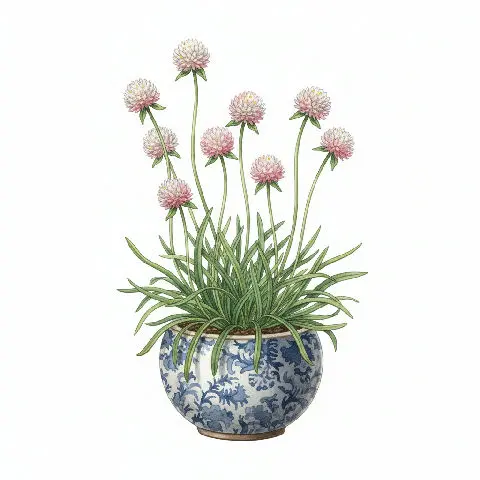
Armeria 'Joystick' is a captivating horticultural cultivar, primarily recognized for its exceptional ornamental qualities. This delightful evergreen perennial is a hybrid selection, often derived from species such as Armeria maritima or Armeria pseudoarmeria, commonly known as sea pink or thrift. It forms dense, compact mounds of linear, grass-like, light green foliage that provides continuous visual interest throughout the year.
From late spring through mid-summer, stiff, wiry stems emerge, each topped with vibrant, globe-shaped flower clusters resembling lollipops or drumsticks. These cheerful blooms are available in an array of colors including pink, red, and white, making Armeria 'Joystick' a popular choice for adding dynamic texture and color to various garden settings. Its robust nature makes it an ideal candidate for rock gardens, front-of-border plantings, container displays, and as an edging plant.
As a cultivated hybrid, its natural habitat is within garden environments globally, thriving particularly well in temperate zones. The species belongs to the Plumbaginaceae family, which includes other ornamental and some historically used plants, though Armeria 'Joystick's' primary distinction remains its aesthetic contribution to horticulture.
Trusted Scientific References
1. Authoritative external sources for Armeria Joystick
1.1 Wikipedia — Armeria Joystick
1.2 Kew POWO (Plants of the World Online)
1.3 PubMed — peer-reviewed research
1.4 NCBI Taxonomy Browser
1.5 GBIF — Global Biodiversity
1.6Armeria Joystick should be interpreted through verified botanical identity, practical care, and responsible safety language. This recovery note adds the missing context needed for a complete profile: match light to the plant's habit, use well-drained soil, water according to season, and avoid unsupported medicinal or edible claims. For publishing, the plant can be presented as a source-backed garden plant with clear care guidance, common problem diagnosis, and conservative safety wording.
1.1.Armeria Joystick — Distinguishing Points
- ✓Botanical Name — Armeria 'Joystick'
- ✓Family — Plumbaginaceae
- ✓Common Names — Drumstick Thrift, Sea Pink (related to parent species)
- ✓Plant Type — Evergreen Perennial
- ✓Flower Color — Pink, Red, White (cultivar dependent)
- ✓Bloom Time — Late Spring to Mid-Summer
- ✓Sun Exposure — Full Sun
- ✓Soil Preference — Well-drained, Normal, Sandy, or Clay
- ✓Drought Tolerance — High
- ✓Uses — Ornamental, Cut Flower, Dried Flower, Border, Container, Edging
1.2.Armeria Joystick — In Brief
- ✓Ornamental Cultivar — Armeria 'Joystick' is a vibrant, evergreen ornamental perennial.
- ✓No Medicinal Efficacy — Lacks documented evidence-based medicinal benefits for human health.
- ✓Drought Tolerant — Thrives in full sun and well-drained soil, making it exceptionally low-maintenance.
- ✓Aesthetic Appeal — Highly valued for its distinctive globe-shaped flowers and compact foliage in gardens.
- ✓Cut & Dried Flowers — Excellent for both fresh bouquets and long-lasting dried floral arrangements.
- ✓Minimal Toxicity — Generally considered safe for ornamental use with a very low toxicity risk.
2.Armeria Joystick — Scientific Identity
3.Armeria Joystick — Fact Sheet
4.Armeria Joystick — Botanical Features
5.Armeria Joystick — Ecological Habitat
6.Armeria Joystick — Folk Medicine Applications
7.Armeria Joystick — Chemical Profile
- ✓Triterpenes — Expected to be present in Armeria 'Joystick', common in many plant species and primarily contribute to general plant defense mechanisms and structural integrity, rather than specific medicinal activities in this context.
- ✓Flavonoids — Likely include derivatives of quercetin and kaempferol, which are widely recognized for their general antioxidant properties in plants, protecting cells from oxidative stress.
- ✓Phenolic Acids — Such as gallic acid and caffeic acid, broadly distributed plant metabolites known for their antioxidant and free-radical scavenging capabilities, contributing to plant resilience.
- ✓Tannins — Responsible for the mild astringent properties historically, though unsubstantiated, attributed to Armeria maritima, acting to precipitate proteins and contract tissues upon contact.
- ✓Saponins — Possible presence, often contributing to foam formation and having various biological activities in other plant species, but not specifically identified or quantified for medicinal purposes in Armeria 'Joystick'.
- ✓Anthocyanins — Pigments primarily responsible for the vibrant red and pink flower colors observed in certain 'Joystick' cultivars, also known for general antioxidant effects in other plant contexts.
- ✓Carotenoids — Present in foliage and sometimes flowers, contributing to yellow/orange hues, acting as accessory photosynthetic pigments and general antioxidants within the plant.
- ✓Polysaccharides — Structural carbohydrates found in plant cell walls, contributing to the plant's overall biomass and potentially having general roles in plant health, but not specific medicinal applications here.
- ✓Volatile Compounds — Minor amounts of volatile organic compounds might be present, contributing to subtle plant scents, but typically not in significant medicinal quantities or concentrations for this species.
- ✓Alkaloids — Generally not reported as major or active constituents in Armeria species, suggesting a low likelihood of their presence in therapeutically significant amounts.
8.Armeria Joystick — Evidence-Based Benefits
- ✓Lack of Documented Efficacy — Armeria 'Joystick' is primarily an ornamental cultivar with no established evidence-based medicinal benefits or pharmacological actions directly attributed to it.
- ✓Limited Traditional Use (Parent Species) — The parent species, Armeria maritima (sea pink or thrift), has very restricted historical medicinal applications, primarily documented in European folklore rather than extensive traditional systems.
- ✓Astringent Properties (Folklore) — Traditionally, Armeria maritima was attributed with mild astringent qualities, likely due to the presence of naturally occurring tannins, which can cause tissue contraction.
- ✓External Wound Care (Historical) — In some historical folk practices, parts of the parent species were occasionally applied topically to minor cuts and skin irritations, with the unsubstantiated aim to promote drying and aid in superficial healing.
- ✓Skin Soothing (Unsubstantiated) — Folkloric accounts occasionally suggest potential for soothing minor skin discomforts, though specific mechanisms or proven efficacy for Armeria species remain unverified by scientific research.
- ✓No Anti-inflammatory Action — There is no scientific research supporting anti-inflammatory effects for Armeria 'Joystick' or its wild relatives; any such claims are unsubstantiated.
- ✓Absence of Internal Use Records — No reliable historical or traditional records suggest internal medicinal use for Armeria species, indicating a lack of known active compounds for systemic therapeutic purposes.
- ✓Not in Major Traditional Systems — Armeria 'Joystick' and its progenitors are notably absent from prominent traditional medicine systems such as Ayurveda, Traditional Chinese Medicine (TCM), or Unani, reinforcing its non-medicinal status.
- ✓Ornamental Value as Primary Benefit — The foremost 'benefit' of Armeria 'Joystick' is its significant aesthetic contribution to garden landscapes, recognized for its unique floral display and compact form.
- ✓Horticultural Research Potential — While not medicinal, its resilience, drought tolerance, and ornamental traits make it a subject of interest for horticultural research and breeding programs.
- ✓Biodiversity Support (Indirect) — As a flowering plant, it can indirectly contribute to local biodiversity by attracting pollinators like butterflies, supporting ecosystem health rather than offering direct human medicinal benefits.
- ✓Mental Well-being (Indirect) — Engagement with gardening and cultivation of beautiful plants like Armeria 'Joystick' can offer indirect psychological and mental health benefits, distinct from pharmacological action.
8.1.Armeria Joystick — Conditions Traditionally Used For
9.Armeria Joystick — Safety Considerations
9.1.Armeria Joystick — Warnings
- ✓Allergic Reactions — While rare, individuals sensitive to plants in the Plumbaginaceae family may experience mild skin irritation or contact dermatitis upon direct contact with foliage or sap.
- ✓Ingestion Risks — As no internal medicinal uses are known or recommended, ingestion of any plant parts is not advised and could potentially cause mild gastrointestinal upset.
- ✓Dermatitis — Direct handling of the plant, especially by individuals with sensitive skin, might trigger localized contact dermatitis.
- ✓Lack of Research — Due to the absence of specific medicinal studies or extensive toxicological evaluations, potential unknown side effects from ingestion cannot be entirely ruled out.
- ✓No Documented Toxicity — There are no widely reported cases of significant toxicity or severe adverse reactions associated with Armeria 'Joystick' or its parent species in horticultural use.
- ✓Pet Safety — Generally considered non-toxic to pets; however, large ingestions of any plant material could still lead to mild digestive upset.
9.2.Armeria Joystick — Risk Assessment
- ✓Ornamental Use Only — Armeria 'Joystick' is strictly cultivated for ornamental purposes; it is not intended for medicinal, culinary, or internal consumption of any kind.
- ✓Consult a Professional — Before considering any plant-based remedies, even those with limited traditional uses, always consult a qualified healthcare practitioner.
- ✓Patch Test for Sensitivity — If handling the plant extensively or if you have known plant sensitivities, a small patch test on the skin is advisable to prevent potential irritation.
- ✓Keep Out of Reach of Children — As with all garden plants, ensure children do not ingest parts of Armeria 'Joystick' to prevent potential, albeit typically mild, discomfort.
- ✓No Known Drug Interactions — Due to its lack of medicinal application and active constituents, there are no documented drug interactions for Armeria 'Joystick'.
- ✓Minimal Toxicity Risk — Overall, Armeria 'Joystick' and its parent species are considered to have a very low toxicity risk to humans and animals when used as an ornamental.
- ✓Environmental Safety — Poses no significant environmental safety concerns when cultivated appropriately within garden settings.
10.Armeria Joystick — Preparation Methods
- ✓Garden Landscaping — Ideal for rock gardens, the front of borders, edging, and mass planting due to its compact habit, vibrant blooms, and evergreen foliage.
- ✓Container Planting — Excellent for pots and containers, providing long-lasting floral displays for patios, balconies, or window boxes.
- ✓Cut Flower Arrangements — The strong, upright stems and distinctive globe-shaped flowers make Armeria 'Joystick' an outstanding choice for fresh cut flower bouquets.
- ✓Dried Flower Craft — Flowers can be picked when just opened and hung indoors to dry, retaining their form and color beautifully for winter arrangements and various crafts.
- ✓Attracting Pollinators — Its nectar-rich flowers are known to attract butterflies and other beneficial pollinators, contributing to garden biodiversity.
- ✓Deer Resistance — Armeria 'Joystick' is generally considered deer resistant, making it a suitable plant choice for areas where deer browse is a concern.
- ✓Year-round Interest — The plant's evergreen foliage provides continuous visual appeal in the garden, even outside of its primary blooming season.
- ✓Erosion Control (Parent Species Context) — While 'Joystick' is a cultivated variety, its parent species' natural habitat often involves coastal areas, suggesting a general family trait for stabilizing sandy soils, though not a primary use for the cultivar itself.
11.Armeria Joystick — How to Grow
- ✓Sun Exposure — Thrives in full sun conditions, requiring at least 6 hours of direct sunlight daily for optimal growth, prolific flowering, and compact form.
- ✓Soil Requirements — Prefers normal, sandy, or clay soils that are well-drained; it tolerates a wide range of soil pH from neutral to alkaline or acidic.
- ✓Soil Moisture — Adaptable to average to moist soil conditions, but excellent drainage is crucial to prevent root rot, particularly in heavier or poorly aerated soils.
- ✓Care Level — Considered an easy-care plant, making it highly suitable for beginner gardeners and low-maintenance landscape designs.
- ✓Propagation — Established clumps are easily divided in the fall or early spring, providing a straightforward method to propagate new plants or rejuvenate existing ones.
- ✓Deadheading — Removing faded flowers (deadheading) is recommended to encourage continuous blooming throughout the season and maintain a tidy, attractive appearance.
- ✓Watering — Highly drought-tolerant once established, requiring minimal supplemental watering except during extended periods of severe dryness.
- ✓Fertilization — Generally requires little to no fertilization; an annual application of balanced, slow-release compost can suffice if soil nutrients are particularly poor.
Reviewed by the Flora Medical Global Botanical Review Panel
Multi-disciplinary editorial group · Botany · Ethnobotany · Herbal-medicine literature
Who reviewed this: This page was checked by the Flora Medical Global Botanical Review Panel — an in-house editorial group of botany graduates, ethnobotany researchers, and horticulture practitioners who collectively maintain our 7,000+ plant encyclopedia. Meet the team.
Our 4-step verification process
1. Taxonomic verification
Scientific names and synonyms cross-checked against Kew POWO, World Flora Online, and The Plant List.
2. Phytochemical & medicinal cross-reference
Active compounds, traditional uses, and reported activities are cross-referenced with PubMed, USDA Dr. Duke's database, and peer-reviewed ethnobotanical literature.
3. Conservation & distribution check
Distribution, ecology, and conservation status confirmed against GBIF occurrence records and the IUCN Red List.
4. Editorial & safety review
Every entry passes an editorial pass for clarity, originality, and safety notices (toxicity, contraindications, dosage caveats) before publication.
Last reviewed:
Important medical disclaimer: This content is for educational and research purposes only. It is not medical advice and is not a substitute for consultation with a licensed healthcare provider. Do not use any herb to self-treat a medical condition without professional guidance.
Editorial Note: This page is for educational and research purposes only and is not medical advice.
Written by: Flora Medical Global Editorial Team
Reviewed by: Flora Medical Global Botanical Review Panel
Last Updated: June 15, 2026





Armeria Joystick — Comments & Community Reviews
Rate this plant