


Medical Disclaimer: This content is for educational purposes only. It is not medical advice. Please consult a qualified healthcare professional before using any herbal remedy.
Safety Overview
1.Artemisia Silver Mound — At a Glance
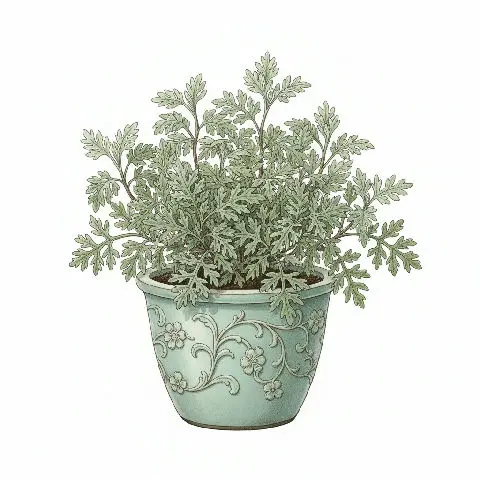
Artemisia schmidtiana, widely recognized as 'Silver Mound' Artemisia, is a captivating herbaceous perennial celebrated for its distinctive finely textured, silver-gray foliage that forms a dense, hemispherical mound. Originating from the vast and often harsh landscapes of Northern Asia, including regions of Japan, Korea, and Siberia, this resilient species naturally thrives in sub-alpine meadows and rocky, exposed slopes, demonstrating remarkable adaptability to challenging environmental conditions. Botanically, it is classified within the expansive Asteraceae family, a group that encompasses numerous species valued for both their medicinal properties and ornamental beauty.
Unlike some of its more potent medicinal relatives, such as Artemisia annua (Sweet Annie) or Artemisia absinthium (Wormwood), Artemisia schmidtiana 'Silver Mound' is primarily cultivated for its aesthetic appeal in Western horticulture and is not traditionally recognized in major codified systems like Ayurveda, TCM, or Unani for internal medicinal applications. This is largely attributed to its comparatively lower concentration of therapeutically active compounds, notably thujone. The 'Silver Mound' cultivar is particularly prized for its compact, cushion-like growth habit, typically reaching a modest 30-45 cm (12-18 inches) in both height and spread, making it an ideal choice for rock gardens, border edging, and as an elegant groundcover.
Its delicate, deeply lobed, almost fern-like leaves are densely covered in fine, silvery hairs (trichomes), which impart its characteristic frosted appearance and play a crucial role in minimizing water loss in arid environments. While it does produce small, inconspicuous yellow-green flowers in late summer, these are often considered secondary to its striking foliage and are sometimes removed to maintain the plant's neat, mounded form. Modern pharmacological research specifically on Artemisia schmidtiana 'Silver Mound' is limited, focusing more on its ornamental resilience, though phytochemical analyses confirm the presence of compounds typical of the broader Artemisia genus.
Trusted Scientific References
1. Authoritative external sources for Artemisia schmidtiana
1.1 Wikipedia — Artemisia schmidtiana
1.2 Kew POWO (Plants of the World Online)
1.3 PubMed — peer-reviewed research
1.4 NCBI Taxonomy Browser
1.5 GBIF — Global Biodiversity
1.1.Artemisia Silver Mound — Highlights
- ✓Botanical Name — Artemisia schmidtiana 'Silver Mound'
- ✓Common Names — Silver Mound Artemisia, Wormwood (general genus name), Sage (general genus name), Mugwort (general genus name).
- ✓Family — Asteraceae (Daisy Family)
- ✓Foliage — Delicate, feathery, deeply lobed, silvery-gray leaves covered in fine trichomes.
- ✓Growth Habit — Dense, compact, cushion-like mounding herbaceous perennial.
- ✓Size — Typically reaches 12 inches (30 cm) tall and 18 inches (45 cm) wide.
- ✓Sun Exposure — Prefers full sun to partial shade for optimal growth and foliage color.
- ✓Soil Preference — Requires well-drained, dry to average moisture soil; tolerant of clay and alkaline conditions.
- ✓Drought Tolerance — Highly drought-tolerant once established, suitable for xeriscaping.
- ✓Deer Resistance — Generally unpalatable to deer, making it a good choice for deer-prone areas.
- ✓Ornamental Value — Primarily cultivated for its outstanding aesthetic appeal, texture, and silver hue in gardens.
1.2.Artemisia Silver Mound — Quick Summary
- ✓Botanical Name — Artemisia schmidtiana 'Silver Mound'
- ✓Family — Asteraceae
- ✓Key Feature — Finely textured, silvery-gray foliage forming a dense, mounding habit.
- ✓Primary Use — Highly valued ornamental landscape plant and groundcover.
- ✓Habitat — Native to Northern Asia, thriving in dry, exposed, sub-alpine conditions.
- ✓Medicinal Note — Not traditionally used internally; possesses lower active compound concentrations compared to medicinal relatives in the Artemisia genus.
2.Artemisia Silver Mound — Botanical Identity
3.Artemisia Silver Mound — Key Data
4.Artemisia Silver Mound — Botanical Description
5.Artemisia Silver Mound — Native Range & Habitat
6.Artemisia Silver Mound — Heritage Uses
7.Artemisia Silver Mound — Chemical Profile
- ✓Sesquiterpene Lactones — Compounds like artemisinin (found in Artemisia annua) and absinthin (in Artemisia absinthium) are characteristic of the genus, known for anti-inflammatory and antiparasitic actions, though in Artemisia schmidtiana, these are present in comparatively lower concentrations.
- ✓Flavonoids — Quercetin, luteolin, and apigenin derivatives are often found in Artemisia species, contributing to antioxidant and anti-inflammatory effects through their ability to scavenge free radicals and modulate enzyme activity.
- ✓Coumarins — Simple and furanocoumarins, which can have anticoagulant, anti-inflammatory, and antimicrobial properties, are part of the broader Artemisia phytochemistry, though their specific roles in 'Silver Mound' are less studied.
- ✓Essential Oils (Terpenoids) — Comprising monoterpenes (e.g., camphor, 1,8-cineole, and low concentrations of alpha-thujone) and sesquiterpenes, these volatile compounds give the plant its characteristic aroma and may possess insect-repelling and antiseptic qualities.
- ✓Phenolic Acids — Compounds such as caffeic acid, chlorogenic acid, and ferulic acid are present, known for their potent antioxidant and free-radical scavenging capabilities, contributing to the plant's overall cellular protection.
- ✓Triterpenoids — Ursolic acid and oleanolic acid, often associated with anti-inflammatory and hepatoprotective activities, are found across various plant families including Asteraceae, and may be present in 'Silver Mound' Artemisia.
- ✓Polysaccharides — Complex carbohydrates that can contribute to immune-modulating effects, though their specific quantity and biological activity in the context of Artemisia schmidtiana's medicinal profile are not extensively researched.
- ✓Plant Sterols — Beta-sitosterol and stigmasterol, common plant sterols, are present and in other species are associated with potential cholesterol-lowering and anti-inflammatory properties, offering a baseline for phytochemical analysis.
8.Artemisia Silver Mound — Evidence-Based Benefits
- ✓Ornamental Value — Highly prized for its aesthetic appeal, offering fine texture and silvery foliage to garden designs, enhancing visual interest and garden structure.
- ✓Aromatic Properties — The foliage releases a subtle, pleasant aroma when brushed, potentially offering mild mood-enhancing or insect-repelling qualities in the garden environment, contributing to sensory gardens.
- ✓Drought Tolerance — Its natural resilience in dry, exposed conditions makes it a valuable choice for xeriscaping and low-water gardens, contributing to sustainable ecological landscaping practices.
- ✓Deer Resistance — Known to be unpalatable to deer, this plant helps protect other garden species from browsing, making it useful in wildlife-prone areas without requiring chemical deterrents.
- ✓Soil Stabilization — Its dense, fibrous root system and mounding growth habit can effectively contribute to preventing soil erosion on slopes or in rocky garden beds, especially in challenging topographies.
- ✓Companion Planting — May deter certain garden pests through its aromatic compounds, potentially benefiting neighboring plants in an integrated pest management strategy by creating a less hospitable environment for pests.
- ✓Potential Antioxidant Support (Genus-level) — While not traditionally used internally, the Artemisia genus is rich in compounds with antioxidant activity, suggesting exploratory interest in 'Silver Mound' Artemisia's phytochemical profile for external or research applications.
- ✓Anti-inflammatory Potential (Genus-level) — Other Artemisia species are recognized for anti-inflammatory properties, providing a basis for further scientific investigation into Artemisia schmidtiana's compounds, albeit not for direct internal medicinal use.
- ✓Antimicrobial Investigations (Genus-level) — Preliminary studies on various Artemisia species indicate antimicrobial actions, warranting examination of 'Silver Mound' for potential external applications or as a source of novel compounds.
- ✓Garden Therapy — The act of cultivating and interacting with such a visually appealing and fragrant plant can offer psychological benefits, promoting relaxation, stress reduction, and overall well-being through horticultural engagement.
- ✓Habitat Support — Provides effective groundcover and shelter for beneficial insects, contributing to garden biodiversity and supporting local ecosystems by offering a safe haven.
- ✓Urban Resilience — Its tolerance to urban pollution makes it a valuable plant for city green spaces, contributing to aesthetic improvements and ecological function in challenging environments.
8.1.Artemisia Silver Mound — Health Applications
9.Artemisia Silver Mound — Safety & Side Effects
9.1.Artemisia Silver Mound — Warnings
- ✓Allergic Reactions — Sensitive individuals may experience contact dermatitis from handling the foliage, characterized by skin irritation, redness, or itching, especially after prolonged exposure.
- ✓Phototoxicity (Rare) — Though less common with Artemisia schmidtiana, certain furanocoumarins found in the broader Artemisia genus can potentially cause skin sensitivity to sunlight in some individuals.
- ✓Gastrointestinal Upset (If Ingested) — While not intended for consumption, accidental ingestion might lead to mild digestive discomfort, nausea, or vomiting due to the presence of various plant compounds.
- ✓Oral Irritation — Direct contact with plant sap to mucous membranes could potentially cause mild irritation or a bitter taste, deterring further ingestion.
- ✓Pregnancy and Lactation Concerns — As a general precaution with Artemisia species, internal use is advised against during pregnancy and lactation due to a lack of specific safety data for this species and the potential abortifacient effects of some Artemisia compounds.
- ✓Drug Interactions — Due to its low concentration of potent active compounds, significant drug interactions are unlikely but remain theoretically possible if consumed in large quantities, especially with medications like blood thinners.
9.2.Artemisia Silver Mound — Safety Profile
- ✓Ornamental Use Only — Artemisia schmidtiana 'Silver Mound' is cultivated primarily for its aesthetic appeal and is not recommended for internal medicinal use or consumption.
- ✓External Contact Precaution — Individuals with sensitive skin should wear gloves when handling the plant to prevent potential contact dermatitis or skin irritation.
- ✓Avoid Ingestion — Advise against consuming any part of the plant, as its internal safety profile for human medicinal purposes has not been established.
- ✓Pregnancy and Breastfeeding — Due to insufficient data on this specific species and general caution with the Artemisia genus, internal use is contraindicated during pregnancy and lactation.
- ✓Children and Pets — Keep out of reach of young children and pets to prevent accidental ingestion or potential skin irritation from handling.
- ✓Low Toxicity Risk — Compared to other Artemisia species, 'Silver Mound' has a significantly lower concentration of potent compounds like thujone, reducing its inherent toxic potential.
- ✓Allergen Awareness — Individuals with known allergies to the Asteraceae family should exercise caution when handling this plant.
10.Artemisia Silver Mound — Preparation Methods
- ✓Landscape Design — Primarily used as an ornamental plant for its striking silver foliage in mass plantings, rock gardens, border edging, and general garden use, providing textural contrast.
- ✓Groundcover — Its dense, mounding habit makes it an effective groundcover, suppressing weeds and adding fine texture to the landscape, particularly in sunny, dry areas.
- ✓Container Plantings — Ideal for 'spiller-thriller-filler' container combinations, providing a consistent silver backdrop that complements other flowering or foliage plants.
- ✓Aromatic Gardens — Planted near pathways or seating areas, its foliage releases a subtle, pleasant aroma when brushed, enhancing sensory garden experiences and inviting interaction.
- ✓Deer Repellent Planting — Utilized in gardens where deer are a concern, as its foliage is generally unpalatable to them, helping to protect adjacent, more desirable plants.
- ✓Erosion Control — Its fibrous root system and dense foliage can help stabilize soil on slopes and prevent erosion in challenging garden sites, especially in arid conditions.
- ✓Dried Floral Arrangements — The silvery foliage can be harvested and dried for use in everlasting bouquets and wreaths, adding a unique texture and long-lasting color to indoor decor.
- ✓Xeriscape Gardens — An excellent choice for water-wise landscaping due to its high drought tolerance, reducing the need for supplemental irrigation.
11.Artemisia Silver Mound — How to Grow
- ✓Sunlight — Thrives best in full sun to partial shade, ensuring optimal foliage color and compact growth; insufficient light can lead to leggy growth.
- ✓Soil Preference — Requires well-drained soil; tolerates dry to average moisture levels and shows a preference for clay and alkaline soil types, avoiding waterlogged conditions.
- ✓Watering — Highly drought-tolerant once established, making it suitable for xeriscapes; ensure soil dries out between waterings to prevent root rot.
- ✓Hardiness — Resilient in USDA Hardiness Zones 1b to 9, demonstrating a wide adaptability to various climates and temperature extremes.
- ✓Maintenance — Low maintenance; prune back in late fall or early spring to maintain its tidy, mounded form and prevent the center from splitting, which can occur in overly rich soils.
- ✓Propagation — Easily propagated by crown division in spring or by taking rooted stem cuttings during the growing season, allowing for garden expansion.
- ✓Environmental Tolerance — Highly tolerant of urban pollution and salt, making it a robust choice for city gardens, roadside plantings, and coastal landscapes.
- ✓Container Growing — Excellent for outdoor pots and containers, often used as a 'filler' component in mixed arrangements due to its consistent texture and color.
Reviewed by the Flora Medical Global Botanical Review Panel
Multi-disciplinary editorial group · Botany · Ethnobotany · Herbal-medicine literature
Who reviewed this: This page was checked by the Flora Medical Global Botanical Review Panel — an in-house editorial group of botany graduates, ethnobotany researchers, and horticulture practitioners who collectively maintain our 7,000+ plant encyclopedia. Meet the team.
Our 4-step verification process
1. Taxonomic verification
Scientific names and synonyms cross-checked against Kew POWO, World Flora Online, and The Plant List.
2. Phytochemical & medicinal cross-reference
Active compounds, traditional uses, and reported activities are cross-referenced with PubMed, USDA Dr. Duke's database, and peer-reviewed ethnobotanical literature.
3. Conservation & distribution check
Distribution, ecology, and conservation status confirmed against GBIF occurrence records and the IUCN Red List.
4. Editorial & safety review
Every entry passes an editorial pass for clarity, originality, and safety notices (toxicity, contraindications, dosage caveats) before publication.
Last reviewed:
Important medical disclaimer: This content is for educational and research purposes only. It is not medical advice and is not a substitute for consultation with a licensed healthcare provider. Do not use any herb to self-treat a medical condition without professional guidance.
Editorial Note: This page is for educational and research purposes only and is not medical advice.
Written by: Flora Medical Global Editorial Team
Reviewed by: Flora Medical Global Botanical Review Panel
Last Updated: June 15, 2026





Artemisia Silver Mound — Comments & Community Reviews
Rate this plant