


Medical Disclaimer: This content is for educational purposes only. It is not medical advice. Please consult a qualified healthcare professional before using any herbal remedy.
Safety Overview
1.Asclepias Tuberosa — Overview
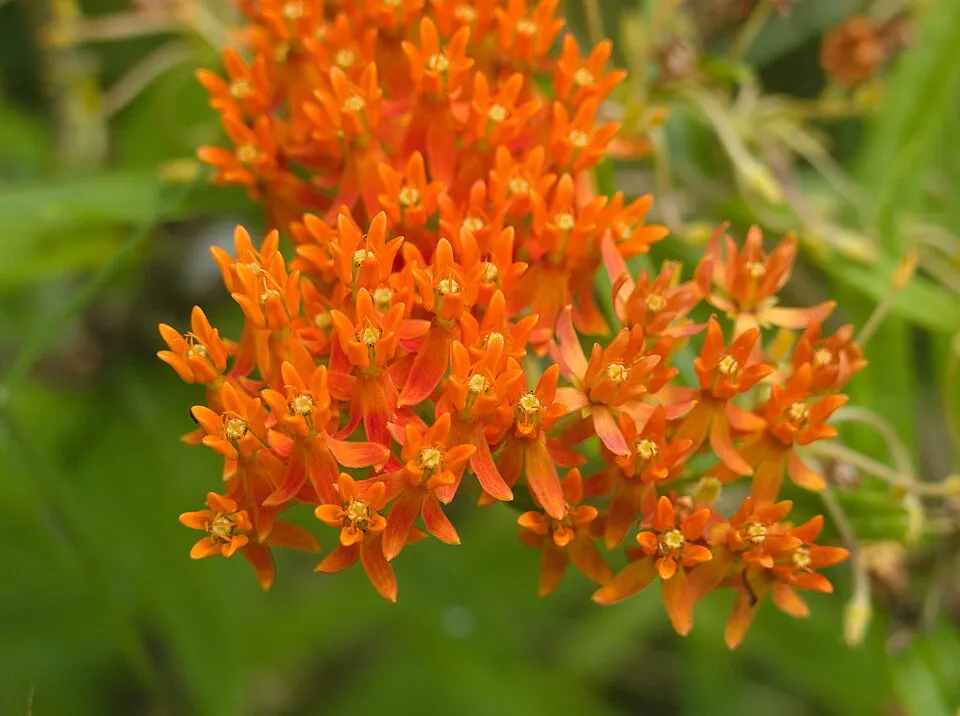
Asclepias tuberosa, commonly known as Butterfly Milkweed or Pleurisy Root, is a captivating perennial herb renowned for its vibrant orange blossoms and significant ecological role. Typically growing 0.3 to 0.9 meters (1 to 3 feet) tall, it develops from robust, woody rootstocks that are often tuberous and enlarged. Its stems are characteristically hairy, erect, and frequently form dense clumps, containing a clear, watery sap, distinguishing it from other milkweeds that typically have milky sap.
The leaves are alternate, simple, and lance-shaped, measuring approximately 5 to 10 centimeters long. They exhibit a shiny green surface above and a velvety texture beneath, contributing to the plant's lush appearance.
The flowering display occurs from late spring to early summer, featuring showy, rounded to flat-topped clusters of individual flowers near the branch tips. Each flower presents five downward-bent petals, ranging in color from bright orange to red, and occasionally yellow, topped by a crown of five erect hoods.
Following successful pollination, the plant produces distinctive hairy, spindle-shaped pods, 8 to 15 centimeters in length, which contain numerous seeds, each equipped with a tuft of long, white silky hairs for wind dispersal.
Native to a broad expanse of the United States, particularly the eastern and mid-western regions, Asclepias tuberosa thrives in diverse open habitats. It is commonly found in sandy, loamy, or rocky limestone soils of prairies, open woodlands, roadsides, and disturbed areas. Taxonomically, it belongs to the Apocynaceae family (formerly Asclepiadaceae), a family known for its specialized flowers and often milky sap (though A.
tuberosa is an exception). The genus name, Asclepias, honors Asklepios, the Greek god of medicine, while 'tuberosa' refers to its enlarged, tuberous root system. This species is a critical host plant for Monarch butterfly larvae and attracts a wide array of other pollinators, making it an invaluable addition to biodiversity-focused landscapes.
Trusted Scientific References
1. Authoritative external sources for Asclepias Tuberosa
1.1 Wikipedia — Asclepias Tuberosa
1.2 Kew POWO (Plants of the World Online)
1.3 PubMed — peer-reviewed research
1.4 NCBI Taxonomy Browser
1.5 GBIF — Global Biodiversity
1.1.Asclepias Tuberosa — Defining Traits
- ✓Vibrant Orange Flowers — Showy, rounded clusters of bright orange to red blossoms.
- ✓Monarch Host Plant — Essential for the life cycle of Monarch butterflies.
- ✓Tuberous Root System — Features enlarged, woody roots, giving it its 'tuberosa' epithet.
- ✓Clear Sap — Unlike most milkweeds, it produces a watery, rather than milky, sap.
- ✓Traditional Respiratory Aid — Historically valued as 'Pleurisy Root' for lung conditions.
- ✓Native to Eastern/Midwestern US — Thrives in open, well-drained habitats.
- ✓Pollinator Magnet — Attracts a wide variety of bees, butterflies, and other beneficial insects.
- ✓Drought Tolerant — Well-adapted to drier conditions due to its robust root system.
- ✓Contains Cardiac Glycosides — Possesses potent compounds that require careful handling and pose toxicity risks.
- ✓Ethnobotanical Significance — Used by Native American tribes for food, fiber, and medicine.
1.2.Asclepias Tuberosa — In Brief
- ✓Butterfly Milkweed (Asclepias tuberosa) is a vibrant perennial herb native to eastern and central North America.
- ✓Renowned as a critical host plant for Monarch butterfly larvae and a valuable pollinator attractor.
- ✓Historically known as 'Pleurisy Root,' it was traditionally used for respiratory ailments and wound healing.
- ✓Contains cardiac glycosides, making it potentially toxic if ingested without expert guidance or proper preparation.
- ✓Its bright orange flowers and clear sap distinguish it from other milkweed species.
- ✓A significant plant in both ecological restoration and traditional ethnobotanical practices.
2.Asclepias Tuberosa — Taxonomic Classification
3.Asclepias Tuberosa — Quick Facts
4.Asclepias Tuberosa — Structural Profile
5.Asclepias Tuberosa — Habitat & Distribution
6.Asclepias Tuberosa — Ethnobotanical Uses
7.Asclepias Tuberosa — Bioactive Constituents
- ✓Cardiac Glycosides — These potent compounds, such as asclepiadin, are present throughout the plant and are responsible for its cardiotonic effects, as well as its toxicity at higher doses.
- ✓Resinoids — Found in all parts of the plant, these complex mixtures contribute to its emetic and irritant properties, acting on mucous membranes.
- ✓Alkaloids — Present in small quantities, these nitrogenous compounds can exert various physiological effects, though their specific contributions in A. tuberosa are considered minor.
- ✓Flavonoids — Common plant pigments with antioxidant and anti-inflammatory properties, contributing to cellular protection and overall plant defense.
- ✓Triterpenes — These compounds are known for their anti-inflammatory, antimicrobial, and adaptogenic activities, often found in plant roots and aerial parts.
- ✓Phenolic Acids — Possess antioxidant and antimicrobial properties, playing a role in plant defense against pathogens and oxidative stress.
- ✓Phytosterols — Plant sterols structurally similar to cholesterol, potentially offering anti-inflammatory and cholesterol-lowering effects.
- ✓Saponins — These glycosides can have expectorant and anti-inflammatory properties, contributing to the plant's traditional respiratory uses, though they can also be irritating.
- ✓Tannins — Astringent compounds that can contribute to anti-diarrheal effects and wound healing by contracting tissues and forming protective layers.
8.Asclepias Tuberosa — What Research Suggests
- ✓Respiratory Support — Historically revered as 'Pleurisy Root,' Asclepias tuberosa was traditionally used to alleviate inflammation of the lung lining and thorax, offering relief for pleurisy and mild pulmonary edema.
- ✓Expectorant Action — The root was historically employed to stimulate expectoration, helping to clear mucus and phlegm from the respiratory passages.
- ✓Diaphoretic Properties — Traditional uses suggest it promotes perspiration, aiding in fever reduction and detoxification through increased skin activity.
- ✓Bronchial Dilation — It was believed to stimulate the vagus nerve, contributing to bronchial dilation, which could ease breathing in respiratory conditions.
- ✓Anti-inflammatory Effects — European American folk medicine utilized its root to reduce inflammation, particularly in the respiratory system.
- ✓Wound Healing — Indigenous tribes like the Omahas applied chewed or pulverized root directly to wounds to aid in healing and reduce swelling.
- ✓Digestive Aid — Some traditional practices used various milkweed species, including potentially A. tuberosa, as a remedy for diarrhea and colic.
- ✓Emetic Use — The Dakota tribe traditionally employed butterfly milkweed as an emetic, to induce vomiting for detoxification purposes.
- ✓Lymphatic Drainage — Its historical use for pleurisy also suggested an ability to increase fluid circulation and lymphatic drainage, supporting overall immune function.
- ✓Scrofulous Swelling — Certain milkweed preparations were traditionally applied as salves for scrofulous swellings, indicating topical anti-inflammatory or drawing properties.
8.1.Asclepias Tuberosa — Reported Uses
9.Asclepias Tuberosa — Precautions & Warnings
9.1.Asclepias Tuberosa — Caution Notes
- ✓Internal Toxicity — Contains cardiac glycosides which are poisonous if ingested in sufficient quantities without proper preparation, potentially causing severe systemic effects.
- ✓Gastrointestinal Distress — Symptoms can include dullness, weakness, bloating, and vomiting due to the irritating nature of resinoids and cardiac glycosides.
- ✓Cardiovascular Effects — Cardiac glycosides can lead to a rapid and weak pulse, and in severe cases, heart rhythm disturbances and cardiac arrest.
- ✓Neurological Symptoms — Poisoning may manifest as inability to stand or walk, spasms, dilated pupils, and ultimately coma.
- ✓Respiratory Difficulty — Severe toxicity can impair breathing, leading to respiratory distress.
- ✓Skin Irritation — Direct contact with the sap may cause mild skin irritation in sensitive individuals.
- ✓Livestock Poisoning — Known to be toxic to grazing animals like cows and sheep, leading to significant health issues or fatality if consumed.
9.2.Asclepias Tuberosa — Clinical Safety Notes
- ✓Internal Use Caution — Due to the presence of cardiac glycosides, internal use of Asclepias tuberosa is generally not recommended without expert medical herbalist supervision.
- ✓Pregnancy and Lactation — Contraindicated during pregnancy and lactation due to potential toxicity and lack of safety data, posing risks to the fetus or infant.
- ✓Cardiac Conditions — Individuals with pre-existing heart conditions should strictly avoid internal use due to the cardiotonic effects of cardiac glycosides.
- ✓Drug Interactions — May interact with cardiac medications, diuretics, or other drugs, necessitating consultation with a healthcare professional.
- ✓Children and Pets — Keep out of reach of children and pets, as ingestion can lead to severe poisoning.
- ✓Dosage Sensitivity — Even small doses of unprepared plant material can be toxic; traditional medicinal preparations typically involved specific detoxification or processing.
- ✓External Use — Topical application should be done with caution, and a patch test is advisable for sensitive skin.
10.Asclepias Tuberosa — Application Forms
- ✓Pleurisy Root Decoction — Historically, the dried root was prepared as a decoction to alleviate pleurisy and other bronchial and pulmonary conditions.
- ✓Topical Application for Wounds — Indigenous practices involved chewing the raw root or pulverizing dried root to apply directly to wounds and swellings.
- ✓Emetic Preparation — Certain tribes used specific preparations of the plant to induce vomiting, primarily for detoxification purposes.
- ✓Respiratory Tea — A mild infusion of the root was traditionally used to support expectoration and reduce fever through diaphoretic action.
- ✓Traditional Vegetable — Young shoots, stems, flower buds, immature fruits, and roots were boiled and consumed as a vegetable by various Native American groups, requiring careful preparation to mitigate toxicity.
- ✓Salve for Swellings — Historically, a salve containing milkweed extracts was applied externally for scrofulous swellings, suggesting anti-inflammatory action.
- ✓Fiber Production — Stems were collected in late fall, dried, and fibers extracted to make cords, ropes, and coarse cloth, especially by Pueblo peoples.
11.Asclepias Tuberosa — Propagation & Care
- ✓Seed Propagation — Easily grown from seed; collect pods after ripening but before splitting to prevent wind dispersal.
- ✓Cold Stratification — Seeds require a cold treatment for approximately three months to break dormancy and improve germination rates.
- ✓Direct Sowing — Plant seeds directly into the ground in the fall for natural cold stratification and spring germination.
- ✓Rhizome Cuttings — Propagate effectively by dividing dormant tuberous rhizomes, ensuring each piece has at least one bud.
- ✓Planting Timing — For rhizome cuttings, plant in late fall to allow sufficient root development before winter.
- ✓Soil Preference — Thrives in sandy, loamy, or rocky limestone soils; prefers well-drained conditions.
- ✓Sun Exposure — Requires full sun for optimal growth and flowering, typical of its prairie and open woodland habitats.
- ✓Management — Annual burning in the fall can stimulate new, taller growth and enhance flower and seed production, mimicking natural prairie conditions.
Reviewed by the Flora Medical Global Botanical Review Panel
Multi-disciplinary editorial group · Botany · Ethnobotany · Herbal-medicine literature
Who reviewed this: This page was checked by the Flora Medical Global Botanical Review Panel — an in-house editorial group of botany graduates, ethnobotany researchers, and horticulture practitioners who collectively maintain our 7,000+ plant encyclopedia. Meet the team.
Our 4-step verification process
1. Taxonomic verification
Scientific names and synonyms cross-checked against Kew POWO, World Flora Online, and The Plant List.
2. Phytochemical & medicinal cross-reference
Active compounds, traditional uses, and reported activities are cross-referenced with PubMed, USDA Dr. Duke's database, and peer-reviewed ethnobotanical literature.
3. Conservation & distribution check
Distribution, ecology, and conservation status confirmed against GBIF occurrence records and the IUCN Red List.
4. Editorial & safety review
Every entry passes an editorial pass for clarity, originality, and safety notices (toxicity, contraindications, dosage caveats) before publication.
Last reviewed:
Important medical disclaimer: This content is for educational and research purposes only. It is not medical advice and is not a substitute for consultation with a licensed healthcare provider. Do not use any herb to self-treat a medical condition without professional guidance.
Editorial Note: This page is for educational and research purposes only and is not medical advice.
Written by: Flora Medical Global Editorial Team
Reviewed by: Flora Medical Global Botanical Review Panel
Last Updated: June 15, 2026





Asclepias Tuberosa — Comments & Community Reviews
Rate this plant