


Medical Disclaimer: This content is for educational purposes only. It is not medical advice. Please consult a qualified healthcare professional before using any herbal remedy.
Safety Overview
1.Asimina Triloba — Botanical Snapshot
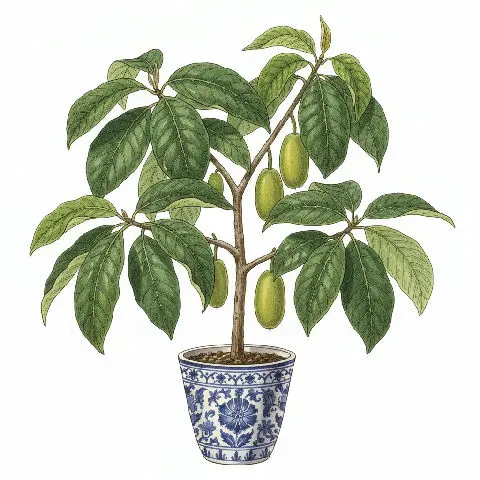
Asimina triloba, commonly known as the Pawpaw, is a remarkable deciduous tree belonging to the Annonaceae family, a group predominantly found in tropical regions, making the Pawpaw a unique cold-hardy outlier native to the eastern United States and parts of Canada. This fascinating plant is celebrated for producing the largest edible fruit indigenous to North America. Its natural habitat stretches from southern Ontario, Canada, south to Florida, and west to Nebraska, where it thrives in the understory of hardwood forests, particularly in rich, moist, well-drained soils along riverbanks and streams.
The tree exhibits a distinctive growth habit, often forming dense, clonal thickets through root suckers. Its large, simple, obovate leaves lend a lush, tropical appearance during the growing season, transforming into a striking golden-yellow in autumn. Historically, Indigenous peoples such as the Cherokee, Shawnee, and Iroquois deeply valued the Pawpaw fruit as a nutritious staple, particularly during the late summer and early autumn harvest.
Early European explorers and settlers, including Hernando de Soto, also documented its consumption, recognizing its unique custard-like texture and complex flavor profile, often described as a delightful blend of banana, mango, and pineapple. Beyond its culinary appeal, various parts of the Asimina triloba tree, notably the bark, twigs, and seeds, have been traditionally explored for their medicinal properties. Modern scientific inquiry has increasingly focused on the complex phytochemical makeup of the Pawpaw, revealing a rich array of bioactive compounds, particularly annonaceous acetogenins, which are gaining significant attention for their potential pharmacological activities, including natural pesticidal and anticarcinogenic research.
Trusted Scientific References
1. Authoritative external sources for Asimina triloba
1.1 Wikipedia — Asimina triloba
1.2 Kew POWO (Plants of the World Online)
1.3 PubMed — peer-reviewed research
1.4 NCBI Taxonomy Browser
1.5 GBIF — Global Biodiversity
1.1.Asimina Triloba — Distinguishing Points
- ✓North America's largest — North America's largest indigenous edible fruit.
- ✓Temperate member of — Temperate member of the predominantly tropical Annonaceae family.
- ✓Fruit has a creamy, custard — like texture with a tropical flavor profile.
- ✓Contains potent annonaceous — Contains potent annonaceous acetogenins, studied for anticancer and pesticidal effects.
- ✓Forms clonal colonies — Forms clonal colonies through root suckers, creating dense thickets.
- ✓Deciduous tree with — Deciduous tree with large, simple leaves that turn golden-yellow in autumn.
- ✓Historically a vital — Historically a vital food source for Indigenous peoples.
- ✓Requires cross — pollination for optimal fruit production, often by flies and beetles.
- ✓Known for its — Known for its cold hardiness, thriving in temperate climates.
- ✓Fruit is rich — Fruit is rich in vitamins, minerals, and antioxidants.
1.2.Asimina Triloba — In Brief
- ✓Asimina triloba, or Pawpaw, is North America's largest native edible fruit, belonging to the tropical Annonaceae family.
- ✓The fruit boasts a unique tropical flavor, often likened to a blend of banana, mango, and pineapple.
- ✓Its bark and twigs contain potent annonaceous acetogenins, which are subjects of significant research for their anticarcinogenic and pesticidal properties.
- ✓Traditionally, Indigenous peoples utilized the fruit as a food source and various parts for medicinal purposes.
- ✓While the fruit is generally safe for consumption, medicinal extracts carry potential side effects, including gastrointestinal upset, skin rashes, and neurotoxicity concerns.
- ✓Further scientific evidence is needed to fully establish the efficacy and safety of Pawpaw for many purported medicinal uses.
2.Asimina Triloba — Botanical Identity
3.Asimina Triloba — Key Data
4.Asimina Triloba — Physical Description
5.Asimina Triloba — Origin & Spread
6.Asimina Triloba — Traditional Uses
7.Asimina Triloba — Key Phytochemicals
- ✓Annonaceous Acetogenins — These are the most studied bioactive compounds, including asimicin, asimin, asiminacin, asiminecin, trilobacin, and annonacin. They are known for their potent cytotoxic, antitumor, and pesticidal activities, primarily by inhibiting mitochondrial complex I.
- ✓Alkaloids — Various alkaloids such as asimilobine have been identified, though their specific pharmacological roles are less extensively characterized compared to acetogenins.
- ✓Flavonoids — Present in the fruit and leaves, these compounds contribute to the plant's antioxidant capacity and may offer anti-inflammatory benefits.
- ✓Phenolic Acids — Abundant in the fruit pulp, these include compounds like chlorogenic acid, which contribute to the fruit's antioxidant and potentially antimicrobial properties.
- ✓Carotenoids — Found in the ripe fruit, these pigments contribute to the fruit's color and act as antioxidants, supporting vision and immune health.
- ✓Fatty Acids — The seeds contain various fatty acids, though these are not typically associated with the primary medicinal actions of the plant.
- ✓Vitamins — The fruit is rich in Vitamin C, B-vitamins (e.g., riboflavin, niacin), and other essential vitamins crucial for human nutrition.
- ✓Minerals — Significant amounts of potassium, magnesium, copper, and manganese are found in the fruit, supporting various physiological functions.
8.Asimina Triloba — Scientific Evidence
- ✓Potential Anticarcinogenic Activity — Research indicates that annonaceous acetogenins found in Pawpaw extracts exhibit potent cytotoxic effects against various cancer cell lines, suggesting a role in inhibiting ATP production in mitochondria.
- ✓Natural Pesticidal Properties — Certain acetogenins from Asimina triloba have demonstrated significant insecticidal and larvicidal activity, showing promise as botanical pesticides.
- ✓Anti-lice Applications — Extracts from the Pawpaw tree, particularly from the bark, have been explored for their effectiveness in developing natural shampoos for the removal of head lice.
- ✓Traditional Fever Reduction — Historically, some Indigenous communities utilized parts of the Pawpaw tree in remedies aimed at reducing fever, although scientific validation is limited.
- ✓Soothing Oral Inflammations — Traditional uses include topical applications or infusions to alleviate swelling and irritation of the mouth and throat.
- ✓Emetic and Purgative Effects — Historically, seeds were used as an emetic to induce vomiting and as a purgative, though this practice is associated with significant toxicity and is not recommended.
- ✓Antioxidant Support — The fruit pulp contains phenolic compounds and other antioxidants that may help combat oxidative stress and cellular damage.
- ✓Nutritional Support — The fruit is a good source of vitamins (e.g., Vitamin C, B vitamins) and minerals (e.g., potassium, magnesium), contributing to overall health and potentially aiding in conditions like anemia.
- ✓Potential Blood Sugar Regulation — While not a primary medicinal use, the fruit's fiber content and nutrient profile may contribute to better glycemic control as part of a balanced diet.
- ✓Anti-inflammatory Potential — General plant compounds may possess mild anti-inflammatory properties, contributing to overall well-being.
8.1.Asimina Triloba — Health Applications
9.Asimina Triloba — Safety & Side Effects
9.1.Asimina Triloba — Reported Side Effects
- ✓Gastrointestinal Upset — Eating the fruit, especially in large quantities or if not fully ripe, can cause nausea, vomiting, or diarrhea in some sensitive individuals.
- ✓Allergic Reactions — Skin contact with the fruit skin or internal consumption may lead to hives, skin rash, or itching in susceptible people.
- ✓Headaches and Faintness — Some individuals report experiencing headaches or faintness after consuming Pawpaw fruit or extracts.
- ✓Contact Dermatitis — Topical application of bark extracts has been reported to cause a red, itchy rash in some individuals.
- ✓Neurotoxicity Concerns — The presence of annonacin, an annonaceous acetogenin, in the fruit and seeds has raised concerns about potential neurotoxic effects with chronic, high-dose exposure.
- ✓Potent Emetic Effects — Traditional use of seeds or bark as an emetic can lead to severe vomiting and is considered highly dangerous.
- ✓Interaction with Medications — Due to its potent compounds, Pawpaw extracts may interact with certain medications, particularly those affecting cellular metabolism or chemotherapy drugs.
9.2.Asimina Triloba — Toxicity Assessment
- ✓Pregnancy and Breastfeeding — Insufficient reliable information exists regarding the safety of Pawpaw medicinal extracts during pregnancy and breastfeeding; therefore, avoidance is advised.
- ✓Children — Due to a lack of comprehensive safety data, medicinal use of Pawpaw extracts in children is not recommended.
- ✓Internal Medicinal Use — The internal use of Pawpaw bark or seed extracts for medicinal purposes is generally not advised without strict medical supervision due to the presence of potent compounds and potential for toxicity.
- ✓Skin Sensitivity — A patch test is recommended before applying Pawpaw extracts or preparations to the skin, as contact dermatitis has been reported.
- ✓Consumption of Fruit — While the ripe fruit is generally considered safe as food, individuals with sensitivities should consume it in moderation and observe for adverse reactions.
- ✓Neurotoxic Potential — Caution is warranted with long-term or high-dose consumption of Pawpaw fruit and especially extracts, due to the neurotoxic potential of annonacin.
- ✓Consultation with Healthcare Professional — Always consult a healthcare provider before using Pawpaw for medicinal purposes, particularly if you have underlying health conditions or are taking other medications.
10.Asimina Triloba — Usage Guide
- ✓Fresh Fruit Consumption — The ripe fruit is eaten fresh, typically by scooping out the custard-like pulp and discarding the large seeds and skin.
- ✓Culinary Preparations — Pawpaw pulp can be incorporated into various desserts such as pies, custards, ice creams, puddings, and smoothies, offering a unique tropical flavor.
- ✓Herbal Extracts for Research — Standardized extracts of bark and twigs, rich in acetogenins, are used in scientific research for their potential anticarcinogenic and pesticidal properties.
- ✓Topical Applications — Traditionally, bark extracts or poultices were applied externally for conditions like skin rashes or insect bites, or as a natural pesticide against lice.
- ✓Seed and Bark Caution — While historically used as emetics, consuming Pawpaw seeds or bark medicinally by mouth is highly discouraged due to potential toxicity and severe side effects.
- ✓Fermented Products — The fruit pulp can be used to make fermented beverages or vinegars, preserving its flavor and nutrients.
- ✓Drying and Freezing — Pawpaw pulp can be pureed and frozen for later use or dehydrated to create fruit leathers, extending its shelf life.
11.Asimina Triloba — How to Grow
- ✓Site Selection — Prefers rich, moist, well-drained, slightly acidic soils (pH 5.5-7.0) and thrives in protected locations.
- ✓Sunlight Requirements — Young Pawpaw trees benefit from partial shade for the first 1-2 years; mature trees require full sun for optimal fruit production.
- ✓Propagation — Can be grown from seeds (requiring cold stratification for 90-120 days) or propagated clonally from root suckers.
- ✓Pollination — Most varieties are not self-fertile and require cross-pollination from at least two genetically distinct trees for fruit set, often by flies and beetles.
- ✓Watering — Requires consistent moisture, especially during dry periods and fruit development; avoid waterlogging.
- ✓Pruning — Minimal pruning is needed, primarily for shaping, removing dead or diseased branches, and maintaining light penetration.
- ✓Pest and Disease Management — Generally resistant to most pests and diseases, though some insect larvae may feed on leaves, and fungal spots can occur.
- ✓Cold Hardiness — Highly cold-hardy, tolerating temperatures down to -20°F (-29°C), making it suitable for temperate climates.
Reviewed by the Flora Medical Global Botanical Review Panel
Multi-disciplinary editorial group · Botany · Ethnobotany · Herbal-medicine literature
Who reviewed this: This page was checked by the Flora Medical Global Botanical Review Panel — an in-house editorial group of botany graduates, ethnobotany researchers, and horticulture practitioners who collectively maintain our 7,000+ plant encyclopedia. Meet the team.
Our 4-step verification process
1. Taxonomic verification
Scientific names and synonyms cross-checked against Kew POWO, World Flora Online, and The Plant List.
2. Phytochemical & medicinal cross-reference
Active compounds, traditional uses, and reported activities are cross-referenced with PubMed, USDA Dr. Duke's database, and peer-reviewed ethnobotanical literature.
3. Conservation & distribution check
Distribution, ecology, and conservation status confirmed against GBIF occurrence records and the IUCN Red List.
4. Editorial & safety review
Every entry passes an editorial pass for clarity, originality, and safety notices (toxicity, contraindications, dosage caveats) before publication.
Last reviewed:
Important medical disclaimer: This content is for educational and research purposes only. It is not medical advice and is not a substitute for consultation with a licensed healthcare provider. Do not use any herb to self-treat a medical condition without professional guidance.
Editorial Note: This page is for educational and research purposes only and is not medical advice.
Written by: Flora Medical Global Editorial Team
Reviewed by: Flora Medical Global Botanical Review Panel
Last Updated: June 15, 2026





Asimina Triloba — Comments & Community Reviews
Rate this plant