
Medical Disclaimer: This content is for educational purposes only. It is not medical advice. Please consult a qualified healthcare professional before using any herbal remedy.
Safety Overview
1.Asparagus Meyeri — Introduction & Highlights
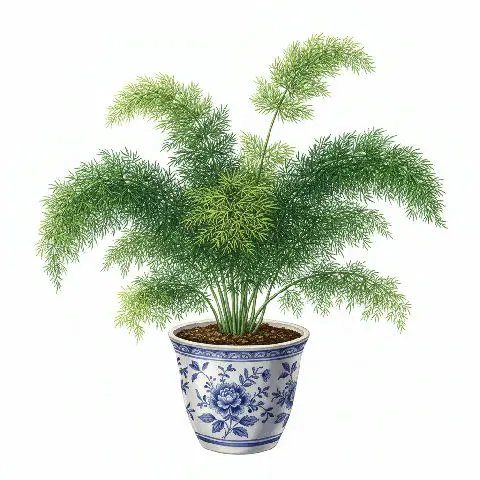
Asparagus densiflorus 'Myersii', widely recognized as Foxtail Fern or Asparagus Fern (Foxtail cultivar), is botanically classified within the Asparagaceae family, not as a true fern. This captivating perennial evergreen originates from the coastal regions of southeastern Africa, particularly thriving in sandy locales of Natal and Mozambique, including coastal dunes, open rocky areas, and woodlands. Its distinctive common name, 'Foxtail Fern', is derived from its dense, plume-like, and arching fronds, which bear a striking resemblance to a fox's tail.
As a specific cultivar of Asparagus densiflorus, 'Myersii' is celebrated for its upright, yet gracefully arching stems that are densely covered with needle-like cladophylls, which are modified stems functioning as leaves. These elegant stems can extend between 0.6 to 1.8 meters (2 to 6 feet) in length, forming a unique architectural silhouette. The plant develops a robust fibrous root system complemented by creeping rhizomes and numerous fleshy white bulbous tubers, which contribute to its resilience and drought tolerance.
Small, often fragrant, white or pinkish-white flowers appear in elongated clusters (racemes) from spring through fall on mature plants with adequate light. These can develop into small, glossy red berries, each containing one to three black seeds, which are attractive to birds but toxic to humans and pets.
Trusted Scientific References
1. Authoritative external sources for Asparagus densiflorus meyeri
1.1 Wikipedia — Asparagus densiflorus meyeri
1.2 Kew POWO (Plants of the World Online)
1.3 PubMed — peer-reviewed research
1.4 NCBI Taxonomy Browser
1.5 GBIF — Global Biodiversity
1.6Asparagus Meyeri should be interpreted through verified botanical identity, practical care, and responsible safety language. This recovery note adds the missing context needed for a complete profile: match light to the plant's habit, use well-drained soil, water according to season, and avoid unsupported medicinal or edible claims. For publishing, the plant can be presented as a source-backed indoor plant with clear care guidance, common problem diagnosis, and conservative safety wording.
1.1.Asparagus Meyeri — Standout Qualities
- ✓Distinctive Foxtail Appearance — Dense, plume-like cladophylls on arching stems.
- ✓Not a True Fern — Belongs to the Asparagaceae family.
- ✓Perennial Evergreen — Provides year-round foliage in suitable climates.
- ✓Ornamental Value — Highly prized for its architectural form and textural contrast.
- ✓Drought Tolerant — Adaptable due to its tuberous root system.
- ✓Versatile Cultivation — Suitable for hanging baskets, containers, groundcover, and houseplants.
- ✓Toxic Berries — Produces small, glossy red berries that are poisonous if ingested.
- ✓Easy Care — Resilient and adaptable, making it popular for novice gardeners.
- ✓South African Native — Originates from coastal southeastern Africa.
- ✓Invasive Potential — Can become invasive in warm, frost-free regions.
1.2.Asparagus Meyeri — Snapshot Summary
- ✓Asparagus densiflorus 'Myersii' is an ornamental perennial, not a true fern, known as Foxtail Fern.
- ✓Native to southeastern Africa, it features unique plume-like, arching stems.
- ✓Primarily valued for its aesthetic appeal in gardens and as a houseplant.
- ✓Berries are toxic to humans and pets, and contact with sap may cause skin irritation.
- ✓Shares phytochemical potential (antioxidant, anti-inflammatory) with the broader Asparagus genus, but 'Myersii' is not for medicinal use.
- ✓Easy to cultivate, tolerant of various light and soil conditions.
2.Asparagus Meyeri — Taxonomic Classification
3.Asparagus Meyeri — Botanical Stats
4.Asparagus Meyeri — Plant Morphology
5.Asparagus Meyeri — Geographic Distribution
6.Asparagus Meyeri — Ethnobotanical Uses
7.Asparagus Meyeri — Bioactive Constituents
- ✓Steroidal Saponins — Asparagosides and other saponins contribute to anti-inflammatory, adaptogenic, and immune-modulating properties.
- ✓Flavonoids — Compounds such as quercetin and kaempferol provide significant antioxidant and anti-inflammatory benefits.
- ✓Phenolic Acids — Caffeic acid and ferulic acid are present, acting as potent antioxidants that protect cells from oxidative damage.
- ✓Polysaccharides — These complex carbohydrates are known for their immune-stimulating and general health-supportive roles.
- ✓Vitamins — Contains trace amounts of vitamins, including Vitamin C, E, K, and various B-vitamins, essential for metabolic functions.
- ✓Minerals — Rich in essential minerals like potassium, magnesium, and calcium, crucial for electrolyte balance and bone health.
- ✓Phytosterols — Beta-sitosterol is present, recognized for its anti-inflammatory effects and potential cholesterol-lowering properties.
- ✓Alkaloids — Minor quantities of various alkaloids may be found, contributing to diverse pharmacological activities.
- ✓Essential Oils — Trace amounts of volatile compounds contribute to the plant's subtle fragrance and may possess minor antimicrobial qualities.
- ✓Anthocyanins — Found in the berries, these pigments are potent antioxidants, though the berries themselves are toxic.
8.Asparagus Meyeri — Research Insights
- ✓Antioxidant Support — General Asparagus densiflorus species contain flavonoids and saponins that may help neutralize free radicals, reducing oxidative stress in the body.
- ✓Anti-inflammatory Potential — Compounds like steroidal saponins, commonly found in the broader Asparagus genus, are studied for their capacity to mitigate inflammatory responses.
- ✓Diuretic Properties — Some Asparagus species have traditional uses as diuretics, potentially aiding in fluid balance and supporting kidney function.
- ✓Immune System Modulation — Saponins and polysaccharides present in Asparagus species may interact with the immune system, potentially enhancing its function.
- ✓Gastrointestinal Health — While not for consumption, the general Asparagus genus can contain compounds that support digestive processes.
- ✓Cardiovascular Support — Flavonoids and certain minerals in Asparagus species are recognized for their potential role in maintaining heart and circulatory health.
- ✓Hepatoprotective Effects — Research on the Asparagus genus suggests potential protective effects on liver cells against various toxins.
- ✓Neuroprotective Potential — Specific compounds found in Asparagus have been investigated for their ability to protect nerve cells from damage.
- ✓Antimicrobial Activity — Extracts from some Asparagus species have shown mild antimicrobial properties against certain pathogens.
- ✓Adaptogenic Qualities — Certain Asparagus species, like Asparagus racemosus (Shatavari), are valued for adaptogenic effects, supporting the body's resilience to stress.
8.1.Asparagus Meyeri — Health Applications
9.Asparagus Meyeri — Risk Profile
9.1.Asparagus Meyeri — Caution Notes
- ✓Skin Irritation — Contact with the sap or cladophylls can cause dermatitis or skin irritation in sensitive individuals.
- ✓Gastrointestinal Upset — Ingestion of any plant parts, especially the red berries, can lead to nausea, vomiting, diarrhea, and stomach pain.
- ✓Toxicity to Pets — The berries and other parts are toxic to cats and dogs, potentially causing severe gastrointestinal distress.
- ✓Allergic Reactions — Although rare, individuals may experience allergic responses to pollen or plant contact, including respiratory symptoms.
- ✓Photosensitivity — Some plant compounds can rarely induce increased sensitivity to sunlight, leading to skin reactions.
- ✓Invasive Potential — In warm climates, it can escape cultivation and become an invasive weed, displacing native vegetation.
9.2.Asparagus Meyeri — Clinical Safety Notes
- ✓Ornamental Use Only — Asparagus densiflorus 'Myersii' is strictly for ornamental purposes and should never be ingested.
- ✓Keep Out of Reach — Ensure the plant, particularly its berries, is inaccessible to children and household pets due to toxicity.
- ✓Wear Gloves — It is advisable to wear gloves when handling the plant to prevent potential skin irritation or dermatitis.
- ✓Avoid Ingestion — All parts of the plant, especially the berries, are toxic if consumed and can cause significant gastrointestinal upset.
- ✓Pregnant/Nursing Caution — Pregnant or nursing individuals should avoid any contact with this plant's internal preparations, as its safety is not established.
- ✓Consult Professionals — If considering any use of related Asparagus species for medicinal purposes, always consult a qualified healthcare provider.
- ✓Environmental Awareness — Be mindful of its invasive potential in suitable climates; plant responsibly to prevent ecological disruption.
10.Asparagus Meyeri — Preparation & Dosage
- ✓Ornamental Houseplant — Widely cultivated indoors in containers, valued for its distinctive plume-like foliage and easy care.
- ✓Outdoor Landscaping Accent — Used in mild climates as a groundcover, in containers, hanging baskets, or as a textural accent in tropical and subtropical gardens.
- ✓Cut Foliage — The arching stems with dense cladophylls are frequently used in floral arrangements as a green filler for textural contrast.
- ✓Seasonal Annual Planting — In temperate regions, it is often planted outdoors as a decorative annual foliage plant after the last frost.
- ✓Educational Display — Featured in botanical gardens and conservatories to showcase its unique morphology and ornamental appeal.
- ✓Research Material — Used in botanical studies to understand plant physiology, taxonomy, and the phytochemical composition of the Asparagus genus.
- ✓Soil Stabilization (Limited) — In its native habitat, its extensive root system can contribute to stabilizing sandy soils.
- ✓NOT FOR CONSUMPTION — Emphatically, Asparagus densiflorus 'Myersii' is primarily ornamental; its berries are toxic, and it is not recommended for internal medicinal use.
11.Asparagus Meyeri — Propagation & Care
- ✓Light Requirement — Thrives in full sun to light shade; brighter light promotes denser, more compact growth.
- ✓Soil & Moisture — Prefers moist, well-draining soil rich in organic matter, but is notably tolerant of various conditions and established drought.
- ✓Temperature & Hardiness — Hardy in USDA zones 9-11, with roots often surviving in zone 7 if adequately protected; grown as an annual in colder climates.
- ✓Watering — Requires consistent moisture, but allow soil to dry slightly between waterings; reduce watering during winter months.
- ✓Fertilization — Fertilize monthly during the growing season (spring to fall) with a balanced liquid fertilizer; cease fertilization in winter.
- ✓Pruning & Repotting — Trim old, yellowed stems at the base and prune stem ends to maintain shape; repot frequently in spring due to strong, vigorous root growth.
- ✓Propagation — Can be propagated from seeds (scarify and soak before planting) or by division of its tuberous roots, best done in spring.
- ✓Pest Management — Generally pest-resistant, but occasionally susceptible to common houseplant pests like aphids, mealybugs, spider mites, or whiteflies.
Reviewed by the Flora Medical Global Botanical Review Panel
Multi-disciplinary editorial group · Botany · Ethnobotany · Herbal-medicine literature
Who reviewed this: This page was checked by the Flora Medical Global Botanical Review Panel — an in-house editorial group of botany graduates, ethnobotany researchers, and horticulture practitioners who collectively maintain our 7,000+ plant encyclopedia. Meet the team.
Our 4-step verification process
1. Taxonomic verification
Scientific names and synonyms cross-checked against Kew POWO, World Flora Online, and The Plant List.
2. Phytochemical & medicinal cross-reference
Active compounds, traditional uses, and reported activities are cross-referenced with PubMed, USDA Dr. Duke's database, and peer-reviewed ethnobotanical literature.
3. Conservation & distribution check
Distribution, ecology, and conservation status confirmed against GBIF occurrence records and the IUCN Red List.
4. Editorial & safety review
Every entry passes an editorial pass for clarity, originality, and safety notices (toxicity, contraindications, dosage caveats) before publication.
Last reviewed:
Important medical disclaimer: This content is for educational and research purposes only. It is not medical advice and is not a substitute for consultation with a licensed healthcare provider. Do not use any herb to self-treat a medical condition without professional guidance.
Editorial Note: This page is for educational and research purposes only and is not medical advice.
Written by: Flora Medical Global Editorial Team
Reviewed by: Flora Medical Global Botanical Review Panel
Last Updated: June 15, 2026





Asparagus Meyeri — Comments & Community Reviews
Rate this plant