
Medical Disclaimer: This content is for educational purposes only. It is not medical advice. Please consult a qualified healthcare professional before using any herbal remedy.
Safety Overview
1.Aspidistra Milky Way — At a Glance
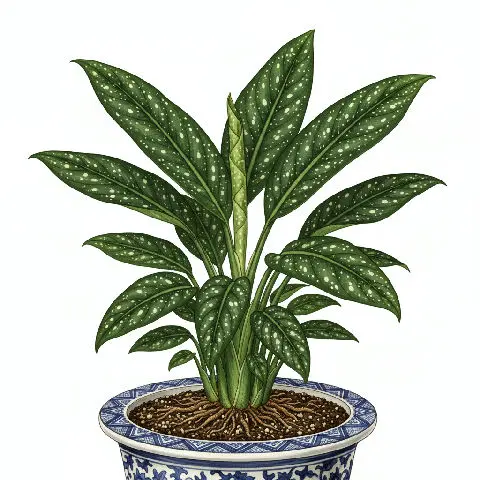
The Aspidistra elatior 'Milky Way', a captivating cultivar of the renowned Cast Iron Plant, is a testament to botanical resilience and aesthetic appeal. This perennial herbaceous plant, native to the shaded forest floors of East Asia, particularly China and Japan, belongs to the Asparagaceae family.
Unlike its standard green-leaved parent, 'Milky Way' distinguishes itself with stunning, deep green foliage liberally adorned with creamy-white or pale yellow speckles, creating a celestial, star-dusted appearance. These lanceolate to broadly ovate leaves emerge directly from a subterranean rhizome, growing upright to about 18-24 inches (45-60 cm) in height and spreading through clonal growth.
Its taxonomy places it within the Liliales order, highlighting its ancient lineage. The genus name 'Aspidistra' is derived from the Greek 'aspidion', meaning 'little shield', a reference to the shape of its stigma.
The species epithet 'elatior' is Latin for 'taller', describing its relatively erect growth habit. The 'Milky Way' epithet specifically denotes its unique variegation pattern, a stable genetic trait that makes each leaf a miniature work of natural art.
Historically, the broader Aspidistra elatior species gained immense popularity in Victorian England for its extraordinary hardiness, surviving the challenging indoor conditions of urban homes with low light, poor air quality, and infrequent care. The 'Milky Way' cultivar continues this legacy, offering an ornamental variant that maintains the species' famed toughness while adding significant visual interest.
Its robust rhizomatous root system allows it to persist and spread, making it an enduring and low-maintenance choice for deep shade gardens or as a resilient indoor plant, revered for its ability to thrive where many other plants fail.
Trusted Scientific References
1. Authoritative external sources for Aspidistra elatior milky way
1.1 Wikipedia — Aspidistra elatior milky way
1.2 Kew POWO (Plants of the World Online)
1.3 PubMed — peer-reviewed research
1.4 NCBI Taxonomy Browser
1.5 GBIF — Global Biodiversity
1.1.Aspidistra Milky Way — Notable Characteristics
- ✓Unique 'Milky Way' Variegation — Distinctive creamy-white speckles on dark green leaves.
- ✓Exceptional Hardiness — Nicknamed 'Cast Iron Plant' for its robust nature.
- ✓Low Light Tolerance — Thrives in deep shade, making it ideal for challenging indoor spaces.
- ✓Evergreen Foliage — Maintains lush, attractive leaves year-round.
- ✓Drought Resistance — Can tolerate periods of dryness, forgiving of infrequent watering.
- ✓Pest Resistance — Generally resistant to common houseplant pests.
- ✓Air Purification Properties — Contributes to improved indoor air quality (characteristic of the species).
- ✓Rhizomatous Growth — Spreads slowly via underground rhizomes, forming clumps.
- ✓Architectural Form — Upright, structural leaves add a sophisticated touch to interiors.
- ✓Historical Significance — Popularized in Victorian homes for its resilience and elegance.
1.2.Aspidistra Milky Way — Concise Overview
- ✓Aspidistra 'Milky Way' is a highly resilient, variegated houseplant.
- ✓Features unique speckled, dark green foliage resembling a starry night.
- ✓The species Aspidistra elatior has traditional medicinal uses in TCM, particularly its rhizome.
- ✓Known as the 'Cast Iron Plant' for its exceptional tolerance to low light and neglect.
- ✓Primarily valued as an ornamental plant, offering enduring beauty with minimal care.
2.Aspidistra Milky Way — Nomenclature & Classification
3.Aspidistra Milky Way — Vital Statistics
4.Aspidistra Milky Way — Botanical Features
5.Aspidistra Milky Way — Ecological Habitat
6.Aspidistra Milky Way — Folk Medicine Applications
7.Aspidistra Milky Way — Phytochemistry
- ✓Steroidal Saponins — Key compounds like aspidistrin, spirostanol saponins, and furostanol saponins are responsible for anthelmintic and anti-inflammatory activities.
- ✓Flavonoids — Compounds such as quercetin, kaempferol, and their glycosides contribute to antioxidant, anti-inflammatory, and potentially antimicrobial effects.
- ✓Phenolic Acids — Gallic acid, caffeic acid, and ferulic acid provide significant antioxidant capacity, protecting cells from oxidative damage.
- ✓Alkaloids — While less prominent, some Aspidistra species contain trace alkaloids that may contribute to various pharmacological actions.
- ✓Polysaccharides — These complex carbohydrates can offer immunomodulatory effects, supporting overall immune system function.
- ✓Phytosterols — Beta-sitosterol and related compounds are known for their anti-inflammatory and cholesterol-lowering properties.
- ✓Glycosides — Various glycosidic compounds are present, influencing the plant's overall medicinal profile and bioavailability of active components.
- ✓Triterpenes — These compounds are associated with anti-inflammatory, hepatoprotective, and adaptogenic effects in many botanicals.
- ✓Essential Oils — Trace amounts of volatile compounds contribute to the plant's aroma and may possess mild antimicrobial or insect-repelling properties.
8.Aspidistra Milky Way — Pharmacological Findings
- ✓Anthelmintic Properties — The rhizome of Aspidistra elatior has been traditionally used to expel intestinal parasites, including tapeworms and roundworms, due to compounds like aspidistrin.
- ✓Anti-inflammatory Effects — Phytochemicals present in Aspidistra, such as certain saponins and flavonoids, may help reduce inflammation and alleviate associated pain.
- ✓Detoxifying Action — Traditional Chinese Medicine (TCM) utilizes Aspidistra for its purported ability to clear heat and detoxify the body, supporting general internal cleansing.
- ✓Diuretic Support — Some traditional applications suggest a mild diuretic effect, aiding in the elimination of excess fluids and supporting urinary tract health.
- ✓Wound Healing — Topically, preparations from Aspidistra have been applied to facilitate the healing of minor wounds, cuts, and skin irritations.
- ✓Respiratory Relief — In folk medicine, Aspidistra has been used to address certain respiratory complaints, potentially offering relief from coughs or congestion.
- ✓Abdominal Pain Management — The plant’s rhizome is traditionally employed to soothe abdominal discomfort and spasms, particularly those related to parasitic infections.
- ✓Menstrual Regulation — Certain traditional systems indicate its use in addressing menstrual irregularities, although specific mechanisms require further research.
- ✓Swelling Reduction — Applied externally or taken internally in traditional contexts, it may help in reducing localized swelling and edema.
- ✓Antimicrobial Activity — Preliminary research on Aspidistra species suggests potential antimicrobial properties, contributing to its traditional use against infections.
8.1.Aspidistra Milky Way — Conditions Traditionally Used For
9.Aspidistra Milky Way — Cautions & Contraindications
9.1.Aspidistra Milky Way — Reported Side Effects
- ✓Gastrointestinal Upset — High doses may lead to nausea, vomiting, or diarrhea in sensitive individuals.
- ✓Allergic Reactions — Skin irritation or allergic dermatitis can occur in susceptible people upon topical contact.
- ✓Drug Interactions — Potential interactions with blood thinners, diuretics, or other medications have not been extensively studied but are possible.
- ✓Liver or Kidney Stress — Excessive or prolonged use without supervision could theoretically impact liver or kidney function.
- ✓Pregnancy and Lactation — Not recommended for use during pregnancy or breastfeeding due to insufficient safety data.
- ✓Children's Sensitivity — Use in children should be approached with extreme caution and under professional guidance due to potential for adverse reactions.
9.2.Aspidistra Milky Way — Risk Assessment
- ✓Professional Consultation — Always consult a qualified healthcare practitioner or medical herbalist before using Aspidistra for medicinal purposes.
- ✓Proper Identification — Ensure correct identification of Aspidistra elatior, as 'Milky Way' is an ornamental cultivar and not typically used medicinally.
- ✓Dosage Adherence — Strictly follow recommended dosages from a professional to avoid potential adverse effects.
- ✓Avoid Self-Medication — Do not self-diagnose or self-treat serious conditions with Aspidistra.
- ✓Pregnancy and Breastfeeding — Contraindicated during pregnancy and lactation due to lack of safety data.
- ✓Pediatric Use — Not recommended for infants or young children without explicit medical advice.
- ✓Allergic History — Individuals with known allergies to plants in the Asparagaceae family should exercise caution.
10.Aspidistra Milky Way — Usage Guide
- ✓Decoction (Rhizome) — The dried rhizome of Aspidistra elatior is typically boiled in water to extract its medicinal compounds for internal use.
- ✓Powdered Form — Dried rhizomes can be ground into a fine powder and encapsulated or mixed with liquids for consumption.
- ✓Topical Poultice — Fresh or dried and rehydrated plant material can be crushed and applied directly to skin irritations or minor wounds.
- ✓Tincture — The rhizome can be macerated in alcohol to create a concentrated liquid extract for internal or external application.
- ✓Infusion (Leaves) — While less common for medicinal purposes, leaves can be steeped in hot water for a mild herbal tea.
- ✓External Wash — A decoction of the rhizome can be used as a wash for skin conditions or as an anthelmintic bath.
- ✓Medicinal Congee/Porridge — In TCM, the rhizome might be cooked with rice to create a medicinal congee for easier ingestion.
- ✓Herbal Combinations — Aspidistra is often used in traditional formulas alongside other herbs to enhance specific therapeutic effects.
11.Aspidistra Milky Way — Cultivation & Care
- ✓Light — Thrives in low to medium indirect light; direct sunlight can scorch its unique variegated foliage.
- ✓Watering — Water moderately, allowing the top inch or two of soil to dry out between waterings; overwatering can lead to rhizome rot.
- ✓Soil — Prefers well-draining, rich potting mix, ideally with organic matter to retain some moisture.
- ✓Temperature — Tolerates a wide range of indoor temperatures but prefers consistent warmth between 60-75°F (15-24°C).
- ✓Humidity — Highly adaptable to average household humidity levels, no special requirements are typically needed.
- ✓Fertilization — Feed sparingly during the growing season (spring to early autumn) with a balanced liquid fertilizer, diluted to half strength.
- ✓Propagation — Easily propagated by dividing the rhizome, ensuring each section has at least one leaf and a healthy root system.
- ✓Pests and Diseases — Generally robust and resistant to most pests and diseases; occasional issues might include spider mites or scale in very dry conditions.
Reviewed by the Flora Medical Global Botanical Review Panel
Multi-disciplinary editorial group · Botany · Ethnobotany · Herbal-medicine literature
Who reviewed this: This page was checked by the Flora Medical Global Botanical Review Panel — an in-house editorial group of botany graduates, ethnobotany researchers, and horticulture practitioners who collectively maintain our 7,000+ plant encyclopedia. Meet the team.
Our 4-step verification process
1. Taxonomic verification
Scientific names and synonyms cross-checked against Kew POWO, World Flora Online, and The Plant List.
2. Phytochemical & medicinal cross-reference
Active compounds, traditional uses, and reported activities are cross-referenced with PubMed, USDA Dr. Duke's database, and peer-reviewed ethnobotanical literature.
3. Conservation & distribution check
Distribution, ecology, and conservation status confirmed against GBIF occurrence records and the IUCN Red List.
4. Editorial & safety review
Every entry passes an editorial pass for clarity, originality, and safety notices (toxicity, contraindications, dosage caveats) before publication.
Last reviewed:
Important medical disclaimer: This content is for educational and research purposes only. It is not medical advice and is not a substitute for consultation with a licensed healthcare provider. Do not use any herb to self-treat a medical condition without professional guidance.
Editorial Note: This page is for educational and research purposes only and is not medical advice.
Written by: Flora Medical Global Editorial Team
Reviewed by: Flora Medical Global Botanical Review Panel
Last Updated: June 15, 2026





Aspidistra Milky Way — Comments & Community Reviews
Rate this plant