
Medical Disclaimer: This content is for educational purposes only. It is not medical advice. Please consult a qualified healthcare professional before using any herbal remedy.
Safety Overview
1.Astelia Chathamica — Overview
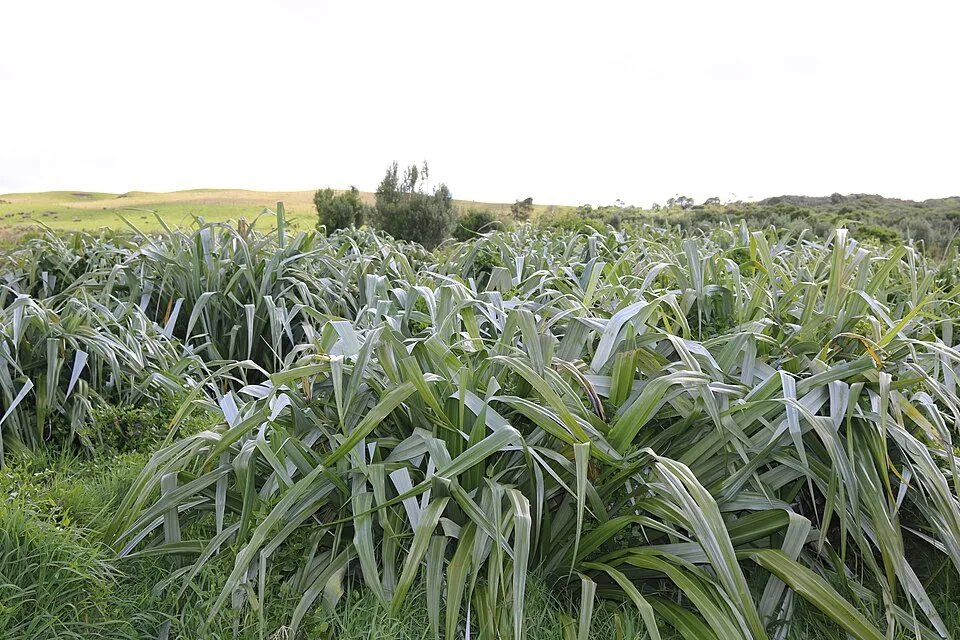
Astelia chathamica, commonly known as Chatham Islands kakaha, Moriori flax, or silver spear, is a distinctive evergreen perennial species belonging to the recently named Asteliaceae family. Native and endemic to the remote Chatham Islands of New Zealand, this striking plant forms large, architectural clumps of sword-shaped leaves, typically reaching an impressive height of up to 1.2 meters (4 feet).
Its foliage is particularly notable for its unique silver-green hue, often with a metallic sheen, which provides a dramatic visual contrast in various landscapes. The robust, leathery leaves are arranged in a rosette, contributing to its dense, clumping growth habit.
During its flowering season, Astelia chathamica produces small, inconspicuous green flowers, which are often hidden amidst the dense foliage. These flowers are dioecious, meaning male and female flowers are borne on separate plants. Following successful pollination, the female plants develop clusters of attractive, fleshy red berries.
These berries, while not typically consumed by humans, serve as a valuable food source for native bird species within its natural habitat. The plant thrives in conditions of partial shade and prefers fertile, well-drained soils with a consistent supply of moderate moisture. While it exhibits a degree of hardiness, tolerating temperatures down to approximately -3°C (27°F), its foliage can be susceptible to frost damage in colder climates, necessitating some winter protection.
Its unique aesthetic and resilience have led to its recognition in horticulture, including the prestigious Royal Horticultural Society’s Award of Garden Merit.
Trusted Scientific References
1. Authoritative external sources for Astelia Chathamica
1.1 Wikipedia — Astelia Chathamica
1.2 Kew POWO (Plants of the World Online)
1.3 PubMed — peer-reviewed research
1.4 NCBI Taxonomy Browser
1.5 GBIF — Global Biodiversity
1.6Astelia Chathamica should be interpreted through verified botanical identity, practical care, and responsible safety language. This recovery note adds the missing context needed for a complete profile: match light to the plant's habit, use well-drained soil, water according to season, and avoid unsupported medicinal or edible claims. For publishing, the plant can be presented as a source-backed garden plant with clear care guidance, common problem diagnosis, and conservative safety wording.
1.1.Astelia Chathamica — Standout Qualities
- ✓Botanical Name — Astelia chathamica (Skottsb.) L.B.Moore, commonly known as Chatham Islands kakaha or silver spear.
- ✓Plant Type — Evergreen perennial, forming a robust, clumping habit with a distinctive architectural presence.
- ✓Foliage — Characterized by striking silver-green, sword-shaped leaves that can reach up to 1.2 meters in length.
- ✓Mature Size — Typically grows to about 1.2 meters (4 feet) in both height and spread, forming a substantial clump.
- ✓Native Range — Endemic to the Chatham Islands, a remote archipelago of New Zealand.
- ✓Flowers — Produces inconspicuous small green flowers, with male and female flowers on separate plants (dioecious).
- ✓Fruit — Female plants bear attractive clusters of red berries, which are a food source for native birds.
- ✓Growing Conditions — Prefers partial shade, fertile, and well-drained soil with moderate, consistent moisture.
- ✓Hardiness — Tolerant to temperatures down to -3°C (27°F), though its foliage may be susceptible to frost damage.
- ✓Ornamental Value — Highly prized in horticulture for its aesthetic appeal, holding the Royal Horticultural Society’s Award of Garden Merit.
1.2.Astelia Chathamica — Snapshot Summary
- ✓Distinctive evergreen perennial native to the Chatham Islands, New Zealand, known for its architectural form.
- ✓Features striking silver-green, sword-shaped leaves forming large clumps, reaching up to 1.2 meters in height.
- ✓Primarily valued as an ornamental plant, recognized with the prestigious RHS Award of Garden Merit.
- ✓Thrives in partial shade, well-drained, fertile soil, requiring moderate and consistent watering.
- ✓Produces small green flowers followed by attractive red berries on female plants, providing ecological value.
- ✓Foliage can be damaged by frost below -3°C, necessitating winter protection in colder climates.
2.Astelia Chathamica — Scientific Profile
3.Astelia Chathamica — Botanical Stats
4.Astelia Chathamica — Plant Morphology
5.Astelia Chathamica — Where It Grows
6.Astelia Chathamica — Ethnobotanical Uses
7.Astelia Chathamica — Secondary Metabolites
- ✓Polysaccharides — Structural carbohydrates like cellulose and hemicellulose are abundant, contributing to the fibrous and robust nature of the plant's leaves and stems.
- ✓Cuticular Waxes and Lipids — These protective layers are present on the leaf surface, aiding in drought resistance and providing the characteristic silvery sheen and frost protection.
- ✓Phenolic Compounds — General classes such as flavonoids and phenolic acids are likely present, common in many plants for their antioxidant and UV-protective roles, though specific to A. chathamica is unresearched.
- ✓Tannins — These astringent compounds may be found in the leaves, potentially offering defense against herbivores and contributing to plant resilience.
- ✓Saponins — Glycosidic compounds that can exhibit surfactant properties, possibly present in the roots or leaves, though their specific role in A. chathamica is not documented.
- ✓Carotenoids — Pigments responsible for various yellow, orange, and red hues, potentially present in the berries and contributing to photosynthesis and antioxidant activity in foliage.
- ✓Anthocyanins — Water-soluble pigments responsible for the red coloration of the berries, acting as powerful antioxidants and protecting against environmental stressors.
- ✓Chlorophylls — Essential green pigments crucial for photosynthesis, highly concentrated in the plant's leaves.
8.Astelia Chathamica — Modern Studies
- ✓Ornamental Value — Primarily cultivated for its striking architectural form and silver-green foliage, Astelia chathamica significantly enhances landscape aesthetics and garden design.
- ✓Ecological Support — The berries produced by female plants serve as a natural food source for native birds, contributing to local biodiversity and ecosystem health.
- ✓Soil Stabilization — Its robust, clumping growth habit and extensive root system are effective in binding soil, making it valuable for erosion control, particularly on slopes.
- ✓Air Purification — Like many plants, Astelia chathamica contributes to local air quality by absorbing carbon dioxide and releasing oxygen through photosynthesis.
- ✓Moisture Retention — The dense foliage and clumping habit can help to create a microclimate that retains ground moisture, benefiting surrounding plants in its immediate vicinity.
- ✓Potential Antioxidant Source (Undocumented) — While not specifically studied for Astelia chathamica, many plants contain phenolic compounds and carotenoids that possess antioxidant properties, suggesting a theoretical potential.
- ✓Hypothetical Anti-inflammatory Properties (Unresearched) — Some plant species are known for anti-inflammatory actions due to various phytochemicals; this remains unexplored for Astelia chathamica.
- ✓Traditional Craft Material (Historical Inference) — Related Astelia species were historically used by indigenous peoples for their strong, fibrous leaves in weaving and crafting, a potential non-medicinal benefit.
- ✓Stress Reduction (Visual) — The serene beauty and unique texture of its silver foliage can contribute to a calming garden environment, promoting psychological well-being through visual appeal.
8.1.Astelia Chathamica — Reported Uses
9.Astelia Chathamica — Risk Profile
9.1.Astelia Chathamica — Caution Notes
- ✓Allergic Contact Dermatitis — Direct handling of the leaves or sap may cause mild skin irritation or allergic reactions in individuals with hypersensitivity, though this is uncommon.
- ✓Undocumented Ingestion Toxicity — There is no documented information on the edibility or toxicity of Astelia chathamica for humans; therefore, ingestion of any part of the plant should be strictly avoided.
- ✓Gastrointestinal Discomfort — Accidental ingestion, particularly of the berries, could theoretically lead to mild digestive upset in sensitive individuals due to unknown compounds.
- ✓Horticultural Irritation — Sap from damaged leaves might cause temporary eye irritation if it comes into direct contact.
- ✓Environmental Impact — Over-collection from wild populations for horticultural trade could negatively impact its native ecosystem, though it is primarily cultivated.
9.2.Astelia Chathamica — Safety Profile
- ✓Ornamental Use Only — Astelia chathamica is strictly an ornamental plant; it has no established traditional or scientific medicinal uses for human consumption.
- ✓Avoid Ingestion — Due to a complete lack of toxicity data and absence of documented medicinal applications, no part of Astelia chathamica should be ingested by humans.
- ✓Skin Sensitivity — While generally safe to handle, individuals with sensitive skin should wear gloves to prevent potential mild contact irritation from the foliage or sap.
- ✓Child and Pet Safety — Keep this plant out of reach of young children and pets to prevent accidental ingestion, as its potential toxicity is unknown.
- ✓Consult Experts — In cases of accidental ingestion or suspected adverse reactions, seek immediate medical advice or consult a poison control center.
- ✓Pregnant/Nursing Caution — Due to the absence of any safety data, pregnant or nursing individuals must strictly avoid any internal exposure to this plant.
10.Astelia Chathamica — How to Use
- ✓Ornamental Display — Primarily used as a stunning architectural plant in gardens, providing a strong focal point with its unique silver-green, sword-shaped leaves.
- ✓Landscape Design — Excellent for creating textural contrast in planting schemes, suitable for modern, coastal, or New Zealand native-themed gardens.
- ✓Container Planting — Its clumping habit makes it an ideal specimen for large pots and containers, allowing it to be moved to sheltered locations in winter.
- ✓Cut Foliage — The durable and visually appealing leaves can be incorporated into floral arrangements and bouquets, adding a contemporary and structural element.
- ✓Erosion Control — Planted on slopes or banks, its robust root system helps to stabilize soil and prevent erosion, particularly in its native coastal environments.
- ✓Wildlife Attraction — The red berries produced by female plants attract native birds, enhancing biodiversity in the garden ecosystem.
- ✓Traditional Non-Medicinal Use (Inferred) — While not explicitly documented for A. chathamica, related Astelia species were historically utilized by indigenous cultures for their strong fibers in weaving and crafting.
11.Astelia Chathamica — Growth Requirements
- ✓Light Requirements — Thrives best in partial shade, where it is protected from intense, direct sunlight, which can scorch its distinctive silver-green foliage.
- ✓Soil Preferences — Requires fertile, well-drained soil rich in organic matter; prefers slightly acidic to neutral pH levels for optimal growth.
- ✓Watering Schedule — Needs moderate and consistent watering, ensuring the soil remains evenly moist but never waterlogged to prevent root rot.
- ✓Temperature Tolerance — Hardy down to approximately -3°C (27°F); however, foliage can be damaged by frost, so winter protection or placement in sheltered spots is recommended in colder zones.
- ✓Propagation Methods — Can be successfully propagated through division of established clumps in early spring or by sowing fresh seeds, though seed germination can be slow and erratic.
- ✓Maintenance Practices — Benefits from an annual application of a balanced slow-release fertilizer in spring and removal of any damaged or dead leaves to maintain its tidy appearance.
- ✓Pest and Disease Management — Generally robust and disease-resistant; ensure good air circulation to prevent fungal issues and monitor for common garden pests like snails or slugs.
- ✓Landscape Placement — Ideal for use as a striking accent plant, in mass plantings, coastal gardens, or large containers, complementing various garden styles.
Reviewed by the Flora Medical Global Botanical Review Panel
Multi-disciplinary editorial group · Botany · Ethnobotany · Herbal-medicine literature
Who reviewed this: This page was checked by the Flora Medical Global Botanical Review Panel — an in-house editorial group of botany graduates, ethnobotany researchers, and horticulture practitioners who collectively maintain our 7,000+ plant encyclopedia. Meet the team.
Our 4-step verification process
1. Taxonomic verification
Scientific names and synonyms cross-checked against Kew POWO, World Flora Online, and The Plant List.
2. Phytochemical & medicinal cross-reference
Active compounds, traditional uses, and reported activities are cross-referenced with PubMed, USDA Dr. Duke's database, and peer-reviewed ethnobotanical literature.
3. Conservation & distribution check
Distribution, ecology, and conservation status confirmed against GBIF occurrence records and the IUCN Red List.
4. Editorial & safety review
Every entry passes an editorial pass for clarity, originality, and safety notices (toxicity, contraindications, dosage caveats) before publication.
Last reviewed:
Important medical disclaimer: This content is for educational and research purposes only. It is not medical advice and is not a substitute for consultation with a licensed healthcare provider. Do not use any herb to self-treat a medical condition without professional guidance.
Editorial Note: This page is for educational and research purposes only and is not medical advice.
Written by: Flora Medical Global Editorial Team
Reviewed by: Flora Medical Global Botanical Review Panel
Last Updated: June 15, 2026





Astelia Chathamica — Comments & Community Reviews
Rate this plant