


Medical Disclaimer: This content is for educational purposes only. It is not medical advice. Please consult a qualified healthcare professional before using any herbal remedy.
Safety Overview
1.Aster — Overview
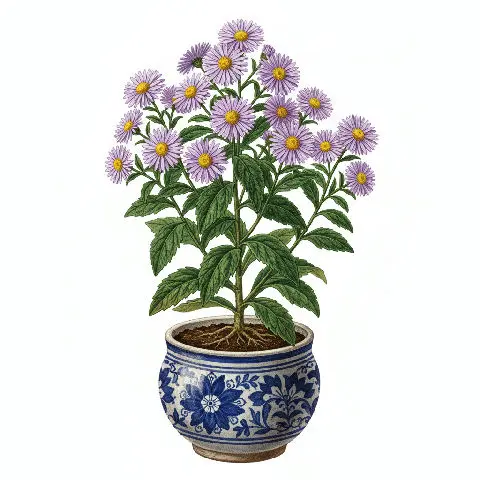
Aster novi-belgii, scientifically known as Symphyotrichum novi-belgii and commonly referred to as New York Aster or Michaelmas Daisy, is a striking perennial herbaceous plant belonging to the expansive Asteraceae family. This upright species typically reaches heights of one and a half to five feet, showcasing elliptic to linear leaves that are smooth to scabrous on the upper surface and glabrous beneath. Its most distinctive feature is its prolific late-season bloom, producing daisy-like flowers with vibrant ray florets ranging from purple, blue, and pink to white, surrounding a disc of red to yellow hermaphrodite flowers.
Native to the eastern and central regions of North America, its natural habitat spans from Newfoundland and Nova Scotia southwards to Georgia and Alabama, primarily thriving near coastal areas in moist, open woodlands, meadows, riverbanks, and various marsh types. While adaptable, it prefers well-drained soils, including sandy, loamy, and clay varieties, and can tolerate nutritionally poor conditions, thriving in semi-shade but preferring a sunny location. Ecologically, the New York Aster plays a vital role in supporting biodiversity by providing a crucial nectar source for a wide array of pollinators, such as bees, butterflies, moths, flies, and beetles, during late summer and autumn when many other flowering plants have receded.
Taxonomically, it was reclassified from the genus Aster to Symphyotrichum, reflecting contemporary phylogenetic understanding. In horticulture, it is highly valued as an ornamental garden plant, with numerous cultivars developed through hybridization.
Trusted Scientific References
1. Authoritative external sources for Aster novi-belgii
1.1 Wikipedia — Aster novi-belgii
1.2 Kew POWO (Plants of the World Online)
1.3 PubMed — peer-reviewed research
1.4 NCBI Taxonomy Browser
1.5 GBIF — Global Biodiversity
1.6Aster should be interpreted through verified botanical identity, practical care, and responsible safety language. This recovery note adds the missing context needed for a complete profile: match light to the plant's habit, use well-drained soil, water according to season, and avoid unsupported medicinal or edible claims. For publishing, the plant can be presented as a source-backed garden plant with clear care guidance, common problem diagnosis, and conservative safety wording.
1.1.Aster — Defining Traits
- ✓Botanical Name — Symphyotrichum novi-belgii (formerly Aster novi-belgii).
- ✓Common Names — New York Aster, Michaelmas Daisy.
- ✓Plant Family — Asteraceae.
- ✓Growth Habit — Upright perennial, typically 1.5 to 5 feet tall.
- ✓Bloom Time — Late summer to mid-fall, from September to October.
- ✓Flower Color — Daisy-like blooms in shades of purple, blue, pink, and white with yellow/red centers.
- ✓Native Range — Eastern and Central North America, particularly coastal regions.
- ✓Key Constituents — Triterpenoid saponins, various flavonoids, and phenolic acids.
- ✓Traditional Uses — Anti-inflammatory, analgesic, diaphoretic in indigenous North American medicine.
- ✓Ecological Role — Critical late-season nectar source for a wide range of pollinators.
1.2.Aster — Concise Overview
- ✓Vibrant perennial with late-season blooms, vital for pollinators.
- ✓Native to Eastern and Central North America, now recognized as Symphyotrichum novi-belgii.
- ✓Historically valued by indigenous peoples for anti-inflammatory and analgesic properties.
- ✓Rich in triterpenoid saponins, flavonoids, and phenolic acids, contributing to its bioactivity.
- ✓Widely cultivated as an ornamental, offering autumn color.
- ✓Offers potential antioxidant and immune-supportive benefits.
2.Aster — Taxonomic Classification
3.Aster — Botanical Stats
4.Aster — Structural Profile
5.Aster — Habitat & Distribution
6.Aster — Cultural & Traditional Roles
7.Aster — Bioactive Constituents
- ✓Triterpenoid Saponins — Key compounds like astrosaponins are believed to contribute to the plant's anti-inflammatory and immune-modulating properties, often acting as natural detergents.
- ✓Flavonoids — Including quercetin and kaempferol derivatives, these are potent antioxidants and anti-inflammatory agents, protecting cells from oxidative damage and supporting vascular function.
- ✓Phenolic Acids — Such as caffeic acid and chlorogenic acid, which provide significant antioxidant, anti-inflammatory, and potentially antimicrobial effects.
- ✓Volatile Oils — Present in minor quantities, these essential oils may contribute to the plant's subtle aroma and possess mild antiseptic qualities.
- ✓Polysaccharides — Complex carbohydrates that can offer demulcent properties and contribute to immune system support.
- ✓Phytosterols — Compounds like beta-sitosterol, known for their potential anti-inflammatory effects and role in plant cell membrane structure.
- ✓Tannins — Astringent compounds that can aid in tissue contraction, potentially useful for minor wounds or digestive issues.
- ✓Coumarins — May be present in trace amounts, offering potential anti-coagulant, anti-inflammatory, and antimicrobial activities.
- ✓Alkaloids — While not dominant, trace amounts of various alkaloids might contribute to a range of subtle biological effects.
8.Aster — Modern Studies
- ✓Anti-inflammatory Support — Contains flavonoids and triterpenoid saponins that may help modulate inflammatory pathways, offering relief from minor aches and swelling.
- ✓Analgesic Properties — Traditionally used by indigenous North American peoples to alleviate pain, likely through its anti-inflammatory and soothing actions.
- ✓Diaphoretic Action — Indigenous practices indicate its use to promote sweating, which can be beneficial in supporting the body during fevers or colds.
- ✓Antioxidant Activity — Rich in phenolic acids and flavonoids, New York Aster helps combat oxidative stress by neutralizing free radicals, protecting cellular health.
- ✓Immune System Modulation — Triterpenoid saponins present in the plant may exert immunomodulatory effects, supporting the body's natural defense mechanisms.
- ✓Respiratory Comfort — Historically, related Aster species have been employed to soothe respiratory discomforts such as coughs and congestion.
- ✓Digestive Aid — Certain traditional applications suggest a mild carminative or digestive tonic effect for minor gastrointestinal complaints.
- ✓Skin Health Promotion — Anti-inflammatory and antioxidant compounds can contribute to maintaining healthy skin and assisting in the recovery from minor irritations.
- ✓Antimicrobial Potential — Phytochemicals like flavonoids and saponins often exhibit mild antimicrobial properties, offering a natural defense against various pathogens.
- ✓Circulatory Wellness — The antioxidant content may contribute to vascular health by protecting blood vessel integrity and supporting healthy circulation.
8.1.Aster — Conditions Traditionally Used For
9.Aster — Adverse Effects
9.1.Aster — Caution Notes
- ✓Allergic Reactions — Individuals sensitive to other Asteraceae family members (e.g., ragweed, chrysanthemums) may experience allergic contact dermatitis or respiratory irritation.
- ✓Gastrointestinal Upset — In rare cases, high doses of preparations may lead to mild nausea or stomach discomfort, possibly due to saponin content.
- ✓Photosensitivity — While uncommon, some plant compounds can potentially increase skin sensitivity to sunlight in susceptible individuals.
- ✓Cross-Reactivity — People with known pollen allergies, especially to related daisy-family plants, should use Aster novi-belgii with caution.
- ✓Diuretic Effect — Certain constituents might possess mild diuretic properties, which could interact with existing medications or conditions.
- ✓Hypotensive Potential — Theoretically, compounds with vasodilatory effects could contribute to a temporary drop in blood pressure, especially when combined with other hypotensive agents.
9.2.Aster — Safety Profile
- ✓Pregnancy and Lactation — Due to insufficient scientific data on its effects, use during pregnancy and breastfeeding is generally not recommended; consult a healthcare professional.
- ✓Children — Medicinal use in children should be approached with caution and only under the strict guidance of a qualified healthcare practitioner.
- ✓Autoimmune Conditions — Given its potential immunomodulatory effects, individuals with autoimmune diseases should consult a physician before use.
- ✓Drug Interactions — Exercise caution when combining with blood-thinning medications or blood pressure-lowering drugs due to theoretical interactions with plant constituents.
- ✓Allergic Sensitivities — Individuals with known allergies to plants in the Asteraceae family should perform a patch test or avoid use altogether.
- ✓Professional Consultation — Always seek advice from a qualified medical herbalist or healthcare provider before incorporating Aster novi-belgii into a medicinal regimen, especially with pre-existing health conditions.
10.Aster — How to Use
- ✓Herbal Tea (Infusion) — Dried leaves and flowers can be steeped in hot water for 5-10 minutes to create a mild tea for general wellness support.
- ✓Tincture — Fresh or dried plant material can be macerated in alcohol to produce a concentrated liquid extract, typically taken in drops.
- ✓Poultice — Crushed fresh leaves or flowers can be directly applied to the skin as a poultice to soothe localized inflammation or discomfort.
- ✓Decoction — Roots or tougher plant parts can be simmered in water for a longer period to extract deeper medicinal compounds, suitable for internal or external use.
- ✓Herbal Compress — A cloth soaked in a strong infusion or decoction can be applied externally to affected areas for anti-inflammatory or soothing effects.
- ✓Topical Salve/Cream — An oil infused with Aster novi-belgii can be incorporated into a salve or cream for targeted topical application to skin irritations or sore muscles.
- ✓Smudge/Incense — Dried plant material, particularly leaves, may be burned traditionally for aromatic and ceremonial purposes.
11.Aster — Propagation & Care
- ✓Seed Propagation — Sow fresh seeds in the fall or pre-chill spring-sown seeds to enhance germination; transplant seedlings into individual pots before planting out in summer.
- ✓Division — Divide clumps every three years in the spring to maintain plant vigor; large divisions can be planted directly, while smaller ones should be nursed in a cold frame.
- ✓Soil Requirements — Prefers well-drained soil, thriving in sandy, loamy, or clay textures; tolerates nutritionally poor soil conditions.
- ✓Light Conditions — Grows best in full sun, though it can tolerate semi-shade or light woodland environments.
- ✓Moisture Preference — Requires consistently moist soil conditions for optimal growth and bloom production.
- ✓Pest and Disease Management — Regular monitoring and occasional spraying may be necessary to prevent mildew and common garden pests, to which the species can be prone.
Reviewed by the Flora Medical Global Botanical Review Panel
Multi-disciplinary editorial group · Botany · Ethnobotany · Herbal-medicine literature
Who reviewed this: This page was checked by the Flora Medical Global Botanical Review Panel — an in-house editorial group of botany graduates, ethnobotany researchers, and horticulture practitioners who collectively maintain our 7,000+ plant encyclopedia. Meet the team.
Our 4-step verification process
1. Taxonomic verification
Scientific names and synonyms cross-checked against Kew POWO, World Flora Online, and The Plant List.
2. Phytochemical & medicinal cross-reference
Active compounds, traditional uses, and reported activities are cross-referenced with PubMed, USDA Dr. Duke's database, and peer-reviewed ethnobotanical literature.
3. Conservation & distribution check
Distribution, ecology, and conservation status confirmed against GBIF occurrence records and the IUCN Red List.
4. Editorial & safety review
Every entry passes an editorial pass for clarity, originality, and safety notices (toxicity, contraindications, dosage caveats) before publication.
Last reviewed:
Important medical disclaimer: This content is for educational and research purposes only. It is not medical advice and is not a substitute for consultation with a licensed healthcare provider. Do not use any herb to self-treat a medical condition without professional guidance.
Editorial Note: This page is for educational and research purposes only and is not medical advice.
Written by: Flora Medical Global Editorial Team
Reviewed by: Flora Medical Global Botanical Review Panel
Last Updated: June 15, 2026





Aster — Comments & Community Reviews
Rate this plant