


Medical Disclaimer: This content is for educational purposes only. It is not medical advice. Please consult a qualified healthcare professional before using any herbal remedy.
Safety Overview
1.Aster Frikartii — Overview
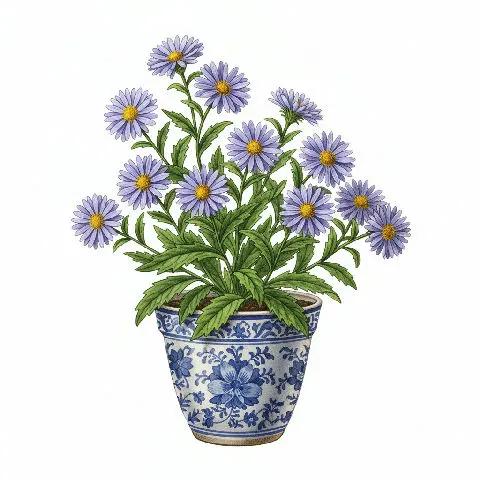
Aster frikartii, commonly known as Aster ‘Frikartii’ or Frikart’s Aster, is a distinguished herbaceous perennial celebrated for its prolific and extended flowering period. This specific cultivar is a horticultural triumph, resulting from a deliberate hybrid cross between Aster amellus and Aster thomsonii.
The Swiss hybridizer Karl Frikart developed this plant in the early 20th century, aiming to combine the robust hardiness and rich coloration of Aster amellus with the graceful form and prolonged bloom time of Aster thomsonii. The outcome is a resilient and aesthetically pleasing plant that has become a beloved staple in perennial borders, cottage gardens, and mixed plantings across temperate regions worldwide.
Botanically, Aster frikartii is classified within the expansive Asteraceae family, a diverse group that also encompasses well-known plants such as sunflowers, daisies, and chrysanthemums. While its parent species are native to the meadows and open woodlands of Europe and Asia, Aster frikartii itself is a cultivated hybrid and therefore primarily found in designed landscapes rather than wild habitats. Morphologically, its most captivating feature is its profusion of large, solitary, daisy-like flowers, typically presenting in a vibrant lavender-blue hue, strikingly contrasted by bright yellow central discs.
These blooms emerge from mid-summer and continue through autumn, providing invaluable late-season color and nectar for pollinators when many other garden plants have faded. The plant forms an upright, bushy clump, generally reaching heights of 2-3 feet (60-90 cm) with a similar spread. Its leaves are typically dark green, lance-shaped, and provide a lush backdrop to the abundant blossoms.
It thrives in well-drained, fertile soil and prefers a location with full sun to partial shade, demonstrating adaptability to a variety of garden conditions.
Trusted Scientific References
1. Authoritative external sources for Aster frikartii
1.1 Wikipedia — Aster frikartii
1.2 Kew POWO (Plants of the World Online)
1.3 PubMed — peer-reviewed research
1.4 NCBI Taxonomy Browser
1.5 GBIF — Global Biodiversity
1.1.Aster Frikartii — Defining Traits
- ✓Hybrid Origin — A cultivated cross between Aster amellus and Aster thomsonii.
- ✓Prolific Late — Season Bloomer — Offers abundant flowers from mid-summer into autumn.
- ✓Vibrant Lavender — Blue Flowers — Distinctive daisy-like blooms with bright yellow centers.
- ✓Robust Herbaceous Perennial — Known for its resilience and strong garden performance.
- ✓Attracts Pollinators — A valuable nectar source for bees and butterflies.
- ✓Deer Resistant — Generally not favored by deer, making it suitable for various landscapes.
- ✓Low Maintenance — Requires minimal care once established, ideal for busy gardeners.
- ✓Excellent Cut Flower — Long-lasting blooms are perfect for fresh floral arrangements.
- ✓Adaptable Growth — Thrives in full sun to partial shade and well-drained soils.
- ✓Ornamental Value — Highly esteemed for its aesthetic contribution to gardens.
1.2.Aster Frikartii — Concise Overview
- ✓Aster frikartii is a stunning hybrid perennial, a cross between Aster amellus and Aster thomsonii.
- ✓Renowned for its abundant lavender-blue, daisy-like flowers with bright yellow centers.
- ✓Provides vibrant, long-lasting blooms from mid-summer through autumn, offering crucial late-season color.
- ✓Primarily valued for its ornamental beauty and garden performance, attracting pollinators.
- ✓While direct medicinal uses are limited, the broader Asteraceae family contains beneficial compounds like flavonoids and phenolic acids.
- ✓Thrives in well-drained soil and prefers full sun to partial shade, making it a low-maintenance garden favorite.
2.Aster Frikartii — Systematic Position
3.Aster Frikartii — Reference Facts
4.Aster Frikartii — Structural Profile
5.Aster Frikartii — Habitat & Distribution
6.Aster Frikartii — Ethnobotanical Uses
7.Aster Frikartii — Bioactive Constituents
- ✓Flavonoids — Key compounds like quercetin, kaempferol, and their glycosides are commonly found, offering significant antioxidant and anti-inflammatory activities.
- ✓Phenolic Acids — Includes caffeic acid, chlorogenic acid, and ferulic acid, which contribute to the plant's antioxidant capacity and protective effects.
- ✓Triterpenes — Compounds such as ursolic acid and oleanolic acid are present, known for their anti-inflammatory, hepatoprotective, and potential anticancer properties.
- ✓Sesquiterpene Lactones — These bitter compounds are characteristic of many Asteraceae members, often possessing anti-inflammatory, antimicrobial, and cytotoxic activities.
- ✓Polysaccharides — Complex carbohydrates that are recognized for their immunomodulatory effects, supporting the body's natural defense mechanisms.
- ✓Coumarins — Various coumarin derivatives may be present, which can exhibit anticoagulant, anti-inflammatory, and antimicrobial actions.
- ✓Saponins — Triterpenoid saponins might be found, potentially contributing to expectorant and immune-stimulating properties.
- ✓Volatile Oils — Trace amounts of essential oils comprising monoterpenes and sesquiterpenes contribute to the plant's aroma and potential antimicrobial activity.
- ✓Phytosterols — Plant sterols like beta-sitosterol are typically found, known for their cholesterol-lowering and anti-inflammatory potential.
- ✓Tannins — Astringent compounds that contribute to antioxidant and antimicrobial effects, often found in various plant parts.
8.Aster Frikartii — Modern Studies
- ✓Antioxidant Properties — While direct studies on Aster frikartii are limited, related species within the Asteraceae family are rich in flavonoids and phenolic acids, which are known to combat oxidative stress and protect cells from damage.
- ✓Anti-inflammatory Effects — Compounds like triterpenes and sesquiterpene lactones, common in the Aster genus, may help modulate inflammatory pathways, offering potential relief for inflammatory conditions.
- ✓Antimicrobial Potential — Certain phytochemicals found in Asteraceae plants have demonstrated activity against various bacteria and fungi, suggesting a role in combating microbial infections.
- ✓Immunomodulatory Support — Polysaccharides, present in many Aster species, are known to interact with the immune system, potentially enhancing or balancing immune responses.
- ✓Respiratory Health Support — Historically, some Aster species have been employed in traditional systems to alleviate symptoms of respiratory discomfort, such as coughs and congestion.
- ✓Digestive Aid — Although not specific to Aster frikartii, some members of the Asteraceae family are traditionally used to support digestive function, possibly due to bitter compounds stimulating digestion.
- ✓Skin Health Benefits — The antioxidant and anti-inflammatory compounds found in the broader Aster genus could potentially contribute to soothing minor skin irritations and promoting skin recovery.
- ✓Minor Pain Relief — General Asteraceae compounds, such as certain flavonoids and triterpenes, may possess mild analgesic properties, offering a natural approach to discomfort.
- ✓Wound Healing Enhancement — The combined antimicrobial and anti-inflammatory actions observed in related species could theoretically support the healing process of minor cuts and abrasions.
- ✓Diuretic Action — Some plants within the Asteraceae family are recognized for their mild diuretic effects, promoting healthy fluid balance in the body.
8.1.Aster Frikartii — Indications & Uses
9.Aster Frikartii — Risk Profile
9.1.Aster Frikartii — Caution Notes
- ✓Allergic Reactions — Individuals sensitive to plants in the Asteraceae family (e.g., ragweed, daisies) may experience allergic reactions, including skin irritation or respiratory symptoms.
- ✓Contact Dermatitis — Direct handling of the plant, though generally mild, could potentially cause localized skin irritation or rash in highly sensitive individuals.
- ✓Gastrointestinal Upset — While not well-documented for Aster frikartii, ingestion of large quantities of some Asteraceae plants can rarely lead to mild digestive discomfort.
- ✓Cross-Reactivity — There is a theoretical risk of cross-reactivity for individuals with known allergies to other members of the daisy family.
- ✓Photodermatitis — Some plants in the Asteraceae family contain furocoumarins that can increase skin sensitivity to sunlight, though this is not specifically reported for Aster frikartii.
9.2.Aster Frikartii — Safety Profile
- ✓Pregnancy and Lactation — Due to a lack of specific safety data, internal use of Aster frikartii or related species is not recommended for pregnant or breastfeeding individuals.
- ✓Children — Internal consumption by children should be avoided, as insufficient research exists to establish its safety in pediatric populations.
- ✓Allergies — Individuals with known allergies to other plants in the Asteraceae family (e.g., ragweed, chrysanthemums) should exercise caution when handling or considering any internal use.
- ✓Drug Interactions — There are no specific known drug interactions reported for Aster frikartii; however, caution is always advised, and consultation with a healthcare professional is recommended.
- ✓Topical Application — A patch test on a small skin area is advisable before extensive topical use of any Aster species extract to check for sensitivity.
- ✓Internal Use — Aster frikartii is primarily an ornamental plant; internal consumption is generally not advised due to limited research on its specific pharmacological effects and safety profile.
- ✓Ornamental Use — The plant is considered safe for ornamental cultivation in gardens and landscapes, posing no significant risk through casual contact.
10.Aster Frikartii — Preparation & Dosage
- ✓Ornamental Gardening — Primarily cultivated for its outstanding aesthetic appeal in perennial borders, mixed beds, and cottage gardens.
- ✓Cut Flower Arrangements — Its abundant and long-lasting blooms make it an excellent choice for fresh floral arrangements.
- ✓Pollinator Attraction — Planted to attract and support beneficial insects such as bees and butterflies to the garden ecosystem.
- ✓Herbal Infusions (General Aster spp.) — While not specific to Aster frikartii, some related Aster species are used to prepare herbal teas from dried leaves and flowers for general wellness.
- ✓Topical Applications (General Aster spp.) — Crushed fresh leaves or poultices from other Aster species have been traditionally applied to soothe minor skin irritations.
- ✓Tincture Preparation (General Aster spp.) — Extracts steeped in alcohol are made from various Aster species for internal use as part of herbal medicine practices.
- ✓Homeopathic Remedies — Certain Aster species are incorporated into homeopathic preparations for specific conditions, adhering to homeopathic principles.
11.Aster Frikartii — Growth Requirements
- ✓Soil Preference — Thrives in well-drained, fertile loam with a neutral to slightly alkaline pH (6.0-7.0) for optimal growth.
- ✓Sunlight Requirements — Prefers full sun (at least 6 hours of direct sunlight daily) but can tolerate partial shade, though flowering may be reduced.
- ✓Watering Schedule — Requires moderate, consistent moisture, especially during dry spells; avoid waterlogging to prevent root rot.
- ✓Propagation Techniques — Easily propagated by division in early spring or autumn, or from stem cuttings taken in late spring to early summer.
- ✓Fertilization Needs — Benefit from a light application of balanced granular fertilizer in early spring to support vigorous growth and blooming.
- ✓Pruning Practices — Deadhead spent flowers regularly to encourage continuous blooming and prevent self-seeding; cut back foliage in late autumn or early spring.
- ✓Pest and Disease Management — Generally robust, but monitor for common issues like powdery mildew in humid conditions or slug and snail damage.
Reviewed by the Flora Medical Global Botanical Review Panel
Multi-disciplinary editorial group · Botany · Ethnobotany · Herbal-medicine literature
Who reviewed this: This page was checked by the Flora Medical Global Botanical Review Panel — an in-house editorial group of botany graduates, ethnobotany researchers, and horticulture practitioners who collectively maintain our 7,000+ plant encyclopedia. Meet the team.
Our 4-step verification process
1. Taxonomic verification
Scientific names and synonyms cross-checked against Kew POWO, World Flora Online, and The Plant List.
2. Phytochemical & medicinal cross-reference
Active compounds, traditional uses, and reported activities are cross-referenced with PubMed, USDA Dr. Duke's database, and peer-reviewed ethnobotanical literature.
3. Conservation & distribution check
Distribution, ecology, and conservation status confirmed against GBIF occurrence records and the IUCN Red List.
4. Editorial & safety review
Every entry passes an editorial pass for clarity, originality, and safety notices (toxicity, contraindications, dosage caveats) before publication.
Last reviewed:
Important medical disclaimer: This content is for educational and research purposes only. It is not medical advice and is not a substitute for consultation with a licensed healthcare provider. Do not use any herb to self-treat a medical condition without professional guidance.
Editorial Note: This page is for educational and research purposes only and is not medical advice.
Written by: Flora Medical Global Editorial Team
Reviewed by: Flora Medical Global Botanical Review Panel
Last Updated: June 15, 2026





Aster Frikartii — Comments & Community Reviews
Rate this plant