


Medical Disclaimer: This content is for educational purposes only. It is not medical advice. Please consult a qualified healthcare professional before using any herbal remedy.
Safety Overview
1.Astilbe Arendsii — Introduction & Highlights
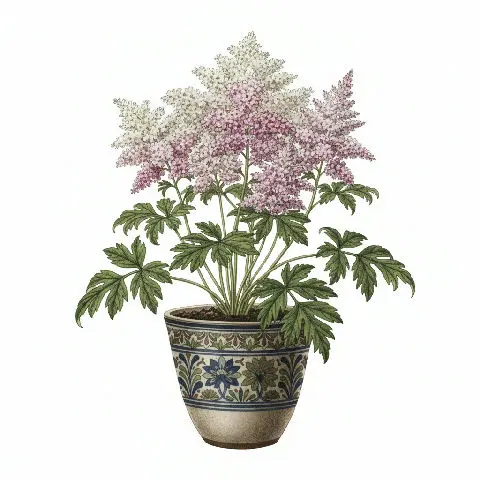
Astilbe x arendsii, commonly known as Arends' Astilbe, represents a significant horticultural achievement, being a hybrid perennial garden plant within the Saxifragaceae family. This specific hybrid group was meticulously developed in the early 20th century by the renowned German nurseryman Georg Arends. He achieved this by cross-breeding several prominent Astilbe species native to Asia, primarily including Astilbe astilboides, Astilbe chinensis, Astilbe japonica, and Astilbe thunbergii.
The primary objective of this intricate hybridization was to cultivate plants exhibiting enhanced vigor, a broader spectrum of flower colors, and extended blooming periods compared to their individual parent species. Consequently, Astilbe x arendsii is not a naturally occurring species found in the wild but rather a cultivated masterpiece, highly esteemed for its distinctive feathery, plume-like flower panicles and elegant, fern-like foliage. Its historical development is rooted purely in ornamental horticulture, lacking documented ancient traditional medicinal uses for this specific hybrid in systems like Ayurveda, TCM, or Unani.
The plant is celebrated for its remarkable ability to flourish in partial to full shade conditions, making it an exemplary choice for woodland gardens, shaded borders, and riparian zones. Its robust nature and vibrant blooms, which span a palette from crisp white and creamy hues to various shades of pink, lavender, and rich red, have cemented its status as a staple in temperate climate gardens globally. Its aesthetic appeal, coupled with relatively low maintenance requirements once established, and a high tolerance for moist soil, contribute significantly to its widespread popularity.
Trusted Scientific References
1. Authoritative external sources for Astilbe arendsii
1.1 Wikipedia — Astilbe arendsii
1.2 Kew POWO (Plants of the World Online)
1.3 PubMed — peer-reviewed research
1.4 NCBI Taxonomy Browser
1.5 GBIF — Global Biodiversity
1.6Astilbe Arendsii should be interpreted through verified botanical identity, practical care, and responsible safety language. This recovery note adds the missing context needed for a complete profile: match light to the plant's habit, use well-drained soil, water according to season, and avoid unsupported medicinal or edible claims. For publishing, the plant can be presented as a source-backed garden plant with clear care guidance, common problem diagnosis, and conservative safety wording.
1.1.Astilbe Arendsii — Standout Qualities
- ✓Dense, erect, plume — like flower panicles comprising numerous tiny flowers.
- ✓Primary active compounds — Primary active compounds include flavonoids and triterpenoid saponins, derived from its parent species.
- ✓No traditional classification — No traditional classification in Ayurveda, TCM, or Unani as it is a modern hybrid; however, parent species like Astilbe chinensis have ethnobotanical mentions in regional folk medicine.
- ✓Key therapeutic indications — Key therapeutic indications (historically from parent species): astringent and anti-inflammatory properties, with a potential mechanism linked to flavonoid activity, used topically or internally for mild inflammations.
- ✓Thrives in partial — Thrives in partial to full shade with consistently moist, well-draining, organically rich soil.
- ✓Attractive, fern — like, often bronze-green foliage adding texture to garden designs.
- ✓Robust and low — maintenance perennial once established, suitable for various temperate climates.
- ✓Wide range of — Wide range of flower colors including white, pink, red, lavender, and purple.
- ✓Valued primarily for — Valued primarily for its ornamental beauty and ability to brighten shaded garden areas.
- ✓Rhizomatous root system, — Rhizomatous root system, forming dense clumps and allowing for easy propagation by division.
1.2.Astilbe Arendsii — Snapshot Summary
- ✓Astilbe x arendsii is a modern, ornamental hybrid prized for its feathery plumes and shade tolerance.
- ✓Lacks direct traditional medicinal uses, but its parent species (e.g., Astilbe chinensis) have a history in regional folk medicine.
- ✓Inherited phytochemicals from its ancestors include flavonoids, triterpenoid saponins, and tannins.
- ✓Ancestral species are noted for astringent and mild anti-inflammatory properties.
- ✓Primarily valued for its aesthetic appeal in temperate woodland gardens.
2.Astilbe Arendsii — Systematic Position
3.Astilbe Arendsii — Quick Facts
4.Astilbe Arendsii — Structural Profile
5.Astilbe Arendsii — Habitat & Distribution
6.Astilbe Arendsii — Cultural & Traditional Roles
7.Astilbe Arendsii — Active Compounds
- ✓Flavonoids — Key compounds include quercetin, kaempferol, and their glycosides, known for potent antioxidant, anti-inflammatory, and antiallergic activities.
- ✓Triterpenoid Saponins — Such as astilbin (from Astilbe chinensis), which contribute to anti-inflammatory, immune-modulating, and potentially expectorant properties.
- ✓Phenolic Acids — Including gallic acid and caffeic acid, which are recognized for their significant antioxidant and free-radical scavenging capabilities.
- ✓Tannins — A class of polyphenolic compounds responsible for the plant's astringent properties, which can help in tissue toning and reducing inflammation.
- ✓Polysaccharides — Contribute to immunomodulatory effects and overall plant health, though specific medicinal actions for this hybrid are less studied.
- ✓Coumarins — May be present in minor amounts, offering potential anti-inflammatory and anticoagulant properties.
- ✓Glycosides — Various forms of sugar-bound compounds that can enhance the bioavailability and activity of other phytochemicals.
- ✓Essential Oils (Trace) — While not a prominent feature, trace amounts of volatile compounds may contribute to the plant's subtle fragrance and minor bioactivities.
8.Astilbe Arendsii — What Research Suggests
- ✓Astringent Properties — Derived from parent species like Astilbe chinensis, the tannins present contribute to astringent actions, potentially useful for toning tissues and reducing secretions, often applied topically.
- ✓Anti-inflammatory Effects — Research on ancestral Astilbe species indicates the presence of flavonoids and saponins that may exert anti-inflammatory activity, beneficial for alleviating mild internal or external inflammations.
- ✓Antioxidant Support — Flavonoids such as quercetin and kaempferol, found in its genetic lineage, act as potent antioxidants, helping to neutralize free radicals and protect cells from oxidative damage.
- ✓Sore Throat Relief — Traditionally, some parent species were used in folk medicine as gargles or infusions to soothe irritated mucous membranes and reduce inflammation associated with sore throats.
- ✓Minor Wound Healing — The astringent and mild antimicrobial properties inherited from its progenitors could aid in the healing of minor cuts, scrapes, and skin irritations when applied as a poultice or wash.
- ✓Digestive Comfort — In traditional contexts, the astringent nature of related species was sometimes employed to address mild gastrointestinal discomfort, such as loose stools, by promoting tissue tightening.
- ✓Immune System Modulation — Certain phytochemicals, particularly flavonoids and saponins found in Astilbe species, are being explored for their potential to modulate immune responses, though specific mechanisms for this hybrid are not established.
- ✓Pain Management (Mild) — While not a primary analgesic, the anti-inflammatory components from its parent species could offer symptomatic relief for mild aches and pains associated with inflammatory conditions.
- ✓Antimicrobial Potential — Preliminary studies on some Astilbe species suggest mild antimicrobial activity, which could contribute to protecting against certain bacterial or fungal infections.
- ✓Respiratory Support — Historically, parent species were sometimes used to help clear congestion and soothe inflamed respiratory passages, likely due to their astringent and expectorant-like qualities.
8.1.Astilbe Arendsii — Therapeutic Indications
9.Astilbe Arendsii — Adverse Effects
9.1.Astilbe Arendsii — Caution Notes
- ✓Mild Gastric Upset — Ingesting large quantities of related Astilbe species might lead to mild stomach discomfort or nausea due to their active compounds.
- ✓Allergic Skin Reactions — Direct contact with plant sap, though rare, could potentially cause skin irritation or allergic dermatitis in sensitive individuals.
- ✓Constipation — The astringent properties, if consumed in high doses from ancestral species, could theoretically contribute to constipation.
- ✓Oral Irritation — While traditionally used for sore throats, very strong preparations might cause temporary oral irritation.
- ✓Interaction with Medications — Hypothetically, high doses of saponins or flavonoids from parent species could interact with blood thinners or other medications, although specific data for Astilbe arendsii is absent.
- ✓Photosensitivity — While not commonly reported, some plant compounds can rarely induce photosensitivity in susceptible individuals.
9.2.Astilbe Arendsii — Risk Assessment
- ✓Pregnancy & Lactation — Use is not recommended during pregnancy or lactation due to insufficient safety data for both the hybrid and its parent species.
- ✓Children — Avoid use in children; consult a pediatrician or qualified herbalist before any application.
- ✓Pre-existing Conditions — Individuals with liver, kidney, or gastrointestinal disorders should exercise caution and consult a healthcare provider.
- ✓Drug Interactions — Theoretical interactions with anticoagulant medications or other drugs are possible due to flavonoids and saponins; professional medical advice is crucial.
- ✓Topical Application — Perform a patch test on a small skin area before widespread topical use to check for potential allergic reactions.
- ✓Internal Use — As Astilbe arendsii is primarily ornamental, internal use of this specific hybrid is generally not advised or studied; medicinal uses refer to specific parent species.
- ✓Professional Guidance — Always consult a qualified healthcare provider or medical herbalist before using any plant for medicinal purposes.
10.Astilbe Arendsii — Preparation & Dosage
- ✓Herbal Infusion (Ancestral) — For parent species like Astilbe chinensis, dried leaves or rhizomes can be steeped in hot water to create an infusion for internal use, traditionally for sore throats or mild inflammation.
- ✓Topical Poultice (Ancestral) — Crushed fresh leaves or rhizome paste from related Astilbe species could be applied directly to minor wounds, skin irritations, or swellings due to their astringent properties.
- ✓Decoction for Gargle (Ancestral) — A stronger decoction made from the root of parent species could serve as a traditional gargle for oral and pharyngeal inflammations.
- ✓Tincture (Limited Use) — While not common for Astilbe arendsii, tinctures of its medicinal parent species could be prepared using alcohol extraction for concentrated internal or external applications.
- ✓Salves and Creams (Theoretical) — Extracts from Astilbe chinensis, rich in anti-inflammatory compounds, could theoretically be incorporated into topical salves or creams for skin conditions.
- ✓Bath Additive (Folk Use) — Infusions of ancestral Astilbe species might have been added to bathwater in folk medicine for soothing general skin discomforts or muscle aches.
- ✓Herbal Compress (Ancestral) — Cloth soaked in a warm decoction of parent species could be applied as a compress to inflamed joints or bruises for localized relief.
- ✓Ornamental Enjoyment — The primary and most common use of Astilbe arendsii is its cultivation as an ornamental garden plant, enjoyed for its beauty and shade tolerance.
11.Astilbe Arendsii — Growth Requirements
- ✓Light Requirement — Thrives best in partial to full shade; direct scorching sun can lead to leaf burn and reduced flowering.
- ✓Soil Conditions — Prefers consistently moist, well-draining, and organically rich soil with a slightly acidic to neutral pH (6.0-7.0).
- ✓Watering — Requires regular and consistent moisture, especially during dry spells; never allow the soil to completely dry out.
- ✓Fertilization — Apply a balanced, slow-release granular fertilizer or organic compost in early spring to support vigorous growth and flowering.
- ✓Propagation — Best propagated by division of its rhizomatous root system in early spring or fall, ensuring each section has healthy roots and foliage.
- ✓Pest & Disease Management — Generally robust, but watch for slugs and snails, and ensure good air circulation to prevent powdery mildew in humid conditions.
- ✓Hardiness Zones — Well-suited for USDA Hardiness Zones 4-8, tolerating cold winters with appropriate mulching.
- ✓Pruning — Deadhead spent flower plumes to encourage more blooms and maintain a tidy appearance, though some prefer to leave them for winter interest.
Reviewed by the Flora Medical Global Botanical Review Panel
Multi-disciplinary editorial group · Botany · Ethnobotany · Herbal-medicine literature
Who reviewed this: This page was checked by the Flora Medical Global Botanical Review Panel — an in-house editorial group of botany graduates, ethnobotany researchers, and horticulture practitioners who collectively maintain our 7,000+ plant encyclopedia. Meet the team.
Our 4-step verification process
1. Taxonomic verification
Scientific names and synonyms cross-checked against Kew POWO, World Flora Online, and The Plant List.
2. Phytochemical & medicinal cross-reference
Active compounds, traditional uses, and reported activities are cross-referenced with PubMed, USDA Dr. Duke's database, and peer-reviewed ethnobotanical literature.
3. Conservation & distribution check
Distribution, ecology, and conservation status confirmed against GBIF occurrence records and the IUCN Red List.
4. Editorial & safety review
Every entry passes an editorial pass for clarity, originality, and safety notices (toxicity, contraindications, dosage caveats) before publication.
Last reviewed:
Important medical disclaimer: This content is for educational and research purposes only. It is not medical advice and is not a substitute for consultation with a licensed healthcare provider. Do not use any herb to self-treat a medical condition without professional guidance.
Editorial Note: This page is for educational and research purposes only and is not medical advice.
Written by: Flora Medical Global Editorial Team
Reviewed by: Flora Medical Global Botanical Review Panel
Last Updated: June 15, 2026





Astilbe Arendsii — Comments & Community Reviews
Rate this plant