
Medical Disclaimer: This content is for educational purposes only. It is not medical advice. Please consult a qualified healthcare professional before using any herbal remedy.
Safety Overview
1.Astrantia Maxima — Introduction & Highlights
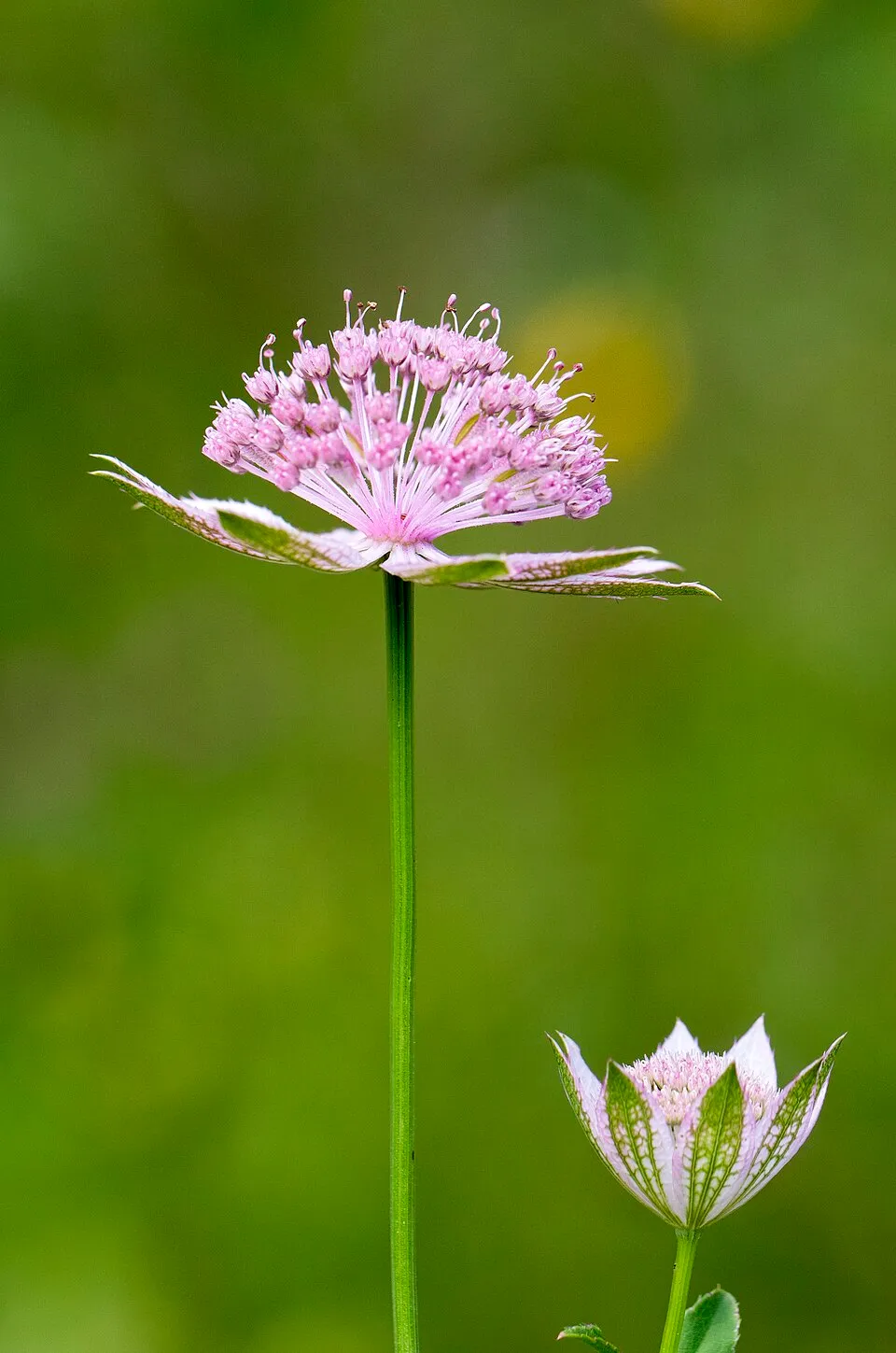
Astrantia maxima, commonly known as Great Masterwort or Masterwort, is an elegant herbaceous perennial belonging to the Apiaceae (carrot) family. Native to the mountain meadows, grasslands, woodland clearings, and stream banks across Europe and western Asia, this species thrives in cool, moist environments. While closely related to Astrantia major, A.
maxima is distinguished by its generally taller stature, with its unique "pincushion" flowers positioned somewhat closer to the basal foliage compared to its cousin. The plant forms attractive mounded clumps, typically exceeding 1.5 feet in height, and gradually spreads through stolons, creating a lush groundcover. Its medium green basal leaves are a prominent feature, palmate in shape with 3 to 7 deeply divided, toothed lobes, often reaching 3 to 6 inches in length.
The sparse leaves along the branched flower stems are narrower, featuring three shallower divisions, maintaining their appeal throughout the growing season without significant fall color.
Flowering from early summer through autumn, Astrantia maxima produces dense, compact, domed compound umbels, each about an inch across, atop slender, wiry stems. These distinctive inflorescences are encircled by numerous (typically 19-20) showy, papery, petal-like involucral bracts, which create a captivating pincushion-like effect. The tiny, tightly packed individual flowers, subtly colored in shades of red, pink, or white, possess five petals and prominent long stamens, emitting a faint fragrance.
These blooms are highly attractive to a variety of pollinators, including bees, flies, and beetles. The decorative bracts hold their form remarkably well, making them excellent for both fresh cut flower arrangements and dried floral displays. Astrantia maxima prefers part shade and rich, consistently moist soil enriched with organic matter, tolerating some standing water, making it a suitable choice for woodland gardens, perennial borders, and even bog garden edges, particularly in regions with cool night temperatures.
Trusted Scientific References
1. Authoritative external sources for Astrantia Maxima
1.1 Wikipedia — Astrantia Maxima
1.2 Kew POWO (Plants of the World Online)
1.3 PubMed — peer-reviewed research
1.4 NCBI Taxonomy Browser
1.5 GBIF — Global Biodiversity
1.1.Astrantia Maxima — Key Features
- ✓Unique "Pincushion" Flowers — Characterized by intricate, domed umbels surrounded by showy, papery bracts.
- ✓Taller Growth Habit — Typically exhibits a more upright and taller stature compared to Astrantia major.
- ✓Palmate Basal Leaves — Features attractive, deeply lobed leaves that form a dense basal clump.
- ✓Hardy Perennial — Resilient in USDA Hardiness Zones 4-7, returning year after year.
- ✓Pollinator Magnet — Flowers are highly attractive to a diverse range of insects, including bees, flies, and beetles.
- ✓Versatile Floral Use — Excellent for fresh cut flower arrangements and retains beauty when dried for everlasting displays.
- ✓Shade — Loving Plant — Thrives in partial shade, making it ideal for woodland gardens and shaded borders.
- ✓Moist Soil Preference — Requires consistently moist, rich, organic-rich soil to flourish.
- ✓Low Maintenance — Generally easy to care for with few significant pest or disease issues.
- ✓Stolonoferous Spread — Gradually expands its clumps through underground stolons, forming attractive patches.
1.2.Astrantia Maxima — Quick Summary
- ✓Ornamental Perennial — Astrantia maxima is a striking perennial known for its distinctive "pincushion" flowers and attractive foliage.
- ✓Habitat & Growth — Native to European and Asian woodlands, it thrives in cool, moist, partial shade conditions with rich, organic soil.
- ✓Traditional Uses (Genus) — Historically, its close relative A. major has been used as an astringent, diuretic, and expectorant in folk medicine.
- ✓Key Constituents — Contains notable phytochemicals such as coumarins, triterpenoid saponins, flavonoids, and tannins.
- ✓Safety Considerations — Potential for photosensitivity and allergic reactions exists; caution advised for pregnant individuals and those on certain medications.
- ✓Low Maintenance — Generally pest-resistant and easy to grow, making it a popular choice for shade gardens.
2.Astrantia Maxima — Taxonomic Classification
3.Astrantia Maxima — Reference Facts
4.Astrantia Maxima — Structural Profile
5.Astrantia Maxima — Habitat & Distribution
6.Astrantia Maxima — Ethnobotanical Uses
7.Astrantia Maxima — Bioactive Constituents
- ✓The phytochemistry of Astrantia maxima, while not as extensively studied as some other medicinal plants, is presumed to share similarities with its close relative, Astrantia major. These compounds are thought to be responsible for the traditional uses attributed to the genus.
- ✓Coumarins — Key compounds such as astrantiin, a furanocoumarin, are present, known for potential photosensitizing effects and various biological activities.
- ✓Triterpenoid Saponins — These compounds contribute to the plant's traditional expectorant and anti-inflammatory properties, often found in the roots.
- ✓Flavonoids — Derivatives of quercetin and kaempferol are common, acting as potent antioxidants and contributing to anti-inflammatory effects.
- ✓Phenolic Acids — Including caffeic acid and chlorogenic acid, these compounds are significant antioxidants and may offer protective cellular benefits.
- ✓Tannins — Both gallotannins and ellagitannins are present, responsible for the characteristic astringent properties traditionally utilized for wound healing and tissue constriction.
- ✓Essential Oils — Trace amounts of volatile compounds contribute to the plant's subtle fragrance and may possess mild antimicrobial activity.
- ✓Polysaccharides and Mucilage — These complex carbohydrates provide soothing and demulcent properties, beneficial for irritated mucous membranes, particularly in respiratory and digestive applications.
- ✓Phytosterols — Plant sterols are found, which can contribute to anti-inflammatory and cholesterol-lowering effects, though their concentration and specific role in Astrantia are less defined.
8.Astrantia Maxima — What Research Suggests
- ✓While Astrantia maxima is primarily cherished as an ornamental plant, traditional herbalism, particularly concerning its close relative Astrantia major (Great Masterwort), suggests several potential medicinal applications. Specific research on A. maxima is limited, and these benefits are largely extrapolated from the genus or A. major.
- ✓Astringent Properties — Due to the presence of tannins, Astrantia species have been traditionally employed for their astringent qualities, which can help to constrict tissues and reduce fluid discharge from minor cuts, wounds, and skin irritations.
- ✓Diuretic Action — Historically, preparations from the roots of Great Masterwort were used to encourage diuresis, aiding the body in expelling excess fluids and supporting urinary tract health.
- ✓Expectorant Effects — In folk medicine, Astrantia has been noted for its potential to act as an expectorant, assisting in the clearance of mucus from the respiratory passages and offering relief from coughs and mild bronchitis.
- ✓Anti-inflammatory Potential — The plant's rich profile of flavonoids and phenolic compounds may contribute to anti-inflammatory effects, traditionally utilized both topically for localized swelling and internally for systemic inflammatory responses.
- ✓Digestive Support — Traditional uses mention the roots of Astrantia major in decoctions to aid digestion, alleviate minor stomach discomfort, and promote overall gastrointestinal well-being.
- ✓Wound Healing Promotion — External application of poultices or extracts from Astrantia leaves or roots has been a traditional practice to accelerate the healing of superficial wounds, minor burns, and insect bites.
- ✓Mild Purgative Action — Historically, higher doses of certain Astrantia preparations were used as a mild purgative to stimulate bowel movements, though this application requires careful consideration due to potential side effects.
- ✓Antiseptic Qualities — The presence of various phytochemicals may impart mild antiseptic properties, which could contribute to preventing infection in minor skin abrasions when applied topically.
8.1.Astrantia Maxima — Therapeutic Indications
9.Astrantia Maxima — Precautions & Warnings
9.1.Astrantia Maxima — Reported Side Effects
- ✓While Astrantia maxima is not widely used medicinally, potential side effects, primarily extrapolated from its close relatives in the Apiaceae family or general herbal principles, should be considered.
- ✓Photosensitivity — The presence of furanocoumarins may induce phytophotodermatitis, causing skin sensitivity and rashes when exposed to sunlight after contact or ingestion.
- ✓Allergic Reactions — Sensitive individuals may experience allergic responses, including skin rashes, itching, or, rarely, respiratory discomfort upon contact or ingestion.
- ✓Gastrointestinal Upset — High doses of root preparations, if consumed, could potentially lead to digestive disturbances such as nausea, vomiting, or diarrhea.
- ✓Skin Irritation — Topical application, especially of fresh plant material, might cause localized contact dermatitis or irritation in susceptible individuals.
- ✓Purgative Effects — Ingesting larger quantities of root-based preparations could result in an overly strong laxative or purgative effect.
- ✓Uterine Stimulation — Some traditional uses of related Apiaceae plants suggest caution during pregnancy due to potential uterine stimulating effects, though not specifically documented for Astrantia.
- ✓Drug Interactions — Due to coumarin content, there is a theoretical potential for interaction with anticoagulant medications, requiring medical consultation.
9.2.Astrantia Maxima — Safety Overview
- ✓The safety profile of Astrantia maxima for medicinal use is not well-established, and caution is advised.
- ✓Pregnancy and Lactation — Due to the lack of specific safety data and potential coumarin content, use is generally not recommended for pregnant or breastfeeding individuals.
- ✓Pediatric Use — Insufficient research exists regarding its safety in children; therefore, use should be avoided in this population.
- ✓Photosensitivity Risk — Individuals prone to photosensitivity should exercise caution or avoid contact, especially when exposed to strong sunlight, due to the presence of furanocoumarins.
- ✓Allergic Sensitivities — People with known allergies to plants in the Apiaceae family (e.g., carrots, celery, parsley) should avoid Astrantia to prevent potential allergic reactions.
- ✓Medication Interactions — Consult a healthcare professional before use, particularly if taking anticoagulant medications or diuretics, due to theoretical interactions with coumarin compounds.
- ✓Topical Application — Always perform a patch test on a small area of skin before widespread topical application to check for any irritation or allergic response.
- ✓Internal Dosage — If considering internal use, which is not widely supported by modern research for A. maxima, start with very low doses and monitor closely for any adverse effects.
10.Astrantia Maxima — Preparation & Dosage
- ✓While Astrantia maxima is primarily ornamental, if considering its historical uses (extrapolated from A. major), various preparation methods can be employed.
- ✓Root Decoction — For internal applications such as digestive support or expectorant effects, dried Astrantia roots can be simmered in water for 15-20 minutes to create a potent decoction.
- ✓Leaf Infusion — Fresh or dried leaves can be steeped in hot water for 10-15 minutes to create an infusion, suitable for a mild internal tea or as a topical wash for skin irritations.
- ✓Fresh Poultice — Crushed fresh leaves can be directly applied to the skin as a poultice to soothe insect bites, minor cuts, or skin inflammation, secured with a bandage.
- ✓Tincture Preparation — A concentrated alcoholic extract can be made from the dried roots or aerial parts, allowing for convenient internal dosing and extended shelf life.
- ✓Topical Salve — Infused oil made from the leaves and flowers can be incorporated into a beeswax base to create a soothing salve for external application on minor wounds, rashes, or dry skin.
- ✓Herbal Compress — A cloth soaked in a strong infusion or decoction can be applied warm to affected areas of the skin for a more intensive topical treatment.
- ✓Dried Herb Storage — Harvested leaves and roots can be dried thoroughly and stored in airtight containers for later use in teas, poultices, or other preparations.
- ✓Ornamental Use — Beyond medicinal considerations, the striking "pincushion" flowers are excellent for fresh cut flower arrangements and retain their beauty when dried.
11.Astrantia Maxima — Growing Guide
- ✓Cultivating Astrantia maxima successfully hinges on replicating its native woodland edge environment.
- ✓Site Selection — Plant in a location offering partial shade, ideally receiving a few hours of morning sun followed by dappled shade throughout the afternoon. While tolerant of full shade, blooming may be reduced.
- ✓Soil Requirements — Thrives in rich, continuously moist soil abundant in organic matter. Amend heavy soils with compost to improve drainage and fertility.
- ✓Water Management — Consistent moisture is crucial; the plant does not tolerate dry conditions. Regular irrigation is necessary if natural rainfall is insufficient. It can even tolerate some standing water.
- ✓Climate Preference — Performs optimally in cooler climates where night temperatures consistently remain below 70°F (21°C), making it well-suited for temperate regions.
- ✓Fertilization — In rich, organically amended soils, additional fertilization may not be necessary. Otherwise, a balanced slow-release fertilizer can be applied in early spring and again mid-summer.
- ✓Propagation — Can be propagated from fresh seeds, which require 2-3 months of cold stratification for successful germination. Alternatively, established clumps can be divided in early spring or fall.
- ✓Pest and Disease Management — Generally a robust plant with few serious pest issues, though occasional attacks by aphids or slugs may occur, requiring minimal intervention.
- ✓Maintenance — Deadheading spent flowers can encourage a longer blooming period. Foliage and stems can be cut back in fall or left for winter interest.
Reviewed by the Flora Medical Global Botanical Review Panel
Multi-disciplinary editorial group · Botany · Ethnobotany · Herbal-medicine literature
Who reviewed this: This page was checked by the Flora Medical Global Botanical Review Panel — an in-house editorial group of botany graduates, ethnobotany researchers, and horticulture practitioners who collectively maintain our 7,000+ plant encyclopedia. Meet the team.
Our 4-step verification process
1. Taxonomic verification
Scientific names and synonyms cross-checked against Kew POWO, World Flora Online, and The Plant List.
2. Phytochemical & medicinal cross-reference
Active compounds, traditional uses, and reported activities are cross-referenced with PubMed, USDA Dr. Duke's database, and peer-reviewed ethnobotanical literature.
3. Conservation & distribution check
Distribution, ecology, and conservation status confirmed against GBIF occurrence records and the IUCN Red List.
4. Editorial & safety review
Every entry passes an editorial pass for clarity, originality, and safety notices (toxicity, contraindications, dosage caveats) before publication.
Last reviewed:
Important medical disclaimer: This content is for educational and research purposes only. It is not medical advice and is not a substitute for consultation with a licensed healthcare provider. Do not use any herb to self-treat a medical condition without professional guidance.
Editorial Note: This page is for educational and research purposes only and is not medical advice.
Written by: Flora Medical Global Editorial Team
Reviewed by: Flora Medical Global Botanical Review Panel
Last Updated: June 15, 2026





Astrantia Maxima — Comments & Community Reviews
Rate this plant