


Medical Disclaimer: This content is for educational purposes only. It is not medical advice. Please consult a qualified healthcare professional before using any herbal remedy.
Safety Overview
1.Aucuba Japonica — Plant Snapshot
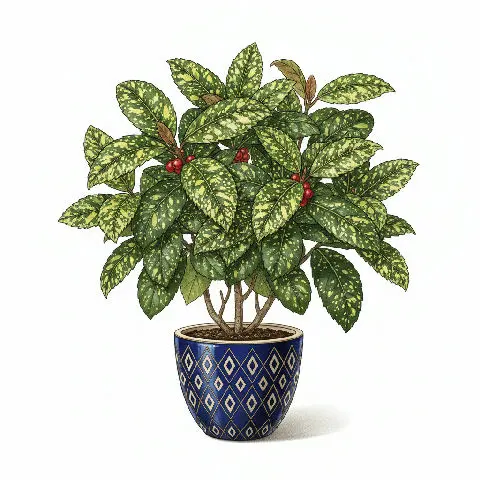
Aucuba japonica, commonly recognized as the Japanese laurel or spotted laurel, is a resilient evergreen shrub indigenous to the shaded forest understories of Japan, Korea, and China. This robust plant is celebrated for its exceptional tolerance to profound shade and urban atmospheric pollution, establishing itself as a favored specimen in temperate urban landscapes and low-light garden environments.
The genus name 'Aucuba' is a direct transliteration of 'Aokiba,' the plant's Japanese common name, while 'japonica' explicitly denotes its Japanese origin. Taxonomically, Aucuba is classified within the Garryaceae family, a comparatively small group of woody plants.
Historically, the Japanese laurel gained considerable renown during the Victorian era in England, where its hardiness and vibrant variegated cultivars thrived amidst the sooty, shaded conditions prevalent in industrial cities. A characteristic botanical feature of Aucuba japonica is its dioecious nature, meaning individual plants are either exclusively male or female.
For the distinctive bright red berries to develop, a female plant necessitates pollination from a nearby male specimen. These visually striking drupes, despite their aesthetic appeal, are considered mildly toxic if ingested.
The foliage of Aucuba japonica is typically glossy, leathery, and a deep green, frequently adorned with prominent gold, yellow, or cream variegation, which contributes to its 'spotted laurel' epithet. Botanically, the leaves are arranged oppositely, exhibiting an ovate to oblong-lanceolate shape, typically measuring 8-12 cm in length and 3-5 cm in width, with a coarsely serrated margin, particularly towards the apex. The flowers are diminutive, inconspicuous, and purplish-brown, emerging in terminal panicles during early spring (March-April).
They possess four petals and, compared to the plant's striking foliage and fruit, offer minimal ornamental value. The fruit, a fleshy drupe, ripens in autumn (September-November) and persists throughout the winter months, offering a vivid splash of color against the dark green backdrop of the leaves.
Trusted Scientific References
1. Authoritative external sources for Aucuba japonica
1.1 Wikipedia — Aucuba japonica
1.2 Kew POWO (Plants of the World Online)
1.3 PubMed — peer-reviewed research
1.4 NCBI Taxonomy Browser
1.5 GBIF — Global Biodiversity
1.1.Aucuba Japonica — Standout Qualities
- ✓Evergreen Foliage — Maintains green leaves year-round, providing continuous garden interest.
- ✓Shade Loving — Thrives in low-light conditions where many other plants struggle.
- ✓Variegated Forms — Many cultivars display attractive gold, yellow, or cream speckles on leaves.
- ✓Red Berries — Female plants produce bright, persistent red drupes in autumn and winter.
- ✓Dioecious Nature — Requires both male and female plants for berry production.
- ✓Pollution Tolerant — Excellent choice for urban environments due to its resilience to air pollution.
- ✓Low Maintenance — Generally easy to grow and care for once established.
- ✓Hardy and Robust — Withstands various challenging environmental conditions.
- ✓Leathery Leaves — Thick, glossy, and durable foliage.
- ✓Winter Interest — Berries provide color and visual appeal during colder months.
1.2.Aucuba Japonica — Snapshot Summary
- ✓Evergreen ornamental shrub native to East Asia.
- ✓Known for its shade tolerance and vibrant variegated foliage.
- ✓Produces striking red berries in female plants, which are toxic.
- ✓Contains aucubin and other iridoid glycosides.
- ✓Limited traditional medicinal uses, primarily external and with caution.
- ✓Not recommended for internal consumption due to toxicity.
2.Aucuba Japonica — Scientific Profile
3.Aucuba Japonica — Reference Facts
4.Aucuba Japonica — Plant Morphology
5.Aucuba Japonica — Where It Grows
6.Aucuba Japonica — Cultural & Traditional Roles
7.Aucuba Japonica — Secondary Metabolites
- ✓Iridoid Glycosides — Primarily Aucubin, which is a major component responsible for the plant's bitter taste and emetic properties; other related iridoids may also be present.
- ✓Saponins — These compounds contribute to the plant's toxicity and can cause gastrointestinal irritation upon ingestion, potentially acting as foaming agents.
- ✓Tannins — Present in the leaves, tannins contribute to the astringent properties, which might explain traditional topical uses for minor wounds and inflammation.
- ✓Flavonoids — A diverse group of plant pigments with antioxidant and anti-inflammatory potential, contributing to the plant's general protective mechanisms.
- ✓Alkaloids — While not extensively studied, some species in related families contain minor alkaloid constituents, requiring further investigation in Aucuba japonica.
- ✓Phenolic Acids — These organic acids contribute to antioxidant activity and plant defense, found commonly across many plant species.
- ✓Volatile Oils — Present in trace amounts, these contribute to the plant's scent profile and may possess mild antimicrobial properties.
- ✓Cyanogenic Glycosides — Some plant species contain these compounds which release hydrogen cyanide upon hydrolysis; their presence in Aucuba japonica requires specific confirmation and would contribute to toxicity.
8.Aucuba Japonica — Research Insights
- ✓Traditional Anti-inflammatory — Historically, Aucuba japonica leaves have been applied topically in some folk medicine traditions to reduce inflammation associated with sprains and bruises.
- ✓Minor Wound Healing Support — Extracts from the leaves were traditionally used externally to aid in the healing of minor cuts and abrasions, possibly due to astringent properties.
- ✓Respiratory Aid (Traditional) — In specific regional folk practices, a decoction from the leaves was cautiously administered internally as an expectorant for coughs, though with significant awareness of potential toxicity.
- ✓Analgesic Properties (Topical) — The plant's leaves were sometimes crushed and applied as a poultice to soothe localized pain from muscular strains or minor injuries.
- ✓Anthelmintic Potential — Some traditional texts suggest a historical, albeit highly cautious, use of Aucuba preparations for expelling intestinal parasites.
- ✓Emetic and Purgative Action — The berries, due to their toxic glycosides, have been used in traditional settings to induce vomiting and bowel evacuation, but this practice is extremely risky and not recommended.
- ✓Dermatological Applications — Folk remedies occasionally utilized leaf preparations for treating certain skin conditions, likely for their perceived soothing or astringent effects.
- ✓Anti-pyretic (Fever-reducing) — Limited historical accounts suggest internal use for fevers, though this is highly dangerous given the plant's toxicity.
8.1.Aucuba Japonica — Health Applications
9.Aucuba Japonica — Risk Profile
9.1.Aucuba Japonica — Warnings
- ✓Severe Gastrointestinal Upset — Ingestion of berries or large quantities of leaves can cause severe vomiting, diarrhea, and abdominal pain due to toxic glycosides.
- ✓Nausea and Dizziness — Symptoms of mild poisoning can include feelings of sickness, lightheadedness, and general discomfort.
- ✓Oral and Throat Irritation — Direct contact with plant sap or chewing leaves can cause irritation, burning sensations, and swelling in the mouth and throat.
- ✓Allergic Contact Dermatitis — Sensitive individuals may experience skin irritation, redness, or itching upon prolonged contact with the leaves or sap.
- ✓Cardiovascular Effects (Severe Cases) — Extremely high doses of toxic compounds could potentially lead to more severe systemic effects, including cardiac irregularities.
- ✓Dehydration and Electrolyte Imbalance — Prolonged vomiting and diarrhea can lead to significant fluid loss and electrolyte disturbances, especially in children.
9.2.Aucuba Japonica — Risk Assessment
- ✓HIGHLY TOXIC IF INGESTED — All parts of Aucuba japonica, especially the berries, are considered toxic and should never be consumed by humans or pets.
- ✓Keep Out of Reach of Children and Pets — Ensure young children and animals do not have access to the plant, particularly the attractive red berries.
- ✓External Use with Caution — While some traditional uses were external, always perform a patch test to check for skin sensitivity before widespread topical application.
- ✓Pregnant and Nursing Women — Avoid all use of Aucuba japonica during pregnancy and lactation due to unknown effects and potential toxicity.
- ✓Individuals with Pre-existing Conditions — People with gastrointestinal sensitivities or other health issues should strictly avoid any exposure or traditional use.
- ✓Consult a Healthcare Professional — Never self-medicate with Aucuba japonica; always seek expert medical advice for any health concerns.
- ✓Handle with Gloves — When pruning or handling the plant, it is advisable to wear gloves to prevent potential skin irritation from sap.
10.Aucuba Japonica — Preparation & Dosage
- ✓Topical Poultice — Crushed fresh leaves traditionally applied externally to sprains, bruises, or minor skin irritations.
- ✓Decoction for External Wash — Boiled leaves cooled and used as a wash for skin conditions or minor wounds, never for internal consumption.
- ✓Infusion (External Only) — Steeped leaves in hot water to create a liquid for compresses or topical application to soothe localized discomfort.
- ✓Berry External Application — Berries are NOT for internal use; their use, if any, was strictly external in specific folk remedies, often as a counter-irritant.
- ✓Leaf Extract (Research) — For scientific study, extracts are prepared using solvents to isolate specific compounds for laboratory analysis.
- ✓Herbal Compress — Leaves warmed and applied directly to the skin for their traditional anti-inflammatory or analgesic effects.
- ✓Garden Specimen — Primarily cultivated as an ornamental shrub for its attractive foliage and berries in shaded landscapes.
11.Aucuba Japonica — Propagation & Care
- ✓Shade Tolerance — Thrives in deep to partial shade, making it ideal for underplanting or north-facing exposures.
- ✓Soil Requirements — Prefers moist, well-drained, organically rich soils, but is highly adaptable to a range of soil types.
- ✓Watering — Requires consistent moisture, especially during dry periods; young plants need regular watering to establish.
- ✓Fertilization — Benefits from a balanced slow-release fertilizer in spring, though often not strictly necessary in fertile soils.
- ✓Pruning — Prune in late winter or early spring to maintain shape, remove dead or damaged branches, or control size.
- ✓Propagation — Easily propagated by semi-hardwood cuttings taken in summer or by seed, though seed germination can be slow.
- ✓Pest and Disease Resistance — Generally robust and resistant to most common pests and diseases, contributing to its low-maintenance appeal.
- ✓Temperature and Hardiness — Hardy in USDA zones 7-10, tolerant of urban pollution and coastal conditions.
Reviewed by the Flora Medical Global Botanical Review Panel
Multi-disciplinary editorial group · Botany · Ethnobotany · Herbal-medicine literature
Who reviewed this: This page was checked by the Flora Medical Global Botanical Review Panel — an in-house editorial group of botany graduates, ethnobotany researchers, and horticulture practitioners who collectively maintain our 7,000+ plant encyclopedia. Meet the team.
Our 4-step verification process
1. Taxonomic verification
Scientific names and synonyms cross-checked against Kew POWO, World Flora Online, and The Plant List.
2. Phytochemical & medicinal cross-reference
Active compounds, traditional uses, and reported activities are cross-referenced with PubMed, USDA Dr. Duke's database, and peer-reviewed ethnobotanical literature.
3. Conservation & distribution check
Distribution, ecology, and conservation status confirmed against GBIF occurrence records and the IUCN Red List.
4. Editorial & safety review
Every entry passes an editorial pass for clarity, originality, and safety notices (toxicity, contraindications, dosage caveats) before publication.
Last reviewed:
Important medical disclaimer: This content is for educational and research purposes only. It is not medical advice and is not a substitute for consultation with a licensed healthcare provider. Do not use any herb to self-treat a medical condition without professional guidance.
Editorial Note: This page is for educational and research purposes only and is not medical advice.
Written by: Flora Medical Global Editorial Team
Reviewed by: Flora Medical Global Botanical Review Panel
Last Updated: June 15, 2026





Aucuba Japonica — Comments & Community Reviews
Rate this plant