


Medical Disclaimer: This content is for educational purposes only. It is not medical advice. Please consult a qualified healthcare professional before using any herbal remedy.
Safety Overview
1.Avocado Tree — Essential Profile
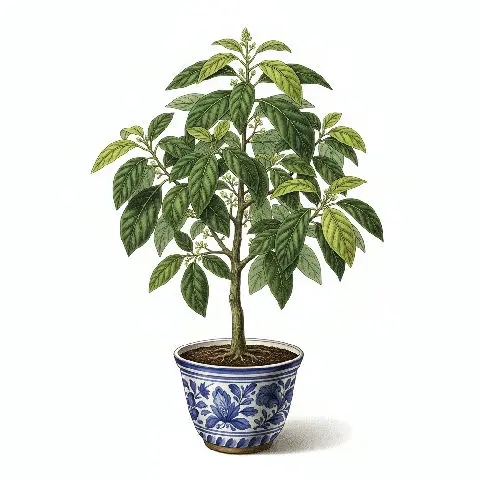
The Avocado Tree, scientifically known as Persea americana, is a distinguished species of flowering plant within the ancient laurel family (Lauraceae). Originating from south-central Mexico, its historical roots stretch back over 10,000 years, with evidence of its consumption found in ancient Mesoamerican sites. The name 'avocado' itself is a transliteration of the Aztec word 'ahuacatl,' which intriguingly referred to 'testicle,' a nod to its shape and believed aphrodisiac qualities. Spanish explorers introduced this versatile fruit to Europe in the 16th century, from where it subsequently diffused across tropical and subtropical regions globally, leading to its widespread cultivation today.
Taxonomically, it falls under the genus Persea, encompassing more than 150 species, with Persea americana having three principal horticultural races: Mexican, Guatemalan, and West Indian, named for their original cultivation areas. This medium to large evergreen tree can reach impressive heights of 9 to 20 meters (30-65 feet) in its native habitat. Its foliage consists of large, shiny, evergreen leaves, typically 7-41 cm (3-16 inches) long, varying in shape from elliptic to oval or lanceolate, often pubescent and reddish when young, maturing to a smooth, leathery, dark green. The inconspicuous, yellowish-green flowers are borne in many-flowered terminal panicles.
Botanically classified as a large berry, the fruit of Persea americana contains a single, prominent seed enveloped by a creamy, nutrient-rich pulp. The fruit's leathery skin varies in thickness, texture, and color—from green to black, purple, or reddish—depending on the cultivar, with shapes ranging from spherical to pyriform, and some varieties weighing up to 2.3 kg (5 lbs).
Trusted Scientific References
1. Authoritative external sources for Persea americana
1.1 Wikipedia — Persea americana
1.2 Kew POWO (Plants of the World Online)
1.3 PubMed — peer-reviewed research
1.4 NCBI Taxonomy Browser
1.5 GBIF — Global Biodiversity
1.6Avocado Tree should be interpreted through verified botanical identity, practical care, and responsible safety language. This recovery note adds the missing context needed for a complete profile: match light to the plant's habit, use well-drained soil, water according to season, and avoid unsupported medicinal or edible claims. For publishing, the plant can be presented as a source-backed garden plant with clear care guidance, common problem diagnosis, and conservative safety wording.
1.1.Avocado Tree — Distinguishing Points
- ✓Botanical Classification — A large berry containing a single seed, belonging to the ancient Lauraceae family.
- ✓Nutritional Powerhouse — Exceptional source of monounsaturated fatty acids, dietary fiber, and a wide array of vitamins and minerals.
- ✓Diverse Bioactive Compounds — Contains unique alkanols (acetogenins), carotenoids, phenolic compounds, and phytosterols with various health benefits.
- ✓Ancient Medicinal History — Utilized for millennia in Mesoamerican traditional medicine for a variety of ailments.
- ✓Cardiovascular Health Support — Prominent for its role in promoting heart health and managing cholesterol levels.
- ✓Anti — inflammatory and Antioxidant — Exhibits significant anti-inflammatory and free-radical scavenging properties.
- ✓Versatile Plant Parts — Fruit, leaves, and seeds are all traditionally used for their therapeutic potential.
- ✓Global Cultivation — Widely cultivated in tropical and subtropical regions worldwide, with numerous cultivars.
- ✓Skin and Hair Benefits — Avocado oil and pulp are highly valued in cosmetics for moisturizing and nourishing properties.
- ✓Culinary Staple — Revered globally for its creamy texture and rich flavor in diverse cuisines.
1.2.Avocado Tree — Concise Overview
- ✓Persea americana is a tropical evergreen tree native to Mexico, known for its highly nutritious fruit.
- ✓Rich in monounsaturated fats, vitamins (K, C, E, B6, folate), and minerals (potassium, magnesium).
- ✓Traditional uses include treating hypertension, diabetes, stomach ache, and skin conditions.
- ✓Modern research highlights its cardiovascular, anti-inflammatory, and antioxidant benefits.
- ✓Contains unique acetogenins, flavonoids, and phytosterols contributing to its health properties.
- ✓Generally safe for consumption, but caution advised for latex allergies and specific drug interactions.
2.Avocado Tree — Nomenclature & Classification
3.Avocado Tree — Vital Statistics
4.Avocado Tree — Botanical Description
5.Avocado Tree — Native Range & Habitat
6.Avocado Tree — Traditional Uses
7.Avocado Tree — Phytochemistry
- ✓Alkanols (Aliphatic Acetogenins) — Key compounds like avocatin B, 1,2,4-trihydroxyheptadec-16-ene, and 1,2,4-trihydroxyheptadec-16-yne, which have shown cytotoxic, anti-proliferative, and anti-cancer activities, particularly in the fruit and seeds.
- ✓Monounsaturated Fatty Acids — Primarily oleic acid, a crucial component of avocado oil, known for its cardioprotective benefits, cholesterol-lowering effects, and anti-inflammatory actions.
- ✓Vitamins — Rich in fat-soluble vitamins like Vitamin K (phylloquinone), Vitamin E (alpha-tocopherol), and water-soluble vitamins such as Vitamin C (ascorbic acid), Vitamin B6 (pyridoxine), and folate (B9), essential for various metabolic processes and antioxidant defense.
- ✓Minerals — Significant source of potassium, vital for blood pressure regulation and nerve function, and magnesium, important for muscle and nerve function, blood glucose control, and bone health.
- ✓Carotenoids — Includes lutein, zeaxanthin, and beta-carotene, powerful antioxidants crucial for eye health, protecting against age-related macular degeneration, and contributing to overall antioxidant capacity.
- ✓Phenolic Compounds — A diverse group including flavonoids (e.g., quercetin, catechin, epicatechin, kaempferol) and phenolic acids (e.g., caffeic acid, p-coumaric acid), contributing to the plant's antioxidant and anti-inflammatory properties.
- ✓Phytosterols — Beta-sitosterol, campesterol, and stigmasterol are present, which are known for their ability to help lower LDL cholesterol by inhibiting its absorption in the gut.
- ✓Terpenoid Glycosides — Various triterpenoid saponins and their glycosides have been identified, contributing to diverse biological activities, including anti-inflammatory and antimicrobial effects.
- ✓Furan Ring-containing Derivatives — A class of compounds with various structures and bioactivities, including some that contribute to the plant's defense mechanisms and pharmacological profile.
- ✓Coumarins — Certain furocoumarins have been isolated, which can have various pharmacological effects, including anti-inflammatory and potential phototoxic properties in specific contexts.
8.Avocado Tree — Pharmacological Findings
- ✓Cardiovascular Health Support — Rich in monounsaturated fatty acids, particularly oleic acid, which helps lower LDL (bad) cholesterol levels and increase HDL (good) cholesterol, promoting heart health.
- ✓Anti-inflammatory Properties — Contains phytosterols, carotenoids, and flavonoids that exhibit potent anti-inflammatory effects, potentially alleviating symptoms of inflammatory conditions.
- ✓Potent Antioxidant Activity — Abundant in vitamins C and E, as well as phenolic compounds and carotenoids, which combat oxidative stress by neutralizing free radicals, protecting cellular integrity.
- ✓Blood Pressure Regulation — High potassium content contributes to maintaining healthy blood pressure levels, counteracting the effects of sodium and supporting cardiovascular function.
- ✓Blood Sugar Management — Traditionally used to help manage diabetes, certain compounds in avocado leaves and fruit may improve insulin sensitivity and regulate glucose metabolism.
- ✓Digestive System Support — Traditional applications for stomach ache and diarrhea suggest its role in soothing gastrointestinal discomfort and promoting gut health.
- ✓Skin Health and Wound Healing — The fruit's pulp, rich in vitamins E and C and healthy fats, is applied topically for its moisturizing, nourishing, and regenerative properties, aiding in wound healing and skin vitality.
- ✓Menorrhagia Management — In traditional medicine systems, parts of the avocado tree have been utilized to address excessive menstrual bleeding (menorrhagia), though specific mechanisms require further study.
- ✓Respiratory Health — Traditional uses include remedies for bronchitis, suggesting potential expectorant or anti-inflammatory benefits for the respiratory system.
- ✓Comprehensive Nutritional Support — A dense source of essential vitamins (K, C, B6, E, folate) and minerals (potassium, magnesium), contributing to overall bodily function, energy production, and immune health.
8.1.Avocado Tree — Therapeutic Indications
9.Avocado Tree — Cautions & Contraindications
9.1.Avocado Tree — Possible Adverse Reactions
- ✓Allergic Reactions — Individuals sensitive to latex may experience cross-reactivity, leading to oral allergy syndrome symptoms like itching or swelling of the mouth and throat.
- ✓Digestive Upset — Excessive consumption, particularly of unripe fruit or large amounts of seed extract, may cause stomach upset, nausea, or diarrhea in some individuals.
- ✓Weight Gain — Due to its high caloric and fat content, overconsumption of avocado can contribute to unintended weight gain if not balanced with overall dietary intake.
- ✓Drug Interactions — Avocado, particularly in concentrated forms, may interact with certain medications, such as blood thinners (e.g., warfarin) due to its Vitamin K content, potentially reducing their efficacy.
- ✓Liver Concerns — Some animal studies suggest very high doses of certain avocado compounds, especially from the seed, could potentially impact liver function, though this is not well-established in humans with typical consumption.
- ✓Skin Reactions — Topical application of avocado pulp or oil can cause skin irritation or allergic contact dermatitis in sensitive individuals.
- ✓Purgative Effects — Traditional use of certain parts, especially the seed, at higher doses might have strong purgative effects.
9.2.Avocado Tree — Risk Assessment
- ✓General Consumption — Ripe avocado fruit is generally considered safe for consumption by most healthy individuals as part of a balanced diet.
- ✓Pregnancy and Breastfeeding — Moderate consumption of the fruit is typically considered safe during pregnancy and lactation, but medicinal preparations from other plant parts should be avoided or used with caution under medical supervision.
- ✓Latex Allergy — Individuals with a latex allergy should exercise caution as cross-reactivity with avocado is common and can trigger allergic reactions.
- ✓Medication Interactions — Consult a healthcare professional if consuming avocado in medicinal quantities or taking blood-thinning medications, due to potential Vitamin K interactions.
- ✓Seed and Leaf Extracts — Medicinal use of avocado seed or leaf extracts should be approached with caution and ideally under expert guidance, as concentrations of bioactive compounds are higher and potential toxicities are less studied for human safety.
- ✓Topical Use — Perform a patch test before extensive topical application of avocado pulp or oil to check for skin sensitivity or allergic reactions.
- ✓Moderation is Key — As with any food or herbal remedy, moderation in consumption is advisable to prevent potential side effects and ensure balanced nutrition.
10.Avocado Tree — Preparations & Uses
- ✓Leaf Infusion (Tea) — Dried avocado leaves are steeped in hot water to create a medicinal tea, traditionally used for hypertension, diabetes, and as a diuretic.
- ✓Fruit Pulp Consumption — The ripe fruit pulp is consumed fresh for its nutritional benefits, including cardiovascular support and as a general tonic.
- ✓Topical Pulp Application — Mashed avocado pulp is applied directly to the skin as a poultice or mask for wound healing, moisturizing, and to alleviate skin conditions.
- ✓Seed Extracts — Avocado seeds are dried, ground, and used to prepare tinctures or powdered supplements, traditionally for anti-inflammatory purposes or as a source of antioxidants.
- ✓Avocado Oil Extraction — Oil pressed from the fruit pulp is used as a culinary oil, a cosmetic ingredient for skin and hair, and as a carrier oil for essential oils.
- ✓Bark Decoction — In some traditional practices, bark is boiled to create a decoction, used for various internal ailments, though less common than leaf or fruit preparations.
- ✓Flower Essence — Avocado flowers may be used in flower essence therapy for emotional and spiritual support, though this is a more esoteric application.
- ✓Root Preparations — Rarely used, but some indigenous traditions might prepare root extracts for specific conditions, requiring expert guidance due to potential toxicity.
11.Avocado Tree — Cultivation & Care
- ✓Climate — Thrives in tropical and subtropical climates, requiring warm temperatures and protection from frost, which can damage or kill young trees.
- ✓Soil Requirements — Prefers well-draining, fertile, slightly acidic to neutral soils (pH 6.0-7.0); avoid heavy, waterlogged soils to prevent root rot.
- ✓Watering — Requires consistent and ample watering, especially during dry periods and fruit development, but avoid overwatering.
- ✓Sun Exposure — Needs full sun exposure for optimal growth and fruit production, typically 6-8 hours of direct sunlight per day.
- ✓Propagation — Commonly propagated by grafting to ensure genetic consistency and faster fruiting, but can also be grown from seed, though this yields variable results.
- ✓Pruning — Light pruning is recommended to shape the tree, remove dead or diseased branches, and manage canopy size for better air circulation and light penetration.
- ✓Fertilization — Benefits from regular fertilization with balanced nutrients, particularly nitrogen, phosphorus, and potassium, along with micronutrients, adjusted to the tree's age and growth stage.
- ✓Pest and Disease Management — Vigilant monitoring for pests like avocado mites, thrips, and diseases such as root rot (Phytophthora cinnamomi) and anthracnose is crucial for healthy cultivation.
Reviewed by the Flora Medical Global Botanical Review Panel
Multi-disciplinary editorial group · Botany · Ethnobotany · Herbal-medicine literature
Who reviewed this: This page was checked by the Flora Medical Global Botanical Review Panel — an in-house editorial group of botany graduates, ethnobotany researchers, and horticulture practitioners who collectively maintain our 7,000+ plant encyclopedia. Meet the team.
Our 4-step verification process
1. Taxonomic verification
Scientific names and synonyms cross-checked against Kew POWO, World Flora Online, and The Plant List.
2. Phytochemical & medicinal cross-reference
Active compounds, traditional uses, and reported activities are cross-referenced with PubMed, USDA Dr. Duke's database, and peer-reviewed ethnobotanical literature.
3. Conservation & distribution check
Distribution, ecology, and conservation status confirmed against GBIF occurrence records and the IUCN Red List.
4. Editorial & safety review
Every entry passes an editorial pass for clarity, originality, and safety notices (toxicity, contraindications, dosage caveats) before publication.
Last reviewed:
Important medical disclaimer: This content is for educational and research purposes only. It is not medical advice and is not a substitute for consultation with a licensed healthcare provider. Do not use any herb to self-treat a medical condition without professional guidance.
Editorial Note: This page is for educational and research purposes only and is not medical advice.
Written by: Flora Medical Global Editorial Team
Reviewed by: Flora Medical Global Botanical Review Panel
Last Updated: June 15, 2026





Avocado Tree — Comments & Community Reviews
Rate this plant