
Medical Disclaimer: This content is for educational purposes only. It is not medical advice. Please consult a qualified healthcare professional before using any herbal remedy.
Safety Overview
1.Baltic Blue Pothos — Overview
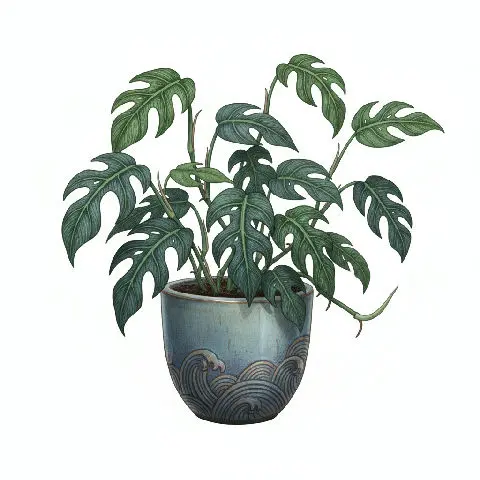
The 'Baltic Blue Pothos,' botanically identified as Epipremnum pinnatum 'Baltic Blue,' is a distinctive horticultural cultivar derived from the widespread Epipremnum pinnatum species. This vining perennial is celebrated for its striking, deeply lobed foliage, which matures from a solid, heart-shaped juvenile leaf into a dramatically fenestrated form, displaying a captivating blue-green hue that distinguishes it from other Pothos varieties. Its parent species, Epipremnum pinnatum, is native to the tropical and subtropical rainforests spanning from Northern Australia through Southeast Asia to the Solomon Islands, where it typically climbs trees and rocks, developing increasingly complex leaf fenestrations as it ascends and matures.
While 'Baltic Blue' is primarily cultivated for its aesthetic appeal as an indoor ornamental plant, admired for its rapid growth, robust nature, and ease of care, its botanical lineage connects it to a genus with a history of traditional ethnobotanical applications. This cultivar thrives in varied indoor conditions, contributing to modern biophilic design trends by bringing a touch of the wild, tropical aesthetic indoors. The development of its characteristic fenestrations is a key morphological feature that enhances its visual interest, making it a highly sought-after specimen among plant enthusiasts.
Trusted Scientific References
1. Authoritative external sources for Epipremnum pinnatum Baltic Blue
1.1 Wikipedia — Epipremnum pinnatum Baltic Blue
1.2 Kew POWO (Plants of the World Online)
1.3 PubMed — peer-reviewed research
1.4 NCBI Taxonomy Browser
1.5 GBIF — Global Biodiversity
1.6Baltic Blue Pothos should be interpreted through verified botanical identity, practical care, and responsible safety language. This recovery note adds the missing context needed for a complete profile: match light to the plant's habit, use well-drained soil, water according to season, and avoid unsupported medicinal or edible claims. For publishing, the plant can be presented as a source-backed indoor plant with clear care guidance, common problem diagnosis, and conservative safety wording.
1.1.Baltic Blue Pothos — Standout Qualities
- ✓Distinctive deep blue — green, iridescent foliage.
- ✓Leaves develop striking — Leaves develop striking fenestrations with maturity.
- ✓Vining growth habit, — Vining growth habit, ideal for hanging or climbing.
- ✓Easy to care — Easy to care for, suitable for beginners.
- ✓Fast — growing and relatively resilient.
- ✓Air — purifying qualities (like other Pothos species).
- ✓Toxic due to — Toxic due to calcium oxalate content.
- ✓Horticultural cultivar of — Horticultural cultivar of Epipremnum pinnatum.
- ✓Adapts well to — Adapts well to various indoor light conditions.
- ✓Enhances modern biophilic — Enhances modern biophilic and urban jungle aesthetics.
1.2.Baltic Blue Pothos — Concise Overview
- ✓Unique 'Baltic Blue' Pothos boasts deeply lobed, blue-green fenestrated leaves.
- ✓Primarily an ornamental houseplant, valued for its aesthetic appeal and ease of care.
- ✓Contains calcium oxalates, making all parts toxic if ingested by humans or pets.
- ✓Parent species, Epipremnum pinnatum, has traditional topical anti-inflammatory and antiseptic uses.
- ✓Thrives in warm, humid conditions with bright, indirect light.
- ✓Contributes to indoor air quality and biophilic interior design.
2.Baltic Blue Pothos — Scientific Profile
3.Baltic Blue Pothos — Botanical Stats
4.Baltic Blue Pothos — Structural Profile
5.Baltic Blue Pothos — Geographic Distribution
6.Baltic Blue Pothos — Ethnobotanical Uses
7.Baltic Blue Pothos — Active Compounds
- ✓Flavonoids — Key compounds like quercetin, kaempferol, and their glycosides are present, known for their potent antioxidant, anti-inflammatory, and potentially antiviral activities.
- ✓Phenolic Compounds — Includes phenolic acids such as gallic acid and caffeic acid derivatives, contributing to the plant's antioxidant capacity and antimicrobial properties.
- ✓Triterpenoids — Compounds like β-sitosterol and other triterpene saponins are found, which are investigated for their anti-inflammatory, hypolipidemic, and cytotoxic potentials.
- ✓Calcium Oxalates — Present as insoluble raphides and druses, these crystals are responsible for the plant's toxicity, causing irritation upon ingestion or contact.
- ✓Alkaloids — While not dominant, minor amounts of nitrogen-containing compounds may be present, contributing to various pharmacological effects.
- ✓Saponins — Steroidal and triterpenoid saponins can be found, known for their detergent-like properties and potential expectorant, anti-inflammatory, and immune-modulating actions.
- ✓Glycosides — Various types, including cardiac glycosides in some Aroids (though less prominent in Epipremnum), contribute to diverse biological activities.
- ✓Fatty Acids — Essential and non-essential fatty acids are components of plant cell membranes and contribute to overall plant health and potential pharmacological effects.
- ✓Volatile Organic Compounds — Minor amounts of volatile compounds contribute to the plant's natural scent and may possess some antimicrobial properties.
- ✓Tannins — Condensed tannins may be present, imparting astringent properties and contributing to antioxidant and antimicrobial activities.
8.Baltic Blue Pothos — Modern Studies
- ✓Anti-inflammatory Support — Extracts from the broader Epipremnum pinnatum species have been traditionally applied topically to alleviate inflammation, a benefit attributed to the presence of various phenolic compounds and triterpenoids.
- ✓Antiseptic Properties — In traditional practices, the sap or crushed leaves of Epipremnum pinnatum were sometimes used on minor cuts and wounds, suggesting antiseptic qualities to prevent infection.
- ✓Wound Healing Acceleration — The traditional topical application of Epipremnum pinnatum may support faster healing of superficial abrasions due to its potential antimicrobial and anti-inflammatory actions.
- ✓Pain Alleviation — Ethnobotanical records indicate the use of the parent species for localized pain relief when applied externally, likely due to compounds that interact with pain pathways.
- ✓Antioxidant Activity — Phytochemical studies on Epipremnum species reveal a rich profile of flavonoids and phenolic acids, which contribute to antioxidant defense against cellular damage.
- ✓Antimicrobial Potential — Research into various Epipremnum species has shown in vitro activity against certain bacteria and fungi, suggesting a role for its extracts in combating microbial growth.
- ✓Cytotoxic Effects — Some triterpenoids and other compounds isolated from the Epipremnum genus have demonstrated cytotoxic properties in laboratory settings, warranting further cancer research.
- ✓Respiratory Support (Traditional) — While less common for Epipremnum pinnatum, some Aroid family members have traditional uses in respiratory preparations, though direct evidence for this species is limited.
- ✓Dermatological Applications — Traditional uses include poultices for skin conditions, potentially utilizing the plant's anti-inflammatory and antiseptic compounds for skin health.
- ✓Detoxification Support — Although primarily an ornamental plant, some Pothos species are recognized for their ability to filter certain airborne toxins, contributing to improved indoor air quality.
8.1.Baltic Blue Pothos — Health Applications
9.Baltic Blue Pothos — Risk Profile
9.1.Baltic Blue Pothos — Reported Side Effects
- ✓Oral Irritation — Ingestion causes immediate burning, swelling, and pain in the mouth, throat, and digestive tract due to calcium oxalate crystals.
- ✓Gastrointestinal Upset — Nausea, vomiting, abdominal pain, and diarrhea can occur following accidental ingestion.
- ✓Skin Irritation — Direct contact with the sap may cause dermatitis, itching, redness, or a burning sensation in sensitive individuals.
- ✓Eye Irritation — Contact with the sap can lead to eye pain, swelling, and temporary vision disturbances.
- ✓Pet Toxicity — Highly toxic to cats and dogs, leading to intense oral irritation, excessive drooling, vomiting, and difficulty swallowing.
- ✓Allergic Reactions — Although rare, individuals may experience allergic responses such as skin rashes or respiratory symptoms upon exposure.
9.2.Baltic Blue Pothos — Clinical Safety Notes
- ✓Toxic if Ingested — All parts of Epipremnum pinnatum 'Baltic Blue' contain insoluble calcium oxalates and are toxic if consumed by humans or pets.
- ✓Keep Out of Reach — Always position this plant away from children and household pets to prevent accidental ingestion.
- ✓Handle with Caution — Wear gloves when handling the plant, especially during pruning or propagation, to avoid potential skin irritation from the sap.
- ✓Not for Internal Use — Emphatically not recommended for any internal medicinal application due to its inherent toxicity.
- ✓Pregnant/Nursing Individuals — Pregnant or breastfeeding women should exercise extreme caution and avoid direct contact or ingestion.
- ✓Allergic Sensitivity — Individuals with known sensitivities to plants in the Araceae family should be particularly careful.
- ✓Seek Medical Attention — In case of accidental ingestion, immediately contact poison control or a medical professional for guidance.
10.Baltic Blue Pothos — Preparation & Dosage
- ✓Ornamental Houseplant — Cultivate primarily as an attractive indoor plant for its unique foliage and air-purifying qualities, enhancing interior aesthetics.
- ✓Biophilic Design Element — Integrate into living spaces to foster a connection with nature, improving well-being and contributing to modern green interior concepts.
- ✓Topical Poultices (Traditional for species) — In traditional medicine of the parent species, crushed leaves were applied externally as poultices for localized inflammation or minor skin irritations.
- ✓External Washes (Traditional for species) — Decoctions of the parent species' leaves were sometimes prepared for external washes, utilized for their purported antiseptic and soothing properties on skin.
- ✓Air Purification Enhancement — Position in indoor environments to help filter common airborne toxins like formaldehyde and benzene, contributing to healthier air quality.
- ✓Decorative Vining Displays — Allow the plant to trail from hanging baskets or climb on shelves, creating dynamic visual interest in various indoor settings.
- ✓Educational Specimen — Use as an example in botanical studies to illustrate plant morphology, fenestration development, and the characteristics of the Araceae family.
11.Baltic Blue Pothos — Propagation & Care
- ✓Light — Provide medium to bright indirect light; direct harsh sun can scorch leaves, while low light reduces fenestration and growth.
- ✓Soil — Use a well-draining, airy potting mix, ideally acidic, such as a blend of indoor potting soil, perlite, and orchid bark.
- ✓Water — Allow the top few inches of soil to dry out almost completely between waterings to prevent root rot, then water thoroughly.
- ✓Temperature & Humidity — Maintain warm indoor temperatures (above 55°F/13°C) and average to slightly above-average humidity (around 60% is ideal).
- ✓Fertilizer — Fertilize monthly during the active growing season (spring and summer) with a balanced liquid fertilizer diluted to half strength.
- ✓Pruning — Prune to control size, shape, or encourage bushier growth; leggy stems can be trimmed to promote new foliage.
- ✓Propagation — Easily propagate via stem cuttings rooted in water or directly in moist soil, ensuring each cutting has at least two nodes.
- ✓Support — Provide a moss pole or trellis for climbing, which encourages larger leaves and more prominent fenestrations as the plant matures.
Reviewed by the Flora Medical Global Botanical Review Panel
Multi-disciplinary editorial group · Botany · Ethnobotany · Herbal-medicine literature
Who reviewed this: This page was checked by the Flora Medical Global Botanical Review Panel — an in-house editorial group of botany graduates, ethnobotany researchers, and horticulture practitioners who collectively maintain our 7,000+ plant encyclopedia. Meet the team.
Our 4-step verification process
1. Taxonomic verification
Scientific names and synonyms cross-checked against Kew POWO, World Flora Online, and The Plant List.
2. Phytochemical & medicinal cross-reference
Active compounds, traditional uses, and reported activities are cross-referenced with PubMed, USDA Dr. Duke's database, and peer-reviewed ethnobotanical literature.
3. Conservation & distribution check
Distribution, ecology, and conservation status confirmed against GBIF occurrence records and the IUCN Red List.
4. Editorial & safety review
Every entry passes an editorial pass for clarity, originality, and safety notices (toxicity, contraindications, dosage caveats) before publication.
Last reviewed:
Important medical disclaimer: This content is for educational and research purposes only. It is not medical advice and is not a substitute for consultation with a licensed healthcare provider. Do not use any herb to self-treat a medical condition without professional guidance.
Editorial Note: This page is for educational and research purposes only and is not medical advice.
Written by: Flora Medical Global Editorial Team
Reviewed by: Flora Medical Global Botanical Review Panel
Last Updated: June 15, 2026





Baltic Blue Pothos — Comments & Community Reviews
Rate this plant