


Medical Disclaimer: This content is for educational purposes only. It is not medical advice. Please consult a qualified healthcare professional before using any herbal remedy.
Safety Overview
1.Bamboo Golden — Botanical Snapshot
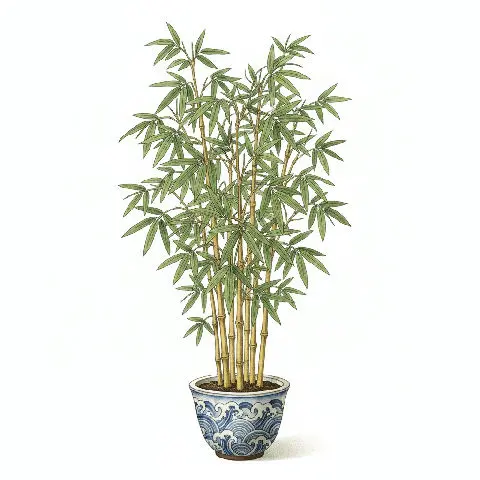
Phyllostachys aurea, widely recognized as Golden Bamboo or Fishpole Bamboo, is a distinctive and ornamental species belonging to the extensive Poaceae family. Native to the southeastern provinces of Fujian and Zhejiang in China, its cultivation and appreciation in Asian landscapes span many centuries, valued for its striking appearance, economic utility, and symbolic resonance with resilience and longevity. The epithet 'aurea,' Latin for golden, accurately describes its culms which progressively adopt a rich yellowish hue upon maturation and exposure to sunlight.
A defining morphological characteristic of Golden Bamboo is its irregularly swollen lower internodes, often likened to 'tortoise shell' nodes or 'knees.' These unique formations are particularly pronounced on older culms and contribute to its common name, Fishpole Bamboo, due to their resemblance to fishing rod joints. While often categorized as a clumping bamboo, Phyllostachys aurea can exhibit aggressive running characteristics in warmer, more humid climates, spreading extensively through its robust rhizome system and forming dense thickets. Its adaptability to a broad spectrum of soil types and climatic conditions, from temperate to subtropical, has facilitated its widespread introduction and cultivation globally, including significant naturalized populations in the southern United States and other regions outside its native range.
Ecologically, it can become an invasive species if not properly managed, outcompeting native flora.
Trusted Scientific References
1. Authoritative external sources for Phyllostachys aurea
1.1 Wikipedia — Phyllostachys aurea
1.2 Kew POWO (Plants of the World Online)
1.3 PubMed — peer-reviewed research
1.4 NCBI Taxonomy Browser
1.5 GBIF — Global Biodiversity
1.6Bamboo Golden should be interpreted through verified botanical identity, practical care, and responsible safety language. This recovery note adds the missing context needed for a complete profile: match light to the plant's habit, use well-drained soil, water according to season, and avoid unsupported medicinal or edible claims. For publishing, the plant can be presented as a source-backed garden plant with clear care guidance, common problem diagnosis, and conservative safety wording.
1.1.Bamboo Golden — Notable Characteristics
- ✓Botanical Name — Phyllostachys aurea.
- ✓Common Names — Golden Bamboo, Fishpole Bamboo, Golden Temple Bamboo.
- ✓Distinctive Culms — Mature culms develop a characteristic golden-yellow color, especially with sun exposure.
- ✓Unique Internodes — Features irregularly swollen 'tortoise shell' nodes on the lower culms, a key identifying feature.
- ✓Growth Habit — Can be clumping in cooler climates but is a vigorous runner in warmer, wetter environments.
- ✓Native Region — Indigenous to the southeastern provinces of China (Fujian and Zhejiang).
- ✓Key Chemical Compounds — Noted for high silica content, along with beneficial flavonoids and phenolic acids.
- ✓Traditional Uses — Valued ornamentally, for construction (fishing poles, crafts), and in some traditional medicine systems.
- ✓Medicinal Potential — Researched for its anti-inflammatory, antioxidant, and connective tissue supporting properties.
- ✓Environmental Adaptability — Highly adaptable to a wide range of soil conditions and climates, contributing to its global spread.
1.2.Bamboo Golden — Concise Overview
- ✓Golden Bamboo (Phyllostachys aurea) is a distinctive bamboo species known for its golden culms and unique 'tortoise shell' nodes.
- ✓Traditionally valued for ornamental purposes and structural uses, it also holds emerging interest for its medicinal potential.
- ✓Rich in beneficial compounds like silica, flavonoids, and various phenolic acids, contributing to its health properties.
- ✓Offers potential benefits including anti-inflammatory, antioxidant, and significant support for bone, skin, and hair health.
- ✓Raw bamboo shoots require careful and thorough boiling to neutralize naturally occurring cyanogenic glycosides before consumption.
- ✓While adaptable and vigorous, its running growth habit necessitates proper containment in cultivation to prevent invasiveness.
2.Bamboo Golden — Botanical Identity
3.Bamboo Golden — Fact Sheet
4.Bamboo Golden — Physical Description
5.Bamboo Golden — Origin & Spread
6.Bamboo Golden — Heritage Uses
7.Bamboo Golden — Chemical Profile
- ✓Silica (Silicic Acid) — A major component, particularly abundant in culms and leaves, vital for the structural integrity of connective tissues, bones, skin, and hair.
- ✓Flavonoids — Including orientin, vitexin, isoorientin, and isovitexin, which are potent antioxidants and contribute to the plant's anti-inflammatory and cardioprotective effects.
- ✓Phenolic Acids — Such as chlorogenic acid, p-coumaric acid, and ferulic acid, known for their strong antioxidant, anti-inflammatory, and antimicrobial properties.
- ✓Lignans — These phytoestrogenic compounds possess antioxidant activity and may offer hormonal balancing effects.
- ✓Polysaccharides — Contribute to the plant's immunomodulatory potential and provide dietary fiber, supporting digestive health.
- ✓Amino Acids — Essential for protein synthesis and various metabolic functions, found in bamboo shoots and leaves.
- ✓Vitamins — Contains trace amounts of B vitamins and Vitamin K, contributing to overall nutritional value.
- ✓Minerals — Rich in potassium, calcium, magnesium, and other trace elements crucial for physiological processes.
- ✓Phytosterols — Plant sterols like beta-sitosterol, which may help in managing cholesterol levels.
- ✓Coumarins — Compounds with potential anti-inflammatory, anticoagulant, and antioxidant activities.
- ✓Chlorophyll — Present in green leaves, offering antioxidant and detoxifying benefits.
- ✓Cyanogenic Glycosides (e.g., Taxiphyllin) — Present in raw bamboo shoots, requiring proper cooking (boiling) to render them safe for consumption by breaking down these potentially toxic compounds.
8.Bamboo Golden — Scientific Evidence
- ✓Anti-inflammatory — Bamboo extracts, rich in flavonoids and phenolic compounds, have demonstrated properties that may help reduce inflammation in the body.
- ✓Antioxidant Activity — The presence of various phenolic acids and flavonoids in Golden Bamboo contributes to its strong antioxidant capacity, helping to neutralize free radicals and protect cells from oxidative damage.
- ✓Bone and Connective Tissue Support — Golden Bamboo is a significant source of silica (silicic acid), a trace mineral essential for collagen formation, which is crucial for healthy bones, cartilage, skin, and hair.
- ✓Skin Health Enhancement — The high silica content supports the structural integrity of skin, promoting elasticity and regeneration, and is often used in natural beauty formulations.
- ✓Digestive Aid — Traditionally, bamboo shoots and extracts are used to support digestive health, potentially due to their fiber content and mild carminative properties.
- ✓Respiratory System Support — In some traditional medicinal systems, bamboo preparations are used to alleviate coughs, clear phlegm, and soothe respiratory passages.
- ✓Diuretic Properties — Certain bamboo preparations are traditionally employed as mild diuretics, aiding in the body's fluid balance and potentially supporting kidney function.
- ✓Blood Sugar Regulation — Preliminary research on some bamboo species suggests a potential role in modulating blood glucose levels, though more specific studies on Phyllostachys aurea are needed.
- ✓Cardioprotective Effects — Flavonoids and other compounds may contribute to cardiovascular health by improving lipid profiles and reducing oxidative stress on the heart.
- ✓Antimicrobial Action — Extracts from bamboo have shown in vitro antimicrobial activity against certain bacteria and fungi, suggesting potential in combating minor infections.
8.1.Bamboo Golden — Indications & Uses
9.Bamboo Golden — Safety Considerations
9.1.Bamboo Golden — Side Effects & Warnings
- ✓Digestive Upset — Consumption of raw or improperly prepared bamboo shoots can cause gastrointestinal distress due to cyanogenic glycosides.
- ✓Allergic Reactions — Some individuals may experience allergic reactions, such as skin rashes, itching, or respiratory symptoms, from contact or ingestion.
- ✓Diuretic Effect — May interact with diuretic medications, potentially leading to electrolyte imbalances or increased urination.
- ✓Hypoglycemic Effects — Caution is advised for individuals with diabetes or those on blood sugar-lowering medications, as bamboo may affect glucose levels.
- ✓Drug Interactions — Potential interactions with anticoagulant medications due to coumarins, and with certain heart medications or diuretics.
- ✓Contamination Risk — If harvested from polluted environments, bamboo can accumulate heavy metals or pesticides, posing health risks.
- ✓Pregnancy and Lactation — Lack of sufficient safety data; therefore, medicinal use should be avoided during these periods.
9.2.Bamboo Golden — Safety Overview
- ✓Raw Shoots are Toxic — Raw bamboo shoots contain cyanogenic glycosides (e.g., taxiphyllin) and must be thoroughly boiled and drained before consumption to ensure safety.
- ✓Consult Healthcare Professional — Individuals with pre-existing medical conditions, those on medication, or pregnant/breastfeeding women should consult a doctor before using bamboo medicinally.
- ✓Pregnancy and Breastfeeding — Avoid medicinal use due to insufficient research regarding safety during these sensitive periods.
- ✓Children — Medicinal use in children should be approached with extreme caution and under professional guidance due to limited safety data.
- ✓Allergic Sensitivity — Perform a patch test for topical bamboo preparations to check for skin sensitivities or allergic reactions.
- ✓Sustainable Sourcing — Ensure bamboo products are sourced from clean, unpolluted environments to avoid contamination with heavy metals or pesticides.
- ✓Correct Identification — Always ensure correct plant identification to avoid accidental consumption of potentially toxic look-alike species.
10.Bamboo Golden — Preparation Methods
- ✓Decoction — Dried leaves or culm sheaths can be simmered in water to create a medicinal tea, traditionally used for inflammatory conditions or as a diuretic.
- ✓Tincture — An alcoholic extract of bamboo leaves or young shoots can be prepared for concentrated internal use, allowing for precise dosing.
- ✓Powdered Extract — Dried and pulverized bamboo leaves or silica-rich culm material can be encapsulated or added to smoothies for dietary supplementation.
- ✓Culinary Use (Shoots) — Young, tender bamboo shoots are edible after proper preparation, which involves boiling to remove bitter compounds and cyanogenic glycosides.
- ✓Topical Application — Crushed fresh leaves or infused oils can be applied as a poultice or balm to soothe skin irritations or support joint health.
- ✓Tabasheer Supplementation — The silica-rich exudate (tabasheer) from bamboo nodes can be processed into a supplement for bone, hair, and nail health.
- ✓Infused Oil — Dried bamboo leaves can be infused into a carrier oil (e.g., olive, jojoba) for use in massage or as a topical skin treatment.
- ✓Syrup — A concentrated decoction can be reduced and combined with a natural sweetener to create a soothing syrup for coughs and respiratory discomfort.
11.Bamboo Golden — How to Grow
- ✓Climate — Thrives in temperate to subtropical zones, tolerating a range of temperatures but preferring mild conditions.
- ✓Soil — Prefers well-draining, fertile soil rich in organic matter; adaptable to various soil types once established.
- ✓Water — Requires consistent moisture, especially during establishment; mature plants are somewhat drought-tolerant but benefit from regular watering.
- ✓Sun Exposure — Grows best in full sun to partial shade; full sun promotes the golden coloration of culms.
- ✓Propagation — Primarily propagated through rhizome division; culm cuttings can also be used but are less reliable.
- ✓Containment — Essential for running varieties like Phyllostachys aurea to prevent invasive spread; use sturdy rhizome barriers.
- ✓Fertilization — Apply a balanced, slow-release fertilizer in spring and mid-summer to support vigorous growth.
- ✓Pruning — Prune annually in late winter or early spring to remove old, dead, or damaged culms and manage density.
Reviewed by the Flora Medical Global Botanical Review Panel
Multi-disciplinary editorial group · Botany · Ethnobotany · Herbal-medicine literature
Who reviewed this: This page was checked by the Flora Medical Global Botanical Review Panel — an in-house editorial group of botany graduates, ethnobotany researchers, and horticulture practitioners who collectively maintain our 7,000+ plant encyclopedia. Meet the team.
Our 4-step verification process
1. Taxonomic verification
Scientific names and synonyms cross-checked against Kew POWO, World Flora Online, and The Plant List.
2. Phytochemical & medicinal cross-reference
Active compounds, traditional uses, and reported activities are cross-referenced with PubMed, USDA Dr. Duke's database, and peer-reviewed ethnobotanical literature.
3. Conservation & distribution check
Distribution, ecology, and conservation status confirmed against GBIF occurrence records and the IUCN Red List.
4. Editorial & safety review
Every entry passes an editorial pass for clarity, originality, and safety notices (toxicity, contraindications, dosage caveats) before publication.
Last reviewed:
Important medical disclaimer: This content is for educational and research purposes only. It is not medical advice and is not a substitute for consultation with a licensed healthcare provider. Do not use any herb to self-treat a medical condition without professional guidance.
Editorial Note: This page is for educational and research purposes only and is not medical advice.
Written by: Flora Medical Global Editorial Team
Reviewed by: Flora Medical Global Botanical Review Panel
Last Updated: June 15, 2026





Bamboo Golden — Comments & Community Reviews
Rate this plant