


Medical Disclaimer: This content is for educational purposes only. It is not medical advice. Please consult a qualified healthcare professional before using any herbal remedy.
Safety Overview
1.Barringtonia — Plant Snapshot
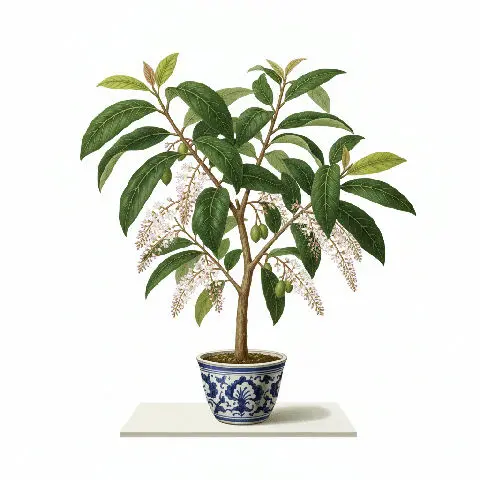
Barringtonia acutangula, commonly known as the Indian Oak or Freshwater Mangrove, is a stately, medium-sized evergreen tree native to the tropical and subtropical regions of Asia and northern Australia. Typically reaching heights of 10-15 meters, with some specimens exceeding 20 meters, it forms a dense, spreading canopy, providing significant shade. The tree's bark is characteristically dark brown and somewhat fissured. Its leaves are simple, alternate, and distinctly oblanceolate to obovate, measuring approximately 8-20 cm in length and 3-7 cm in width.
These leaves are glossy green with entire margins and often display a reddish hue before senescence, adding to the tree's ornamental appeal. The most striking feature is its pendulous inflorescence, a terminal or axillary raceme that can extend up to 40 cm, adorned with numerous small, fragrant flowers. These flowers range from pinkish-red to white, each possessing four petals and a multitude of prominent stamens, which collectively create a captivating brush-like appearance. The fruit is a distinctive, four-angled or ovate berry, 2-5 cm long, resembling a small wild cardamom pod, transitioning from green to brown upon maturity and encasing a single seed.
An extensive root system enables its survival and thriving in riparian zones, freshwater swamps, and coastal areas, demonstrating remarkable tolerance to waterlogged soils. Beyond its ecological role, Barringtonia acutangula holds deep historical and cultural significance in traditional medicine systems across its native range, where it is also valued for timber and as an ornamental species.
Trusted Scientific References
1. Authoritative external sources for Barringtonia acutangula
1.1 Wikipedia — Barringtonia acutangula
1.2 Kew POWO (Plants of the World Online)
1.3 PubMed — peer-reviewed research
1.4 NCBI Taxonomy Browser
1.5 GBIF — Global Biodiversity
1.6Barringtonia should be interpreted through verified botanical identity, practical care, and responsible safety language. This recovery note adds the missing context needed for a complete profile: match light to the plant's habit, use well-drained soil, water according to season, and avoid unsupported medicinal or edible claims. For publishing, the plant can be presented as a source-backed medicinal plant with clear care guidance, common problem diagnosis, and conservative safety wording.
1.1.Barringtonia — Key Features
- ✓Botanical Name — Barringtonia acutangula (L.) Gaertn.
- ✓Common Names — Indian Oak, Freshwater Mangrove, Hijjala, Samudraphal.
- ✓Family — Lecythidaceae, known for tropical trees and shrubs.
- ✓Habitat — Riparian zones, freshwater swamps, riverbanks, and coastal areas.
- ✓Morphology — Medium-sized evergreen tree with pendulous pinkish-red flowers and distinctive four-angled fruits.
- ✓Primary Actions — Exhibits significant anti-inflammatory, antipyretic, and anthelmintic activities.
- ✓Traditional Medicine — Widely utilized in Ayurvedic medicine for a range of ailments including fever, diarrhea, and skin diseases.
- ✓Phytochemistry — Rich in triterpenoid saponins, tannins, and phenolic compounds.
- ✓Ecological Role — Important for stabilizing riverbanks and supporting local ecosystems.
- ✓Ornamental Value — Valued for its attractive flowers and foliage in landscaping.
1.2.Barringtonia — Snapshot Summary
- ✓Barringtonia acutangula — Indian Oak, Freshwater Mangrove, Hijjala.
- ✓Family Lecythidaceae — Native to tropical Asia and Australia.
- ✓Key Actions — Anti-inflammatory, antipyretic, antidiarrheal, anthelmintic, anticancer.
- ✓Traditional Uses — Ayurveda for fever, diarrhea, worms, poisoning, skin conditions.
- ✓Key Constituents — Triterpenoid saponins, tannins, phenolic compounds.
- ✓Cautions — Potent action, avoid in pregnancy, strict dosage required.
2.Barringtonia — Systematic Position
3.Barringtonia — Reference Facts
4.Barringtonia — Plant Morphology
5.Barringtonia — Where It Grows
6.Barringtonia — Historical Applications
7.Barringtonia — Bioactive Constituents
- ✓Triterpenoid Saponins — Key compounds include barringtogenol C and barringtogenic acid, which are responsible for haemolytic activity, as well as significant anti-inflammatory and cytotoxic effects.
- ✓Phenolic Compounds — Gallic acid, 3,3′-dimethoxy ellagic acid, and dihydromyticetin are present, contributing to the plant's antioxidant, astringent, and antimicrobial properties.
- ✓Tannins — The bark is rich in tannins (up to 16%), imparting strong astringent qualities and contributing to its traditional use in treating diarrhea and skin ailments.
- ✓Steroids — Stigmasterol, a phytosterol, has been identified, known for its potential anti-inflammatory, antioxidant, and cholesterol-lowering effects.
- ✓Flavonoids — Various flavonoids are found, acting as potent antioxidants and contributing to the plant's overall protective and anti-inflammatory profile.
- ✓Alkaloids — While less prominent, some alkaloidal compounds may be present, contributing to its diverse pharmacological activities.
- ✓Glucosides — Specific glucosides, including barringtonic acid glucoside, are found, which are often associated with various therapeutic benefits.
- ✓Opioid Painkillers — The bark has been noted to contain compounds with opioid-like pain-relieving properties, aligning with its traditional use as an analgesic.
8.Barringtonia — Research Insights
- ✓Anti-inflammatory Action — The triterpenoid saponins, notably barringtogenol C, in Barringtonia acutangula, exhibit significant anti-inflammatory effects by inhibiting pro-inflammatory mediators, similar to NSAIDs, thereby reducing swelling and pain.
- ✓Antipyretic Properties — Extracts from the root and bark are traditionally used to manage fever, helping to reduce body temperature through mechanisms that may involve modulating immune responses.
- ✓Antidiarrheal Effects — The fresh juice of the leaves, often combined with honey, is employed to treat diarrhea, suggesting an ability to regulate gut motility and reduce fluid loss.
- ✓Anthelmintic Action — Cold infusions of the leaves are traditionally administered to expel intestinal worms, indicating potent anthelmintic compounds that paralyze or kill parasites.
- ✓Expectorant and Bronchodilatory Support — Historically, this plant has been used for cough and dyspnea, possibly by loosening phlegm and relaxing bronchial muscles.
- ✓Detoxifying and Antitoxic Effects — The root is applied in cases of poisoning, including spider bites and insect stings, suggesting a capacity to neutralize toxins and reduce inflammatory reactions.
- ✓Analgesic and Topical Anti-inflammatory Use — Seed paste is topically applied to alleviate localized pain and swelling, leveraging its anti-inflammatory and pain-relieving constituents.
- ✓Ocular Health Support — A paste made from the seeds is traditionally used as a collyrium for various eye diseases, indicating soothing and potentially antimicrobial properties beneficial for eye health.
- ✓Diuretic Properties — The bark powder, when consumed, is believed to promote urine production, assisting in the treatment of urinary retention and potentially aiding in urinary tract health.
- ✓Hepatoprotective and Splenic Support — The root is used in traditional medicine for splenomegaly, suggesting protective effects on the liver and spleen.
- ✓Dermatological Applications — Decoctions of the bark are used to purify blood and treat various skin diseases, pointing to its antimicrobial, anti-inflammatory, and detoxifying actions on the skin.
- ✓Anticancer Potential — Research indicates that seed and leaf extracts possess anti-tumor properties, showing promise in inhibiting cancer cell growth and inducing apoptosis.
8.1.Barringtonia — Health Applications
9.Barringtonia — Risk Profile
9.1.Barringtonia — Reported Side Effects
- ✓Gastrointestinal Upset — High doses, particularly of fruit or bark, may induce emesis (vomiting) and purgation (diarrhea) due to potent active compounds.
- ✓Hemolysis Risk — Triterpenoid saponins in the fruit are haemolytic in nature; thus, internal use must be cautious and dosage strictly controlled to avoid blood cell damage.
- ✓Uterine Contractions — Traditional use in obstructed labor suggests uterine stimulant properties, posing a risk during pregnancy or for individuals prone to uterine issues.
- ✓Hypotension — Due to its diuretic action, excessive use might lead to a drop in blood pressure, especially in individuals on antihypertensive medication.
- ✓Allergic Reactions — As with any plant material, sensitive individuals may experience allergic reactions such as skin rashes or respiratory irritation.
- ✓Drug Interactions — Potential interactions with blood thinners, diuretics, or medications affecting liver enzymes due to its active constituents.
- ✓Toxicity in Overdose — Unregulated or excessive consumption of any part of the plant may lead to systemic toxicity.
9.2.Barringtonia — Safety Overview
- ✓Pregnancy and Lactation — Avoid use during pregnancy due to potential abortifacient or uterine stimulant effects; safety during lactation is not established.
- ✓Children — Not recommended for infants or young children without explicit guidance from a qualified medical herbalist due to potent effects and lack of safety data.
- ✓Pre-existing Conditions — Individuals with blood disorders, severe liver, kidney, or cardiac conditions should exercise extreme caution and consult a healthcare professional before use.
- ✓Dosage Adherence — Adhere strictly to recommended dosages and preparation methods to prevent adverse effects, especially given its potent emetic and purgative properties.
- ✓Professional Consultation — Always consult a qualified medical herbalist or healthcare practitioner before incorporating Barringtonia acutangula into any health regimen, particularly if taking other medications.
- ✓Haemolytic Properties — Due to the haemolytic nature of its saponins, internal use should be approached with caution and under expert supervision.
- ✓External Use — While generally safer, topical applications should be tested on a small skin area first to check for sensitivity.
10.Barringtonia — Preparation & Dosage
- ✓Bark Powder (Nasya) — Fine powder of the bark is used as a nasal errhine (Nasya) in traditional medicine for relief from headaches.
- ✓Seed Paste (Collyrium) — A paste prepared from the seeds is applied as a collyrium to the eyes for treating various ocular conditions.
- ✓Leaf Juice with Honey — Fresh leaf juice, typically 10-12 ml, is mixed with honey and administered orally to treat diarrhea.
- ✓Bark Powder for Urinary Retention — 8-10g of bark powder is given with sugar candy to promote urination and alleviate urinary retention.
- ✓Root Decoction for Fever and Splenomegaly — A decoction or paste of the root, 8-10g in divided doses, is traditionally used for fever and enlarged spleen.
- ✓Bark Decoction for Skin Diseases — A decoction of the bark, 40-50 ml in divided doses, is consumed for blood purification and management of skin ailments.
- ✓Seed Paste for Topical Pain — A paste of the seeds is applied externally to reduce localized pain and swelling.
- ✓Leaf Cold Infusion for Worms — A cold infusion of the leaves, 25-30 ml, is taken to expel intestinal worms.
11.Barringtonia — Growth Requirements
- ✓Climate Preference — Thrives in tropical and subtropical climates with high humidity and abundant rainfall.
- ✓Soil Requirements — Prefers deep, fertile, waterlogged soils, often found along riverbanks, swamps, and estuarine environments.
- ✓Light Exposure — Requires full sun exposure for optimal growth, though it can tolerate partial shade in very hot climates.
- ✓Water Needs — Demands consistently moist to wet soil conditions; highly tolerant of flooding and standing water.
- ✓Propagation — Primarily propagated by seeds, which germinate readily, or sometimes by stem cuttings.
- ✓Growth Rate — Exhibits a moderate to fast growth rate under ideal conditions, developing a robust root system quickly.
- ✓Maintenance — Generally low maintenance, requiring minimal pruning except for shaping or removing dead branches.
- ✓Pest and Disease — Relatively resistant to most common pests and diseases, especially when grown in its natural habitat.
Reviewed by the Flora Medical Global Botanical Review Panel
Multi-disciplinary editorial group · Botany · Ethnobotany · Herbal-medicine literature
Who reviewed this: This page was checked by the Flora Medical Global Botanical Review Panel — an in-house editorial group of botany graduates, ethnobotany researchers, and horticulture practitioners who collectively maintain our 7,000+ plant encyclopedia. Meet the team.
Our 4-step verification process
1. Taxonomic verification
Scientific names and synonyms cross-checked against Kew POWO, World Flora Online, and The Plant List.
2. Phytochemical & medicinal cross-reference
Active compounds, traditional uses, and reported activities are cross-referenced with PubMed, USDA Dr. Duke's database, and peer-reviewed ethnobotanical literature.
3. Conservation & distribution check
Distribution, ecology, and conservation status confirmed against GBIF occurrence records and the IUCN Red List.
4. Editorial & safety review
Every entry passes an editorial pass for clarity, originality, and safety notices (toxicity, contraindications, dosage caveats) before publication.
Last reviewed:
Important medical disclaimer: This content is for educational and research purposes only. It is not medical advice and is not a substitute for consultation with a licensed healthcare provider. Do not use any herb to self-treat a medical condition without professional guidance.
Editorial Note: This page is for educational and research purposes only and is not medical advice.
Written by: Flora Medical Global Editorial Team
Reviewed by: Flora Medical Global Botanical Review Panel
Last Updated: June 15, 2026





Barringtonia — Comments & Community Reviews
Rate this plant