


Medical Disclaimer: This content is for educational purposes only. It is not medical advice. Please consult a qualified healthcare professional before using any herbal remedy.
Safety Overview
1.Bayberry — Plant Snapshot
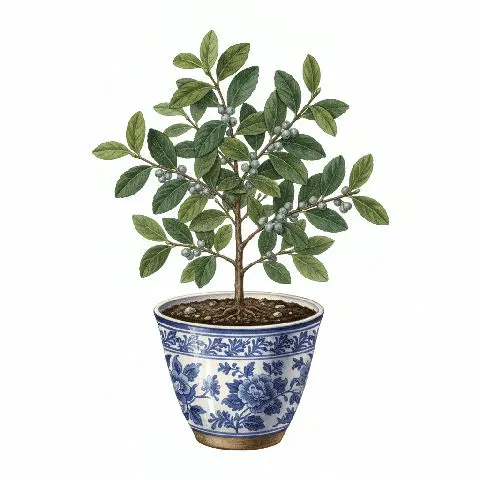
Bayberry, known scientifically as Myrica cerifera, is an adaptable and enduring evergreen shrub or small tree, indigenous to the southeastern United States, extending its natural range into Central America and the Caribbean. This resilient species typically attains a height of 3 to 9 meters, frequently forming dense, ecologically significant thickets. Its distinctive foliage comprises narrow, oblanceolate to obovate leaves, generally 2 to 10 cm in length, which release a characteristic aroma when crushed due to their rich volatile oil content. These leaves are notably glandular-dotted on both surfaces and feature margins that are either entire or sparsely toothed. Myrica cerifera is dioecious, meaning individual plants bear either male or female flowers.
The inconspicuous flowers emerge in catkins during early spring, often coinciding with or preceding the new leaf growth. A prominent feature of Bayberry is its small, spherical fruits, approximately 2-4 mm in diameter, encased in a thick, waxy, bluish-white coating. These berries are a crucial food source for avian species and hold historical importance for their wax. The bark is smooth and greyish-brown, gradually developing slight fissures with maturity. Its robust and fibrous root system plays a vital role in colonizing disturbed areas and stabilizing soil.
Taxonomically, Myrica cerifera is classified within the genus Myrica, part of the Myricaceae family, which is recognized for its members' capacity to fix atmospheric nitrogen through a symbiotic relationship with Frankia bacteria in root nodules, although this specific capability is still under discussion for M. cerifera. Historically, Bayberry has been a cornerstone of indigenous North American medicine, employed by various tribes for a broad spectrum of ailments. Its cultural impact also includes its use in candle-making, where the fragrant wax from its berries was highly valued, contributing to common names such as Wax Myrtle and Candleberry. While not formally integrated into systems like Ayurveda or Traditional Chinese Medicine, its properties resonate with principles found in many global traditional healing practices.
Trusted Scientific References
1. Authoritative external sources for Myrica cerifera
1.1 Wikipedia — Myrica cerifera
1.2 Kew POWO (Plants of the World Online)
1.3 PubMed — peer-reviewed research
1.4 NCBI Taxonomy Browser
1.5 GBIF — Global Biodiversity
1.1.Bayberry — Key Features
- ✓Aromatic Foliage — Leaves release a distinctive scent when crushed, indicative of volatile oil content.
- ✓Waxy Berries — Small, bluish-white fruits covered in a thick, fragrant wax, historically used for candles.
- ✓Evergreen Habit — Retains its green leaves year-round, providing year-round interest and habitat.
- ✓Dioecious Nature — Separate male and female plants are required for fruit production.
- ✓Nitrogen — Fixing Potential — Belongs to a family known for symbiotic nitrogen fixation, though debated for M. cerifera.
- ✓Native to North America — Widely distributed across the southeastern US and parts of Central America.
- ✓Traditional Medicinal Uses — Rich history in indigenous North American herbal medicine for various ailments.
- ✓Astringent Properties — High tannin content makes it valuable for drying and tightening tissues.
- ✓Drought Tolerant — Adaptable and resilient, thriving in various soil types once established.
- ✓Ornamental Value — Often used in landscaping for its hardiness, evergreen foliage, and attractive berries.
1.2.Bayberry — Concise Overview
- ✓Bayberry (Myrica cerifera) is an evergreen shrub native to the southeastern US, known for its aromatic leaves and waxy berries.
- ✓Traditionally used by Native Americans for digestive issues, fevers, and as an astringent.
- ✓Contains tannins, flavonoids, and volatile oils, contributing to its anti-inflammatory and antioxidant properties.
- ✓Historically valued for candle wax from its berries, giving it common names like Wax Myrtle and Candleberry.
- ✓Caution is advised due to potential side effects including liver damage, increased blood pressure, and risks during pregnancy.
- ✓Clinical research validating many traditional uses is limited, emphasizing the need for professional guidance.
2.Bayberry — Scientific Profile
3.Bayberry — Quick Facts
4.Bayberry — Structural Profile
5.Bayberry — Geographic Distribution
6.Bayberry — Cultural & Traditional Roles
7.Bayberry — Active Compounds
- ✓Tannins — Predominantly gallotannins and condensed tannins, responsible for the plant's astringent properties, contributing to its use in diarrhea and as a topical agent.
- ✓Flavonoids — Including myricetin, quercetin, and anthocyanins (especially in Myrica rubra), which provide significant antioxidant and anti-inflammatory activity.
- ✓Volatile Oils — Present in the leaves and bark, contributing to the plant's characteristic aroma and potentially offering mild antiseptic and stimulating effects.
- ✓Triterpenes — Such as myricadiol, a compound identified in Bayberry, which has shown specific biological activities, including spermatocidal effects.
- ✓Phenolic Acids — Including ellagic acid, a potent antioxidant found in the berries, contributing to the plant's free radical scavenging capacity.
- ✓Proanthocyanidins — Specifically prodelphinidin B-2 3,3'-di-O-gallate, isolated from related species like Myrica rubra, demonstrating antiviral properties.
- ✓Resins — Contribute to the plant's protective mechanisms and may have some traditional medicinal applications.
- ✓Wax Esters — The distinctive waxy coating on the berries is composed of various wax esters, historically used for candle making and contributing to its common names.
- ✓Alkaloids — While not a primary class, some minor alkaloid-like compounds might be present, though their medicinal significance is less prominent.
- ✓Saponins — These compounds can be found in various plant parts and may contribute to some of the plant's traditional uses, though specific saponins are not extensively highlighted for Myrica cerifera.
8.Bayberry — What Research Suggests
- ✓Astringent Properties — Bayberry bark and leaves contain tannins that create a drying and tightening effect on tissues, useful for conditions like diarrhea and excessive secretions.
- ✓Anti-inflammatory Action — Research, though limited, suggests Bayberry possesses compounds that may help reduce inflammation within the body, potentially alleviating discomfort.
- ✓Antioxidant Support — The plant is rich in antioxidant compounds, like flavonoids and anthocyanins, which combat oxidative stress and protect cells from damage by free radicals.
- ✓Digestive Aid — Traditionally used to soothe gastrointestinal issues, Bayberry tea has been employed to help manage diarrhea and promote overall digestive comfort.
- ✓Fever Reduction — Native American traditions utilized Bayberry preparations, particularly from leaves and stems, for their febrifuge properties to help reduce fever.
- ✓Circulatory Stimulant — In folk medicine, Bayberry has been regarded as a tonic that can stimulate the circulatory system, promoting better blood flow throughout the body.
- ✓Antimicrobial Effects — Certain constituents of Bayberry may exhibit antimicrobial activity, making it a potential aid against bacterial or parasitic infections, such as intestinal worms.
- ✓Wound Healing — Applied topically as an ointment or poultice, Bayberry has been traditionally used to support the healing of skin ulcers, wounds, and minor skin irritations due to its astringent and possibly antiseptic qualities.
- ✓Sore Throat Relief — As a gargle, Bayberry preparations have been used in traditional practices to alleviate symptoms of a sore throat, likely due to its astringent and soothing properties.
- ✓Vaginal Discharge Management — Historically, Bayberry was used as a douche for addressing vaginal discharge, leveraging its astringent and cleansing attributes.
8.1.Bayberry — Indications & Uses
9.Bayberry — Precautions & Warnings
9.1.Bayberry — Warnings
- ✓Nausea and Vomiting — Ingesting large quantities of Bayberry, especially the root bark, can induce gastrointestinal upset.
- ✓Liver Damage — Prolonged or excessive oral use of Bayberry has been associated with potential liver toxicity.
- ✓Allergic Reactions — Individuals may experience allergic responses, including skin rashes or more severe systemic reactions, particularly with topical application.
- ✓Cross-Sensitivity — There are reports of cross-sensitivity with other fruits or plant compounds in susceptible individuals.
- ✓Increased Blood Pressure — Due to its tannin content, Bayberry may contribute to sodium retention and fluid buildup, potentially elevating blood pressure.
- ✓Exacerbated Edema — For individuals prone to water retention, Bayberry might worsen existing edema due to its potential effects on fluid balance.
- ✓Reduced Blood Clotting — Some constituents may interfere with blood coagulation, posing a risk for individuals on anticoagulant medications or with bleeding disorders.
9.2.Bayberry — Safety Profile
- ✓Pregnancy and Lactation — Considered possibly unsafe; avoid use due to potential for liver damage, uterine stimulation, and the presence of a reported carcinogen in the root bark.
- ✓High Blood Pressure — Contraindicated for individuals with hypertension due to its tannin content which can increase sodium retention and fluid volume.
- ✓Edema (Water Retention) — Should be avoided by those with edema as it may exacerbate the condition.
- ✓Cancer-Causing Chemicals — The root bark is reported to contain a chemical with carcinogenic potential, raising safety concerns for internal use.
- ✓Spermatocidal Activity — Myricadiol, a compound found in Bayberry, has demonstrated spermatocidal effects, relevant for reproductive health considerations.
- ✓Drug Interactions — May interact with anticoagulant or antiplatelet medications due to its potential to reduce blood clot formation.
- ✓Dosage Uncertainty — Lack of clinical trials means there are no established safe or effective dosage recommendations for human use.
10.Bayberry — How to Use
- ✓Decoction (Bark/Roots) — Simmer dried root bark in water for 10-15 minutes to extract active compounds, traditionally used for internal conditions like diarrhea or fevers.
- ✓Infusion (Leaves) — Steep fresh or dried leaves in hot water to make a tea, often used for its tonic and stimulant properties or for parasitic worms.
- ✓Tincture — Prepare an alcohol-based extract of the bark or leaves for concentrated internal use, allowing for precise dosing.
- ✓Poultice (Crushed Leaves/Bark) — Apply crushed fresh leaves or powdered bark directly to the skin for wounds, ulcers, or localized inflammation.
- ✓Gargle/Mouthwash — Use a diluted decoction or infusion as a gargle for sore throats or as a mouthwash for oral hygiene.
- ✓Douche — A diluted infusion can be used as a traditional vaginal douche for discharge, though this practice requires caution and medical consultation.
- ✓Ointment/Salve — Incorporate Bayberry extract or powdered bark into a base of oil and wax for topical application to skin ailments.
- ✓Powder — Dried and powdered bark can be encapsulated for internal use or mixed with water for topical applications.
11.Bayberry — Growth Requirements
- ✓Site Selection — Choose a location with full sun to partial shade; Bayberry tolerates a range of light conditions.
- ✓Soil Requirements — Thrives in well-drained, acidic to neutral soils, including sandy or poor soils, reflecting its native habitat.
- ✓Water Needs — Drought-tolerant once established, but benefits from regular watering during dry periods, especially when young.
- ✓Propagation — Can be propagated by seeds (which require stratification), cuttings (semi-hardwood), or by division of suckers.
- ✓Fertilization — Generally requires minimal fertilization, as it can fix nitrogen, though a light application of balanced fertilizer can boost growth in very poor soils.
- ✓Pruning — Prune in late winter or early spring to shape the plant, remove dead or damaged branches, and maintain desired size.
- ✓Climate Suitability — Hardy in USDA zones 7-11, tolerating coastal conditions, salt spray, and various temperatures within its range.
- ✓Pest and Disease Management — Generally resistant to most pests and diseases, making it a low-maintenance plant.
Reviewed by the Flora Medical Global Botanical Review Panel
Multi-disciplinary editorial group · Botany · Ethnobotany · Herbal-medicine literature
Who reviewed this: This page was checked by the Flora Medical Global Botanical Review Panel — an in-house editorial group of botany graduates, ethnobotany researchers, and horticulture practitioners who collectively maintain our 7,000+ plant encyclopedia. Meet the team.
Our 4-step verification process
1. Taxonomic verification
Scientific names and synonyms cross-checked against Kew POWO, World Flora Online, and The Plant List.
2. Phytochemical & medicinal cross-reference
Active compounds, traditional uses, and reported activities are cross-referenced with PubMed, USDA Dr. Duke's database, and peer-reviewed ethnobotanical literature.
3. Conservation & distribution check
Distribution, ecology, and conservation status confirmed against GBIF occurrence records and the IUCN Red List.
4. Editorial & safety review
Every entry passes an editorial pass for clarity, originality, and safety notices (toxicity, contraindications, dosage caveats) before publication.
Last reviewed:
Important medical disclaimer: This content is for educational and research purposes only. It is not medical advice and is not a substitute for consultation with a licensed healthcare provider. Do not use any herb to self-treat a medical condition without professional guidance.
Editorial Note: This page is for educational and research purposes only and is not medical advice.
Written by: Flora Medical Global Editorial Team
Reviewed by: Flora Medical Global Botanical Review Panel
Last Updated: June 15, 2026





Bayberry — Comments & Community Reviews
Rate this plant