


Medical Disclaimer: This content is for educational purposes only. It is not medical advice. Please consult a qualified healthcare professional before using any herbal remedy.
Safety Overview
1.Bearberry — Overview
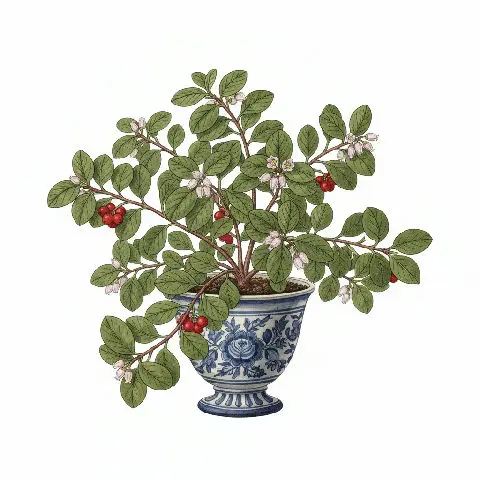
Bearberry, scientifically known as Arctostaphylos patula, is an intrinsically resilient, low-growing evergreen shrub belonging to the Ericaceae family, sharing botanical kinship with other notable species like blueberries and rhododendrons. This species is indigenous to the arid and semi-arid regions of western North America, flourishing particularly within the chaparral and forest ecosystems spanning California, Oregon, and Nevada. While often mistaken for its close congener, Arctostaphylos uva-ursi (Common Bearberry), A.
patula distinguishes itself through several key morphological features. Its leaves are generally larger, exhibiting a more pronounced glossy green sheen and a less serrated margin compared to A. uva-ursi.
The growth habit, while still sprawling, tends to be more upright and robust.
The foliage consists of leathery, ovate to elliptic leaves, typically measuring between 2 to 5 cm in length, with clearly defined venation patterns. In late winter to early spring, the plant produces small, urn-shaped flowers, varying in color from pristine white to delicate pink, which cluster together attractively. These flowers subsequently mature into small, characteristic red to reddish-orange drupes, a hallmark of the Arctostaphylos genus.
The extensive, deep root system of Arctostaphylos patula allows it to thrive in dry, nutrient-poor soils, making it a pioneer species in disturbed areas and highly resistant to drought and fire. Its bark is typically smooth, reddish-brown, and peels in thin layers, adding to its distinctive appearance. Historically, various Indigenous peoples of North America, including the Maidu, Miwok, and Pomo tribes, held Arctostaphylos patula in high regard for both its medicinal and practical applications, primarily utilizing the leaves for therapeutic value.
Trusted Scientific References
1. Authoritative external sources for Arctostaphylos patula
1.1 Wikipedia — Arctostaphylos patula
1.2 Kew POWO (Plants of the World Online)
1.3 PubMed — peer-reviewed research
1.4 NCBI Taxonomy Browser
1.5 GBIF — Global Biodiversity
1.1.Bearberry — Standout Qualities
- ✓Botanical Name — Arctostaphylos patula.
- ✓Common Name — Bearberry.
- ✓Family — Ericaceae.
- ✓Primary Active Compound — Arbutin.
- ✓Key Medicinal Use — Urinary tract antiseptic.
- ✓Growth Habit — Low-growing, sprawling evergreen shrub.
- ✓Habitat — Arid regions, chaparral, pine forests of Western North America.
- ✓Distinctive Feature — Urn-shaped white to pink flowers, red drupes.
- ✓Traditional Use — Indigenous North American medicine, especially for leaves.
- ✓Safety Note — Short-term use advised due to hydroquinone content.
1.2.Bearberry — Snapshot Summary
- ✓Resilient evergreen shrub native to western North America.
- ✓Leaves are traditionally used for urinary tract health.
- ✓Rich in arbutin, tannins, and flavonoids.
- ✓Known for antiseptic, anti-inflammatory, and antioxidant properties.
- ✓Use with caution and for short durations due to potential toxicity.
- ✓An important species in Indigenous North American ethnobotany.
2.Bearberry — Taxonomic Classification
3.Bearberry — Botanical Stats
4.Bearberry — Plant Morphology
5.Bearberry — Habitat & Distribution
6.Bearberry — Ethnobotanical Uses
7.Bearberry — Active Compounds
- ✓Hydroquinone Derivatives — Primarily arbutin (hydroquinone-O-beta-D-glucopyranoside) and methylarbutin, which are hydrolyzed in the body to release hydroquinone, responsible for the urinary antiseptic effects.
- ✓Flavonoids — Key compounds include quercetin, hyperoside, and myricetin, which contribute significantly to the plant's antioxidant and anti-inflammatory activities.
- ✓Tannins — Comprising gallotannins and ellagitannins such as corilagin, these compounds impart astringent properties and possess antimicrobial and antioxidant actions.
- ✓Phenolic Acids — Gallic acid, caffeic acid, and chlorogenic acid are present, further enhancing the overall antioxidant capacity of bearberry extracts.
- ✓Triterpenes — Ursolic acid is a notable triterpene found in bearberry, recognized for its anti-inflammatory, hepatoprotective, and potential anticancer properties.
- ✓Iridoids — While less prominent, certain iridoid glycosides may be present, contributing to the plant's diverse pharmacological profile.
- ✓Anthocyanins — Found in the red berries, these pigments are powerful antioxidants and contribute to the fruit's characteristic color.
- ✓Volatile Oils — Present in small quantities, these essential oils may contribute to the plant's aroma and possess mild antimicrobial attributes.
- ✓Resins — These complex mixtures of organic compounds contribute to the plant's protective mechanisms against herbivores and pathogens.
8.Bearberry — What Research Suggests
- ✓Urinary Tract Health — Bearberry leaves, rich in arbutin, are converted into hydroquinone in the urinary tract, acting as a potent antiseptic against bacterial infections like UTIs.
- ✓Anti-inflammatory Action — The plant's high content of phenolic compounds, including flavonoids and tannins, contributes to reducing inflammation throughout the body.
- ✓Antioxidant Properties — Numerous phenolic compounds found in bearberry, such as hyperoside and corilagin, effectively scavenge free radicals, protecting cells from oxidative damage.
- ✓Diuretic Effects — Bearberry promotes increased urine flow, aiding in the flushing out of toxins and supporting kidney function.
- ✓Astringent Qualities — The presence of tannins provides a natural drying and toning effect on mucous membranes and skin, useful for minor irritations.
- ✓Skin Brightening — Derivatives of hydroquinone can inhibit melanin production, making bearberry extracts a potential ingredient in formulations for reducing hyperpigmentation.
- ✓Wound Healing — Traditionally, bearberry preparations were used topically to aid in the healing of minor cuts, abrasions, and skin irritations due to its astringent and antiseptic properties.
- ✓Gastrointestinal Support — Its astringent action can help alleviate mild cases of diarrhea by toning the intestinal lining and reducing fluid secretion.
- ✓Pain Relief — Through its anti-inflammatory mechanisms, bearberry may offer relief from minor aches and discomfort associated with inflammatory conditions.
8.1.Bearberry — Health Applications
9.Bearberry — Precautions & Warnings
9.1.Bearberry — Possible Adverse Reactions
- ✓Gastrointestinal Upset — Nausea, vomiting, and stomach irritation can occur, especially with high doses or prolonged use, due to the hydroquinone content.
- ✓Liver Toxicity — Long-term or excessive use may potentially lead to liver damage due to the metabolic burden of hydroquinone, necessitating cautious use.
- ✓Kidney Irritation — While used for urinary issues, very high doses might paradoxically irritate the kidneys, particularly in individuals with pre-existing renal conditions.
- ✓Urine Discoloration — Urine may turn greenish-brown due to the presence of hydroquinone metabolites, a harmless but notable side effect.
- ✓Skin Irritation — Topical application of bearberry extracts may cause contact dermatitis or allergic reactions in sensitive individuals.
- ✓Headaches — Some individuals report experiencing headaches as a side effect, possibly linked to the systemic effects of active compounds.
- ✓Constipation — The high tannin content can sometimes lead to constipation in susceptible individuals.
9.2.Bearberry — Safety Profile
- ✓Duration of Use — Recommended for short-term use only, typically no longer than 5-7 days, and not exceeding 5 courses per year to prevent toxicity.
- ✓Pregnancy and Lactation — Contraindicated during pregnancy and breastfeeding due to potential uterine stimulating effects and unknown effects on infants.
- ✓Pediatric Use — Not recommended for children under 12 years of age due to potential toxicity and lack of sufficient safety data.
- ✓Pre-existing Conditions — Avoid in individuals with kidney disease, liver disorders, peptic ulcers, or Crohn's disease.
- ✓Drug Interactions — May interact with medications that acidify urine (e.g., cranberry supplements), reducing its efficacy; consult a healthcare professional.
- ✓Hydration — Maintain adequate hydration when using bearberry to support kidney function and help dilute metabolites.
- ✓Urine pH — Efficacy as a urinary antiseptic is enhanced in alkaline urine; avoid foods or medications that acidify urine during use for optimal results.
10.Bearberry — Preparation & Dosage
- ✓Herbal Tea/Infusion — Dried bearberry leaves (1-2 teaspoons per cup) are steeped in hot water for 10-15 minutes, traditionally consumed for urinary tract support.
- ✓Decoction — Leaves are simmered in water for a longer duration (e.g., 20 minutes) to extract more robust compounds, often used for stronger internal effects or external washes.
- ✓Tincture — An alcoholic extract of bearberry leaves, offering a concentrated form for precise dosing, typically used for systemic medicinal applications.
- ✓Capsules/Tablets — Standardized extracts or powdered leaf material are encapsulated for convenient and consistent internal dosage, widely available commercially.
- ✓Topical Application — Infusions or decoctions can be used as washes, compresses, or integrated into salves for addressing skin irritations, minor wounds, or as an astringent.
- ✓Berries (Limited) — Historically consumed by Indigenous peoples fresh or dried, though their astringent taste and lower medicinal compound concentration make them less common in modern herbalism.
- ✓Mouthwash/Gargle — Diluted infusions can serve as a natural mouthwash or gargle due to their astringent and mild antiseptic properties, aiding oral hygiene.
11.Bearberry — Propagation & Care
- ✓Soil Preference — Thrives in well-drained, acidic to neutral soils (pH 4.5-7.0), tolerating sandy, rocky, or nutrient-poor conditions.
- ✓Light Requirements — Prefers full sun to partial shade for optimal growth, with more sun encouraging denser foliage and flowering.
- ✓Watering — Highly drought-tolerant once established; requires minimal supplemental watering, especially in dry climates.
- ✓Propagation — Can be propagated by seeds, which typically require cold stratification, or more reliably by semi-hardwood cuttings taken in late summer or early fall.
- ✓Spacing — Plant 1-2 meters apart to accommodate its sprawling, ground-covering growth habit.
- ✓Fertilization — Generally does not require fertilization; excessive nutrients can disrupt its natural adaptation to lean soils.
- ✓Pruning — Minimal pruning is needed, primarily for shaping, encouraging bushier growth, or removing dead or damaged branches.
- ✓Pest and Disease — Exhibits high resistance to most common garden pests and diseases, a testament to its natural hardiness.
Reviewed by the Flora Medical Global Botanical Review Panel
Multi-disciplinary editorial group · Botany · Ethnobotany · Herbal-medicine literature
Who reviewed this: This page was checked by the Flora Medical Global Botanical Review Panel — an in-house editorial group of botany graduates, ethnobotany researchers, and horticulture practitioners who collectively maintain our 7,000+ plant encyclopedia. Meet the team.
Our 4-step verification process
1. Taxonomic verification
Scientific names and synonyms cross-checked against Kew POWO, World Flora Online, and The Plant List.
2. Phytochemical & medicinal cross-reference
Active compounds, traditional uses, and reported activities are cross-referenced with PubMed, USDA Dr. Duke's database, and peer-reviewed ethnobotanical literature.
3. Conservation & distribution check
Distribution, ecology, and conservation status confirmed against GBIF occurrence records and the IUCN Red List.
4. Editorial & safety review
Every entry passes an editorial pass for clarity, originality, and safety notices (toxicity, contraindications, dosage caveats) before publication.
Last reviewed:
Important medical disclaimer: This content is for educational and research purposes only. It is not medical advice and is not a substitute for consultation with a licensed healthcare provider. Do not use any herb to self-treat a medical condition without professional guidance.
Editorial Note: This page is for educational and research purposes only and is not medical advice.
Written by: Flora Medical Global Editorial Team
Reviewed by: Flora Medical Global Botanical Review Panel
Last Updated: June 15, 2026





Bearberry — Comments & Community Reviews
Rate this plant