


Medical Disclaimer: This content is for educational purposes only. It is not medical advice. Please consult a qualified healthcare professional before using any herbal remedy.
Safety Overview
1.Beaucarnea Recurvata — Botanical Snapshot
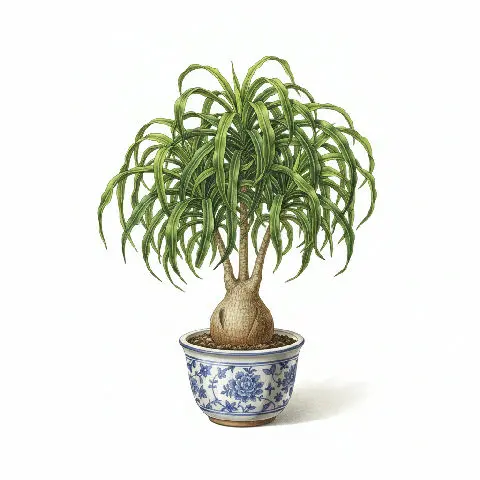
The Beaucarnea recurvata, widely recognized as the Ponytail Palm or Elephant's Foot, is a distinctive, slow-growing evergreen perennial belonging to the Asparagaceae family. Native to the semi-desert regions of southeastern Mexico, it is also found in Belize and Guatemala. Despite its common name, it is not a true palm but rather a succulent monocot. Its striking morphology is characterized by a greatly swollen, woody caudex at its base, which efficiently stores water, giving it a unique, bottle-like appearance and the 'Elephant's Foot' moniker.
From this robust caudex, one or more slender, upright stems emerge, each topped with a dense rosette of long, strap-like, recurved (curling downwards) green leaves, gracefully cascading like a ponytail. This specialized structure allows Beaucarnea recurvata to thrive in arid conditions, making it an exceptionally resilient and drought-tolerant plant. Historically, indigenous Mesoamerican cultures may have utilized parts of this plant for various purposes, though concrete ethnobotanical records for specific medicinal applications are scarce. Its primary significance traditionally and currently lies in its ornamental value due to its unique architectural form and remarkably low maintenance requirements.
Botanically, it was formally described by Charles Lemaire in 1861, with the genus name 'Beaucarnea' honoring Belgian horticulturist Jean-Baptiste Beaucarne, and 'recurvata' specifically denoting its characteristic recurved leaves. In contemporary horticulture, it is highly prized as an indoor houseplant globally, celebrated for its aesthetic appeal, recognized air-purifying qualities, and remarkable ability to withstand neglect. Scientific research into its specific pharmacological properties remains limited, with most studies focusing on its general phytochemical composition, which is considered relatively simple compared to many potent medicinal plants. While it does not feature prominently in complex herbal formulations of traditional systems like Ayurveda or TCM, its resilience and impressive longevity hold symbolic significance in diverse cultures.
Trusted Scientific References
1. Authoritative external sources for Beaucarnea recurvata
1.1 Wikipedia — Beaucarnea recurvata
1.2 Kew POWO (Plants of the World Online)
1.3 PubMed — peer-reviewed research
1.4 NCBI Taxonomy Browser
1.5 GBIF — Global Biodiversity
1.1.Beaucarnea Recurvata — Highlights
- ✓Unique Swollen Caudex — Base of the trunk swells dramatically, storing water and giving it an 'Elephant's Foot' appearance.
- ✓Long, Recurved Leaves — Strap-like, leathery green leaves gracefully arch downwards from the stem apex, resembling a ponytail.
- ✓Extreme Drought Tolerance — Highly adapted to arid environments, surviving extended periods without water due to its caudex.
- ✓Low Maintenance — Requires minimal care, making it an excellent choice for beginner plant enthusiasts and busy individuals.
- ✓Air — Purifying Qualities — Contributes to improved indoor air quality by absorbing common airborne toxins.
- ✓Architectural Form — Offers a striking, sculptural aesthetic that serves as a focal point in interior and landscape designs.
- ✓Exceptional Longevity — Can live for many decades, even centuries, becoming a long-term living investment.
- ✓Non — Toxic to Pets & Humans — Generally considered safe for households with children and domestic animals.
- ✓Not a True Palm — Despite its common name, it is a succulent belonging to the Asparagaceae family, not Arecaceae.
- ✓Slow Growing — Exhibits a slow growth rate, especially when confined to containers, maintaining a manageable size indoors.
1.2.Beaucarnea Recurvata — Concise Overview
- ✓Beaucarnea recurvata, or Ponytail Palm, is a distinctive succulent from the Asparagaceae family.
- ✓Native to Mexico, characterized by a swollen caudex for water storage and cascading recurved leaves.
- ✓Highly valued as a resilient, low-maintenance ornamental houseplant with air-purifying qualities.
- ✓Symbolizes longevity and endurance due to its ability to thrive in harsh conditions and its extreme lifespan.
- ✓Scientific research into its medicinal properties is limited, and it is generally considered non-toxic to humans and pets.
- ✓Requires bright light, well-drained soil, and infrequent watering to prevent root rot.
2.Beaucarnea Recurvata — Nomenclature & Classification
3.Beaucarnea Recurvata — Vital Statistics
4.Beaucarnea Recurvata — Physical Description
5.Beaucarnea Recurvata — Ecological Habitat
6.Beaucarnea Recurvata — Heritage Uses
7.Beaucarnea Recurvata — Key Phytochemicals
- ✓Saponins — These glycosides are commonly found across the Asparagaceae family and related taxa, potentially contributing to minor anti-inflammatory or immune-modulating effects, though specific research on Beaucarnea recurvata is not extensive.
- ✓Flavonoids — Ubiquitous plant antioxidants present in the leaves, these compounds help protect plant cells from oxidative stress and may offer similar protective benefits when consumed in other plants.
- ✓Phenolic Acids — Another class of widespread plant compounds with antioxidant properties, found in various plant tissues, playing a role in plant defense mechanisms and overall plant health.
- ✓Polysaccharides — Structural carbohydrates that form part of plant cell walls, which, in other plant species, can sometimes exhibit immune-modulating or prebiotic properties.
- ✓Steroidal Glycosides — Compounds structurally related to saponins, frequently encountered in succulent and monocotyledonous plants, with potential, yet unresearched, biological activities in Beaucarnea recurvata.
- ✓Carotenoids — Pigments responsible for various plant colors, acting as potent antioxidants and crucial for the light-harvesting processes of photosynthesis within the green leaves.
- ✓Alkaloids — While not a dominant feature, trace amounts of various nitrogen-containing compounds may be present, requiring more specific and comprehensive phytochemical screening to identify.
- ✓Waxes and Cuticular Lipids — Present on the leaf surfaces and caudex, these compounds form a protective layer that minimizes water loss and offers defense against environmental stressors and pathogens.
8.Beaucarnea Recurvata — Evidence-Based Benefits
- ✓Air Purification Support — Beaucarnea recurvata contributes to improved indoor air quality by absorbing common volatile organic compounds (VOCs) like formaldehyde and benzene, fostering a healthier living environment.
- ✓Stress Reduction — The presence of indoor plants, including the Ponytail Palm, has been shown to reduce psychological and physiological stress, promoting a sense of calm and enhancing mental well-being.
- ✓Aesthetic Therapy — Its unique sculptural form and vibrant green foliage provide significant aesthetic appeal, which can positively influence mood, reduce visual fatigue, and create a more harmonious indoor space.
- ✓Humidity Regulation — Through the process of transpiration, this plant releases water vapor into the air, subtly contributing to local humidity levels, which can be beneficial for respiratory comfort in dry climates.
- ✓Symbolic Resilience — Culturally, the Ponytail Palm's ability to endure harsh conditions and its longevity symbolize strength, perseverance, and stability, offering psychological inspiration and grounding.
- ✓Minor Phytochemical Potential — While specific research is limited, similar succulent plants often contain general plant compounds like flavonoids and saponins, which may offer minor antioxidant or anti-inflammatory properties, though not specifically studied for Beaucarnea recurvata.
- ✓Biophilic Connection — Cultivating and nurturing plants like the Ponytail Palm helps foster a deeper connection to nature, which is linked to improved cognitive function and overall life satisfaction.
- ✓Low-Maintenance Wellness — Its extreme ease of care and forgiving nature reduce the demands on plant owners, making it a source of green beauty and well-being without adding significant stress or obligation.
8.1.Beaucarnea Recurvata — Health Applications
9.Beaucarnea Recurvata — Safety Considerations
9.1.Beaucarnea Recurvata — Side Effects & Warnings
- ✓Root Rot — The most common issue, resulting from overwatering and poor drainage, leads to irreversible damage to the plant's root system and eventual demise.
- ✓Leaf Edge Irritation — While generally soft, the finely serrated edges of mature leaves can cause minor skin irritation or small cuts if handled roughly or without care.
- ✓Pest Infestations — Susceptible to common houseplant pests such as mealybugs and scale insects, which can cause stunted growth, leaf damage, and overall plant decline if untreated.
- ✓Aesthetic Browning — Leaf tips frequently dry and turn brown due to inconsistent watering (both too much and too little), excessive fertilizer, or accumulated salts in the soil.
- ✓Sunburn — If moved abruptly from a low-light indoor environment to intense direct outdoor sun, the leaves can develop unsightly scorch marks or sunburn.
- ✓Growth Stagnation — Keeping the plant in a pot that is too small for an extended period can significantly restrict its growth in both height and caudex girth.
- ✓No Known Significant Toxicity — Although generally considered non-toxic to humans and pets, ingestion of large quantities of any plant material can potentially cause mild gastrointestinal upset.
9.2.Beaucarnea Recurvata — Risk Assessment
- ✓Non-Toxic Classification — Beaucarnea recurvata is widely regarded as non-toxic to humans, cats, and dogs, making it a safe and suitable choice for households with pets and children.
- ✓Minimal Allergic Risk — Reports of allergic reactions or contact dermatitis from handling the plant are exceedingly rare, indicating a very low allergenic potential for most individuals.
- ✓Careful Handling of Leaves — While the leaf edges are finely serrated, they are typically soft; however, it is advisable to exercise caution during pruning or extensive handling to avoid minor nicks.
- ✓Prevent Ingestion — Despite its non-toxic nature, it is always prudent to discourage ingestion of any plant material by children or pets to prevent potential mild digestive upset.
- ✓Environmental Suitability — This plant thrives in typical indoor conditions, posing no significant environmental hazards when cultivated responsibly within its recommended growing zones.
- ✓No Known Drug Interactions — Due to its primary ornamental use and lack of significant internal consumption or medicinal application, there are no established drug interactions with pharmaceuticals.
- ✓Low Maintenance Safety — Its resilience and minimal care requirements reduce the chances of plant-related accidents or issues stemming from neglect.
10.Beaucarnea Recurvata — Preparations & Uses
- ✓Ornamental Houseplant — Cultivate Beaucarnea recurvata indoors as a resilient and visually striking houseplant, ideal for adding a touch of natural elegance to any room.
- ✓Landscape Specimen — In warm, dry climates (USDA Zones 9-10), plant outdoors as a unique, drought-tolerant landscape specimen, where it can grow significantly larger.
- ✓Air Purification — Utilize its natural air-filtering capabilities to help improve indoor air quality by placing it in living spaces, offices, or bedrooms.
- ✓Aesthetic Enhancement — Employ its architectural form as a focal point in interior design, contributing to biophilic aesthetics and a sense of calm.
- ✓Symbolic Decor — Incorporate the plant into spaces where its symbolism of resilience, longevity, and strength is desired, such as home offices or contemplative areas.
- ✓Low-Maintenance Greenery — Choose it for environments requiring minimal plant care, perfect for beginners or those with busy lifestyles seeking natural beauty without extensive upkeep.
- ✓Patio & Deck Plant — During warmer months, move container-grown specimens outdoors to patios, decks, or balconies to enhance outdoor living spaces with its unique form.
- ✓Educational Tool — Use it as an example in botanical education to illustrate succulent adaptations, water storage in caudices, and plant resilience.
11.Beaucarnea Recurvata — Cultivation & Care
- ✓Light — Requires bright, indirect to full sun exposure for optimal growth; place in a window receiving ample light, or outdoors in a sunny spot during warm months.
- ✓Soil — Thrives in well-drained soil mixes, ideally a cactus or succulent blend amended with sharp sand or gravel to prevent waterlogging.
- ✓Watering — Water deeply but infrequently; allow the soil to dry out completely between waterings, especially reducing frequency during winter dormancy to prevent root rot.
- ✓Temperature & Humidity — Prefers warm temperatures (60-80°F / 15-27°C) and tolerates average indoor humidity; avoid cold drafts.
- ✓Fertilization — Fertilize sparingly, once or twice during the active growing season (spring and summer) with a balanced liquid fertilizer diluted to half strength.
- ✓Propagation — Primarily propagated by seed, which can be slow and uncommon for home growers; offsets that emerge from the caudex can be removed, but rarely root successfully.
- ✓Repotting — Repot infrequently, typically every 2-3 years or when root-bound, to a pot only slightly larger than the previous one, allowing for slower growth.
- ✓Pruning — Remove yellowing or dry lower leaves to maintain appearance; branching can be encouraged by cutting the main stem when the plant is young.
Reviewed by the Flora Medical Global Botanical Review Panel
Multi-disciplinary editorial group · Botany · Ethnobotany · Herbal-medicine literature
Who reviewed this: This page was checked by the Flora Medical Global Botanical Review Panel — an in-house editorial group of botany graduates, ethnobotany researchers, and horticulture practitioners who collectively maintain our 7,000+ plant encyclopedia. Meet the team.
Our 4-step verification process
1. Taxonomic verification
Scientific names and synonyms cross-checked against Kew POWO, World Flora Online, and The Plant List.
2. Phytochemical & medicinal cross-reference
Active compounds, traditional uses, and reported activities are cross-referenced with PubMed, USDA Dr. Duke's database, and peer-reviewed ethnobotanical literature.
3. Conservation & distribution check
Distribution, ecology, and conservation status confirmed against GBIF occurrence records and the IUCN Red List.
4. Editorial & safety review
Every entry passes an editorial pass for clarity, originality, and safety notices (toxicity, contraindications, dosage caveats) before publication.
Last reviewed:
Important medical disclaimer: This content is for educational and research purposes only. It is not medical advice and is not a substitute for consultation with a licensed healthcare provider. Do not use any herb to self-treat a medical condition without professional guidance.
Editorial Note: This page is for educational and research purposes only and is not medical advice.
Written by: Flora Medical Global Editorial Team
Reviewed by: Flora Medical Global Botanical Review Panel
Last Updated: June 15, 2026





Beaucarnea Recurvata — Comments & Community Reviews
Rate this plant