


Medical Disclaimer: This content is for educational purposes only. It is not medical advice. Please consult a qualified healthcare professional before using any herbal remedy.
Safety Overview
1.Beautyberry Garden — At a Glance
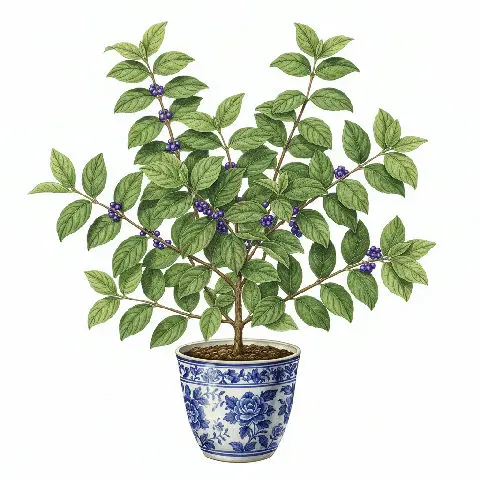
The American Beautyberry, scientifically designated as Callicarpa americana, is a captivating deciduous shrub indigenous to the southeastern United States, with its natural range extending westward into Oklahoma and southward towards Mexico. Its botanical name, 'Callicarpa,' eloquently combines the Greek terms 'kallos' (beauty) and 'karpos' (fruit), a fitting description for its most remarkable attribute: the profusion of vibrant, iridescent magenta to violet drupes that densely cluster along its stems in late summer and autumn. This striking visual display has cemented its status as a highly valued ornamental plant in cultivated landscapes. While visually stunning, the American Beautyberry's fruits are not primarily sought for human consumption due to their notably astringent and slightly bitter flavor; however, they serve as a critical food source for a diverse array of wildlife, particularly avian species, during the scarcity of autumn and early winter.
Historically, its utility was deeply embedded in the folk medicine of Indigenous tribes and early American settlers. Native American communities, including the Choctaw, Creek, and Seminole, traditionally employed various parts of the plant, such as the leaves, roots, and bark, preparing them as infusions, decoctions, or poultices to address conditions like fevers, dysentery, stomachaches, and rheumatic pain. A particularly notable traditional application, which has since attracted significant scientific inquiry, is its use as an effective insect repellent. For centuries, pioneers and Indigenous peoples would crush the leaves and rub them onto their skin or livestock to deter mosquitoes and other biting insects, a practice that ultimately led to the isolation and identification of specific compounds with potent insecticidal and repellent properties.
From a botanical perspective, Callicarpa americana typically attains a height of 1.5 to 2.5 meters, with a commensurate spread, often exhibiting graceful, arching branches that contribute to its somewhat open habit. Its leaves are ovate to elliptic, featuring serrated margins, and can measure from 5 to 15 cm in length, transitioning to a yellowish-green hue in autumn before abscission. Small, inconspicuous blue, violet, pink, or white flowers bloom in axillary clusters from late spring to early summer, preceding the spectacular fruit display. Trusted Scientific References Authoritative external sources for Callicarpa americana : Wikipedia — Callicarpa american ...[CURRENT TEXT EXISTS: 2620 chars]
1.1.Beautyberry Garden — Highlights
- ✓Botanical Name — Callicarpa americana (American Beautyberry).
- ✓Family Classification — Lamiaceae (formerly Verbenaceae).
- ✓Common Synonyms — French Mulberry, Wild Goose's Berries.
- ✓Native Range — Southeastern United States, extending to Oklahoma and Mexico.
- ✓Distinctive Characteristic — Clusters of striking, metallic-purple berries in autumn.
- ✓Primary Medicinal Application — Highly effective natural insect repellent from leaves.
- ✓Traditional Ethnobotanical Uses — Digestive aid, anti-rheumatic, skin conditions, febrifuge.
- ✓Wildlife Ecological Value — Essential food source for numerous bird and mammal species.
- ✓Growth Habit — Deciduous shrub typically growing 1.5 to 2.5 meters tall and wide.
- ✓Key Phytochemicals — Callicarpenal, intermedeol, spathulenol.
1.2.Beautyberry Garden — At-a-Glance Summary
- ✓Native shrub renowned for vibrant magenta berries.
- ✓Traditionally utilized by Native Americans for diverse medicinal purposes.
- ✓Scientifically validated as a potent natural insect repellent.
- ✓Contains diterpenes and sesquiterpenes responsible for repellent action.
- ✓Primarily recommended for external applications due to its astringency.
- ✓Important wildlife food source, especially for birds in winter.
2.Beautyberry Garden — Botanical Identity
3.Beautyberry Garden — Fact Sheet
4.Beautyberry Garden — Botanical Description
5.Beautyberry Garden — Origin & Spread
6.Beautyberry Garden — Heritage Uses
7.Beautyberry Garden — Chemical Profile
- ✓Diterpenes — Callicarpenal is a prominent diterpenoid found in the leaves, widely recognized for its potent insect-repellent and insecticidal properties against various arthropods.
- ✓Sesquiterpenes — Intermedeol and spathulenol are key sesquiterpenoids present in the volatile oils, contributing synergistically to the plant's overall insect-repellent efficacy.
- ✓Flavonoids — These polyphenolic compounds, such as quercetin and kaempferol derivatives, are abundant and contribute to the plant's antioxidant, anti-inflammatory, and potential antimicrobial activities.
- ✓Tannins — High concentrations of tannins are found in the bark, leaves, and berries, imparting significant astringent properties, which support its traditional use for dysentery and skin conditions.
- ✓Saponins — Various saponins may be present, potentially contributing to expectorant or anti-inflammatory actions, though their specific roles in Callicarpa americana require further investigation.
- ✓Phenylethanoid Glycosides — Compounds like verbascoside (acteoside), common in Lamiaceae, are known for their antioxidant and anti-inflammatory effects.
- ✓Volatile Oils — The characteristic aroma and insect-repelling properties of the crushed leaves are attributed to a complex mixture of volatile organic compounds, including a diverse array of terpenes.
- ✓Phytosterols — Plant sterols, such as beta-sitosterol, are generally present and may contribute to various physiological effects, including anti-inflammatory actions.
8.Beautyberry Garden — Evidence-Based Benefits
- ✓Insect Repellent Action — The leaves contain potent diterpenes like callicarpenal, which effectively deter mosquitoes, ticks, and other biting insects by acting as a natural neurotoxin or repellent.
- ✓Anti-inflammatory Properties — Traditional use for rheumatic pain and skin irritation suggests compounds within the plant may help to reduce inflammation and swelling.
- ✓Digestive System Support — Historically employed for stomachaches, dysentery, and colic, indicating potential antispasmodic, antimicrobial, or soothing effects on the gastrointestinal tract.
- ✓Antipyretic Effects — Used in traditional sweat baths for malarial fevers, pointing to the plant's capacity to help reduce elevated body temperatures.
- ✓Dermatological Relief — The bark and leaves were traditionally applied topically for itchy skin, suggesting anti-pruritic and potentially antiseptic qualities.
- ✓Diuretic Activity — Root bark tea was consumed for urine retention, implying a mild diuretic effect that could aid in fluid balance and urinary tract health.
- ✓Antimicrobial Potential — Its historical use against dysentery and skin infections suggests the presence of compounds with activity against certain bacteria, fungi, or viruses.
- ✓Antioxidant Capacity — While not extensively studied for this plant, many plant-derived compounds, such as flavonoids, possess antioxidant properties that protect cells from oxidative stress.
- ✓Analgesic Effects — Relief from conditions like colic and rheumatic pain indicates the presence of compounds that may help to alleviate discomfort and pain.
- ✓Astringent Effects — The high tannin content, particularly in the bark and berries, provides astringent properties useful for tightening tissues and potentially reducing secretions in cases like dysentery.
8.1.Beautyberry Garden — Health Applications
9.Beautyberry Garden — Safety Considerations
9.1.Beautyberry Garden — Caution Notes
- ✓Gastrointestinal Discomfort — Ingesting raw berries or high internal doses of preparations may lead to stomach upset, nausea, or vomiting due to their astringent and bitter compounds.
- ✓Allergic Skin Reactions — Sensitive individuals may experience localized skin irritation, redness, or contact dermatitis upon topical application of leaves or extracts.
- ✓Astringency-Induced Constipation — High tannin content, particularly from bark or berry consumption, could potentially cause or exacerbate constipation in susceptible individuals.
- ✓Oral Irritation — Direct ingestion of unprocessed plant material, especially the berries, may cause a drying or irritating sensation in the mouth and throat.
- ✓Potential Drug Interactions — Internal use, though not thoroughly studied, might theoretically interact with certain medications, particularly those affecting digestion or fluid balance.
- ✓Photosensitivity — While rare, some plant compounds can increase skin sensitivity to sunlight, though this is not a common reported side effect for American Beautyberry.
9.2.Beautyberry Garden — Safety Profile
- ✓External Use Primarily Recommended — The American Beautyberry is safest and most commonly utilized for external applications, such as an insect repellent or for topical skin issues.
- ✓Internal Use Requires Caution — Internal consumption should be approached with extreme prudence and only under the strict guidance of a qualified herbal practitioner due to potential gastrointestinal irritation and lack of extensive safety data.
- ✓Pregnancy and Lactation Contraindication — Avoid internal use during pregnancy and breastfeeding due to insufficient research on its effects on fetal development or infant health.
- ✓Pediatric Use Advisory — Use in children should be limited to topical applications, with a prior patch test; internal use is generally not recommended for this age group.
- ✓Medical Consultation Advised — Individuals with pre-existing health conditions, those taking prescription medications, or prior to surgery should consult a healthcare professional before any internal use.
- ✓Patch Test for Sensitivity — Always perform a small patch test on the skin before widespread topical application to check for any potential allergic reactions or sensitivities.
- ✓Dosage and Duration — Adhere strictly to traditional or recommended dosages for any internal preparations, and limit the duration of use to minimize potential adverse effects.
10.Beautyberry Garden — Usage Guide
- ✓Topical Insect Repellent — Crush fresh American Beautyberry leaves and rub the macerated material directly onto exposed skin or clothing to effectively deter mosquitoes and other biting insects.
- ✓Decoction for Internal Ailments — Prepare a decoction by simmering dried roots or bark in water for 15-20 minutes, traditionally used after straining for digestive issues like stomachaches, dysentery, or colic.
- ✓Infusion for Fevers and Aches — Steep dried leaves or young twigs in hot water to create an infusion, historically applied in sweat baths to alleviate malarial fevers and rheumatic pain.
- ✓Poultice for Skin Irritations — Macerate fresh or dried leaves and bark into a paste and apply topically as a poultice to soothe itchy skin, insect bites, or minor inflammatory conditions.
- ✓Root Bark Tea for Urinary Support — A specific tea from the root bark can be prepared by gentle simmering, traditionally consumed for urinary retention, indicating its potential diuretic properties.
- ✓Traditional Combination Remedies — In some Native American practices, Callicarpa americana roots were combined with roots of other plants, such as Rubus species, to enhance efficacy for specific conditions like dysentery.
- ✓Aromatic Repellent Diffusion — Place bundles of fresh leaves in outdoor areas or rub them on pets' bedding to naturally repel insects without direct skin application.
11.Beautyberry Garden — Garden Cultivation
- ✓Seed Propagation — American Beautyberry can be readily grown from seeds, which typically do not necessitate any special stratification or pretreatment for successful germination.
- ✓Vegetative Cuttings — Propagation is also highly effective using softwood cuttings taken during the growing season, offering a reliable method to replicate desirable plant characteristics.
- ✓Soil and Light Preference — This hardy shrub thrives in well-drained soils and demonstrates adaptability to varying light conditions, performing well in both partial shade and full sun, with more abundant fruiting in sunnier exposures.
- ✓Water Requirements — Once established, Callicarpa americana is relatively drought-tolerant, but consistent moisture, especially during prolonged dry periods and in its early growth stages, promotes robust development.
- ✓Pruning for Production — To encourage prolific fruiting and dense growth, prune the plant in late winter or early spring after the berries have fallen, as flowers and fruits develop on new wood.
- ✓Transplanting Volunteers — Young, self-seeded volunteers are quite vigorous and can be successfully dug up and transplanted to other locations within the garden or landscape.
- ✓Pest and Disease Resilience — Generally regarded as a low-maintenance plant with good resistance to most common garden pests and diseases, requiring minimal intervention.
Reviewed by the Flora Medical Global Botanical Review Panel
Multi-disciplinary editorial group · Botany · Ethnobotany · Herbal-medicine literature
Who reviewed this: This page was checked by the Flora Medical Global Botanical Review Panel — an in-house editorial group of botany graduates, ethnobotany researchers, and horticulture practitioners who collectively maintain our 7,000+ plant encyclopedia. Meet the team.
Our 4-step verification process
1. Taxonomic verification
Scientific names and synonyms cross-checked against Kew POWO, World Flora Online, and The Plant List.
2. Phytochemical & medicinal cross-reference
Active compounds, traditional uses, and reported activities are cross-referenced with PubMed, USDA Dr. Duke's database, and peer-reviewed ethnobotanical literature.
3. Conservation & distribution check
Distribution, ecology, and conservation status confirmed against GBIF occurrence records and the IUCN Red List.
4. Editorial & safety review
Every entry passes an editorial pass for clarity, originality, and safety notices (toxicity, contraindications, dosage caveats) before publication.
Last reviewed:
Important medical disclaimer: This content is for educational and research purposes only. It is not medical advice and is not a substitute for consultation with a licensed healthcare provider. Do not use any herb to self-treat a medical condition without professional guidance.
Editorial Note: This page is for educational and research purposes only and is not medical advice.
Written by: Flora Medical Global Editorial Team
Reviewed by: Flora Medical Global Botanical Review Panel
Last Updated: June 15, 2026





Beautyberry Garden — Comments & Community Reviews
Rate this plant