
Medical Disclaimer: This content is for educational purposes only. It is not medical advice. Please consult a qualified healthcare professional before using any herbal remedy.
Safety Overview
1.Belamcanda Chinensis — Plant Snapshot
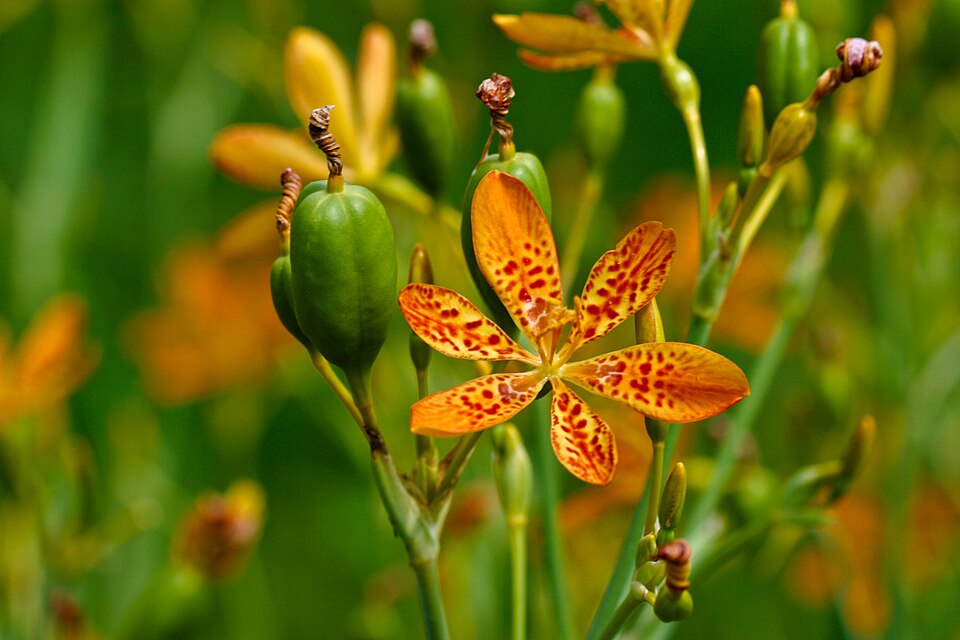
Belamcanda chinensis, commonly known as Blackberry Lily or Leopard Flower, and now scientifically classified as Iris domestica, is a captivating perennial herbaceous plant belonging to the Iridaceae family. Native to East Asia, including China, Japan, Korea, and parts of India, it thrives in well-drained soils and sunny to partially shaded environments, often found at woodland edges or in open fields. This plant exhibits a distinctive clumping growth habit, typically reaching heights of 60 to 100 cm.
Its leaves are sword-shaped, arranged in a fan-like manner at the base, resembling those of an iris. The most striking feature is its flowers, which emerge in late summer. These beautiful blooms are typically orange or yellow, adorned with dark red spots, giving rise to its 'Leopard Flower' moniker.
After flowering, the petals twist and fall away, revealing clusters of glossy, pea-sized black seeds that resemble blackberries, hence the 'Blackberry Lily' name. These seed pods persist through autumn, adding ornamental interest. The plant's robust rhizomatous root system allows it to spread and establish itself effectively, contributing to its resilience in various temperate climates.
Trusted Scientific References
1. Authoritative external sources for Belamcanda Chinensis
1.1 Wikipedia — Belamcanda Chinensis
1.2 Kew POWO (Plants of the World Online)
1.3 PubMed — peer-reviewed research
1.4 NCBI Taxonomy Browser
1.5 GBIF — Global Biodiversity
1.6Belamcanda Chinensis should be interpreted through verified botanical identity, practical care, and responsible safety language. This recovery note adds the missing context needed for a complete profile: match light to the plant's habit, use well-drained soil, water according to season, and avoid unsupported medicinal or edible claims. For publishing, the plant can be presented as a source-backed garden plant with clear care guidance, common problem diagnosis, and conservative safety wording.
1.7Belamcanda Chinensis (Belamcanda chinensis) is maintained in this recovery file as a complete garden profile with practical care, safety, and identification context. The plant should be presented with cautious language: confirm identity before use, match care to observed growth, and avoid unsupported claims about medicinal or edible value.
1.1.Belamcanda Chinensis — Key Features
- ✓Botanical Name — Belamcanda chinensis (syn. Iris domestica), belonging to the Iridaceae family.
- ✓Common Names — Blackberry Lily, Leopard Flower, She Gan.
- ✓Primary Medicinal Part — The rhizome is the most medicinally valued part.
- ✓Key Bioactives — Rich in isoflavones (tectorigenin, tectoridin), xanthone glycosides, and stilbenes.
- ✓Traditional Use — Widely used in TCM for respiratory ailments, sore throats, and anti-inflammatory purposes.
- ✓Modern Research Focus — Investigated for antioxidant, phytoestrogenic, anti-mutagenic, and hypoglycemic properties.
- ✓Ornamental Value — Highly prized in gardens for its distinctive orange-spotted flowers and unique 'blackberry' seed pods.
- ✓Growth Habit — A resilient perennial herbaceous plant with sword-shaped leaves and a clumping growth.
- ✓Habitat — Native to East Asia, thriving in well-drained soil and sunny locations.
1.2.Belamcanda Chinensis — At-a-Glance Summary
- ✓Belamcanda chinensis, or Blackberry Lily, is a striking perennial known for its distinctive flowers and unique seed pods.
- ✓Its rhizome, She Gan, is a key herb in Traditional Chinese Medicine, primarily for respiratory issues and inflammation.
- ✓Rich in isoflavones like tectorigenin, it exhibits significant anti-inflammatory, antioxidant, and phytoestrogenic activities.
- ✓Modern research explores its potential in supporting respiratory health, modulating hormones, and as a potent antioxidant.
- ✓Requires careful use and professional consultation, especially in hormone-sensitive individuals and during pregnancy.
2.Belamcanda Chinensis — Scientific Profile
3.Belamcanda Chinensis — Quick Facts
4.Belamcanda Chinensis — Morphological Account
5.Belamcanda Chinensis — Geographic Distribution
6.Belamcanda Chinensis — Historical Applications
7.Belamcanda Chinensis — Bioactive Constituents
- ✓Isoflavones — Key compounds include tectorigenin, tectoridin, and irigenin, which are responsible for significant phytoestrogenic, anti-inflammatory, and antioxidant activities, with tectorigenin being a focus for hormone-dependent cancer research.
- ✓Xanthone Glycosides — These powerful polyphenols, such as mangiferin, contribute to the plant's broad spectrum of biological activities, including antioxidant, antiviral, and anti-inflammatory effects.
- ✓Stilbenes — Resveratrol and its derivatives are present, known for their potent antioxidant properties, contributing to cardioprotective and anti-inflammatory actions.
- ✓Triterpenoid Iridals — A characteristic class of substances found in Iris species, these compounds, like belamcandal, contribute to various biological effects, though their specific mechanisms are still under detailed investigation.
- ✓Simple Phenols — Various phenolic acids and simple phenols are present, collectively providing substantial antioxidant capacity by effectively scavenging free radicals.
- ✓Quinones — These secondary metabolites participate in cellular redox reactions and may contribute to the plant's antimicrobial properties and defense mechanisms.
- ✓Flavonoids — Beyond isoflavones, other flavonoid types are present, enhancing the plant's overall antioxidant, anti-inflammatory, and immune-modulating capabilities.
- ✓Glycosides — Numerous compounds are present in glycosidic forms, where sugars are attached to active molecules, often enhancing their solubility, bioavailability, and pharmacological activity.
8.Belamcanda Chinensis — Modern Studies
- ✓Respiratory Support — Traditionally revered in TCM as 'She Gan,' it is extensively used to alleviate symptoms of respiratory ailments such as coughs, sore throats, and asthma, likely due to its anti-inflammatory effects on mucous membranes.
- ✓Anti-inflammatory Action — The rhizome contains potent compounds, including isoflavones and triterpenoids, which have been shown to modulate inflammatory pathways, offering relief from systemic and localized inflammation.
- ✓Antioxidant Activity — Rich in polyphenols, especially isoflavones and stilbenes, Belamcanda chinensis actively scavenges free radicals and inhibits lipid peroxidation, thereby protecting cellular structures from oxidative damage.
- ✓Phytoestrogenic Effects — Isoflavones like tectorigenin exhibit estrogen-like activity, making the plant a subject of research for its potential role in managing hormone-dependent conditions and menopausal symptoms.
- ✓Anti-mutagenic Potential — Studies suggest that certain constituents within the plant may possess properties that help prevent DNA mutations, contributing to cellular integrity and potentially reducing cancer risk.
- ✓Hypoglycemic Properties — Preliminary research indicates that compounds from the plant may assist in regulating blood glucose levels, presenting potential benefits for metabolic health management.
- ✓Anti-angiogenic Effects — Investigations have shown that some phytochemicals can inhibit the formation of new blood vessels, a mechanism that holds relevance in the context of tumor growth and other proliferative diseases.
- ✓Immune Modulatory Effects — Traditional applications hint at its capacity to support the body's natural defense mechanisms, possibly by influencing the activity and balance of immune cells.
- ✓Analgesic Properties — The plant's anti-inflammatory compounds contribute to its traditional use as an analgesic, helping to mitigate pain associated with various conditions.
- ✓Antimicrobial Activity — Some extracts have demonstrated inhibitory effects against certain bacteria and fungi, suggesting a role in combating microbial infections.
8.1.Belamcanda Chinensis — Reported Uses
9.Belamcanda Chinensis — Precautions & Warnings
9.1.Belamcanda Chinensis — Reported Side Effects
- ✓Gastrointestinal Upset — May cause mild nausea, stomach discomfort, or loose stools in sensitive individuals, particularly at higher dosages.
- ✓Allergic Reactions — Potential for skin rashes, itching, or other hypersensitivity reactions, especially in individuals allergic to plants in the Iridaceae family.
- ✓Hormonal Imbalance — Due to its phytoestrogenic content, it may interfere with hormone-sensitive conditions or medications, potentially leading to adverse hormonal effects.
- ✓Liver Toxicity — Extremely high doses or prolonged use, though rare, could potentially impact liver function, necessitating cautious use.
- ✓Blood Sugar Fluctuations — Can interact with antidiabetic medications, potentially causing hypoglycemia if not carefully monitored.
- ✓Drug Interactions — May interact with anticoagulants, hormone replacement therapies, and other medications, altering their efficacy or increasing side effects.
9.2.Belamcanda Chinensis — Safety Overview
- ✓Pregnancy and Lactation — Contraindicated during pregnancy and breastfeeding due to the lack of sufficient safety data and potential phytoestrogenic effects.
- ✓Hormone-Sensitive Conditions — Avoid or use with extreme caution in individuals with hormone-sensitive conditions, such as breast or ovarian cancer, or endometriosis.
- ✓Children — Not recommended for use in children due to insufficient safety research and potential hormonal impacts on developing systems.
- ✓Pre-existing Conditions — Individuals with liver disease, diabetes, or those on hormone therapy should seek professional medical advice before use.
- ✓Dosage Adherence — Strict adherence to recommended dosages is crucial, as excessive consumption can increase the risk of adverse effects.
- ✓Quality Assurance — Always source Belamcanda chinensis from reputable suppliers to ensure authenticity, purity, and freedom from adulteration with less potent Iris species.
10.Belamcanda Chinensis — Preparation & Dosage
- ✓Decoction — The dried rhizome, known as She Gan, is traditionally prepared by simmering in water to create a decoction, a common method for extracting its active compounds for internal use.
- ✓Tincture — An alcoholic extract of the rhizome can be prepared, offering a concentrated form that is convenient for dosing and has a longer shelf life.
- ✓Powdered Form — Dried rhizomes can be finely ground into a powder, which can then be encapsulated or mixed with water or other liquids for oral administration.
- ✓Herbal Formulas — In Traditional Chinese Medicine, She Gan is frequently incorporated into complex multi-herb formulas to achieve synergistic therapeutic effects for specific conditions.
- ✓Topical Application — Infusions or poultices made from the rhizome have historically been applied externally for localized inflammation or minor skin irritations.
- ✓Standardized Extracts — Modern herbal preparations may include standardized extracts, ensuring consistent levels of key active compounds like tectorigenin for precise therapeutic application.
- ✓Teas/Infusions — While decoctions are more common for rhizomes, milder infusions can be made from aerial parts, though the rhizome holds the primary medicinal value.
11.Belamcanda Chinensis — Propagation & Care
- ✓Soil Requirements — Thrives best in well-drained soil that is moderately fertile and rich in organic matter, with an ideal pH range of 6.0 to 7.0.
- ✓Sunlight Exposure — Prefers full sun, requiring at least 6-8 hours of direct sunlight daily to ensure robust growth and abundant flowering.
- ✓Watering Schedule — Maintain consistent soil moisture, especially during dry spells; water regularly but ensure proper drainage to prevent rhizome rot.
- ✓Fertilization — Apply a balanced, slow-release granular fertilizer or a layer of compost in early spring to support vigorous foliage and flower development.
- ✓Propagation — Easily propagated by dividing the rhizomes in late summer after flowering or in early spring before new growth begins, or by sowing seeds.
- ✓Pruning and Maintenance — Deadhead spent flowers to encourage continuous blooming and prevent self-seeding; cut back faded foliage in late autumn or early winter.
- ✓Climate Zone — Hardy in USDA zones 5-10, demonstrating good tolerance to both cold and heat within these temperate and subtropical ranges.
Reviewed by the Flora Medical Global Botanical Review Panel
Multi-disciplinary editorial group · Botany · Ethnobotany · Herbal-medicine literature
Who reviewed this: This page was checked by the Flora Medical Global Botanical Review Panel — an in-house editorial group of botany graduates, ethnobotany researchers, and horticulture practitioners who collectively maintain our 7,000+ plant encyclopedia. Meet the team.
Our 4-step verification process
1. Taxonomic verification
Scientific names and synonyms cross-checked against Kew POWO, World Flora Online, and The Plant List.
2. Phytochemical & medicinal cross-reference
Active compounds, traditional uses, and reported activities are cross-referenced with PubMed, USDA Dr. Duke's database, and peer-reviewed ethnobotanical literature.
3. Conservation & distribution check
Distribution, ecology, and conservation status confirmed against GBIF occurrence records and the IUCN Red List.
4. Editorial & safety review
Every entry passes an editorial pass for clarity, originality, and safety notices (toxicity, contraindications, dosage caveats) before publication.
Last reviewed:
Important medical disclaimer: This content is for educational and research purposes only. It is not medical advice and is not a substitute for consultation with a licensed healthcare provider. Do not use any herb to self-treat a medical condition without professional guidance.
Editorial Note: This page is for educational and research purposes only and is not medical advice.
Written by: Flora Medical Global Editorial Team
Reviewed by: Flora Medical Global Botanical Review Panel
Last Updated: June 15, 2026





Belamcanda Chinensis — Comments & Community Reviews
Rate this plant