

Medical Disclaimer: This content is for educational purposes only. It is not medical advice. Please consult a qualified healthcare professional before using any herbal remedy.
Safety Overview
1.Bellis Perennis — Plant Snapshot
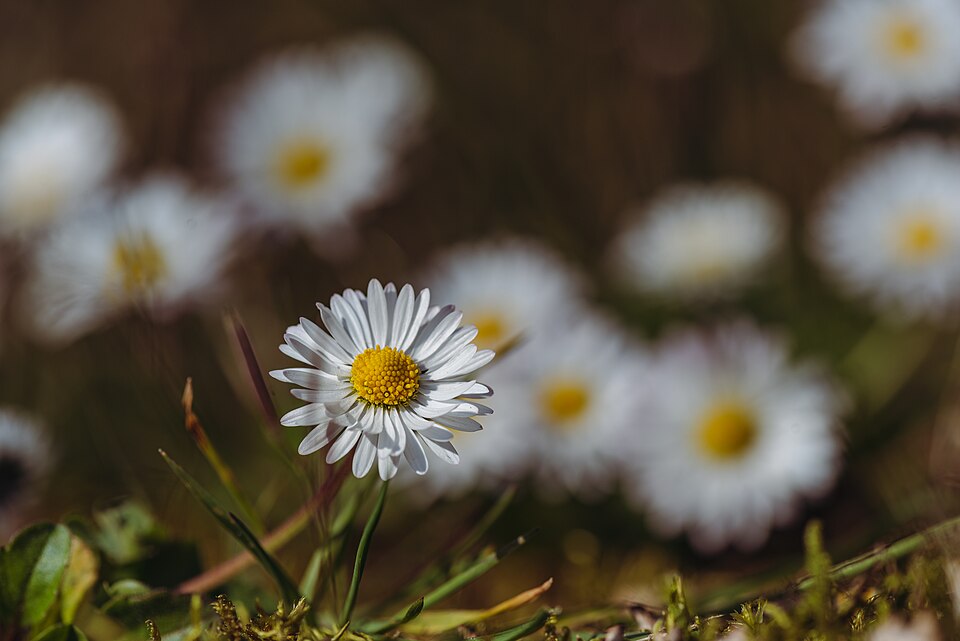
Bellis perennis, commonly known as the common daisy, is a charming perennial herbaceous plant belonging to the Asteraceae family. This resilient species is primarily native to Europe, Northern America, and Central Asia, where it frequently colonizes meadows, lawns, and gardens. Characterized by its distinctive basal rosette of spoon-shaped to round leaves, the plant typically reaches a modest height of up to 25 cm.
Its stems are leafless, slender, and often slightly hairy, supporting solitary flower heads. The composite flowers, known as pseudanthia, are quintessential of the daisy family, featuring bright yellow disc florets at the center, encircled by numerous white to pale pink ray florets, which can sometimes exhibit a deep red hue. These attractive blooms emerge predominantly from early spring through late autumn, attracting a variety of pollinators.
Bellis perennis thrives in well-drained, moist soils and can tolerate a range from full sun to partial shade, demonstrating considerable adaptability in various temperate climates. Beyond its ornamental appeal, the common daisy holds a significant place in traditional herbal medicine, recognized for a diverse array of potential therapeutic properties.
Trusted Scientific References
1. Authoritative external sources for Bellis Perennis
1.1 Wikipedia — Bellis Perennis
1.2 Kew POWO (Plants of the World Online)
1.3 PubMed — peer-reviewed research
1.4 NCBI Taxonomy Browser
1.5 GBIF — Global Biodiversity
1.6Bellis Perennis should be interpreted through verified botanical identity, practical care, and responsible safety language. This recovery note adds the missing context needed for a complete profile: match light to the plant's habit, use well-drained soil, water according to season, and avoid unsupported medicinal or edible claims. For publishing, the plant can be presented as a source-backed garden plant with clear care guidance, common problem diagnosis, and conservative safety wording.
1.1.Bellis Perennis — Key Features
- ✓Botanical Classification — Member of the Asteraceae family, known for its distinctive composite flower heads.
- ✓Basal Rosette Growth — Characterized by leaves arranged in a tight rosette at the base of the plant.
- ✓Ornamental Value — Widely cultivated in gardens and lawns for its attractive, cheerful white and yellow flowers.
- ✓Traditional Medicinal Use — Long history of use in European folk medicine for various ailments.
- ✓Rich in Bioactive Compounds — Contains a potent array of flavonoids, saponins, and phenolic acids.
- ✓Antioxidant Powerhouse — Exhibits strong free radical scavenging capabilities.
- ✓Wound Healing Agent — Renowned for its ability to aid in the repair of skin and minor injuries.
- ✓Anti — inflammatory Action — Possesses properties that help reduce swelling and discomfort.
- ✓Edible Plant — Young leaves and flowers are edible and can be used in salads.
- ✓Resilient and Widespread — A hardy plant that thrives in a variety of temperate environments and often self-seeds.
1.2.Bellis Perennis — Concise Overview
- ✓Bellis perennis, the common daisy, is a resilient perennial native to Europe and parts of Asia and North America.
- ✓Traditionally valued for its medicinal properties, particularly in wound healing, anti-inflammatory, and antioxidant applications.
- ✓Rich in bioactive compounds including flavonoids, saponins (bellisaponins), and phenolic acids.
- ✓Used in various forms such as infusions, poultices, and tinctures for both internal and external applications.
- ✓Generally considered safe, but caution is advised during pregnancy, lactation, and for individuals with Asteraceae allergies.
2.Bellis Perennis — Taxonomic Classification
3.Bellis Perennis — Reference Facts
4.Bellis Perennis — Morphological Account
5.Bellis Perennis — Where It Grows
6.Bellis Perennis — Historical Applications
7.Bellis Perennis — Bioactive Constituents
- ✓Flavonoids — Key compounds like apigenin-7-O-glucopyranoside are prominent, contributing to the plant's antioxidant and anti-inflammatory activities by scavenging free radicals and modulating cellular processes.
- ✓Saponins (Bellisaponins) — These triterpene glycosides, specifically bellisaponins, are a major class of active compounds known for their potential anti-inflammatory, antimicrobial, and hemolytic properties.
- ✓Phenolic Acids — Including caffeic acid and chlorogenic acid, these compounds contribute significantly to the plant's overall antioxidant capacity and may also exert anti-inflammatory and protective effects.
- ✓Tannins — Present in the plant, tannins contribute to its astringent properties, which can be beneficial in wound healing and reducing inflammation, particularly in topical applications.
- ✓Mucilages — These polysaccharides provide a soothing effect, especially beneficial for mucous membranes, and contribute to the plant's traditional use for digestive and skin irritations.
- ✓Essential Oils — While in lower concentrations, volatile compounds contribute to the plant's subtle aroma and may possess mild antimicrobial or insect-repellent properties.
- ✓Organic Acids — Various organic acids are present, playing roles in plant metabolism and potentially contributing to the plant's overall therapeutic profile.
- ✓Polysaccharides — Besides mucilages, other complex carbohydrates are found, which can have immunomodulatory effects and support general cellular health.
- ✓Phytosterols — Compounds like beta-sitosterol are present, known for their potential to support cardiovascular health and modulate immune responses.
- ✓Triterpenes — Beyond the saponins, other triterpenoid compounds contribute to the plant's observed biological activities, including anti-inflammatory and cytotoxic effects.
8.Bellis Perennis — Modern Studies
- ✓Antioxidant Activity — Extracts of Bellis perennis exhibit significant antioxidant capacity, primarily due to phenolic compounds and flavonoids, which scavenge free radicals and protect cells from oxidative stress.
- ✓Anti-inflammatory Properties — Traditionally used to alleviate inflammation, the plant's compounds, including certain saponins and flavonoids, may modulate inflammatory pathways, reducing swelling and discomfort.
- ✓Wound Healing — Bellis perennis has a long history in folk medicine for promoting wound closure and tissue regeneration, likely through its antimicrobial and anti-inflammatory actions, aiding in skin repair.
- ✓Antimicrobial Effects — Studies suggest that extracts possess inhibitory effects against various microorganisms, potentially due to the presence of saponins and phenolic compounds, useful against topical infections.
- ✓Anticancerogenic Potential — Preliminary research indicates that certain compounds within Bellis perennis may exhibit cytotoxic effects against cancer cells, warranting further investigation into its chemopreventive or therapeutic roles.
- ✓Antidepressive and Anxiolytic Effects — Some findings propose that the plant may possess properties that help reduce symptoms of depression and anxiety, potentially by influencing neurotransmitter systems.
- ✓Nephroprotective Action — Emerging evidence suggests Bellis perennis may offer protective benefits to the kidneys, helping to mitigate damage and support renal function.
- ✓Insulin Mimetic Effects — Research hints at the plant's ability to mimic insulin, potentially assisting in glucose metabolism and offering a novel approach for managing blood sugar levels.
- ✓Lipid Metabolism Regulation — Extracts have shown effects on lipid metabolism, which could contribute to antihyperlipidemic outcomes, aiding in the management of cholesterol and triglyceride levels.
- ✓Digestive Aid — Traditionally, the common daisy has been employed to soothe mild gastrointestinal issues, acting as a gentle carminative or digestive tonic.
- ✓Diuretic Properties — Herbal practitioners have utilized Bellis perennis as a mild diuretic, assisting the body in flushing excess fluids and supporting urinary tract health.
- ✓Skin Health Enhancement — Due to its anti-inflammatory and antioxidant compounds, it is often incorporated into remedies for improving skin complexion, soothing irritations, and promoting a healthy dermal barrier.
8.1.Bellis Perennis — Reported Uses
9.Bellis Perennis — Precautions & Warnings
9.1.Bellis Perennis — Caution Notes
- ✓Allergic Reactions — Individuals sensitive to the Asteraceae family may experience allergic contact dermatitis when applied topically or systemic reactions if ingested.
- ✓Gastrointestinal Upset — In rare cases, high doses or sensitive individuals may experience mild stomach upset, nausea, or diarrhea.
- ✓Skin Irritation — While generally soothing, some individuals might develop minor skin irritation or redness upon topical application.
- ✓Photosensitivity — Although not commonly reported, some plant compounds can theoretically increase sensitivity to sunlight in susceptible individuals.
- ✓Interaction with Medications — Due to its diuretic properties, it might interact with other diuretics or medications affecting fluid balance; consult a doctor.
- ✓Hypotension — As some compounds may affect lipid metabolism and potentially blood pressure, individuals on hypotensive medications should exercise caution.
9.2.Bellis Perennis — Toxicity Assessment
- ✓Pregnancy and Lactation — Avoid use during pregnancy and breastfeeding due to insufficient safety data; consult a healthcare professional.
- ✓Allergies — Contraindicated in individuals with known allergies to plants in the Asteraceae (daisy) family, such as ragweed, chamomile, or marigold.
- ✓Children — Use with caution in young children; consult a pediatrician or qualified herbalist for appropriate dosages and applications.
- ✓Surgical Procedures — Discontinue use at least two weeks before scheduled surgery, especially if taking internally, due to potential effects on blood clotting or other medication interactions.
- ✓Consult a Professional — Always consult a qualified healthcare practitioner or medical herbalist before using Bellis perennis, especially if you have pre-existing health conditions or are taking medications.
- ✓Patch Test — Before topical application, perform a patch test on a small area of skin to check for any allergic reactions or sensitivities.
- ✓Dosage Adherence — Adhere strictly to recommended dosages; excessive intake may increase the risk of adverse effects.
10.Bellis Perennis — Application Forms
- ✓Herbal Infusion (Tea) — Steep 1-2 teaspoons of dried Bellis perennis flowers and leaves in hot water for 5-10 minutes for a digestive or anti-inflammatory tea.
- ✓Tincture — Prepare an alcoholic extract by soaking fresh or dried plant material in high-proof alcohol for several weeks, then filter and use drops as directed by a herbalist.
- ✓Poultice — Crush fresh Bellis perennis leaves and flowers to form a paste, apply directly to minor cuts, bruises, or insect bites for wound healing and anti-inflammatory effects.
- ✓Salve or Ointment — Infuse dried Bellis perennis in a carrier oil (e.g., olive oil) and then combine with beeswax to create a topical balm for skin irritations, wounds, or muscular aches.
- ✓Culinary Use — Young leaves and flower petals can be added fresh to salads for a slightly peppery flavor or used as an edible garnish.
- ✓Decoction — For root material or more robust extraction, simmer Bellis perennis in water for a longer period (15-30 minutes) to create a stronger liquid.
- ✓Compresses — Soak a cloth in a strong infusion or decoction and apply as a warm or cool compress to swollen joints, sprains, or irritated skin.
- ✓Homeopathic Preparations — Bellis perennis is used in homeopathy (e.g., Bellis perennis 6C, 30C) for trauma, bruises, and soreness, following specific homeopathic guidelines.
11.Bellis Perennis — Growing Guide
- ✓Soil Preparation — Plant Bellis perennis in nutrient-rich, well-draining soil with a pH between 6.0 and 7.0 for optimal growth.
- ✓Sunlight Requirements — Ensure the plant receives full sun to partial shade; in hotter climates, partial shade during the afternoon is beneficial.
- ✓Watering — Maintain consistent soil moisture, especially during dry spells, as Bellis perennis prefers moist but not waterlogged conditions.
- ✓Fertilization — Apply a balanced, all-purpose liquid fertilizer every 4-6 weeks during the active growing season (spring to early autumn).
- ✓Propagation — Easily propagated by seed sown in spring or late summer, or by dividing established clumps every 2-3 years in early spring or autumn.
- ✓Pruning and Deadheading — Regularly deadhead spent flowers to encourage continuous blooming and prune any dead or diseased foliage to maintain plant health.
- ✓Pest and Disease Management — Generally robust, but monitor for common garden pests like slugs and snails, and ensure good air circulation to prevent fungal issues.
- ✓Winter Care — In colder zones, a light mulch layer can protect the shallow root systems, though it is quite hardy and often self-seeds.
Reviewed by the Flora Medical Global Botanical Review Panel
Multi-disciplinary editorial group · Botany · Ethnobotany · Herbal-medicine literature
Who reviewed this: This page was checked by the Flora Medical Global Botanical Review Panel — an in-house editorial group of botany graduates, ethnobotany researchers, and horticulture practitioners who collectively maintain our 7,000+ plant encyclopedia. Meet the team.
Our 4-step verification process
1. Taxonomic verification
Scientific names and synonyms cross-checked against Kew POWO, World Flora Online, and The Plant List.
2. Phytochemical & medicinal cross-reference
Active compounds, traditional uses, and reported activities are cross-referenced with PubMed, USDA Dr. Duke's database, and peer-reviewed ethnobotanical literature.
3. Conservation & distribution check
Distribution, ecology, and conservation status confirmed against GBIF occurrence records and the IUCN Red List.
4. Editorial & safety review
Every entry passes an editorial pass for clarity, originality, and safety notices (toxicity, contraindications, dosage caveats) before publication.
Last reviewed:
Important medical disclaimer: This content is for educational and research purposes only. It is not medical advice and is not a substitute for consultation with a licensed healthcare provider. Do not use any herb to self-treat a medical condition without professional guidance.
Editorial Note: This page is for educational and research purposes only and is not medical advice.
Written by: Flora Medical Global Editorial Team
Reviewed by: Flora Medical Global Botanical Review Panel
Last Updated: June 15, 2026





Bellis Perennis — Comments & Community Reviews
Rate this plant