


Medical Disclaimer: This content is for educational purposes only. It is not medical advice. Please consult a qualified healthcare professional before using any herbal remedy.
Safety Overview
1.Berberis Asiatica — Essential Profile
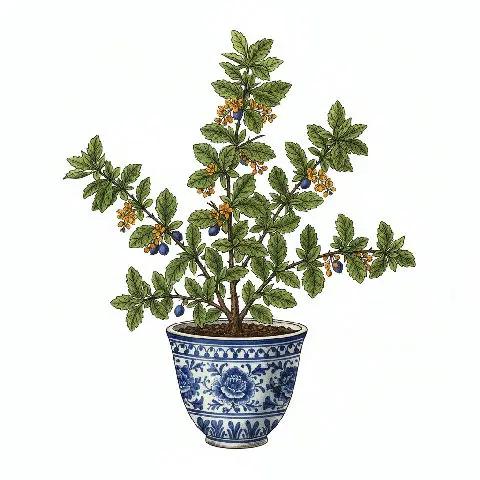
Berberis asiatica, also known as Sumbal, Kilmora, or Chitar, is a robust, perennial thorny shrub native to the temperate and subtropical mountainous terrains of the Himalayas. This species flourishes particularly across India, Nepal, and Bhutan, thriving at altitudes between 1,000 and 3,500 meters, demonstrating remarkable resilience in harsh, high-altitude ecosystems. Morphologically, Berberis asiatica is characterized by its woody stems and roots, which often display a distinctive yellowish hue internally, a direct indicator of its rich berberine content. The shrub bears small, obovate to spatulate leaves, typically clustered, with finely serrated margins and a leathery texture.
Its branches are armed with sharp, trident-like thorns, providing natural defense and often utilized as living fences in traditional agricultural practices. In spring, the plant produces vibrant yellow flowers that mature into small, ovoid, purplish-blue berries. These tart berries are edible and are locally consumed or processed into preserves. The bark, particularly of the roots and stem, is rough and greyish-brown externally, revealing a bright yellow inner layer upon removal.
Historically, Berberis asiatica holds profound cultural and medicinal significance, especially within Ayurvedic and Unani systems, where it's sometimes referred to as 'Daruharidra.' Its therapeutic applications, dating back over 3,000 years, are documented in ancient texts for a wide array of ailments. The concentrated extract from its roots and stem bark, traditionally known as 'Rasaut' or 'Rasanjana,' underscores its enduring therapeutic value. Beyond medicine, the plant's bright yellow wood and roots have been historically employed as a natural dye for local crafts and textiles.
Trusted Scientific References
1. Authoritative external sources for Berberis asiatica
1.1 Wikipedia — Berberis asiatica
1.2 Kew POWO (Plants of the World Online)
1.3 PubMed — peer-reviewed research
1.4 NCBI Taxonomy Browser
1.5 GBIF — Global Biodiversity
1.6Berberis Asiatica should be interpreted through verified botanical identity, practical care, and responsible safety language. This recovery note adds the missing context needed for a complete profile: match light to the plant's habit, use well-drained soil, water according to season, and avoid unsupported medicinal or edible claims. For publishing, the plant can be presented as a source-backed medicinal plant with clear care guidance, common problem diagnosis, and conservative safety wording.
1.1.Berberis Asiatica — Highlights
- ✓Rich in Berberine — Primary active compound responsible for most medicinal properties.
- ✓Himalayan Origin — Native to the mountainous regions of India, Nepal, and Bhutan.
- ✓Thorny Shrub — Characterized by sharp, trident-like thorns on its branches.
- ✓Edible Berries — Produces tart, purplish-blue berries that are locally consumed.
- ✓Yellow Wood/Roots — Distinctive yellow internal color due to alkaloid content.
- ✓Traditional Medicine Staple — Integral to Ayurvedic and Unani systems.
- ✓Anti — inflammatory Powerhouse — Modulates various inflammatory pathways.
- ✓Broad — Spectrum Antimicrobial — Effective against bacteria, fungi, viruses, and protozoa.
- ✓Metabolic Regulator — Supports healthy blood sugar and lipid levels.
- ✓Natural Dye Source — Historically used for its vibrant yellow pigment.
1.2.Berberis Asiatica — At-a-Glance Summary
- ✓Berberis asiatica is a Himalayan shrub rich in the alkaloid berberine.
- ✓Traditionally used in Ayurveda and Unani medicine for over 3,000 years.
- ✓Known for potent anti-inflammatory, antimicrobial, and metabolic benefits.
- ✓Critical contraindications include pregnancy, lactation, and use in infants.
- ✓Preparations include decoctions, tinctures, and topical 'Rasaut' paste.
- ✓Requires careful dosage and professional consultation due to drug interactions.
2.Berberis Asiatica — Scientific Identity
3.Berberis Asiatica — Vital Statistics
4.Berberis Asiatica — Physical Description
5.Berberis Asiatica — Origin & Spread
6.Berberis Asiatica — Folk Medicine Applications
7.Berberis Asiatica — Key Phytochemicals
- ✓Isoquinoline Alkaloids — Berberine (C20H18NO4+), the primary active compound, alongside palmatine, jatrorrhizine, and oxyacanthine, are responsible for the plant's diverse pharmacological actions, influencing cellular signaling pathways.
- ✓Flavonoids — Compounds like quercetin and kaempferol derivatives contribute significantly to the plant's antioxidant, anti-inflammatory, and cardioprotective effects.
- ✓Lignans — These phenolic compounds are precursors in the biosynthesis of various alkaloids and possess their own spectrum of biological activities, including antioxidant properties.
- ✓Tannins — Present in the bark, tannins provide astringent properties, contributing to the plant's efficacy in wound healing, reducing inflammation, and acting as an antiseptic.
- ✓Saponins — Glycosidic compounds that may offer adaptogenic, immune-modulating, and cholesterol-lowering benefits, although their specific role in Berberis asiatica is less studied.
- ✓Sterols — Beta-sitosterol and campesterol are plant sterols found in Berberis asiatica, known for their potential to support cardiovascular health and modulate immune responses.
- ✓Organic Acids — Malic acid and citric acid are present, particularly in the berries, contributing to their tart flavor and potentially aiding in digestion and antioxidant capacity.
- ✓Polysaccharides — Complex carbohydrates found in the plant contribute to its overall immune-supportive properties and may have prebiotic effects, fostering gut health.
8.Berberis Asiatica — Evidence-Based Benefits
- ✓Anti-inflammatory Action — Berberis asiatica, primarily due to berberine, modulates inflammatory pathways, helping to reduce systemic and localized inflammation.
- ✓Antimicrobial Properties — Exhibits broad-spectrum activity against various bacteria, viruses, fungi, protozoa, and helminthes, supporting its traditional use in treating infections.
- ✓Cardioprotective Effects — Berberine contributes to cardiovascular health by improving lipid profiles, reducing blood pressure, and supporting healthy heart function.
- ✓Hepatoprotective Benefits — Supports liver health by reducing oxidative stress, inflammation, and fat accumulation, aiding in conditions like fatty liver disease.
- ✓Renoprotective Action — Helps protect kidney function by mitigating oxidative damage and inflammation, crucial for maintaining renal health.
- ✓Immunomodulatory Support — Modulates the immune system, enhancing its response to pathogens while preventing overactivity in autoimmune conditions.
- ✓Antioxidant Activity — Rich in compounds that neutralize free radicals, protecting cells from oxidative damage and contributing to overall cellular health.
- ✓Hypoglycemic Effects — Significantly lowers blood sugar levels by enhancing insulin sensitivity and reducing glucose production, beneficial for managing diabetes.
- ✓Digestive Aid — Traditionally used to alleviate indigestion, dysentery, and other gastrointestinal disturbances due to its antimicrobial and anti-inflammatory properties.
- ✓Wound Healing Acceleration — Applied topically, its extracts promote faster healing of wounds and skin lesions by combating infection and reducing inflammation.
- ✓Ocular Health Support — Used traditionally for eye infections and inflammation, the 'Rasaut' extract provides soothing and antimicrobial benefits.
- ✓Skin Pigmentation and Sores — Addresses various skin conditions, including reducing hyperpigmentation and aiding in the healing of skin sores and inflammations.
8.1.Berberis Asiatica — Conditions Traditionally Used For
9.Berberis Asiatica — Safety Considerations
9.1.Berberis Asiatica — Reported Side Effects
- ✓Gastrointestinal Upset — Nausea, vomiting, diarrhea, constipation, or abdominal cramps may occur, especially with higher doses or prolonged use of Berberis asiatica preparations.
- ✓Hypoglycemia — Can significantly lower blood sugar levels, posing a risk for individuals on antidiabetic medications or those with hypoglycemia.
- ✓Hypotension — May cause a reduction in blood pressure, which could interact adversely with antihypertensive drugs or in individuals prone to low blood pressure.
- ✓Liver Enzyme Elevation — Rare instances of elevated liver enzymes have been reported with prolonged high-dose berberine use, indicating potential liver stress.
- ✓Allergic Reactions — Sensitive individuals may experience allergic responses such as skin rashes, itching, or hives.
- ✓Uterine Contractions — Berberine can stimulate uterine contractions, making it contraindicated during pregnancy.
- ✓Photosensitivity — Some individuals may experience increased sensitivity to sunlight, leading to easier sunburn.
9.2.Berberis Asiatica — Safety Profile
- ✓Pregnancy and Lactation — Absolutely contraindicated during pregnancy due to potential uterine stimulation and during lactation as berberine can pass into breast milk.
- ✓Children — Not recommended for infants or young children, especially neonates, due to the risk of kernicterus (jaundice) by displacing bilirubin from albumin.
- ✓Drug Interactions — Potentiates the effects of anticoagulant, antiplatelet, antihypertensive, and hypoglycemic medications; consult a doctor if on these drugs.
- ✓Liver/Kidney Conditions — Use with extreme caution in individuals with pre-existing liver or kidney disease; medical supervision is advised.
- ✓Dosage Adherence — Strictly adhere to recommended dosages; high doses can lead to adverse effects and toxicity.
- ✓Medical Consultation — Always consult a healthcare professional before using Berberis asiatica, especially if you have chronic health conditions or are on other medications.
- ✓Jaundice Risk — Berberine can increase free bilirubin levels, particularly dangerous for newborns, hence its contraindication in infants.
10.Berberis Asiatica — Usage Guide
- ✓Decoction — The root and stem bark are traditionally boiled in water to create a decoction, commonly consumed orally for internal ailments like digestive issues, infections, and fevers.
- ✓Tincture — An alcoholic extract of the root or bark is prepared, offering a concentrated form for internal dosing, often diluted in water.
- ✓Topical Paste (Rasaut/Rasanjana) — A concentrated aqueous extract is traditionally prepared into a semi-solid paste, applied externally for eye conditions, skin ailments, and wound healing.
- ✓Powdered Herb — Dried and finely ground root or bark can be encapsulated or mixed with honey or other carriers for oral consumption, providing systemic therapeutic effects.
- ✓Infusion — The leaves or berries can be steeped in hot water to create an infusion, used for milder therapeutic effects or as a nutritional beverage.
- ✓Berries — The ripe purplish-blue berries are consumed fresh, dried, or processed into jams, jellies, or preserves for their nutritional value and mild medicinal properties.
- ✓Gargle/Mouthwash — A diluted decoction is used as a gargle or mouthwash to treat oral infections, toothaches, gum inflammation, and sore throats.
11.Berberis Asiatica — Cultivation & Care
- ✓Climate Preference — Thrives in temperate to subtropical mountainous regions, capable of tolerating a wide range of temperatures and high altitudes.
- ✓Soil Requirements — Prefers well-drained, slightly acidic to neutral (pH 6.0-7.0) loamy or sandy soils enriched with organic matter for optimal growth.
- ✓Propagation — Primarily propagated by seeds, which require cold stratification for successful germination, or by semi-hardwood cuttings taken in summer.
- ✓Sunlight Exposure — Prefers full sun to partial shade; adequate sunlight is crucial for robust growth, flowering, and fruit development.
- ✓Watering Needs — Moderately drought-tolerant once established, but regular watering, especially during prolonged dry periods, promotes healthier growth.
- ✓Pruning — Minimal pruning is generally required; focus on removing dead, diseased, or crossing branches to maintain plant health and shape.
- ✓Pests and Diseases — Generally resilient, but can be susceptible to fungal diseases like rust and powdery mildew in overly humid or poorly ventilated conditions.
- ✓Harvesting — Roots and bark, the primary medicinal parts, are typically harvested from mature plants (3-5 years old) during the dormant season for maximum alkaloid content.
Reviewed by the Flora Medical Global Botanical Review Panel
Multi-disciplinary editorial group · Botany · Ethnobotany · Herbal-medicine literature
Who reviewed this: This page was checked by the Flora Medical Global Botanical Review Panel — an in-house editorial group of botany graduates, ethnobotany researchers, and horticulture practitioners who collectively maintain our 7,000+ plant encyclopedia. Meet the team.
Our 4-step verification process
1. Taxonomic verification
Scientific names and synonyms cross-checked against Kew POWO, World Flora Online, and The Plant List.
2. Phytochemical & medicinal cross-reference
Active compounds, traditional uses, and reported activities are cross-referenced with PubMed, USDA Dr. Duke's database, and peer-reviewed ethnobotanical literature.
3. Conservation & distribution check
Distribution, ecology, and conservation status confirmed against GBIF occurrence records and the IUCN Red List.
4. Editorial & safety review
Every entry passes an editorial pass for clarity, originality, and safety notices (toxicity, contraindications, dosage caveats) before publication.
Last reviewed:
Important medical disclaimer: This content is for educational and research purposes only. It is not medical advice and is not a substitute for consultation with a licensed healthcare provider. Do not use any herb to self-treat a medical condition without professional guidance.
Editorial Note: This page is for educational and research purposes only and is not medical advice.
Written by: Flora Medical Global Editorial Team
Reviewed by: Flora Medical Global Botanical Review Panel
Last Updated: June 15, 2026





Berberis Asiatica — Comments & Community Reviews
Rate this plant