


Medical Disclaimer: This content is for educational purposes only. It is not medical advice. Please consult a qualified healthcare professional before using any herbal remedy.
Safety Overview
1.Bhui Amla — Plant Snapshot
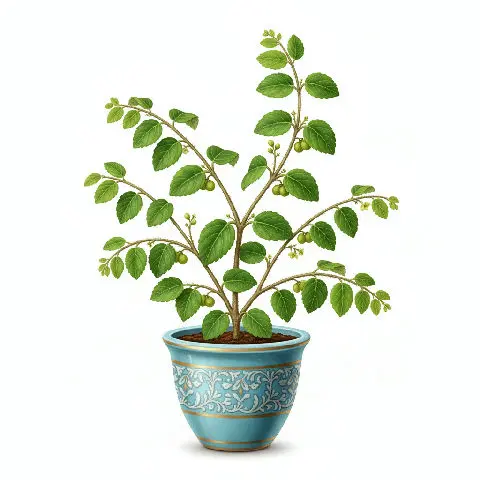
Bhui Amla, officially known as Phyllanthus urinaria, is a remarkable annual herbaceous plant belonging to the diverse Phyllanthaceae family. It is colloquially recognized by names such as 'Chamber Bitter' or 'Stonebreaker' due to its long-standing traditional applications. While often confused with its close botanical relative, Phyllanthus niruri (Bhumi Amla), P. urinaria possesses a unique distinguishing feature: its small, warty fruit capsules consistently point upwards, a clear morphological differentiator from the downward-facing fruits of P. niruri.
This resilient tropical and subtropical weed typically grows as a compact, erect plant, reaching heights of 50 to 70 centimeters, completing its entire life cycle within a single growing season. Its stems are generally light green and smooth, adorned with simple, alternate leaves arranged in a distichous pattern, which imparts a delicate, fern-like or feathery aesthetic to the plant. The inconspicuous, monoecious flowers emerge from the leaf axils, usually pale green, sometimes subtly tinged with red, eventually developing into the characteristic three-seeded capsules. Indigenous to a vast geographical expanse, Phyllanthus urinaria flourishes across tropical and subtropical regions of Asia, Africa, and the Americas. It is frequently encountered in disturbed soils, cultivated fields, and along roadsides, highlighting its adaptability and hardiness.
The plant prefers moist, well-drained soils and thrives optimally in warm, humid conditions, establishing itself as a ubiquitous presence throughout its native habitats. Historically, Bhui Amla has held a profound and significant role in various traditional medicine systems for centuries. Ancient Ayurvedic texts detail its efficacy, particularly in addressing liver disorders, jaundice, and urinary tract infections. In Traditional Chinese Medicine (TCM), it is highly valued for its ability to clear internal heat, detoxify the body, and alleviate damp-heat conditions, showcasing its broad therapeutic appeal.
Trusted Scientific References
1. Authoritative external sources for Phyllanthus urinaria
1.1 Wikipedia — Phyllanthus urinaria
1.2 Kew POWO (Plants of the World Online)
1.3 PubMed — peer-reviewed research
1.4 NCBI Taxonomy Browser
1.5 GBIF — Global Biodiversity
1.1.Bhui Amla — Standout Qualities
- ✓Distinct Upward — Pointing Fruits — A key morphological differentiator from other Phyllanthus species, especially P. niruri.
- ✓Annual Herbaceous Growth — Completes its life cycle within a single growing season, making it a fast-growing plant.
- ✓Widespread Tropical Distribution — Found extensively across tropical and subtropical regions globally, indicating its adaptability.
- ✓Rich in Bioactive Lignans — Contains potent compounds like phyllanthin and hypophyllanthin, central to its medicinal efficacy.
- ✓Supports Urinary Tract Health — Traditionally known as 'Stonebreaker' for its benefits in managing kidney and gall bladder stones.
- ✓Aids Digestive System Function — Helps improve appetite, alleviates hyperacidity, and supports overall gut health.
- ✓Exhibits Anti — inflammatory Actions — Possesses compounds that help reduce inflammation throughout the body.
- ✓Powerful Antioxidant Properties — Contributes to cellular protection by neutralizing harmful free radicals.
- ✓Traditional Liver Tonic — Widely used in indigenous medicine systems for a broad spectrum of liver disorders.
- ✓Antiviral Capabilities — Demonstrates efficacy against certain viral infections, notably hepatitis B.
1.2.Bhui Amla — In Brief
- ✓Potent Hepatoprotective Herb — Supports liver health, aids regeneration, and protects against toxins and viral infections.
- ✓Natural Diuretic & Litholytic — Renowned for its 'stonebreaker' properties, assisting in kidney and gall bladder stone management.
- ✓Significant Antiviral Activity — Particularly noted for its efficacy against hepatitis B virus.
- ✓Anti-inflammatory & Antioxidant — Contributes to reducing systemic inflammation and combating oxidative stress.
- ✓Valued in Traditional Medicine — A cornerstone in Ayurvedic and Traditional Chinese Medicine for diverse ailments.
- ✓Distinctive Morphology — Easily identified by its characteristic upward-pointing fruit capsules.
2.Bhui Amla — Systematic Position
3.Bhui Amla — Reference Facts
4.Bhui Amla — Structural Profile
5.Bhui Amla — Geographic Distribution
6.Bhui Amla — Ethnobotanical Uses
7.Bhui Amla — Active Compounds
- ✓Lignans — Key compounds like phyllanthin, hypophyllanthin, and niranthin are abundant, primarily responsible for Bhui Amla's potent hepatoprotective, antiviral, and antioxidant activities.
- ✓Flavonoids — Includes quercetin, rutin, and kaempferol, which contribute to its anti-inflammatory, antioxidant, and protective effects on capillaries.
- ✓Tannins — A high concentration of ellagitannins and other tannins provides astringent properties, contributing to its antiviral and anti-inflammatory actions.
- ✓Phenolic Acids — Compounds such as gallic acid and ellagic acid are present, known for their strong antioxidant and free-radical scavenging capabilities.
- ✓Alkaloids — Various alkaloids are identified, which may contribute to its diverse pharmacological spectrum, including potential antispasmodic effects.
- ✓Terpenoids — Triterpenes like lupeol have been isolated, known for their anti-inflammatory, hepatoprotective, and anticancer properties.
- ✓Saponins — Certain glycosides with saponin structures are found, potentially influencing immune modulation and acting as expectorants.
- ✓Steroids — Phytosterols such as beta-sitosterol contribute to the plant's anti-inflammatory and cholesterol-lowering potential.
- ✓Lipids — Fatty acids and their esters are present, playing roles in cellular structure and potentially in overall health benefits.
- ✓Volatile Oils — Trace amounts of essential oils contribute to the plant's aroma and may possess antimicrobial properties.
- ✓Coumarins — Certain coumarin derivatives are sometimes found, which can have anticoagulant and anti-inflammatory effects.
8.Bhui Amla — Research Insights
- ✓Hepatoprotective — Bhui Amla is widely recognized for its liver-protective properties, aiding in the regeneration of liver cells and offering defense against various toxins and viral hepatitis.
- ✓Antiviral Activity — It exhibits significant antiviral effects, particularly against hepatitis B virus, by inhibiting viral replication and supporting the body’s immune response.
- ✓Diuretic and Litholytic — Known as 'Stonebreaker,' it promotes urine flow and helps in the dissolution and expulsion of kidney and gall bladder stones.
- ✓Anti-inflammatory — The plant contains compounds that can reduce inflammation throughout the body, potentially alleviating symptoms of inflammatory conditions.
- ✓Antioxidant Support — Rich in antioxidants, Bhui Amla helps combat oxidative stress and neutralize free radicals, protecting cellular integrity.
- ✓Antihypertensive — Traditional uses and some studies suggest its ability to help lower elevated blood pressure, contributing to cardiovascular health.
- ✓Antidiabetic — It may assist in regulating blood sugar levels, making it a potential adjunct in managing diabetes.
- ✓Digestive Aid — Bhui Amla can stimulate appetite, alleviate hyperacidity, and provide relief from various gastrointestinal discomforts.
- ✓Immunomodulatory — It supports and modulates the immune system, enhancing the body's natural defense mechanisms.
- ✓Febrifugal — Traditionally employed to reduce fever, especially in conditions like malaria and chronic fevers, by clearing heat from the body.
- ✓Anthelmintic — It possesses properties that help in expelling parasitic worms from the digestive tract.
- ✓Antispasmodic — The herb can help relieve muscle spasms and cramps, offering soothing effects on the smooth muscles.
8.1.Bhui Amla — Health Applications
9.Bhui Amla — Risk Profile
9.1.Bhui Amla — Warnings
- ✓Increased Vata Dosha — High doses may aggravate Vata dosha, potentially leading to dryness, constipation, or discomfort.
- ✓Gastrointestinal Upset — Excessive intake can sometimes result in diarrhea or dysentery due to its laxative properties.
- ✓Hypotensive Effects — May lower blood pressure significantly, posing a risk for individuals already on antihypertensive medications.
- ✓Hypoglycemic Effects — Can reduce blood sugar levels, requiring caution and monitoring for diabetic patients on medication.
- ✓Electrolyte Imbalance — Prolonged or excessive use as a diuretic may lead to electrolyte imbalances if not adequately hydrated.
- ✓Pregnancy and Lactation — Lack of sufficient safety data advises against its use during pregnancy and breastfeeding.
- ✓Drug Interactions — Potential interactions with blood thinners, antidiabetic drugs, and antihypertensive medications should be considered.
9.2.Bhui Amla — Safety Overview
- ✓Professional Consultation — Always consult a qualified healthcare practitioner or medical herbalist before initiating Bhui Amla supplementation, especially for chronic conditions.
- ✓Adherence to Dosage — Strictly follow recommended dosages to minimize the risk of adverse effects and ensure therapeutic benefits.
- ✓Monitor for Reactions — Discontinue use immediately and seek medical attention if any allergic reactions or severe adverse effects are observed.
- ✓Avoid Prolonged Unsupervised Use — Best utilized for specific therapeutic durations under expert guidance rather than continuous, long-term self-medication.
- ✓Contraindicated in Pregnancy/Lactation — Due to the absence of comprehensive safety studies, it is generally not recommended for pregnant or breastfeeding women.
- ✓Caution with Pre-existing Conditions — Individuals with diabetes, hypertension, or those on blood-thinning medications should exercise extreme caution and seek medical advice.
- ✓Hydration — Maintain adequate hydration when using Bhui Amla, especially due to its diuretic properties, to prevent electrolyte imbalances.
10.Bhui Amla — Application Forms
- ✓Decoction Preparation — Boil 10-15 grams of dried whole Bhui Amla plant in 2-3 cups of water until reduced by half; consume once or twice daily for liver and kidney support.
- ✓Fresh Juice Extraction — Press fresh leaves and stems to extract juice; 15-20 ml can be taken on an empty stomach for digestive issues, jaundice, or anemia.
- ✓Powder Form Consumption — Dried and pulverized Bhui Amla powder (3-6 grams) can be mixed with water or honey and consumed twice daily.
- ✓Topical Paste Application — Crush fresh leaves to form a paste, sometimes mixed with a pinch of rock salt, and apply externally to treat skin infections, swelling, or ulcers overnight.
- ✓Medicinal Infusion (Tea) — Steep fresh or dried Bhui Amla leaves in hot water for 5-10 minutes to create a medicinal tea, beneficial for fevers and general well-being.
- ✓Standardized Capsules — Available in standardized extract form; typically 1-2 capsules taken twice daily with plain water after meals, as per manufacturer's instructions.
- ✓Nasal Drops — For blocked nose or respiratory congestion, 2-3 drops of fresh Bhui Amla juice can be instilled into each nostril.
- ✓Chewing Fresh Leaves — Chewing a few fresh leaves on an empty stomach is a traditional practice believed to balance doshas and improve digestion.
11.Bhui Amla — Growing Guide
- ✓Climate Preference — Bhui Amla thrives in warm, humid tropical and subtropical climates, requiring consistent temperatures above 20°C (68°F).
- ✓Soil Requirements — It prefers well-drained, fertile loamy or sandy-loamy soils with a slightly acidic to neutral pH range of 5.5-7.0.
- ✓Propagation — Primarily propagated by seeds, which germinate readily when sown directly in moist soil during the rainy season.
- ✓Watering — Requires consistent moisture, especially during germination and early growth stages; avoid waterlogging to prevent root rot.
- ✓Light Exposure — Flourishes best in full sun to partial shade, with ample sunlight promoting robust growth and higher concentration of active compounds.
- ✓Pest and Disease Management — Generally a resilient plant, but monitor for common garden pests like aphids and ensure good air circulation to prevent fungal issues in overly damp conditions.
- ✓Harvesting — The entire plant is typically harvested at maturity, usually before extensive seed dispersal, for its medicinal applications.
- ✓Fertilization — Benefits from moderate organic fertilization, especially in nutrient-poor soils, to support healthy growth.
Reviewed by the Flora Medical Global Botanical Review Panel
Multi-disciplinary editorial group · Botany · Ethnobotany · Herbal-medicine literature
Who reviewed this: This page was checked by the Flora Medical Global Botanical Review Panel — an in-house editorial group of botany graduates, ethnobotany researchers, and horticulture practitioners who collectively maintain our 7,000+ plant encyclopedia. Meet the team.
Our 4-step verification process
1. Taxonomic verification
Scientific names and synonyms cross-checked against Kew POWO, World Flora Online, and The Plant List.
2. Phytochemical & medicinal cross-reference
Active compounds, traditional uses, and reported activities are cross-referenced with PubMed, USDA Dr. Duke's database, and peer-reviewed ethnobotanical literature.
3. Conservation & distribution check
Distribution, ecology, and conservation status confirmed against GBIF occurrence records and the IUCN Red List.
4. Editorial & safety review
Every entry passes an editorial pass for clarity, originality, and safety notices (toxicity, contraindications, dosage caveats) before publication.
Last reviewed:
Important medical disclaimer: This content is for educational and research purposes only. It is not medical advice and is not a substitute for consultation with a licensed healthcare provider. Do not use any herb to self-treat a medical condition without professional guidance.
Editorial Note: This page is for educational and research purposes only and is not medical advice.
Written by: Flora Medical Global Editorial Team
Reviewed by: Flora Medical Global Botanical Review Panel
Last Updated: June 15, 2026





Bhui Amla — Comments & Community Reviews
Rate this plant