


Medical Disclaimer: This content is for educational purposes only. It is not medical advice. Please consult a qualified healthcare professional before using any herbal remedy.
Safety Overview
1.Bhui Kumra — Introduction & Highlights
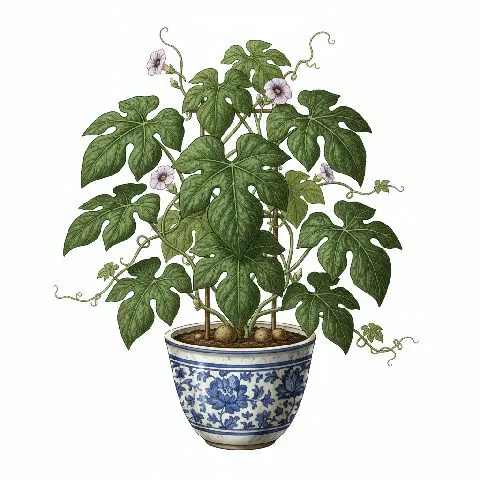
Bhui Kumra, scientifically recognized as Ipomoea digitata and also known by the synonym Ipomoea mauritiana, is a robust, perennial climbing vine belonging to the Convolvulaceae family, commonly referred to as the morning glory family. This vigorous liana is celebrated for its substantial, fleshy, tuberous roots, which are the primary part utilized for their profound medicinal properties. The plant often scrambles and twines vigorously over supporting structures, easily reaching impressive lengths of 7 to 10 meters, showcasing its characteristic glabrous stems and rapid ascent. Its distinctive foliage features large, orbicular leaf blades deeply palmately lobed into 5 to 9 narrow, lanceolate or ovate segments, giving them the appearance of an open hand or 'finger-leaf'.
These leaves, which can measure 6-24 cm in length and 6-18 cm in width, are supported by petioles 3-11 cm long and typically have a cordate or truncate base with an acuminate apex. The plant's aesthetic appeal is enhanced by striking, funnel-shaped flowers that bloom during the monsoon season, ranging in color from vibrant pink to purplish-pink and measuring approximately 5-6 cm long. These showy blossoms are borne in few-to-many flowered inflorescences on long peduncles. After successful pollination, Bhui Kumra produces globular capsules, about 1.2-1.4 cm long, containing 4 black, flattened seeds, each covered with characteristic cottony brown hairs, aiding in dispersal.
The most remarkable feature remains its large, underground tuberous root, often resembling a small pumpkin or sweet potato, which gives rise to its common name 'Bhui Kumra,' meaning 'ground pumpkin' in some Indian languages. These roots are rich in starch and various bioactive compounds.
Trusted Scientific References
1. Authoritative external sources for Ipomoea digitata
1.1 Wikipedia — Ipomoea digitata
1.2 Kew POWO (Plants of the World Online)
1.3 PubMed — peer-reviewed research
1.4 NCBI Taxonomy Browser
1.5 GBIF — Global Biodiversity
1.6Bhui Kumra should be interpreted through verified botanical identity, practical care, and responsible safety language. This recovery note adds the missing context needed for a complete profile: match light to the plant's habit, use well-drained soil, water according to season, and avoid unsupported medicinal or edible claims. For publishing, the plant can be presented as a source-backed medicinal plant with clear care guidance, common problem diagnosis, and conservative safety wording.
1.1.Bhui Kumra — Key Features
- ✓Vigorous perennial climbing — Vigorous perennial climbing vine, reaching up to 10 meters.
- ✓Distinctive large, palmately — Distinctive large, palmately lobed leaves resembling an open hand.
- ✓Produces attractive pink to purplish — pink funnel-shaped flowers.
- ✓Possesses large, fleshy, — Possesses large, fleshy, subterranean tuberous roots, the primary medicinal part.
- ✓Known by common — Known by common names like Alligator Yam, Finger Leaf Morning Glory, and Milky Yam.
- ✓A significant herb — A significant herb in traditional Indian medicine, particularly Ayurveda.
- ✓Belongs to the — Belongs to the Convolvulaceae family, known for morning glories.
- ✓Roots are rich — Roots are rich in starch and various bioactive phytochemicals.
- ✓Exhibits adaptogenic, aphrodisiac, and anti — inflammatory actions.
- ✓Found naturally in — Found naturally in tropical and subtropical regions globally, including India.
1.2.Bhui Kumra — Quick Summary
- ✓Bhui Kumra (Ipomoea digitata) is a potent Ayurvedic herb known for its large, medicinal tuberous roots.
- ✓Renowned for adaptogenic, aphrodisiac, anti-inflammatory, and antioxidant properties.
- ✓Key chemical constituents include phytosterols, resin glycosides, and coumarins like scopoletin.
- ✓Traditionally used to enhance vitality, support reproductive health, and aid digestion.
- ✓Requires careful dosage and professional consultation, especially for those with existing health conditions.
- ✓A valuable component in traditional medicine systems like Ayurveda, Unani, and Siddha.
2.Bhui Kumra — Systematic Position
3.Bhui Kumra — Reference Facts
4.Bhui Kumra — Structural Profile
5.Bhui Kumra — Where It Grows
6.Bhui Kumra — Historical Applications
7.Bhui Kumra — Bioactive Constituents
- ✓Glycosides — Primarily resin glycosides are present, contributing to the plant's purgative and anti-inflammatory actions.
- ✓Phytosterols — Beta-sitosterol is a prominent phytosterol known for its anti-inflammatory, antioxidant, and cholesterol-lowering properties.
- ✓Coumarins — Scopoletin, a type of coumarin, is found, which exhibits anti-inflammatory, antioxidant, and potential anticancer activities.
- ✓Triterpenes — Compounds like Taraxerol are present, contributing to the plant's anti-inflammatory and hepatoprotective effects.
- ✓Flavonoids — Various flavonoids are likely present, offering antioxidant and anti-inflammatory benefits, common in many medicinal plants.
- ✓Saponins — These compounds contribute to the plant's adaptogenic and immune-modulating properties, and can also have expectorant effects.
- ✓Alkaloids — While not extensively characterized, some alkaloidal compounds may be present, influencing various pharmacological activities.
- ✓Carbohydrates — The tuberous roots are rich in starch, providing energy and contributing to the plant's nutritive and tonic properties.
- ✓Phenolic Compounds — These broad-spectrum antioxidants contribute significantly to the plant's free radical scavenging capacity and protective effects.
- ✓Fatty Acids — Essential fatty acids may be present in small amounts, supporting cellular function and overall health.
- ✓Tannins — Astringent properties are often attributed to tannins, which can contribute to wound healing and anti-diarrheal effects.
- ✓Minerals — The tuberous roots contain various essential minerals vital for physiological functions.
8.Bhui Kumra — What Research Suggests
- ✓Adaptogenic Properties — Bhui Kumra is traditionally used as a rejuvenative tonic, helping the body adapt to stress and promoting overall vitality and well-being.
- ✓Aphrodisiac Action — It is highly regarded for its ability to enhance libido, improve sexual performance, and address conditions like spermatorrhoea, making it a valuable natural aphrodisiac.
- ✓Anti-inflammatory Effects — The plant possesses compounds that can help reduce inflammation, offering potential relief for various inflammatory conditions throughout the body.
- ✓Antioxidant Potential — Rich in antioxidants, Ipomoea digitata helps neutralize harmful free radicals, protecting cells from oxidative damage and supporting cellular health.
- ✓Hypoglycemic Activity — Traditional systems utilize Bhui Kumra to manage blood sugar levels, suggesting a potential role in supporting individuals with hyperglycemia.
- ✓Anticonvulsant Properties — Research indicates that certain constituents in Ipomoea digitata may help in modulating neuronal activity, thus exhibiting anticonvulsant effects.
- ✓Digestive Aid — It is traditionally used to alleviate indigestion, improve gastrointestinal health, and support healthy bowel function.
- ✓Menstrual Health Support — Bhui Kumra is employed in traditional medicine to address various menstrual problems, helping to regulate cycles and ease discomfort.
- ✓Immunomodulatory Effects — The plant may help modulate the immune system, enhancing the body's natural defense mechanisms against infections.
- ✓Galactagogue Properties — In some traditional practices, it is believed to promote lactation in nursing mothers, although more research is needed to confirm this effect.
- ✓Hepatoprotective Action — Preliminary studies suggest potential protective effects on the liver, helping to guard against damage from toxins.
- ✓Anabolic Properties — Due to its traditional use as a body-building tonic, it is thought to support muscle mass and strength, particularly in Ayurvedic formulations.
8.1.Bhui Kumra — Indications & Uses
9.Bhui Kumra — Risk Profile
9.1.Bhui Kumra — Possible Adverse Reactions
- ✓Gastrointestinal Upset — May cause mild digestive discomfort, bloating, or diarrhea in sensitive individuals or at high doses.
- ✓Allergic Reactions — Rare instances of allergic reactions, such as skin rashes or itching, have been reported.
- ✓Blood Sugar Fluctuations — Due to its hypoglycemic effects, it may interact with antidiabetic medications, potentially causing blood sugar to drop too low.
- ✓Hormonal Imbalance — As an aphrodisiac, it might influence hormonal levels, warranting caution for individuals with hormone-sensitive conditions.
- ✓Drug Interactions — Potential interactions with certain medications, including antidiabetics, anticoagulants, and hormone therapies.
- ✓Pregnancy & Lactation — Not recommended for use during pregnancy or lactation due to insufficient safety data.
- ✓Overdose Symptoms — Excessive intake may lead to exaggerated side effects, including severe gastrointestinal distress or dizziness.
9.2.Bhui Kumra — Safety Overview
- ✓Professional Guidance — Always consult a qualified healthcare professional or herbalist before using Bhui Kumra, especially for therapeutic purposes.
- ✓Pregnancy & Breastfeeding — Avoid use during pregnancy and lactation due to a lack of comprehensive safety studies in these populations.
- ✓Children — Use in children should be avoided unless specifically recommended and supervised by a pediatrician or herbal expert.
- ✓Pre-existing Conditions — Individuals with chronic health conditions, particularly diabetes or hormone-sensitive disorders, should exercise extreme caution.
- ✓Medication Interactions — Monitor for potential interactions with prescription medications, especially those for diabetes, heart conditions, or hormonal imbalances.
- ✓Purity & Sourcing — Ensure the plant material or supplement is sourced from reputable suppliers to guarantee purity and prevent contamination.
- ✓Discontinue if Adverse Reactions Occur — Stop use immediately if any adverse effects or allergic reactions are experienced.
10.Bhui Kumra — How to Use
- ✓Powdered Root — Dried tuberous root is finely powdered and often mixed with milk, ghee, or honey for internal consumption as a tonic.
- ✓Decoction — Sliced or crushed fresh roots can be boiled in water to create a decoction, used for various therapeutic purposes.
- ✓Paste — Fresh root is ground into a paste, which can be applied topically for skin conditions or consumed internally for specific ailments.
- ✓Herbal Formulations — Bhui Kumra is a key ingredient in many Ayurvedic and traditional polyherbal formulations, often combined with other synergistic herbs.
- ✓Extracts — Standardized extracts of the root are available in capsule or liquid form, offering a concentrated dose of active compounds.
- ✓Dosage — Dosage varies significantly based on age, health condition, and specific preparation; always consult a qualified herbalist or physician.
- ✓Topical Application — The root paste can be used externally for its anti-inflammatory properties, particularly for swelling or skin irritations.
- ✓Culinary Use — In some regions, the starchy tuberous roots are cooked and consumed as a nutritious vegetable, similar to sweet potatoes.
11.Bhui Kumra — Growing Guide
- ✓Climate — Thrives in tropical and subtropical regions, preferring warm, humid environments with ample rainfall.
- ✓Soil — Requires well-drained, fertile, loamy soil rich in organic matter for optimal tuber development.
- ✓Propagation — Primarily propagated by seeds or stem cuttings, but also effectively grown from root tubers.
- ✓Support — As a vigorous climbing vine, it necessitates strong support structures like trellises, fences, or other trees.
- ✓Watering — Needs consistent moisture, especially during dry periods, but avoids waterlogging to prevent root rot.
- ✓Sunlight — Prefers full sun exposure to partial shade for healthy growth and prolific flowering.
- ✓Pests & Diseases — Generally hardy, but monitor for common vine pests like aphids and fungal diseases in overly humid conditions.
- ✓Harvesting — Tuberous roots are typically harvested when mature, usually after 1-2 years of growth, by carefully digging them up.
Reviewed by the Flora Medical Global Botanical Review Panel
Multi-disciplinary editorial group · Botany · Ethnobotany · Herbal-medicine literature
Who reviewed this: This page was checked by the Flora Medical Global Botanical Review Panel — an in-house editorial group of botany graduates, ethnobotany researchers, and horticulture practitioners who collectively maintain our 7,000+ plant encyclopedia. Meet the team.
Our 4-step verification process
1. Taxonomic verification
Scientific names and synonyms cross-checked against Kew POWO, World Flora Online, and The Plant List.
2. Phytochemical & medicinal cross-reference
Active compounds, traditional uses, and reported activities are cross-referenced with PubMed, USDA Dr. Duke's database, and peer-reviewed ethnobotanical literature.
3. Conservation & distribution check
Distribution, ecology, and conservation status confirmed against GBIF occurrence records and the IUCN Red List.
4. Editorial & safety review
Every entry passes an editorial pass for clarity, originality, and safety notices (toxicity, contraindications, dosage caveats) before publication.
Last reviewed:
Important medical disclaimer: This content is for educational and research purposes only. It is not medical advice and is not a substitute for consultation with a licensed healthcare provider. Do not use any herb to self-treat a medical condition without professional guidance.
Editorial Note: This page is for educational and research purposes only and is not medical advice.
Written by: Flora Medical Global Editorial Team
Reviewed by: Flora Medical Global Botanical Review Panel
Last Updated: June 15, 2026





Bhui Kumra — Comments & Community Reviews
Rate this plant