
Medical Disclaimer: This content is for educational purposes only. It is not medical advice. Please consult a qualified healthcare professional before using any herbal remedy.
Safety Overview
1.Bignonia Capreolata — Botanical Snapshot
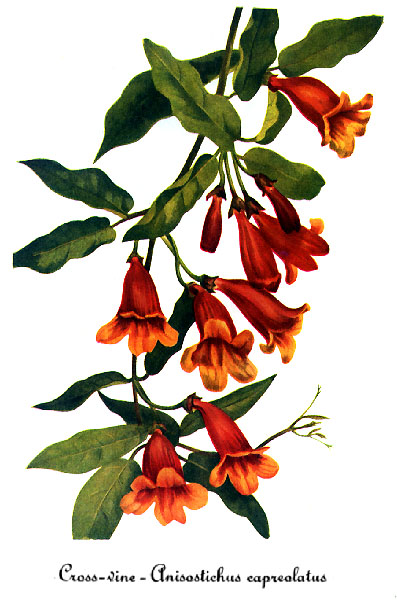
Bignonia capreolata, commonly known as Crossvine, is an elegant perennial woody vine native to the southeastern United States, belonging to the Bignoniaceae family. This vigorous climber is distinguished by its semi-evergreen foliage and striking floral displays. Its leaves are opposite and compound, typically presenting with two leaflets that often appear as four at each node, giving a characteristic 'cross' pattern when viewed from above.
The leaflets themselves are oblong to lanceolate with rounded bases, smooth, and entirely hairless. Between the leaflets, the vine develops branched tendrils, which it skillfully uses to twine and cling to various supports, enabling it to ascend trees and structures in its forest habitat. In early spring, generally from March to June, Crossvine produces a profusion of showy, trumpet-shaped flowers.
These blossoms are a vibrant combination of orange and yellow, often with a reddish exterior and a yellow throat, making them a significant early nectar source for pollinators like ruby-throated hummingbirds. Beyond its ornamental appeal, Bignonia capreolata thrives in well-drained soils rich in organic matter and prefers environments with ample sunlight, ideally receiving 6-8 hours of direct sun daily. While adaptable to diverse climates, it particularly flourishes in temperate zones, showcasing remarkable hardiness and resilience against common pests and diseases, which contributes to its suitability for ecological restoration and organic gardening practices.
Trusted Scientific References
1. Authoritative external sources for Bignonia Capreolata
1.1 Wikipedia — Bignonia Capreolata
1.2 Kew POWO (Plants of the World Online)
1.3 PubMed — peer-reviewed research
1.4 NCBI Taxonomy Browser
1.5 GBIF — Global Biodiversity
1.6Bignonia Capreolata should be interpreted through verified botanical identity, practical care, and responsible safety language. This recovery note adds the missing context needed for a complete profile: match light to the plant's habit, use well-drained soil, water according to season, and avoid unsupported medicinal or edible claims. For publishing, the plant can be presented as a source-backed garden plant with clear care guidance, common problem diagnosis, and conservative safety wording.
1.1.Bignonia Capreolata — Notable Characteristics
- ✓Botanical Classification — Bignonia capreolata, a perennial woody vine in the Bignoniaceae family.
- ✓Distinctive Foliage — Semi-evergreen, opposite, compound leaves with two leaflets often appearing as four per node, featuring branched tendrils.
- ✓Showy Blooms — Produces vibrant orange and yellow trumpet-shaped flowers in early spring, attracting hummingbirds.
- ✓Adaptogenic Properties — Traditionally revered for its ability to combat fatigue and support the body's response to stress.
- ✓Ethnobotanical Significance — Rich history of use among Native American tribes (Cherokee, Koasati) and Appalachian folk herbalists.
- ✓Unique Phytochemistry — Contains indole alkaloids, notably a reserpine-like compound, with ongoing research into its full spectrum of constituents.
- ✓Ecological Value — Provides early nectar for pollinators and serves as forage for wildlife.
- ✓Cultivation Ease — Hardy and resilient, thriving in sunny, well-drained conditions with minimal pest issues.
- ✓Traditional Alterative — Historically used as a 'blood purifier' to support overall systemic health.
- ✓Potential Anti — inflammatory — Traditional applications suggest properties that may help reduce inflammation and rheumatic pain.
1.2.Bignonia Capreolata — Snapshot Summary
- ✓Native Southeastern US vine with striking orange and yellow trumpet flowers.
- ✓Traditionally used as an adaptogen for fatigue and a blood purifier.
- ✓Contains indole alkaloids similar to reserpine, contributing to its effects.
- ✓Valued in Native American and Appalachian folk herbalism for various ailments.
- ✓Requires well-drained soil and ample sunlight for optimal growth.
- ✓Limited modern research, emphasizing traditional knowledge and cautious use.
2.Bignonia Capreolata — Botanical Identity
3.Bignonia Capreolata — Vital Statistics
4.Bignonia Capreolata — Botanical Description
5.Bignonia Capreolata — Ecological Habitat
6.Bignonia Capreolata — Heritage Uses
7.Bignonia Capreolata — Phytochemistry
- ✓Indole Alkaloids — Bignonia capreolata is noted for containing an indole alkaloid structurally similar to reserpine, a compound previously thought exclusive to other plant families, which contributes to its physiological effects.
- ✓Flavonoids — As with many plants, Crossvine likely contains various flavonoids, which are phenolic compounds known for their antioxidant, anti-inflammatory, and cardioprotective activities.
- ✓Iridoid Glycosides — Members of the Bignoniaceae family often contain iridoid glycosides, which are monoterpenoids recognized for their anti-inflammatory, antimicrobial, and hepatoprotective properties.
- ✓Triterpenes — These diverse compounds are commonly found in plants and may be present in Crossvine, contributing to potential anti-inflammatory, hepatoprotective, and adaptogenic effects.
- ✓Phenylethanoid Glycosides — These compounds, often found in medicinal plants, typically exhibit strong antioxidant and anti-inflammatory activities, potentially present in Crossvine foliage.
- ✓Tannins — The presence of tannins is probable, contributing to the plant's astringent properties, which could support its historical use as a 'blood purifier' or for topical applications.
- ✓Saponins — Saponins are glycosides that can have various effects, including adaptogenic, immunomodulatory, and anti-inflammatory actions, potentially contributing to Crossvine's traditional uses.
- ✓Volatile Compounds — While not extensively studied, the plant may contain volatile organic compounds responsible for its mild, slightly sweet green flavor, which could have subtle therapeutic effects.
8.Bignonia Capreolata — Evidence-Based Benefits
- ✓Adaptogenic Support — Crossvine is historically recognized as an adaptogen, traditionally used to combat fatigue and exhaustion, helping the body manage stress and restore vitality over time.
- ✓Blood Purification — The Cherokee people historically utilized the leaves of Bignonia capreolata as a 'blood purifier' or alterative herb, believed to cleanse the system and improve overall bodily functions.
- ✓Rheumatism Relief — The Koasati tribe traditionally employed Crossvine leaves to alleviate symptoms associated with rheumatism, suggesting potential anti-inflammatory or analgesic properties.
- ✓Headache Management — Historically, bark from Bignonia capreolata was prepared in baths and used as a remedy for headaches, pointing towards its potential as a topical analgesic or relaxant.
- ✓Renal Rejuvenation — Appalachian folk herbalists, such as Tommie Bass, regarded Crossvine as a 'renal rejuvenative,' particularly when combined with herbs like pippissewa, indicating its traditional role in supporting kidney health.
- ✓Anti-inflammatory Potential — Traditional applications for rheumatism and general 'cooling properties' in historical contexts suggest that Crossvine may possess compounds with anti-inflammatory effects.
- ✓Allergy Symptom Mitigation — Anecdotal reports indicate that Crossvine, especially when blended with other herbs like goldenrod and nettles, may help mitigate general malaise and symptoms associated with histamine responses during allergy season.
- ✓General Tonic — Regular consumption of Crossvine tea has been reported to contribute to a feeling of overall rejuvenation and reduced weariness, acting as a gentle tonic for long-term well-being.
- ✓Digestive Aid (Historical) — Earlier traditional uses of 'Garden Plant 281' mentioned aiding in digestion, which could extend to Crossvine given its historical context and general alterative properties.
8.1.Bignonia Capreolata — Health Applications
9.Bignonia Capreolata — Cautions & Contraindications
9.1.Bignonia Capreolata — Caution Notes
- ✓Allergic Reactions — Individuals sensitive to plants in the Bignoniaceae family may experience skin irritation or allergic reactions upon contact or ingestion.
- ✓Gastrointestinal Upset — High doses or prolonged use, especially in sensitive individuals, might lead to mild digestive discomfort, nausea, or stomach upset.
- ✓Hypotension Risk — Given the presence of reserpine-like alkaloids, there is a theoretical risk of blood pressure lowering, especially in individuals on hypotensive medications.
- ✓Sedation — The adaptogenic and potentially calming effects could lead to mild sedation, particularly when combined with other central nervous system depressants.
- ✓Lack of Long-Term Safety Data — Extensive modern clinical safety data on Bignonia capreolata is limited, warranting caution with long-term or unsupervised use.
- ✓Interaction with Medications — Potential for interaction with medications, particularly those affecting blood pressure, central nervous system, or immune function, due to its active compounds.
9.2.Bignonia Capreolata — Safety Profile
- ✓Pregnancy and Lactation — Avoid use during pregnancy and lactation due to insufficient safety data and the presence of potent alkaloids.
- ✓Children — Not recommended for use in children, as safety and appropriate dosages have not been established.
- ✓Pre-existing Conditions — Individuals with chronic medical conditions, especially cardiovascular or renal issues, should consult a healthcare professional before use.
- ✓Medication Interactions — Exercise caution when combining with prescription medications, particularly antihypertensives, sedatives, or immunosuppressants.
- ✓Allergic Sensitivity — Discontinue use if any signs of allergic reaction, such as skin rash, itching, or respiratory distress, occur.
- ✓Dosage Adherence — Adhere strictly to recommended traditional dosages; excessive intake may increase the risk of adverse effects.
- ✓Professional Guidance — Always seek advice from a qualified medical herbalist or healthcare provider before integrating Crossvine into a therapeutic regimen.
10.Bignonia Capreolata — Preparation Methods
- ✓Herbal Tea Infusion — For adaptogenic effects, typically steep 3 fresh or dried leaves per cup of hot water; consume regularly over several weeks for noticeable benefits.
- ✓Topical Bath Application — Historically, bark infusions were added to bathwater to alleviate headaches and potentially for rheumatic discomfort.
- ✓Tincture Preparation — Leaves and bark can be macerated in alcohol to create a concentrated tincture, allowing for controlled dosing and extended shelf life.
- ✓Poultice Application — Fresh, crushed leaves could be applied externally as a poultice for localized inflammation or minor skin irritations, leveraging its traditional antiseptic claims.
- ✓Synergistic Blends — Often combined with other herbs like goldenrod and nettles to enhance its effects, particularly for allergy symptom mitigation.
- ✓Decoction for Bark — For bark applications, a decoction (simmering the plant material in water) is generally preferred to extract more robust compounds than a simple infusion.
- ✓Culinary Use (Leaves) — While primarily medicinal, the leaves possess a mild flavor and can be sparingly added to dishes for a unique herbaceous note, though this is less common for medicinal purposes.
11.Bignonia Capreolata — Garden Cultivation
- ✓Soil Preference — Thrives in well-drained soil that is rich in organic matter, ensuring proper aeration and nutrient availability.
- ✓Sunlight Requirements — Prefers a sunny environment, requiring at least 6-8 hours of direct sunlight per day for optimal growth and flowering.
- ✓Climatic Adaptability — Adaptable to various climates but flourishes best in temperate zones, demonstrating resilience across different environmental conditions.
- ✓Watering Needs — Due to its shallow root system, consistent moisture is crucial, necessitating adequate irrigation, especially during dry spells.
- ✓Support Structure — As a climbing vine, Bignonia capreolata requires a trellis, arbor, or other vertical support for its tendrils to cling and twine.
- ✓Pest and Disease Resistance — Exhibits notable hardiness and resilience against common garden pests and diseases, making it suitable for low-maintenance and organic gardening.
- ✓Propagation — Can be propagated from seeds, cuttings, or by layering, with cuttings generally offering a faster establishment.
- ✓Pruning — Benefits from occasional pruning to manage its vigorous growth, encourage bushier habit, and promote abundant flowering.
Reviewed by the Flora Medical Global Botanical Review Panel
Multi-disciplinary editorial group · Botany · Ethnobotany · Herbal-medicine literature
Who reviewed this: This page was checked by the Flora Medical Global Botanical Review Panel — an in-house editorial group of botany graduates, ethnobotany researchers, and horticulture practitioners who collectively maintain our 7,000+ plant encyclopedia. Meet the team.
Our 4-step verification process
1. Taxonomic verification
Scientific names and synonyms cross-checked against Kew POWO, World Flora Online, and The Plant List.
2. Phytochemical & medicinal cross-reference
Active compounds, traditional uses, and reported activities are cross-referenced with PubMed, USDA Dr. Duke's database, and peer-reviewed ethnobotanical literature.
3. Conservation & distribution check
Distribution, ecology, and conservation status confirmed against GBIF occurrence records and the IUCN Red List.
4. Editorial & safety review
Every entry passes an editorial pass for clarity, originality, and safety notices (toxicity, contraindications, dosage caveats) before publication.
Last reviewed:
Important medical disclaimer: This content is for educational and research purposes only. It is not medical advice and is not a substitute for consultation with a licensed healthcare provider. Do not use any herb to self-treat a medical condition without professional guidance.
Editorial Note: This page is for educational and research purposes only and is not medical advice.
Written by: Flora Medical Global Editorial Team
Reviewed by: Flora Medical Global Botanical Review Panel
Last Updated: June 15, 2026





Bignonia Capreolata — Comments & Community Reviews
Rate this plant