
Medical Disclaimer: This content is for educational purposes only. It is not medical advice. Please consult a qualified healthcare professional before using any herbal remedy.
Safety Overview
1.Black-Eyed Susan — Introduction & Highlights
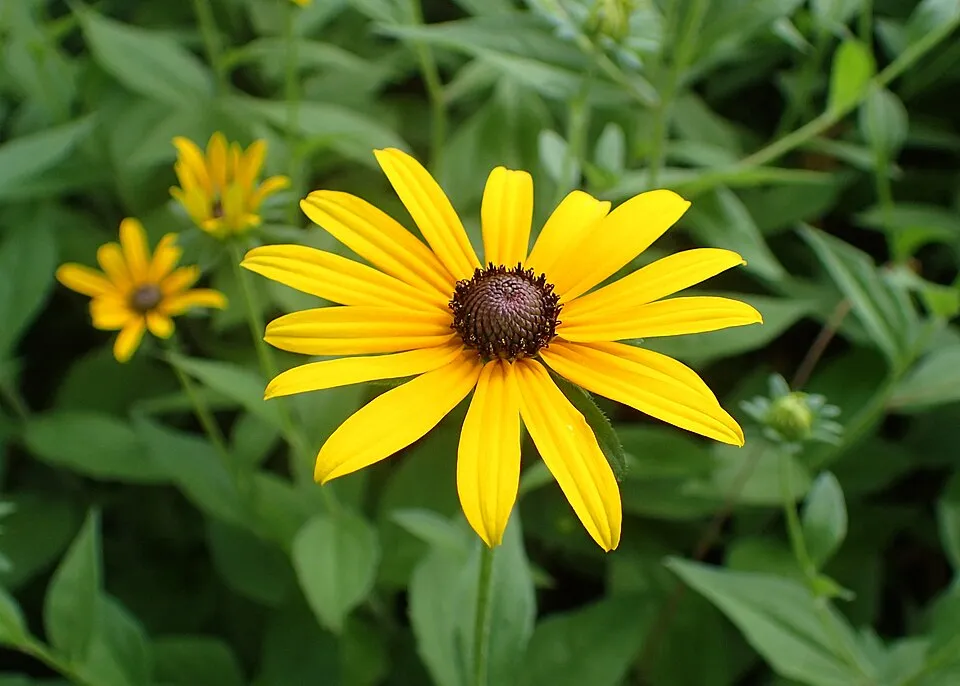
Rudbeckia hirta, widely known as Black-Eyed Susan, is a captivating and resilient North American wildflower, distinguished by its vibrant, daisy-like inflorescences. The plant's common name aptly describes its striking appearance: bright golden-yellow ray florets encircling a prominent, dome-shaped central disc composed of dark brown to purplish-black disc florets. This species is classified within the Asteraceae family, a diverse group renowned for its composite flowers. Depending on environmental conditions, R.
hirta can manifest as an annual, biennial, or short-lived perennial, showcasing remarkable adaptability across a broad native range. Its distribution spans much of eastern and central North America, from the maritime provinces of Canada westward to Saskatchewan and Colorado, and southward through Florida to New Mexico. Black-Eyed Susan thrives in a variety of open habitats, including sun-drenched prairies, meadows, open woodlands, old fields, and disturbed roadsides, indicating its preference for full sun and well-drained soils, though it tolerates a range of soil types. Morphologically, it typically attains a height of 0.3 to 1 meter (1 to 3 feet).
Its stems are robust and covered with coarse, stiff hairs, giving them a rough texture. The leaves are lance-shaped to ovate, also hairy, and arranged alternately along the stem, with basal leaves often larger and petiolate, becoming sessile higher up. The extensive flowering season, typically from early summer until the first hard frost, provides a continuous spectacle of color, making it a crucial nectar source for numerous pollinators like bees, butterflies, and other beneficial insects. Its deep taproot system contributes to its drought tolerance and resilience.
Trusted Scientific References
1. Authoritative external sources for Rudbeckia hirta
1.1 Wikipedia — Rudbeckia hirta
1.2 Kew POWO (Plants of the World Online)
1.3 PubMed — peer-reviewed research
1.4 NCBI Taxonomy Browser
1.5 GBIF — Global Biodiversity
1.6Black-Eyed Susan should be interpreted through verified botanical identity, practical care, and responsible safety language. This recovery note adds the missing context needed for a complete profile: match light to the plant's habit, use well-drained soil, water according to season, and avoid unsupported medicinal or edible claims. For publishing, the plant can be presented as a source-backed garden plant with clear care guidance, common problem diagnosis, and conservative safety wording.
1.1.Black-Eyed Susan — Standout Qualities
- ✓Iconic daisy — like flowers with golden-yellow ray florets and dark brown disc florets.
- ✓Native to eastern — Native to eastern and central North America, adaptable to diverse habitats.
- ✓Known for its — Known for its traditional medicinal uses by Indigenous peoples for various ailments.
- ✓Rich in sesquiterpene — Rich in sesquiterpene lactones, flavonoids, and phenolic acids with bioactive properties.
- ✓Exhibits anti — inflammatory, antimicrobial, antioxidant, and immunomodulatory effects.
- ✓Resilient and drought — tolerant, making it popular in native plant gardens.
- ✓Attracts a wide — Attracts a wide range of pollinators, contributing significantly to biodiversity.
- ✓Can grow as an annual, biennial, or short — lived perennial, showcasing its adaptability.
- ✓Hairy stems and lance — shaped leaves are characteristic botanical identifiers.
- ✓Long blooming season — Long blooming season from summer through fall, providing continuous floral display.
1.2.Black-Eyed Susan — At-a-Glance Summary
- ✓Cheerful North American wildflower with striking yellow petals and a dark center.
- ✓Traditionally used by Indigenous peoples for anti-inflammatory, antiseptic, and diuretic purposes.
- ✓Contains potent phytochemicals like sesquiterpene lactones (helenalin), flavonoids, and phenolic acids.
- ✓Modern research explores its antimicrobial, antioxidant, and cytotoxic potential.
- ✓Primarily used topically or with caution internally due to potential toxicity, especially helenalin.
- ✓Important pollinator plant, easy to cultivate in various conditions.
2.Black-Eyed Susan — Systematic Position
3.Black-Eyed Susan — Reference Facts
4.Black-Eyed Susan — Structural Profile
5.Black-Eyed Susan — Habitat & Distribution
6.Black-Eyed Susan — Cultural & Traditional Roles
7.Black-Eyed Susan — Bioactive Constituents
- ✓Sesquiterpene Lactones — Key compounds include helenalin and germacranolides, which are largely responsible for the plant's anti-inflammatory, cytotoxic, and antimicrobial properties by interacting with sulfhydryl groups of proteins.
- ✓Flavonoids — Compounds such as quercetin, kaempferol, and their glycosides are present, offering significant antioxidant, anti-inflammatory, and vasodilatory effects.
- ✓Phenolic Acids — Chlorogenic acid and caffeic acid are notable examples, providing potent antioxidant activity and contributing to antimicrobial and anti-inflammatory actions.
- ✓Alkamides — While less prominent than in Echinacea species, Rudbeckia hirta contains some alkamides, which are known for their immunomodulatory properties, affecting cytokine production and immune cell activity.
- ✓Polysaccharides — Various complex carbohydrates contribute to the plant's immunomodulatory effects, stimulating immune cells and enhancing host defense mechanisms.
- ✓Volatile Oils — A complex mixture of monoterpenes and sesquiterpenes found in the essential oil contributes to its characteristic aroma and may possess antimicrobial activity.
- ✓Tannins — These astringent compounds contribute to the plant's traditional use in wound healing and as an antiseptic, forming protective layers on tissues and precipitating proteins.
- ✓Coumarins — Furanocoumarins and simple coumarins are present, which can have diverse biological activities including anti-inflammatory, antimicrobial, and photosensitizing effects.
- ✓Polyacetylenes — These compounds are found in many Asteraceae species and are known for their antimicrobial and cytotoxic properties, contributing to the plant's defense mechanisms.
8.Black-Eyed Susan — What Research Suggests
- ✓Anti-inflammatory Properties — Traditional uses point to its efficacy in reducing inflammation, particularly when applied topically to swellings and bites, a benefit attributed to sesquiterpene lactones like helenalin.
- ✓Antimicrobial and Antiseptic Action — Extracts from Rudbeckia hirta have shown activity against various bacteria and fungi, historically used by Indigenous peoples for wound cleansing and preventing infection.
- ✓Diuretic Effects — Historically, preparations from the plant were consumed to promote urination, aiding in the detoxification process and potentially relieving conditions related to fluid retention.
- ✓Immunomodulatory Support — The presence of alkamides and polysaccharides may contribute to modulating the immune system, similar to its close relative Echinacea, offering support during colds and flu.
- ✓Wound Healing Acceleration — Applied as a poultice, Black-Eyed Susan was used to facilitate the healing of cuts, sores, and snake bites, likely due to its antiseptic and anti-inflammatory compounds.
- ✓Antioxidant Activity — Flavonoids and phenolic acids found in the plant contribute to its antioxidant capacity, helping to neutralize free radicals and protect cells from oxidative damage.
- ✓Pain Relief (Analgesic) — Traditional applications included using the plant to alleviate minor aches and pains, possibly through its anti-inflammatory pathways.
- ✓Antipyretic (Fever Reduction) — Indigenous communities utilized decoctions of the root to help bring down fevers associated with colds and influenza.
- ✓Dermatological Applications — Beyond wound care, it was used for various skin irritations, rashes, and insect stings, leveraging its soothing and antiseptic qualities.
- ✓Respiratory System Support — Infusions from the leaves and flowers were traditionally employed to ease symptoms of upper respiratory infections, such as coughs and congestion, by reducing inflammation and acting as an expectorant.
- ✓Potential Cytotoxic Activity — Modern research has identified compounds, notably helenalin, that exhibit cytotoxic effects against certain cancer cells in in vitro studies, warranting further investigation.
8.1.Black-Eyed Susan — Conditions Traditionally Used For
9.Black-Eyed Susan — Precautions & Warnings
9.1.Black-Eyed Susan — Caution Notes
- ✓Allergic Reactions — Individuals sensitive to plants in the Asteraceae family (e.g., ragweed, chamomile, echinacea) may experience allergic contact dermatitis or systemic reactions.
- ✓Skin Irritation — Direct topical application, especially of fresh plant material, may cause skin irritation or rash in some sensitive individuals.
- ✓Gastrointestinal Upset — Oral consumption of large quantities may lead to nausea, vomiting, or stomach discomfort due to the presence of potent compounds.
- ✓Liver Toxicity — High doses of helenalin, a sesquiterpene lactone, can be hepatotoxic, potentially causing liver damage, especially with prolonged or excessive internal use.
- ✓Immunosuppression — While some compounds are immunomodulatory, very high or long-term internal doses of certain sesquiterpene lactones might paradoxically lead to immunosuppression.
- ✓Drug Interactions — May interact with immunosuppressant drugs, blood thinners, or medications metabolized by the liver; consult a healthcare professional.
- ✓Photosensitivity — Some individuals may experience increased skin sensitivity to sunlight following topical application, particularly with furanocoumarins.
9.2.Black-Eyed Susan — Risk Assessment
- ✓Expert Consultation — Internal use of Black-Eyed Susan preparations is not recommended without guidance from a qualified medical herbalist or healthcare provider due to potent compounds.
- ✓Patch Test — Always perform a patch test on a small area of skin before extensive topical application to check for allergic reactions or sensitivity.
- ✓Pregnancy and Lactation — Avoid use during pregnancy and breastfeeding, as insufficient safety data is available and potential abortifacient or toxic effects are unknown.
- ✓Autoimmune Conditions — Individuals with autoimmune disorders should exercise caution or avoid use due to the plant's potential immunomodulatory effects.
- ✓Liver Conditions — Patients with pre-existing liver disease or those taking hepatotoxic medications should strictly avoid internal use due to the risk of liver toxicity.
- ✓Children — Use in children should be avoided or approached with extreme caution and under expert supervision due to potential sensitivities and lack of safety data.
- ✓Dosage — Adhere strictly to recommended dosages from qualified practitioners for any internal preparations; high doses can increase the risk of adverse effects.
10.Black-Eyed Susan — Preparation & Dosage
- ✓Herbal Tea/Infusion — Dried leaves and flowers can be steeped in hot water for 5-10 minutes to create a tea, traditionally used for colds or fevers.
- ✓Root Decoction — The dried roots can be simmered in water for 15-20 minutes to create a stronger decoction, historically used for more profound internal effects.
- ✓Tincture — Fresh or dried plant material (leaves, flowers, roots) can be macerated in alcohol to create a potent liquid extract for internal or external use.
- ✓Poultice — Crushed fresh leaves and flowers, or a paste made from dried plant powder, can be applied directly to skin irritations, wounds, or insect bites.
- ✓Topical Compress — A cloth soaked in a strong infusion or decoction can be applied to inflamed areas, swellings, or skin conditions for soothing relief.
- ✓Salve or Ointment — Infused oil made from Black-Eyed Susan can be incorporated into a beeswax base to create a topical salve for skin conditions and minor injuries.
- ✓Gargle/Mouthwash — A cooled infusion can be used as a gargle for sore throats or as a mouthwash for oral hygiene, utilizing its antiseptic properties.
- ✓Herbal Bath — Adding a strong infusion to bathwater can help soothe widespread skin irritations or provide a relaxing, aromatic experience.
11.Black-Eyed Susan — Growth Requirements
- ✓Soil Preference — Thrives in well-drained, average to poor soils; tolerates clay, sand, and loam but dislikes heavy, wet conditions.
- ✓Sunlight Requirements — Prefers full sun (at least 6 hours direct sun daily) for optimal flowering and growth; tolerates partial shade but may become leggy.
- ✓Watering — Drought-tolerant once established, requiring minimal watering; water regularly during prolonged dry spells or in very sandy soils.
- ✓Propagation — Easily grown from seed; sow directly outdoors in late fall or early spring, or start indoors 6-8 weeks before last frost.
- ✓Spacing — Plant seedlings or thin established plants 12-18 inches (30-45 cm) apart to allow for proper air circulation and growth.
- ✓Maintenance — Deadhead spent flowers to encourage continuous blooming and prevent excessive self-seeding; cut back foliage in late winter or early spring.
- ✓Pest and Disease Resistance — Generally resistant to most pests and diseases, though powdery mildew can occur in humid conditions or crowded plantings.
- ✓Fertilization — Typically does not require fertilization; excessive nutrients can lead to lush foliage but fewer flowers.
Reviewed by the Flora Medical Global Botanical Review Panel
Multi-disciplinary editorial group · Botany · Ethnobotany · Herbal-medicine literature
Who reviewed this: This page was checked by the Flora Medical Global Botanical Review Panel — an in-house editorial group of botany graduates, ethnobotany researchers, and horticulture practitioners who collectively maintain our 7,000+ plant encyclopedia. Meet the team.
Our 4-step verification process
1. Taxonomic verification
Scientific names and synonyms cross-checked against Kew POWO, World Flora Online, and The Plant List.
2. Phytochemical & medicinal cross-reference
Active compounds, traditional uses, and reported activities are cross-referenced with PubMed, USDA Dr. Duke's database, and peer-reviewed ethnobotanical literature.
3. Conservation & distribution check
Distribution, ecology, and conservation status confirmed against GBIF occurrence records and the IUCN Red List.
4. Editorial & safety review
Every entry passes an editorial pass for clarity, originality, and safety notices (toxicity, contraindications, dosage caveats) before publication.
Last reviewed:
Important medical disclaimer: This content is for educational and research purposes only. It is not medical advice and is not a substitute for consultation with a licensed healthcare provider. Do not use any herb to self-treat a medical condition without professional guidance.
Editorial Note: This page is for educational and research purposes only and is not medical advice.
Written by: Flora Medical Global Editorial Team
Reviewed by: Flora Medical Global Botanical Review Panel
Last Updated: June 15, 2026





Black-Eyed Susan — Comments & Community Reviews
Rate this plant