


Medical Disclaimer: This content is for educational purposes only. It is not medical advice. Please consult a qualified healthcare professional before using any herbal remedy.
Safety Overview
1.Black Haw — Essential Profile
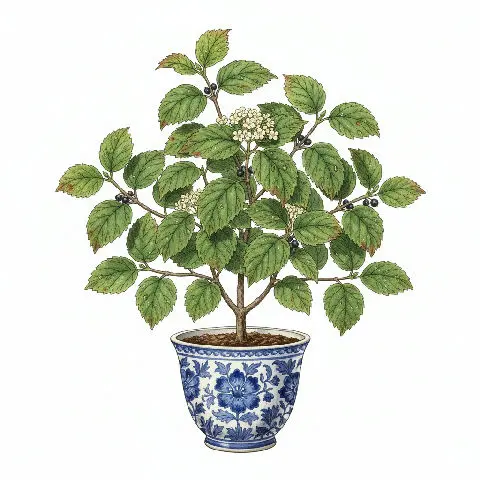
Black Haw, scientifically identified as Viburnum prunifolium, is a prominent deciduous shrub or small tree indigenous to the eastern and central regions of North America, flourishing within the Adoxaceae family. Its natural distribution extends from Connecticut westward to Kansas, and southward through Florida and Texas, typically found thriving in diverse habitats such as woodlands, forest edges, clearings, and along riparian zones. This resilient plant commonly attains heights of 2 to 6 meters, with some specimens reaching up to 9 meters, and can spread 2 to 4 meters wide, developing a dense, aesthetically pleasing rounded crown. The bark of younger plants is characteristically smooth and grayish-brown, gradually transforming with age into a rougher, blocky texture that often evokes the appearance of alligator hide, adding to its distinctive character. The leaves of Viburnum prunifolium are a defining morphological feature, typically ovate to elliptic in shape, measuring 5-10 cm in length, with finely serrated margins that contribute to their elegant appearance.
The upper surface of the leaves is a glossy dark green during the growing season, transitioning into spectacular shades of red, purple, or bronze as autumn progresses. The petioles, which connect the leaf blade to the stem, are frequently reddish, providing an additional visual accent. In late spring to early summer, Black Haw produces abundant clusters of small, delicate creamy-white flowers, organized into flat-topped cymes that span 5-10 cm across. These inflorescences are quite showy, creating a striking display that effectively attracts a wide array of pollinators, vital for the plant's reproductive cycle. Following the vibrant flowering period, the plant develops edible drupes that undergo a sequential maturation process, changing from green to pink, and then eventually ripening to a dark blue or black color in late summer to early autumn.
These ellipsoidal fruits are approximately 1 cm long and each contains a single, flat seed. They possess a sweet, juicy pulp with a subtly astringent taste, making them a favored food source for various wildlife species and occasionally consumed by humans. The root system of Black Haw is fibrous and extensively spreading, a characteristic that enables the plant to establish itself firmly and adapt successfully to a wide range of soil types and environmental conditions. Trusted Scientific References Authoritative external sources for Viburnum prunifolium : ...[CURRENT TEXT EXISTS: 2652 chars]
1.1.Black Haw — Distinguishing Points
- ✓Native North American Shrub — Indigenous to eastern and central North America.
- ✓Uterine Tonic & Spasmolytic — Renowned for its specific action on uterine smooth muscle.
- ✓Relief for Dysmenorrhea — Highly effective for spasmodic menstrual pain.
- ✓Historical Women's Health Herb — Valued by Indigenous tribes for gynecological issues.
- ✓Contains Coumarins & Iridoids — Active compounds responsible for therapeutic effects.
- ✓Deciduous & Ornamental — Features attractive foliage, flowers, and fruits.
- ✓Edible Fruits — Dark blue-black drupes are edible, though slightly astringent.
- ✓Autumn Foliage — Leaves turn vibrant red, purple, or bronze in fall.
- ✓Distinctive Bark — Young bark is smooth, maturing to a blocky, alligator-hide texture.
- ✓Comparatively Safer than Opium — Historically used as a non-addictive antispasmodic alternative.
1.2.Black Haw — Snapshot Summary
- ✓Uterine Antispasmodic — Primary use for menstrual cramps and uterine tension.
- ✓Supports Women's Health — Traditionally used for threatened miscarriage and post-partum care.
- ✓Nervine Relaxant — Helps calm anxiety and nervous tension.
- ✓Key Constituents — Contains coumarins (scopoletin, aesculetin) and iridoid glucosides.
- ✓Native to North America — Indigenous plant with a rich history of traditional use.
- ✓Cautions — Contraindicated in pregnancy and lactation; potential drug interactions.
2.Black Haw — Scientific Identity
3.Black Haw — Key Data
4.Black Haw — Physical Description
5.Black Haw — Ecological Habitat
6.Black Haw — Traditional Uses
7.Black Haw — Key Phytochemicals
- ✓Coumarins — Key compounds include scopoletin and aesculetin, which are recognized for their direct muscle relaxant and antispasmodic activities, particularly on smooth muscles.
- ✓Iridoid Glucosides — These constituents, such as viburnin, are thought to act as agonists on beta-receptors within the central nervous system, contributing to the plant's relaxant and antispasmodic effects, especially on the lungs.
- ✓Flavonoids — A diverse group of polyphenolic compounds like quercetin and kaempferol derivatives, offering antioxidant, anti-inflammatory, and vascular-protective properties.
- ✓Tannins — Present in the bark, these astringent compounds contribute to the plant's tonic effects and may have mild anti-inflammatory and antiseptic actions.
- ✓Valeric Acid — Though often associated with Valeriana officinalis, some Viburnum species may contain small amounts of related compounds contributing to nervine actions.
- ✓Salicylates — While less prominent than in Salix species, some Viburnum species contain salicylate precursors, which could contribute to mild analgesic and anti-inflammatory effects.
- ✓Saponins — These glycosides can contribute to the plant's overall therapeutic profile, potentially offering anti-inflammatory and immune-modulating properties.
- ✓Organic Acids — Various organic acids are present, contributing to the plant's overall flavor profile and potentially influencing its metabolic effects within the body.
- ✓Volatile Oils — While not a primary constituent, small amounts of aromatic compounds contribute to the plant's subtle odor and may offer mild therapeutic benefits.
8.Black Haw — Scientific Evidence
- ✓Uterine Antispasmodic — Black Haw is highly regarded for its profound antispasmodic effects on the uterus, effectively reducing the intensity and frequency of uterine contractions.
- ✓Menstrual Pain Relief — Historically and presently, it is a primary herbal remedy for alleviating spasmodic dysmenorrhea, providing significant relief from severe menstrual cramps.
- ✓Threatened Miscarriage Support — Due to its uterine relaxant properties, Black Haw has been traditionally employed to help prevent threatened or recurrent miscarriages by calming uterine irritability.
- ✓Post-partum Pain & Hemorrhage — It can be used to mitigate after-pains following childbirth and to help manage mild post-partum hemorrhage by toning the uterine muscles.
- ✓Nervine Relaxant — The plant exhibits nervine properties, helping to soothe nervous tension, irritability, and anxiety, contributing to overall mental relaxation.
- ✓Hypotensive Agent — Some constituents may contribute to a mild hypotensive effect, assisting in the management of elevated blood pressure, particularly when stress-induced.
- ✓Asthma Symptom Relief — Research suggests its iridoid glucosides may act as beta-receptor agonists, providing a relaxant effect on bronchial smooth muscles, which can alleviate asthma symptoms.
- ✓General Muscle Relaxant — Beyond the uterus, its antispasmodic actions extend to other smooth muscles, offering relief from general muscular tension and cramps throughout the body.
- ✓Digestive Comfort — By relaxing smooth muscles, Black Haw can help ease gastrointestinal spasms, bloating, and discomfort often associated with irritable bowel syndrome.
8.1.Black Haw — Health Applications
9.Black Haw — Cautions & Contraindications
9.1.Black Haw — Reported Side Effects
- ✓Gastrointestinal Upset — Large doses may cause mild nausea, stomach upset, or diarrhea in sensitive individuals.
- ✓Drowsiness — Due to its nervine and relaxant properties, some individuals may experience mild drowsiness, especially with higher doses.
- ✓Hypotension Risk — Excessive consumption, particularly if combined with hypotensive medications, could lead to a significant drop in blood pressure.
- ✓Allergic Reactions — Rare instances of allergic reactions, such as skin rash or itching, have been reported in highly sensitive individuals.
- ✓Uterine Over-relaxation — While therapeutic, extremely high doses could potentially lead to excessive uterine relaxation, though this is uncommon with standard use.
- ✓Bitterness — The inherent bitter taste of the bark may cause an unpleasant sensation or trigger a gag reflex in some users.
9.2.Black Haw — Risk Assessment
- ✓Pregnancy Contraindication — Avoid use during pregnancy, especially in the first trimester, unless under strict medical herbalist guidance, due to its uterine relaxant properties that could theoretically increase miscarriage risk.
- ✓Lactation Avoidance — Generally best to avoid during lactation as plant compounds may transfer to breast milk and potentially affect the infant.
- ✓Drug Interactions — May interact with hypotensive medications, sedatives, and anticoagulant drugs; consult a healthcare professional before combining.
- ✓Pre-existing Conditions — Use with caution in individuals with very low blood pressure or those undergoing surgery, due to potential hypotensive effects.
- ✓Dosage Adherence — Adhere strictly to recommended dosages; excessive consumption can increase the risk of side effects.
- ✓Professional Guidance — Always consult a qualified medical herbalist or healthcare provider before using Black Haw, especially if pregnant, nursing, or on medication.
- ✓Adulteration Risk — Be aware of potential adulteration with Mountain Maple (Acer spicatum); source from reputable suppliers to ensure quality and safety.
10.Black Haw — Preparations & Uses
- ✓Decoction — The bark is typically prepared as a decoction by simmering 1-2 teaspoons of dried bark in 250ml of water for 15-20 minutes; consumed 2-3 times daily.
- ✓Tincture — A common method involves using a 1:5 ratio (herb to solvent) in 60-70% alcohol; dosage is typically 2-5 ml, three times per day.
- ✓Fluid Extract — A more concentrated form, usually taken in smaller doses of 0.5-2 ml, 2-3 times daily, under professional guidance.
- ✓Infusion — While less common for bark, young leaves or flowers can be infused for milder effects, using 1-2 teaspoons per cup of hot water.
- ✓Poultice — Freshly crushed bark can be applied topically as a poultice for localized muscle pain or spasms, though less common.
- ✓Syrups/Elixirs — The tincture can be incorporated into honey-based syrups or elixirs to improve palatability, especially for children or sensitive individuals.
- ✓Standardized Extracts — Available in capsule or tablet form, providing consistent dosing of active constituents for specific indications.
- ✓Topical Oil — Infused oil made from the bark can be massaged onto the abdomen for menstrual cramps or other localized muscle tension.
11.Black Haw — Cultivation & Care
- ✓Site Selection — Choose a location with full sun to partial shade; Black Haw tolerates a range but flowers best in sun.
- ✓Soil Requirements — Prefers well-drained, fertile loamy soil, but is adaptable to various soil types including clay and sandy soils.
- ✓PH Preference — Thrives in slightly acidic to neutral soil (pH 5.5-7.0).
- ✓Watering — Requires moderate watering, especially when young; established plants are relatively drought-tolerant but benefit from consistent moisture.
- ✓Propagation — Can be propagated by seeds (which require stratification), semi-hardwood cuttings in summer, or layering.
- ✓Pruning — Minimal pruning is needed, primarily to remove dead or diseased branches, or to shape the plant after flowering.
- ✓Fertilization — Generally not required in fertile soils; a balanced slow-release fertilizer can be applied in spring if growth is poor.
- ✓Pest and Disease — Relatively pest and disease resistant, though can occasionally be affected by aphids or powdery mildew.
Reviewed by the Flora Medical Global Botanical Review Panel
Multi-disciplinary editorial group · Botany · Ethnobotany · Herbal-medicine literature
Who reviewed this: This page was checked by the Flora Medical Global Botanical Review Panel — an in-house editorial group of botany graduates, ethnobotany researchers, and horticulture practitioners who collectively maintain our 7,000+ plant encyclopedia. Meet the team.
Our 4-step verification process
1. Taxonomic verification
Scientific names and synonyms cross-checked against Kew POWO, World Flora Online, and The Plant List.
2. Phytochemical & medicinal cross-reference
Active compounds, traditional uses, and reported activities are cross-referenced with PubMed, USDA Dr. Duke's database, and peer-reviewed ethnobotanical literature.
3. Conservation & distribution check
Distribution, ecology, and conservation status confirmed against GBIF occurrence records and the IUCN Red List.
4. Editorial & safety review
Every entry passes an editorial pass for clarity, originality, and safety notices (toxicity, contraindications, dosage caveats) before publication.
Last reviewed:
Important medical disclaimer: This content is for educational and research purposes only. It is not medical advice and is not a substitute for consultation with a licensed healthcare provider. Do not use any herb to self-treat a medical condition without professional guidance.
Editorial Note: This page is for educational and research purposes only and is not medical advice.
Written by: Flora Medical Global Editorial Team
Reviewed by: Flora Medical Global Botanical Review Panel
Last Updated: June 15, 2026





Black Haw — Comments & Community Reviews
Rate this plant