


Medical Disclaimer: This content is for educational purposes only. It is not medical advice. Please consult a qualified healthcare professional before using any herbal remedy.
Safety Overview
1.Bloodwort — Plant Snapshot
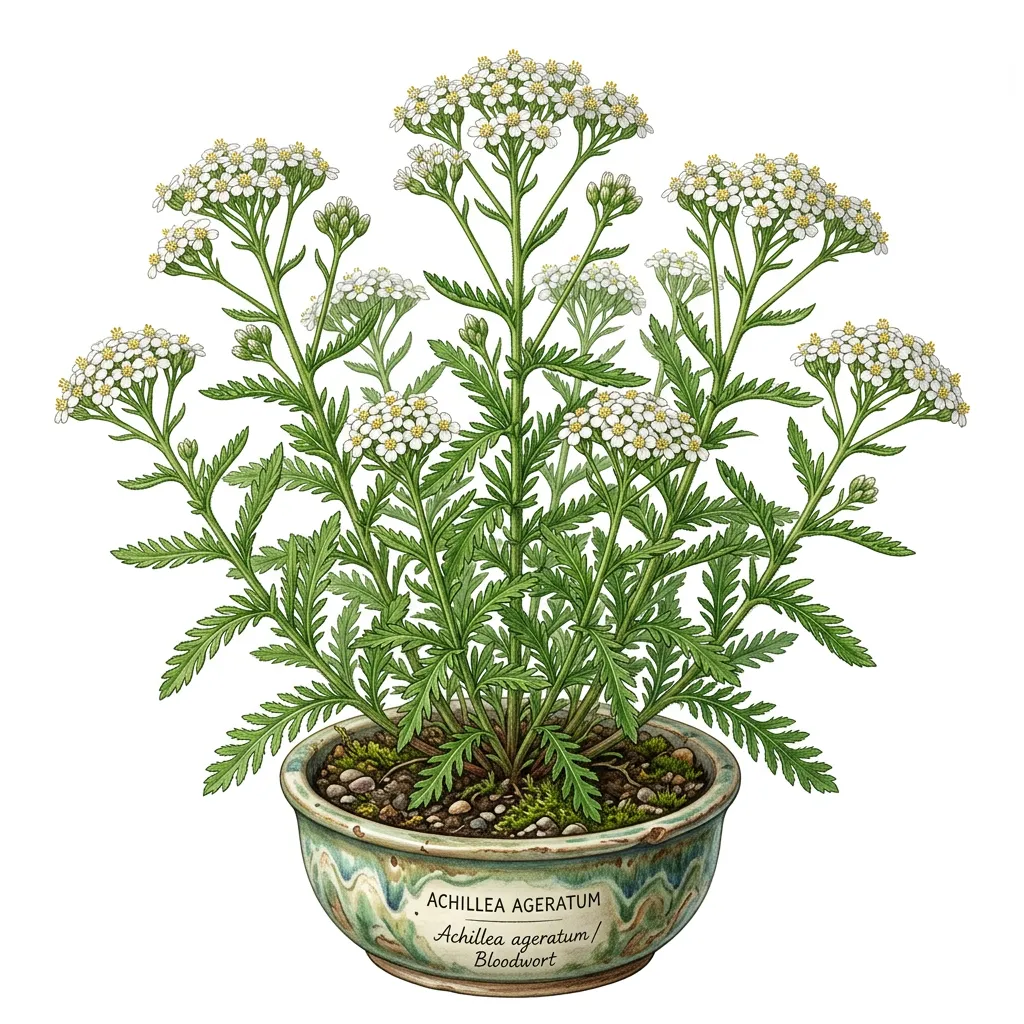
Bloodwort, scientifically designated Achillea ageratum, is a striking perennial herb thriving within the expansive Asteraceae family, often recognized for its resilience and ornamental appeal. This robust species typically achieves a height of up to one meter, characterized by its strong, upright growth habit. A defining feature of Bloodwort is its finely dissected, feathery leaves, which can extend up to 15 centimeters in length, presenting a delicate, almost fern-like texture.
These leaves typically form a basal rosette, with additional, alternately arranged leaves adorning the stems. The stems themselves are generally sturdy and may bear a slight hairiness, exhibiting a color palette from vivid green to subtle reddish tones, enhancing the plant's visual interest throughout its growing season.
During the peak of summer, Achillea ageratum unfurls its distinctive flower heads. These are compound inflorescences, meticulously arranged into dense, flat-topped clusters known as corymbs, which can span up to 10 centimeters in diameter.
Each individual floret within these clusters is predominantly a bright yellow disc flower, frequently surrounded by one or more concentric rows of ray flowers, also displaying various shades of yellow, sometimes transitioning into creamy hues. This vibrant floral display is a significant attractant for a diverse array of pollinators, including bees and butterflies, underscoring the plant's vital ecological contribution.
Indigenous to the sun-drenched Mediterranean region, Bloodwort has evolved to flourish in challenging conditions. It is frequently encountered in rocky outcrops, areas of disturbed ground, and along roadsides, indicating a strong preference for well-drained soils and abundant full sun exposure.
Its inherent ability to withstand harsh environmental factors establishes it as a robust and adaptable species within its native range. Taxonomically, Achillea ageratum shares a close botanical kinship with other species within the genus Achillea, a genus globally celebrated for its profound historical and ongoing significance in traditional herbal medicine across myriad cultures.
Trusted Scientific References
1. Authoritative external sources for Achillea ageratum
1.1 Wikipedia — Achillea ageratum
1.2 Kew POWO (Plants of the World Online)
1.3 PubMed — peer-reviewed research
1.4 NCBI Taxonomy Browser
1.5 GBIF — Global Biodiversity
1.1.Bloodwort — Key Features
- ✓Resilient Perennial — Thrives in challenging Mediterranean environments.
- ✓Finely Dissected Foliage — Distinctive feathery leaves up to 15 cm long.
- ✓Bright Yellow Corymbs — Flat-topped clusters of vibrant yellow flowers.
- ✓Pollinator Attractor — Draws bees and butterflies, supporting biodiversity.
- ✓Traditional Medicinal Plant — Long history of use for various ailments.
- ✓Rich in Bioactive Compounds — Contains flavonoids, terpenoids, and alkamides.
- ✓Drought — Tolerant — Adapts well to dry, well-drained soils.
- ✓Anti — inflammatory Potential — Due to its complex phytochemical profile.
- ✓Digestive and Wound Healing Aid — Key traditional applications.
- ✓Member of Achillea Genus — Shares therapeutic properties with Yarrow.
1.2.Bloodwort — Snapshot Summary
- ✓Achillea ageratum, or Bloodwort, is a Mediterranean perennial known for its feathery leaves and bright yellow flowers.
- ✓Traditionally used for wound healing, digestive issues, inflammation, and as an antispasmodic.
- ✓Rich in flavonoids, terpenoids, and alkamides, contributing to its medicinal properties.
- ✓Requires well-drained soil and full sun, demonstrating resilience in harsh environments.
- ✓Avoid during pregnancy and if allergic to the Asteraceae family; consult a professional for safe use.
2.Bloodwort — Systematic Position
3.Bloodwort — Botanical Stats
4.Bloodwort — Plant Morphology
5.Bloodwort — Habitat & Distribution
6.Bloodwort — Historical Applications
7.Bloodwort — Bioactive Constituents
- ✓Flavonoids — Key compounds like cynaroside and cosmosiin are present, known for their significant anti-inflammatory, antioxidant, and antispasmodic activities.
- ✓Terpenoids — This broad category includes monoterpenes, sesquiterpenes, diterpenes, and triterpenes, contributing to the plant's aromatic profile and often possessing anti-inflammatory, antimicrobial, and antispasmodic properties.
- ✓Proazulenes — Achillicin is a notable proazulene found in the genus, which can convert into chamazulene upon distillation, known for its potent anti-inflammatory effects.
- ✓Alkamides — Lipophilic nitrogen-containing compounds such as p-hydroxyphenethylamide are present, which may contribute to the plant's immunomodulatory and anti-inflammatory activities, similar to those found in Echinacea.
- ✓Phenolic Acids — These compounds offer antioxidant benefits, protecting cells from oxidative stress and contributing to the overall therapeutic effects of the plant.
- ✓Coumarins — Certain species within Achillea contain coumarins, which can have various biological activities including anti-inflammatory and anticoagulant properties, though specific types and concentrations vary.
- ✓Sterols — Plant sterols are present, which are important for cell membrane structure and can have cholesterol-lowering and anti-inflammatory effects.
- ✓Lignans — These phytochemicals possess antioxidant and anti-inflammatory properties, contributing to the plant's defensive mechanisms and potential health benefits.
- ✓Fatty Acids — Essential fatty acids and their derivatives are components of the plant's lipid profile, important for cellular health and potentially modulating inflammatory responses.
8.Bloodwort — What Research Suggests
- ✓Anti-inflammatory Action — Research on related Achillea species suggests the presence of flavonoids and terpenoids that may help reduce inflammation throughout the body, providing relief from various inflammatory conditions.
- ✓Antispasmodic Properties — Compounds like flavonoids found in Bloodwort are thought to exert relaxant effects on smooth muscles, making it traditionally useful for alleviating cramps and spasms, particularly in the gastrointestinal tract.
- ✓Wound Healing Support — Historically, Achillea species, including Bloodwort, have been applied topically to minor cuts and abrasions to promote faster healing and reduce the risk of infection, attributed to its astringent and antiseptic qualities.
- ✓Hemostatic Effects — Traditional uses highlight its ability to staunch minor bleeding, suggesting constituents that aid in blood clotting, making it valuable for external applications on small wounds or nosebleeds.
- ✓Digestive Aid — The plant has been traditionally employed to relieve digestive discomforts such as flatulence, bloating, and dyspepsia, likely due to its carminative properties that help expel gas and soothe the digestive system.
- ✓Diaphoretic Action — Bloodwort may promote sweating, a mechanism that can be beneficial in supporting the body's natural processes during fevers or colds, helping to reduce fever and eliminate toxins.
- ✓Diuretic Properties — Some traditional applications suggest Bloodwort acts as a mild diuretic, aiding in increased urine production and potentially assisting the body in expelling excess fluids and supporting kidney function.
- ✓Emmenagogic Effects — Traditionally, it has been used to stimulate menstrual flow, making it potentially useful for delayed or scanty menstruation, although this action requires careful consideration and professional guidance.
- ✓General Tonic — In various traditional systems, Achillea species are considered tonics, believed to invigorate the body and enhance overall vitality and well-being.
- ✓Pain Relief — Due to its anti-inflammatory and antispasmodic properties, Bloodwort may offer a degree of relief from various types of pain, including headaches and rheumatic discomforts.
8.1.Bloodwort — Reported Uses
9.Bloodwort — Precautions & Warnings
9.1.Bloodwort — Side Effects & Warnings
- ✓Allergic Reactions — Individuals sensitive to the Asteraceae family (daisies, ragweed, chrysanthemums) may experience allergic contact dermatitis or other allergic responses.
- ✓Photosensitivity — Some users may experience increased sensitivity to sunlight, leading to sunburn or skin rashes, especially with topical application.
- ✓Uterine Stimulation — Due to its traditional emmenagogic properties, it may stimulate uterine contractions and should be avoided during pregnancy.
- ✓Anticoagulant Interaction — Constituents in Achillea species may potentially interact with blood-thinning medications, increasing the risk of bleeding.
- ✓Drowsiness — High doses may theoretically cause drowsiness or interact with sedative medications, though this is less documented for A. ageratum specifically.
- ✓Digestive Upset — In rare cases, internal consumption might lead to mild stomach upset, nausea, or diarrhea in sensitive individuals.
- ✓Skin Irritation — Direct application of fresh plant material may cause skin irritation in some people, necessitating a patch test.
9.2.Bloodwort — Risk Assessment
- ✓Pregnancy and Lactation — Avoid use during pregnancy and breastfeeding due to potential uterine stimulant effects and lack of sufficient safety data.
- ✓Allergic Sensitivities — Individuals with known allergies to plants in the Asteraceae family should exercise extreme caution or avoid Bloodwort entirely.
- ✓Medical Consultation — Always consult a healthcare professional or qualified herbalist before using Bloodwort, especially if on medication or having underlying health conditions.
- ✓Topical Patch Test — Before extensive topical application, perform a patch test on a small skin area to check for allergic reactions or irritation.
- ✓Children — Use in children is generally not recommended without expert medical guidance due to insufficient safety data.
- ✓Surgical Procedures — Discontinue use at least two weeks before any scheduled surgery due to potential interactions with blood clotting.
- ✓Dosage Adherence — Strictly follow recommended dosages and preparation guidelines to minimize the risk of adverse effects.
10.Bloodwort — Preparation & Dosage
- ✓Herbal Tea (Infusion) — Steep 1-2 teaspoons of dried Bloodwort leaves and flowers in hot water for 5-10 minutes to create a digestive or diaphoretic tea.
- ✓Tincture — Prepare a potent liquid extract by macerating fresh or dried plant material in alcohol for several weeks, taking small doses as directed by a herbalist.
- ✓Poultice — Crush fresh leaves and flowers to form a paste, then apply directly to minor wounds, cuts, or skin irritations to leverage its wound-healing and astringent properties.
- ✓Decoction — For tougher plant parts or stronger extraction, simmer the roots or aerial parts in water for 15-20 minutes, then strain and consume.
- ✓Culinary Use — While not widely used, young leaves can sometimes be added in small quantities to salads or cooked dishes for a slightly bitter, aromatic flavor.
- ✓Essential Oil (for related species) — Though less common for A. ageratum specifically, essential oils from some Achillea species are used topically in diluted form for anti-inflammatory purposes, always with caution.
- ✓Herbal Compress — Soak a cloth in a strong infusion or decoction of Bloodwort, then apply warm to sore muscles, joints, or areas of inflammation.
11.Bloodwort — Propagation & Care
- ✓Sun Exposure — Plant Bloodwort in full sun for at least 6-8 hours daily to ensure vigorous growth and optimal flowering.
- ✓Soil Requirements — Prefers well-drained soil; sandy or loamy compositions are ideal. It tolerates poor to moderately fertile soils.
- ✓Watering — Once established, Achillea ageratum is drought-tolerant and requires minimal watering. Water deeply during prolonged dry spells.
- ✓Propagation — Can be propagated by seeds, division of established clumps in spring or fall, or by stem cuttings taken in early summer.
- ✓Spacing — Space plants about 30-45 cm apart to allow for proper air circulation and growth, as they can spread over time.
- ✓Pests and Diseases — Generally resistant to most pests and diseases; however, powdery mildew can occur in overly humid conditions or poor air circulation.
- ✓Fertilization — Typically does not require heavy fertilization. A light application of balanced organic fertilizer in spring can promote healthier growth.
- ✓Maintenance — Deadhead spent flowers to encourage continuous blooming and prevent self-seeding. Cut back foliage in late fall or early spring to refresh the plant.
Reviewed by the Flora Medical Global Botanical Review Panel
Multi-disciplinary editorial group · Botany · Ethnobotany · Herbal-medicine literature
Who reviewed this: This page was checked by the Flora Medical Global Botanical Review Panel — an in-house editorial group of botany graduates, ethnobotany researchers, and horticulture practitioners who collectively maintain our 7,000+ plant encyclopedia. Meet the team.
Our 4-step verification process
1. Taxonomic verification
Scientific names and synonyms cross-checked against Kew POWO, World Flora Online, and The Plant List.
2. Phytochemical & medicinal cross-reference
Active compounds, traditional uses, and reported activities are cross-referenced with PubMed, USDA Dr. Duke's database, and peer-reviewed ethnobotanical literature.
3. Conservation & distribution check
Distribution, ecology, and conservation status confirmed against GBIF occurrence records and the IUCN Red List.
4. Editorial & safety review
Every entry passes an editorial pass for clarity, originality, and safety notices (toxicity, contraindications, dosage caveats) before publication.
Last reviewed:
Important medical disclaimer: This content is for educational and research purposes only. It is not medical advice and is not a substitute for consultation with a licensed healthcare provider. Do not use any herb to self-treat a medical condition without professional guidance.
Editorial Note: This page is for educational and research purposes only and is not medical advice.
Written by: Flora Medical Global Editorial Team
Reviewed by: Flora Medical Global Botanical Review Panel
Last Updated: June 15, 2026




Bloodwort — Comments & Community Reviews
Rate this plant