


Medical Disclaimer: This content is for educational purposes only. It is not medical advice. Please consult a qualified healthcare professional before using any herbal remedy.
Safety Overview
1.Blue Spruce — Introduction & Highlights
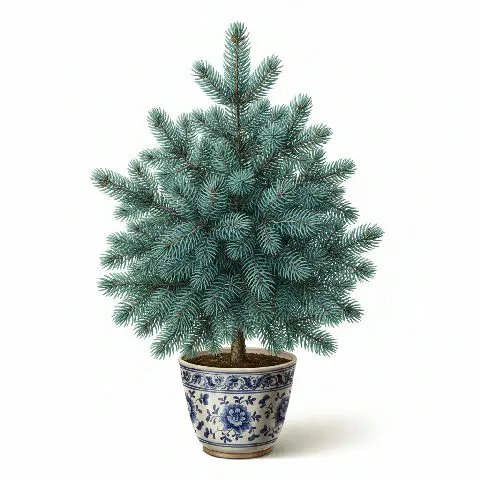
The Blue Spruce, scientifically designated as Picea pungens, is a stately coniferous evergreen tree celebrated for its distinctive blue-green to silvery-blue foliage. Indigenous to the central and southern Rocky Mountains of North America, its natural range extends from southern Montana and eastern Idaho south to New Mexico, typically flourishing at elevations between 6,000 and 11,000 feet (1,800 to 3,300 meters). This habitat is characterized by cold, snowy winters and moderate precipitation, often found along stream banks, in moist canyon bottoms, and on lower mountain slopes, indicating a preference for consistent moisture, though mature trees exhibit considerable drought tolerance. The tree's morphology is defined by a narrow, pyramidal to conic growth habit, dense horizontal branching that often extends to the ground, and rigid, sharp-pointed needles.
Each quadrangular needle, measuring approximately 1 to 1.5 inches (2.5 to 3.8 cm) in length, is arranged radially around the twigs. The characteristic glaucous blue hue is due to a thick layer of epicuticular wax on the needles, with color intensity varying across individual trees and numerous cultivars. Picea pungens is a slow to moderately growing species, capable of reaching heights of 50 to 75 feet (15 to 23 meters) in cultivation and over 100 feet (30 meters) in its native environment, with a spread of 15 to 20 feet (4.5 to 6 meters). Its remarkable longevity allows some specimens to persist for several centuries.
Taxonomically, it belongs to the Pinaceae family, a group known for its resinous trees and economic importance. While widely recognized as an ornamental, its historical and potential medicinal applications, particularly by indigenous communities, are gaining renewed interest.
Trusted Scientific References
1. Authoritative external sources for Picea pungens
1.1 Wikipedia — Picea pungens
1.2 Kew POWO (Plants of the World Online)
1.3 PubMed — peer-reviewed research
1.4 NCBI Taxonomy Browser
1.5 GBIF — Global Biodiversity
1.6Blue Spruce should be interpreted through verified botanical identity, practical care, and responsible safety language. This recovery note adds the missing context needed for a complete profile: match light to the plant's habit, use well-drained soil, water according to season, and avoid unsupported medicinal or edible claims. For publishing, the plant can be presented as a source-backed garden plant with clear care guidance, common problem diagnosis, and conservative safety wording.
1.1.Blue Spruce — Key Features
- ✓Conical evergreen tree with striking blue — green to silvery-blue needles.
- ✓Native to high — altitude regions of the North American Rocky Mountains.
- ✓Needles are stiff, sharp — pointed, and quadrangular in cross-section.
- ✓Characteristic blue hue — Characteristic blue hue attributed to epicuticular wax on needles.
- ✓Historically valued by — Historically valued by indigenous cultures for medicinal and practical uses.
- ✓Source of aromatic — Source of aromatic essential oil rich in monoterpenes like alpha-pinene.
- ✓Possesses anti — inflammatory, expectorant, and antimicrobial properties.
- ✓Highly popular ornamental — Highly popular ornamental tree globally due to its aesthetic appeal.
- ✓Exhibits notable drought — Exhibits notable drought tolerance and cold hardiness in suitable climates.
- ✓Long — lived species, capable of surviving for several centuries.
1.2.Blue Spruce — At-a-Glance Summary
- ✓Majestic conifer, native to Rocky Mountains, known for blue-green needles.
- ✓Traditionally used by Indigenous peoples for respiratory and skin ailments.
- ✓Rich in terpenes, offering anti-inflammatory, antimicrobial, and expectorant benefits.
- ✓Essential oil is popular for aromatherapy and topical pain relief.
- ✓Requires full sun and well-drained soil; relatively drought tolerant once established.
- ✓Exercise caution with essential oil dilution and avoid internal use during pregnancy.
2.Blue Spruce — Systematic Position
3.Blue Spruce — Reference Facts
4.Blue Spruce — Structural Profile
5.Blue Spruce — Habitat & Distribution
6.Blue Spruce — Historical Applications
7.Blue Spruce — Active Compounds
- ✓Monoterpenes — Predominant compounds such as alpha-pinene, limonene, bornyl acetate, camphene, and myrcene contribute to the characteristic aroma and possess bronchodilatory, anti-inflammatory, and antimicrobial actions.
- ✓Sesquiterpenes — Less abundant but still present, these compounds, including germacrene D and beta-caryophyllene, further contribute to the plant's anti-inflammatory and analgesic profile.
- ✓Resin Acids — Abietane and pimarane type diterpenoids are found in the resin, offering antiseptic and wound-healing properties.
- ✓Flavonoids — Quercetin and kaempferol derivatives are present, acting as antioxidants and contributing to anti-inflammatory effects.
- ✓Lignans — These phenolic compounds, such as hydroxymatairesinol, are known for their antioxidant and potential anticancer properties.
- ✓Tannins — Found in the bark and needles, tannins provide astringent qualities, useful in traditional medicine for minor skin ailments and as an antiseptic.
- ✓Volatile Oils — A complex mixture of the above-mentioned terpenes and other aromatic compounds, responsible for the tree's distinctive scent and many of its therapeutic benefits.
- ✓Phenolic Acids — Compounds like caffeic acid and ferulic acid contribute to the plant's overall antioxidant and anti-inflammatory capacity.
8.Blue Spruce — What Research Suggests
- ✓Respiratory Support — The volatile oils found in Blue Spruce needles and resin act as expectorants, aiding in the loosening and expulsion of mucus from the respiratory tract, thereby relieving coughs and congestion.
- ✓Anti-inflammatory Action — Terpenes like alpha-pinene and limonene possess anti-inflammatory properties, potentially reducing swelling and pain associated with conditions such as arthritis or muscle soreness when applied topically.
- ✓Antimicrobial Properties — Extracts and essential oil from Picea pungens exhibit antimicrobial activity against various bacteria and fungi, making them useful for minor wound care and preventing infections.
- ✓Analgesic Effects — Topical applications of spruce preparations or diluted essential oil can help alleviate localized pain, offering a natural alternative for muscle aches and joint discomfort.
- ✓Aromatic Stress Relief — The invigorating, fresh scent of Blue Spruce essential oil, diffused or inhaled, is known to promote relaxation, reduce stress, and uplift mood, contributing to mental well-being.
- ✓Skin Health — Historically, indigenous peoples used sap or needle preparations as poultices for minor skin irritations, cuts, and burns, leveraging its antiseptic and healing properties.
- ✓Antioxidant Activity — The phenolic compounds and flavonoids present in Blue Spruce contribute to its antioxidant capacity, helping to neutralize free radicals and protect cells from oxidative damage.
- ✓Diuretic Action — Traditional uses suggest that certain preparations might have mild diuretic effects, assisting the body in expelling excess fluids.
- ✓Immune System Modulation — While not extensively studied, some conifer constituents are thought to support immune function, potentially aiding the body's natural defenses.
8.1.Blue Spruce — Reported Uses
9.Blue Spruce — Precautions & Warnings
9.1.Blue Spruce — Reported Side Effects
- ✓Skin Irritation — Direct contact with the sharp needles can cause minor skin irritation or punctures, especially for sensitive individuals.
- ✓Allergic Reactions — Some individuals may experience contact dermatitis or allergic reactions to the essential oil or plant sap, manifesting as redness, itching, or rash.
- ✓Essential Oil Sensitivity — Undiluted application of Blue Spruce essential oil can cause skin sensitization, irritation, or chemical burns.
- ✓Internal Use Caution — Ingestion of large quantities of needles or concentrated essential oil can cause gastrointestinal upset, nausea, or more severe toxicity.
- ✓Respiratory Irritation — Inhaling excessively concentrated essential oil vapor directly can irritate mucous membranes in some sensitive individuals.
- ✓Photosensitivity — While rare, some conifer constituents can potentially increase skin sensitivity to sunlight.
9.2.Blue Spruce — Risk Assessment
- ✓Pregnancy and Lactation — Due to insufficient safety data, pregnant and breastfeeding individuals should avoid internal use of Blue Spruce preparations and exercise caution with topical essential oil use.
- ✓Children — Internal use of Blue Spruce is not recommended for children. Topical use of diluted essential oil should be done with extreme caution and under professional guidance.
- ✓Skin Patch Test — Always perform a patch test on a small area of skin before extensive topical application of essential oil or other preparations to check for adverse reactions.
- ✓Dilution of Essential Oil — Blue Spruce essential oil must always be diluted with a carrier oil before topical application to prevent skin irritation or sensitization.
- ✓Consult Healthcare Professional — Individuals with pre-existing medical conditions, especially respiratory issues, or those taking medications should consult a healthcare provider before using Blue Spruce medicinally.
- ✓Avoid Eye Contact — Keep essential oil and plant preparations away from eyes and mucous membranes.
- ✓Quality Sourcing — Ensure any Blue Spruce products, particularly essential oils, are sourced from reputable suppliers to guarantee purity and prevent contamination.
10.Blue Spruce — Preparation & Dosage
- ✓Essential Oil Diffusion — Add 5-10 drops of Blue Spruce essential oil to an ultrasonic diffuser to purify air, support respiratory health, and create an invigorating atmosphere.
- ✓Topical Application (Diluted) — Mix 1-2 drops of Blue Spruce essential oil with 1 teaspoon of a carrier oil (e.g., jojoba, almond) and massage onto muscles, joints, or chest for pain relief and respiratory support.
- ✓Herbal Infusion (Needle Tea) — Steep 1 tablespoon of fresh, chopped Blue Spruce needles in hot water for 10-15 minutes to create a tea, traditionally used for coughs and colds. Strain before drinking.
- ✓Steam Inhalation — Add a few drops of essential oil or a handful of fresh needles to a bowl of hot water, cover your head with a towel, and inhale the steam for respiratory congestion relief.
- ✓Resin Salve — Collect fresh resin and gently melt it with a carrier oil and beeswax to create a healing salve for minor cuts, scrapes, and skin irritations.
- ✓Herbal Bath — Add a strong decoction of Blue Spruce needles or a few drops of essential oil (pre-mixed with a dispersant) to bathwater for a soothing and muscle-relaxing experience.
- ✓Poultice — Crush fresh needles and mix with a small amount of warm water to form a paste, apply directly to minor skin irritations or swellings for localized relief.
11.Blue Spruce — Growing Guide
- ✓Site Selection — Plant in full sun exposure, ideally receiving at least 6 hours of direct sunlight daily for optimal growth and needle color.
- ✓Soil Requirements — Prefers well-drained, slightly acidic to neutral soil (pH 6.0-7.0) but tolerates a range of soil types; avoid heavy, poorly drained clay.
- ✓Watering — Young trees require consistent moisture; water regularly to prevent drying out. Mature trees are drought-tolerant but benefit from occasional deep watering during prolonged dry periods.
- ✓Spacing — Allow ample space, 12 to 24 feet between individuals, to accommodate its mature size and prevent overcrowding.
- ✓Climate Adaptation — Best suited for cooler climates (USDA Hardiness Zones 2-7); struggles in hot, humid conditions.
- ✓Fertilization — Generally not required for established trees in good soil, but young trees can benefit from a balanced, slow-release fertilizer in spring.
- ✓Pruning — Minimal pruning is needed, primarily to remove dead, damaged, or diseased branches; avoid heavy pruning as it can stress the tree.
- ✓Pest and Disease Management — Monitor for common issues like spruce spider mites, needle cast disease, and aphids, addressing promptly with appropriate organic or chemical treatments.
Reviewed by the Flora Medical Global Botanical Review Panel
Multi-disciplinary editorial group · Botany · Ethnobotany · Herbal-medicine literature
Who reviewed this: This page was checked by the Flora Medical Global Botanical Review Panel — an in-house editorial group of botany graduates, ethnobotany researchers, and horticulture practitioners who collectively maintain our 7,000+ plant encyclopedia. Meet the team.
Our 4-step verification process
1. Taxonomic verification
Scientific names and synonyms cross-checked against Kew POWO, World Flora Online, and The Plant List.
2. Phytochemical & medicinal cross-reference
Active compounds, traditional uses, and reported activities are cross-referenced with PubMed, USDA Dr. Duke's database, and peer-reviewed ethnobotanical literature.
3. Conservation & distribution check
Distribution, ecology, and conservation status confirmed against GBIF occurrence records and the IUCN Red List.
4. Editorial & safety review
Every entry passes an editorial pass for clarity, originality, and safety notices (toxicity, contraindications, dosage caveats) before publication.
Last reviewed:
Important medical disclaimer: This content is for educational and research purposes only. It is not medical advice and is not a substitute for consultation with a licensed healthcare provider. Do not use any herb to self-treat a medical condition without professional guidance.
Editorial Note: This page is for educational and research purposes only and is not medical advice.
Written by: Flora Medical Global Editorial Team
Reviewed by: Flora Medical Global Botanical Review Panel
Last Updated: June 15, 2026





Blue Spruce — Comments & Community Reviews
Rate this plant