


Medical Disclaimer: This content is for educational purposes only. It is not medical advice. Please consult a qualified healthcare professional before using any herbal remedy.
Safety Overview
1.Bombax Ceiba — Plant Snapshot
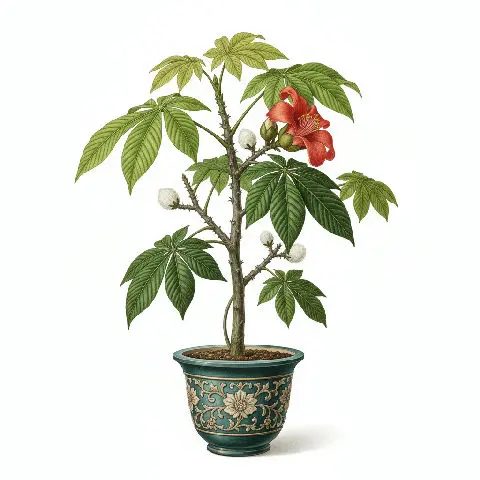
Bombax ceiba, widely known as the Red Silk Cotton Tree, Malabar Kapok, or Sumal, is a grand deciduous tree native to the tropical and subtropical regions spanning Asia and northern Australia. This impressive species, a member of the Malvaceae family, can reach heights of 20-30 meters, characterized by its straight, buttressed trunk and horizontally spreading branches. The bark is typically grey-brown or silver-grey, notably adorned with sharp, conical prickles, especially when the tree is young, serving as a natural deterrent.
Its leaves are palmately compound, featuring 5-7 broad, ovate-lanceolate leaflets that radiate from a long common petiole. The most captivating feature of Bombax ceiba is its abundant, vibrant red, cup-shaped flowers, which emerge on bare branches between January and March, preceding the new foliage. These large, fleshy blossoms, sometimes appearing in yellow or orange variants, are a critical nectar source, attracting various pollinators like birds and bats.
Post-flowering, the tree develops black-brown, egg-shaped capsules, approximately 10-15 cm long. Upon ripening, these fruits burst open, releasing numerous black, oily seeds enveloped in a distinctive white, silky fiber known as kapok, historically utilized for stuffing. The tree thrives in diverse environments, from moist deciduous forests to dry tropical zones, preferring deep, alluvial soils and abundant sunlight, found at elevations up to 1500 meters across its distribution from India and Sri Lanka to Southeast Asia and China.
Trusted Scientific References
1. Authoritative external sources for Bombax ceiba
1.1 Wikipedia — Bombax ceiba
1.2 Kew POWO (Plants of the World Online)
1.3 PubMed — peer-reviewed research
1.4 NCBI Taxonomy Browser
1.5 GBIF — Global Biodiversity
1.6Bombax Ceiba should be interpreted through verified botanical identity, practical care, and responsible safety language. This recovery note adds the missing context needed for a complete profile: match light to the plant's habit, use well-drained soil, water according to season, and avoid unsupported medicinal or edible claims. For publishing, the plant can be presented as a source-backed garden plant with clear care guidance, common problem diagnosis, and conservative safety wording.
1.1.Bombax Ceiba — Standout Qualities
- ✓Common Name — Red Silk Cotton Tree, Malabar Kapok, Sumal.
- ✓Scientific Name — Bombax ceiba.
- ✓Family — Malvaceae.
- ✓Geographic Distribution — South and Southeast Asia, Northern Australia.
- ✓Distinctive Morphology — Buttressed trunk, sharp prickles, large red flowers.
- ✓Traditional Medicine Systems — Ayurveda, Unani, Traditional Chinese Medicine (TCM), Siddha.
- ✓Key Bioactivities — Anti-inflammatory, antioxidant, antimicrobial, hepatoprotective.
- ✓Primary Chemical Constituents — Flavonoids, alkaloids, glycosides, coumarins.
- ✓Economic Uses — Kapok fiber for stuffing, timber.
- ✓Ecological Role — Important nectar source for pollinators, supporting biodiversity.
1.2.Bombax Ceiba — In Brief
- ✓Majestic deciduous tree native to Asia and Australia, known for vibrant red flowers.
- ✓Valued in Ayurveda, Unani, and TCM for diverse therapeutic properties.
- ✓Exhibits anti-inflammatory, antioxidant, antimicrobial, and hepatoprotective activities.
- ✓Rich in flavonoids, alkaloids, glycosides, and coumarins.
- ✓Traditionally used for digestive issues, wounds, respiratory ailments, and skin conditions.
- ✓Kapok fiber from fruits historically used for stuffing and insulation.
2.Bombax Ceiba — Scientific Profile
3.Bombax Ceiba — Botanical Stats
4.Bombax Ceiba — Morphological Account
5.Bombax Ceiba — Where It Grows
6.Bombax Ceiba — Cultural & Traditional Roles
7.Bombax Ceiba — Bioactive Constituents
- ✓Flavonoids — Key compounds like quercetin, kaempferol, and their glycosides are present, contributing significantly to the plant's antioxidant, anti-inflammatory, and hepatoprotective activities.
- ✓Alkaloids — Various alkaloidal compounds are found, which are often associated with diverse pharmacological effects, including antimicrobial and pain-relieving properties.
- ✓Glycosides — A range of glycosides, including cardiac glycosides, are identified, playing roles in hypotensive and potentially other therapeutic effects.
- ✓Coumarins — Compounds such as scopoletin and esculetin contribute to the plant's anti-inflammatory and anticoagulant properties.
- ✓Tannins — Abundant in the bark, tannins provide astringent properties, making them useful in treating diarrhea, dysentery, and promoting wound healing.
- ✓Saponins — These compounds contribute to the plant's anti-inflammatory and immune-modulating effects, and may also play a role in cholesterol regulation.
- ✓Phenolic Acids — Including gallic acid and ellagic acid, these compounds are potent antioxidants and contribute to the overall protective effects against oxidative stress.
- ✓Gums and Mucilage — Present in the exudates, these provide demulcent and soothing properties, often used for digestive and respiratory complaints.
- ✓Proteins and Amino Acids — Essential building blocks found throughout the plant, contributing to its nutritional value and overall biological activity.
- ✓Steroids and Triterpenoids — These compounds often exhibit anti-inflammatory and adaptogenic properties, supporting the plant's broader medicinal applications.
8.Bombax Ceiba — Modern Studies
- ✓Anti-inflammatory Action — Bombax ceiba extracts have demonstrated significant anti-inflammatory properties, likely due to the presence of flavonoids and coumarins, which modulate inflammatory pathways to reduce swelling and pain.
- ✓Antioxidant Activity — Rich in phenolic compounds and flavonoids, the plant exhibits potent antioxidant effects, helping to neutralize free radicals and protect cells from oxidative damage.
- ✓Antimicrobial Properties — Various parts of the tree, including bark and flowers, possess antimicrobial activity, effective against a range of bacteria and fungi, aiding in wound healing and infection prevention.
- ✓Hepatoprotective Effects — Studies suggest that Bombax ceiba can protect the liver from toxic damage, potentially by enhancing antioxidant defense systems and reducing inflammation in hepatic tissues.
- ✓Aphrodisiac Potential — Traditionally, certain preparations are used to enhance libido and sexual vitality, though specific mechanisms require further modern research.
- ✓Anti-diabetic Support — Preliminary research indicates a potential role in managing blood glucose levels, possibly through mechanisms affecting insulin sensitivity or glucose absorption.
- ✓Hypotensive Action — Extracts have shown hypotensive properties, contributing to the regulation of blood pressure, which may be beneficial for individuals with hypertension.
- ✓Wound Healing — Applied topically, bark paste is traditionally used to accelerate the healing of cuts and wounds due to its astringent and antimicrobial qualities.
- ✓Digestive Aid — Decoctions of the bark are traditionally consumed to alleviate symptoms of diarrhea and dysentery, attributed to its astringent and anti-inflammatory compounds.
- ✓Respiratory Relief — In traditional medicine, Bombax ceiba has been utilized to address various respiratory conditions, potentially due to its anti-inflammatory and demulcent properties.
- ✓Blood Purification — Leaves are traditionally employed for purifying the blood, suggesting a role in detoxification processes within the body.
- ✓Dermatological Benefits — Flowers are considered astringent and refrigerant, traditionally used to treat various cutaneous troubles and skin ailments like acne.
8.1.Bombax Ceiba — Health Applications
9.Bombax Ceiba — Risk Profile
9.1.Bombax Ceiba — Side Effects & Warnings
- ✓Allergic Reactions — Individuals sensitive to Malvaceae family plants may experience allergic skin reactions or respiratory symptoms.
- ✓Gastrointestinal Upset — High doses or prolonged use may lead to mild gastrointestinal discomfort, including nausea or stomach upset.
- ✓Medication Interactions — Potential for interaction with anticoagulant medications due to coumarin content, or with blood pressure medications due to hypotensive effects.
- ✓Pregnancy and Lactation — Lack of sufficient safety data advises against use in pregnant or breastfeeding women.
- ✓Pre-existing Conditions — Individuals with chronic health conditions, especially liver or cardiovascular issues, should exercise caution and seek medical advice.
- ✓Dosage Sensitivity — Overconsumption may lead to adverse effects; adherence to recommended dosages is crucial.
- ✓Hypoglycemia Risk — Due to potential anti-diabetic effects, individuals on blood glucose-lowering medications should monitor blood sugar levels closely.
9.2.Bombax Ceiba — Toxicity Assessment
- ✓Professional Consultation — Always consult a qualified healthcare practitioner or medical herbalist before using Bombax ceiba, especially for chronic conditions or alongside other medications.
- ✓Dosage Adherence — Strictly follow recommended dosages and preparation guidelines to minimize the risk of adverse effects.
- ✓Quality Sourcing — Ensure that plant material is sourced from reputable suppliers to guarantee purity, potency, and freedom from contaminants.
- ✓Monitoring for Reactions — Discontinue use and seek medical attention if any adverse reactions or unusual symptoms occur.
- ✓Not for Children — Due to insufficient safety data, use in children is generally not recommended without expert medical supervision.
- ✓Short-Term Use — For self-treatment, Bombax ceiba is generally recommended for short-term use; prolonged administration should be supervised by a healthcare professional.
- ✓Storage — Store dried plant material in a cool, dry, dark place to maintain its therapeutic efficacy and prevent degradation.
10.Bombax Ceiba — How to Use
- ✓Bark Decoction — A common preparation involves boiling the bark in water to create a decoction, often consumed on an empty stomach for digestive issues like diarrhea and dysentery.
- ✓Bark Paste — Fresh bark is ground into a paste and applied topically to cuts, wounds, and skin irritations to promote healing and reduce inflammation.
- ✓Flower Infusion — Dried Bombax ceiba flowers can be steeped in hot water to make an infusion, traditionally used for cooling properties and addressing cutaneous troubles.
- ✓Gum Preparation — The gum exudate from the tree can be collected and processed for internal use, often for its demulcent and astringent qualities.
- ✓Leaf Juice — Fresh leaves may be crushed to extract juice, traditionally used for blood purification or in poultices for external applications.
- ✓Seed Oil — The oily seeds can be processed to extract oil, which may have topical or internal applications, though less common in traditional medicine than other parts.
- ✓Fruit Pulp — The sweet, edible pulp of the fruit can be consumed directly, though its specific medicinal applications are less documented than other parts.
- ✓Powdered Form — Dried parts of the plant, especially bark and flowers, can be pulverized into a fine powder for encapsulation or mixing with other ingredients.
11.Bombax Ceiba — Growth Requirements
- ✓Climate Preference — Thrives in tropical and subtropical climates, requiring warm temperatures year-round.
- ✓Soil Requirements — Prefers deep, well-drained, sandy loam or alluvial soil; maximum development observed in deep alluvial soil of valleys.
- ✓Light Exposure — Requires abundant sunlight for optimal growth and development, recognized as a fast-growing species.
- ✓Water Needs — Tolerant of both moist and dry deciduous forest conditions, but benefits from consistent moisture, especially during establishment.
- ✓Propagation — Primarily propagated by seeds, which are dispersed by wind from the mature fruits.
- ✓Spacing — Given its majestic size and expansive canopy, ample space is necessary for mature trees.
- ✓Elevation — Can be found at elevations up to 1500 meters, demonstrating adaptability to varying altitudes.
- ✓Maintenance — Generally low maintenance once established, but young trees may require protection from pests and diseases.
Reviewed by the Flora Medical Global Botanical Review Panel
Multi-disciplinary editorial group · Botany · Ethnobotany · Herbal-medicine literature
Who reviewed this: This page was checked by the Flora Medical Global Botanical Review Panel — an in-house editorial group of botany graduates, ethnobotany researchers, and horticulture practitioners who collectively maintain our 7,000+ plant encyclopedia. Meet the team.
Our 4-step verification process
1. Taxonomic verification
Scientific names and synonyms cross-checked against Kew POWO, World Flora Online, and The Plant List.
2. Phytochemical & medicinal cross-reference
Active compounds, traditional uses, and reported activities are cross-referenced with PubMed, USDA Dr. Duke's database, and peer-reviewed ethnobotanical literature.
3. Conservation & distribution check
Distribution, ecology, and conservation status confirmed against GBIF occurrence records and the IUCN Red List.
4. Editorial & safety review
Every entry passes an editorial pass for clarity, originality, and safety notices (toxicity, contraindications, dosage caveats) before publication.
Last reviewed:
Important medical disclaimer: This content is for educational and research purposes only. It is not medical advice and is not a substitute for consultation with a licensed healthcare provider. Do not use any herb to self-treat a medical condition without professional guidance.
Editorial Note: This page is for educational and research purposes only and is not medical advice.
Written by: Flora Medical Global Editorial Team
Reviewed by: Flora Medical Global Botanical Review Panel
Last Updated: June 15, 2026





Bombax Ceiba — Comments & Community Reviews
Rate this plant