


Medical Disclaimer: This content is for educational purposes only. It is not medical advice. Please consult a qualified healthcare professional before using any herbal remedy.
Safety Overview
1.Bonsai Ficus — Overview
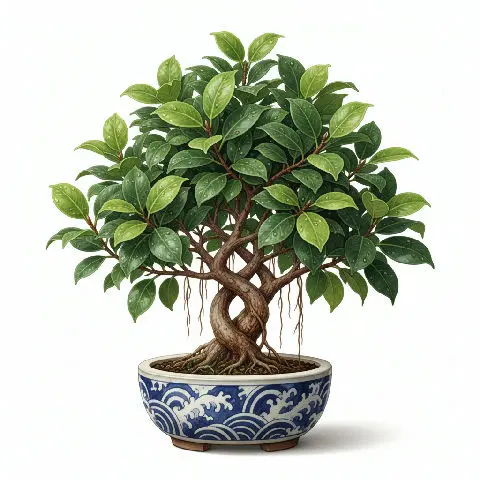
Ficus retusa, commonly known as the Bonsai Ficus, Ginseng Ficus, or Banyan Fig, is a distinguished evergreen tropical tree belonging to the Moraceae family. Native to the warm, humid regions of the Malay Archipelago and Southeast Asia, this species is celebrated for its robust growth, glossy, dark green oval leaves, and especially its tendency to develop prominent aerial roots that can thicken into secondary trunks. In its natural habitat, Ficus retusa can grow into a substantial tree, forming impressive, spreading canopies.
Its taxonomic classification places it within the diverse Ficus genus, which encompasses over 800 species known for their milky latex sap. The adaptability and resilience of Ficus retusa make it an exceptionally popular choice for bonsai cultivation, allowing enthusiasts to meticulously shape its structure and enhance its aesthetic appeal through the manipulation of its distinctive root system. The 'Ginseng Ficus' variant specifically highlights a cultivated form where the trunk and root base are thickened to resemble the gnarled root of ginseng, further increasing its desirability in horticultural art.
This species thrives in environments with ample light and consistent warmth, demonstrating a remarkable capacity to recover from pruning and shaping, which is crucial for maintaining its intricate bonsai forms. Beyond its ornamental value, Ficus retusa, like many Ficus species, holds historical significance in traditional medicinal practices.
Trusted Scientific References
1. Authoritative external sources for Ficus retusa
1.1 Wikipedia — Ficus retusa
1.2 Kew POWO (Plants of the World Online)
1.3 PubMed — peer-reviewed research
1.4 NCBI Taxonomy Browser
1.5 GBIF — Global Biodiversity
1.6Bonsai Ficus should be interpreted through verified botanical identity, practical care, and responsible safety language. This recovery note adds the missing context needed for a complete profile: match light to the plant's habit, use well-drained soil, water according to season, and avoid unsupported medicinal or edible claims. For publishing, the plant can be presented as a source-backed garden plant with clear care guidance, common problem diagnosis, and conservative safety wording.
1.1.Bonsai Ficus — Key Features
- ✓Resilient Tropical Evergreen — Thrives in warm, humid climates, making it suitable for indoor cultivation.
- ✓Distinctive Aerial Roots — Naturally forms 'banyan-like' root structures, highly prized in bonsai art.
- ✓Glossy, Oval Leaves — Features dark green, waxy foliage that adds to its ornamental appeal.
- ✓Milky Latex Sap — Characteristic of the Ficus genus, visible when stems or leaves are cut.
- ✓Adaptable for Bonsai — Tolerates frequent pruning, wiring, and root work, ideal for shaping.
- ✓Anti — inflammatory Properties — Traditionally used to help reduce swelling and discomfort.
- ✓Antiseptic Qualities — Applied topically in traditional medicine for minor infections and wound care.
- ✓Rich in Phytochemicals — Contains a spectrum of bioactive compounds like flavonoids and triterpenoids.
- ✓Cultural Significance — Revered in some Buddhist traditions as a symbol of enlightenment and wisdom.
- ✓Easy to Cultivate Indoors — A popular and forgiving choice for both beginner and experienced bonsai enthusiasts.
1.2.Bonsai Ficus — Quick Summary
- ✓Botanical — Ficus retusa, the Bonsai Ficus, native to Southeast Asia, is cherished for its glossy foliage and distinctive aerial roots.
- ✓Traditional Uses — Valued in Ayurveda and TCM for anti-inflammatory, antiseptic, and wound-healing properties.
- ✓Phytochemistry — Rich in flavonoids, triterpenoids, and phenolic compounds contributing to its bioactivity.
- ✓Bonsai Art — Highly popular for bonsai due to its adaptability, robust growth, and ease of shaping intricate forms.
- ✓Cultivation — Requires bright light, consistent watering, high humidity for aerial roots, and regular pruning.
- ✓Safety Alert — Latex can cause skin irritation; the plant is toxic to pets if ingested.
2.Bonsai Ficus — Systematic Position
3.Bonsai Ficus — Quick Facts
4.Bonsai Ficus — Plant Morphology
5.Bonsai Ficus — Geographic Distribution
6.Bonsai Ficus — Cultural & Traditional Roles
7.Bonsai Ficus — Secondary Metabolites
- ✓Flavonoids — Key compounds like quercetin, rutin, and kaempferol derivatives contribute significantly to the plant's antioxidant and anti-inflammatory activities.
- ✓Triterpenoids — Compounds such as lupeol and β-amyrin are found, known for their anti-inflammatory, hepatoprotective, and potential anti-cancer properties.
- ✓Phenolic Compounds — Includes gallic acid and caffeic acid, which are potent antioxidants and contribute to the plant's antimicrobial effects.
- ✓Alkaloids — Present in minor quantities, these nitrogen-containing compounds can exhibit diverse pharmacological activities.
- ✓Saponins — These glycosides are known for their emulsifying properties and have been associated with immune-modulating and anti-inflammatory actions.
- ✓Phytosterols — Compounds like β-sitosterol are present, contributing to anti-inflammatory effects and potentially influencing cholesterol metabolism.
- ✓Glycosides — Various types of glycosides are found, often linked to specific bioactivities and contributing to the plant's overall therapeutic profile.
- ✓Tannins — Possess astringent and antiseptic properties, which support traditional uses in wound healing and as an anti-diarrheal agent.
- ✓Latex Components — The milky sap contains proteolytic enzymes, resins, and other secondary metabolites that contribute to its traditional wound-healing and sometimes irritant effects.
8.Bonsai Ficus — Research Insights
- ✓Anti-inflammatory Properties — Extracts from Ficus retusa bark and leaves have shown potential in reducing inflammation, traditionally used to alleviate swelling and pain.
- ✓Antiseptic and Antimicrobial Activity — The plant's latex and other compounds exhibit antiseptic qualities, historically applied to prevent infections in minor wounds.
- ✓Wound Healing Support — Traditional applications suggest Ficus retusa aids in the healing of cuts and sores, potentially by promoting tissue regeneration and protecting against pathogens.
- ✓Antioxidant Effects — Rich in phenolic compounds and flavonoids, Ficus retusa helps neutralize free radicals, contributing to cellular protection against oxidative stress.
- ✓Analgesic Potential — In some traditional systems, preparations from Ficus species are used for their pain-relieving effects, though specific research on Ficus retusa is ongoing.
- ✓Dermatological Aid — Traditionally employed for various skin conditions, potentially due to its anti-inflammatory and antiseptic actions.
- ✓Respiratory System Support — Certain Ficus species have traditional uses in alleviating respiratory discomforts like coughs, suggesting possible expectorant or bronchodilatory effects.
- ✓Digestive Health — While not a primary use for F. retusa, other Ficus species are traditionally used to support digestive function, indicating a broader genus potential.
- ✓Immune Modulatory Effects — The presence of diverse phytochemicals may contribute to modulating immune responses, supporting the body's natural defenses.
- ✓Hypoglycemic Indications — Preliminary research on some Ficus species suggests potential in managing blood sugar levels, warranting further investigation for Ficus retusa.
8.1.Bonsai Ficus — Indications & Uses
9.Bonsai Ficus — Precautions & Warnings
9.1.Bonsai Ficus — Side Effects & Warnings
- ✓Skin Irritation — Direct contact with the milky latex sap of Ficus retusa can cause contact dermatitis, skin irritation, or allergic reactions in sensitive individuals.
- ✓Gastrointestinal Upset — Ingestion, especially of large quantities, may lead to symptoms such as nausea, vomiting, abdominal pain, or diarrhea.
- ✓Allergic Reactions — Individuals sensitive to other Ficus species or plants in the Moraceae family may experience allergic responses, including rash, itching, or swelling.
- ✓Pet Toxicity — The leaves and sap are toxic to animals, particularly pets, and ingestion can cause oral irritation, vomiting, and difficulty swallowing.
- ✓Photosensitivity — Although rare, some Ficus species can induce photosensitivity, making skin more susceptible to sunburn.
- ✓Drug Interactions — Potential for interaction with certain medications, particularly anticoagulants or hypoglycemic agents, due to its bioactive compounds.
9.2.Bonsai Ficus — Safety Overview
- ✓Latex Caution — Always handle Ficus retusa with care, avoiding direct contact of the milky latex sap with skin, eyes, or mucous membranes. Wear gloves when pruning.
- ✓Internal Use — Internal consumption of Ficus retusa preparations should only be undertaken under the supervision of a qualified medical herbalist or healthcare professional.
- ✓Pregnancy and Lactation — Due to insufficient safety data, Ficus retusa is generally not recommended for use by pregnant or breastfeeding individuals.
- ✓Pediatric Use — Not advised for infants or young children due to the potential for toxicity and lack of established safety guidelines for this age group.
- ✓Allergic Individuals — Persons with known allergies to figs, mulberries, or other plants in the Moraceae family should exercise extreme caution or avoid use.
- ✓Pet Safety — Ensure Ficus retusa plants are kept out of reach of pets to prevent accidental ingestion, which can lead to poisoning.
- ✓Consult a Professional — Always consult a healthcare provider before using Ficus retusa for medicinal purposes, especially if on medication or managing chronic health conditions.
10.Bonsai Ficus — Application Forms
- ✓Bark Decoction — Prepare a decoction by boiling Ficus retusa bark in water; traditionally consumed for its anti-inflammatory properties or used as a wash.
- ✓Topical Latex Application — Historically, the milky latex sap was carefully applied to minor cuts, wounds, or skin irritations for its antiseptic and wound-healing effects (use with caution).
- ✓Leaf Infusion — Dried leaves can be steeped in hot water to create an herbal infusion, traditionally used for general wellness or mild internal complaints.
- ✓Poultice — Crushed fresh leaves or bark can be prepared as a poultice and applied externally to areas of pain, swelling, or minor skin ailments.
- ✓Herbal Extracts — Modern applications may involve standardized extracts from Ficus retusa, formulated into tinctures or capsules for specific therapeutic purposes under professional guidance.
- ✓Ayurvedic Formulations — Integrated into complex polyherbal preparations within the Ayurvedic system to address a range of conditions, often combined with synergistic herbs.
- ✓Traditional Chinese Medicine (TCM) — Utilized in TCM for its purported cooling and detoxifying properties, often as part of broader herbal prescriptions.
- ✓Gargle/Mouthwash — A diluted decoction of the bark or leaves can be used as a traditional gargle for oral hygiene or minor throat irritations.
11.Bonsai Ficus — Propagation & Care
- ✓Placement — Ficus retusa is an indoor tree that requires abundant light, preferably full sunlight, and should not endure temperatures below 15°C (60°F). It can be placed outdoors during warm summer months.
- ✓Watering — Water generously when the soil surface becomes slightly dry, using room temperature soft water. It tolerates occasional under or overwatering but prefers consistent moisture.
- ✓Humidity — High humidity is crucial for the development of aerial roots; daily misting is advised, but ensure good air circulation to prevent fungal issues.
- ✓Fertilizing — Apply a balanced liquid fertilizer every two weeks during the growing season (summer) and monthly in winter if growth continues.
- ✓Pruning and Shaping — Regular pruning is essential to maintain its bonsai form. Prune back to two leaves after six to eight leaves have grown. Wiring can be used for shaping, but monitor closely to prevent bark damage.
- ✓Repotting — Repot every two years in spring using a well-draining bonsai soil mixture. Ficus retusa tolerates root pruning very well.
- ✓Pest and Disease Management — Generally resistant, but weakened plants (due to dry air or low light) can be susceptible to spider mites or scale insects. Improve environmental conditions and use appropriate treatments if necessary.
Reviewed by the Flora Medical Global Botanical Review Panel
Multi-disciplinary editorial group · Botany · Ethnobotany · Herbal-medicine literature
Who reviewed this: This page was checked by the Flora Medical Global Botanical Review Panel — an in-house editorial group of botany graduates, ethnobotany researchers, and horticulture practitioners who collectively maintain our 7,000+ plant encyclopedia. Meet the team.
Our 4-step verification process
1. Taxonomic verification
Scientific names and synonyms cross-checked against Kew POWO, World Flora Online, and The Plant List.
2. Phytochemical & medicinal cross-reference
Active compounds, traditional uses, and reported activities are cross-referenced with PubMed, USDA Dr. Duke's database, and peer-reviewed ethnobotanical literature.
3. Conservation & distribution check
Distribution, ecology, and conservation status confirmed against GBIF occurrence records and the IUCN Red List.
4. Editorial & safety review
Every entry passes an editorial pass for clarity, originality, and safety notices (toxicity, contraindications, dosage caveats) before publication.
Last reviewed:
Important medical disclaimer: This content is for educational and research purposes only. It is not medical advice and is not a substitute for consultation with a licensed healthcare provider. Do not use any herb to self-treat a medical condition without professional guidance.
Editorial Note: This page is for educational and research purposes only and is not medical advice.
Written by: Flora Medical Global Editorial Team
Reviewed by: Flora Medical Global Botanical Review Panel
Last Updated: June 15, 2026





Bonsai Ficus — Comments & Community Reviews
Rate this plant