
Medical Disclaimer: This content is for educational purposes only. It is not medical advice. Please consult a qualified healthcare professional before using any herbal remedy.
Safety Overview
1.Bowiea Volubilis — Essential Profile
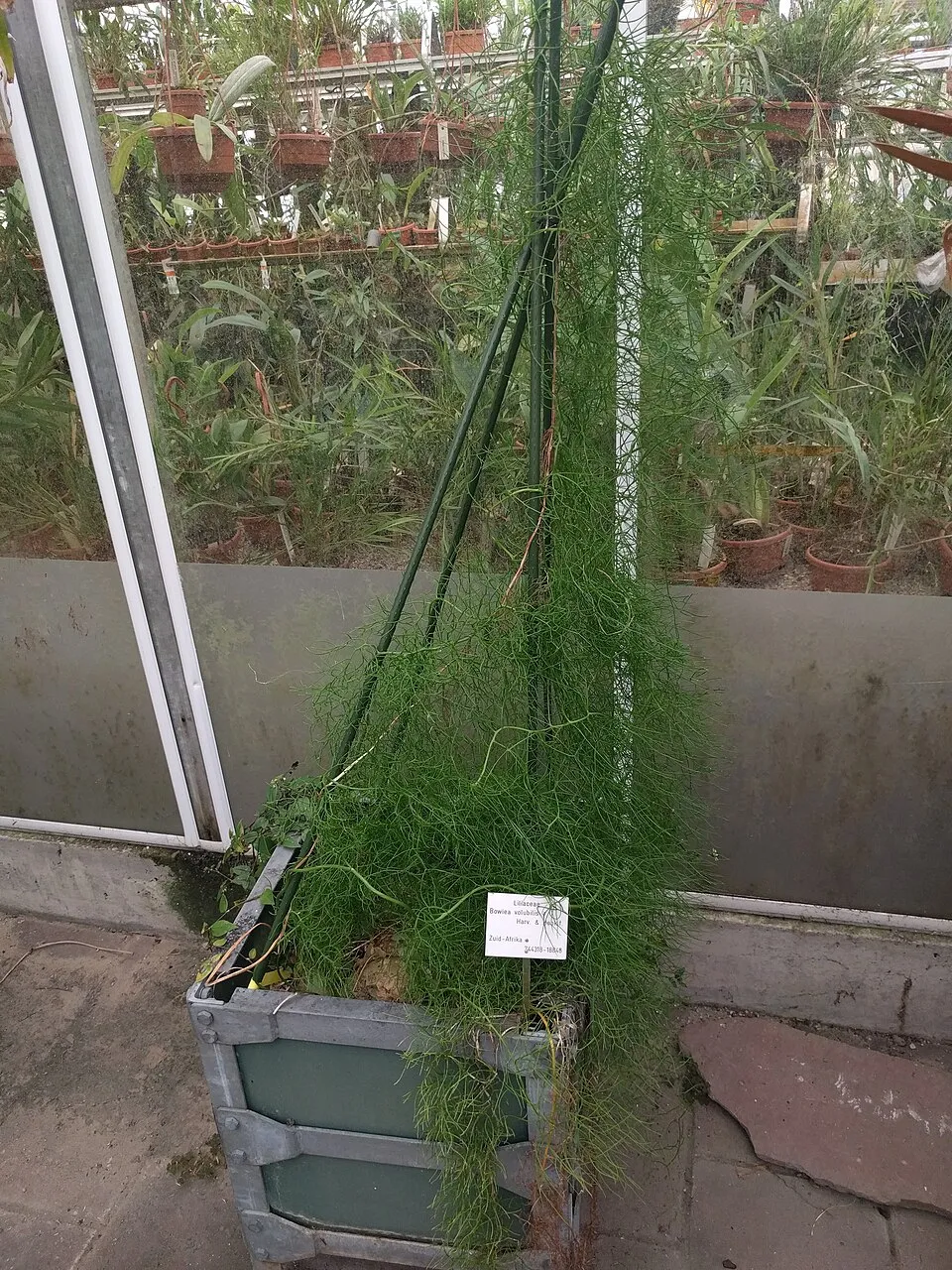
Bowiea volubilis, commonly known as the Climbing Onion or Sea Onion, is a remarkably unique perennial succulent native to southern and eastern Africa, particularly South Africa, Eswatini, and Lesotho. This distinctive plant is characterized by its large, partially exposed, greenish bulb, which can grow up to 25 cm in diameter and serves as a water and nutrient storage organ. From this bulb emerges a slender, highly branched, bright green, twining stem that can reach several meters in length, scrambling over shrubs or trellises.
The leaves are highly reduced, scale-like, and ephemeral, often only appearing briefly before withering, with the stem largely performing the photosynthetic function. During its active growth period, typically in summer, Bowiea volubilis produces numerous small, star-shaped, greenish-white flowers along its stems, followed by three-angled capsules containing black seeds. It thrives in arid to semi-arid environments, often found in rocky outcrops or scrambling through sparse vegetation, preferring well-drained soils and bright, indirect light.
Taxonomically, it belongs to the Asparagaceae family, specifically the subfamily Scilloideae, highlighting its relation to other bulbous monocots.
Trusted Scientific References
1. Authoritative external sources for Bowiea Volubilis
1.1 Wikipedia — Bowiea Volubilis
1.2 Kew POWO (Plants of the World Online)
1.3 PubMed — peer-reviewed research
1.4 NCBI Taxonomy Browser
1.5 GBIF — Global Biodiversity
1.6Bowiea Volubilis should be interpreted through verified botanical identity, practical care, and responsible safety language. This recovery note adds the missing context needed for a complete profile: match light to the plant's habit, use well-drained soil, water according to season, and avoid unsupported medicinal or edible claims. For publishing, the plant can be presented as a source-backed garden plant with clear care guidance, common problem diagnosis, and conservative safety wording.
1.1.Bowiea Volubilis — Notable Characteristics
- ✓Prominent, partially exposed, — Prominent, partially exposed, green bulb, resembling an onion, serving as a storage organ.
- ✓Deciduous, highly branched, — Deciduous, highly branched, twining stems that climb vigorously over supports.
- ✓Contains powerful cardiac — Contains powerful cardiac glycosides, making it highly toxic if ingested by humans or animals.
- ✓Traditional uses in — Traditional uses in African medicine for respiratory ailments, coughs, and colds.
- ✓Exhibits documented antifungal, — Exhibits documented antifungal, antibacterial, and cytotoxic properties in research.
- ✓Drought — tolerant and adapted to arid to semi-arid environments of Southern Africa.
- ✓Valued as a — Valued as a unique ornamental succulent for its unusual growth habit and aesthetic.
- ✓Native to Southern — Native to Southern and Eastern Africa, often found scrambling in scrubland or rocky areas.
- ✓Produces small, star — like, greenish-white flowers during its active growing season.
1.2.Bowiea Volubilis — Quick Summary
- ✓Common name "Climbing Onion" known for its exposed, green bulb and unique climbing stems.
- ✓Contains highly potent and toxic cardiac glycosides, alkaloids, and saponins.
- ✓Traditionally used for respiratory issues, coughs, colds, and as a cardiac remedy, but with extreme caution.
- ✓Poses significant health risks if ingested; not suitable for self-medication due to high toxicity.
- ✓Primarily cultivated as an ornamental plant due to its distinctive growth habit.
2.Bowiea Volubilis — Botanical Identity
3.Bowiea Volubilis — Fact Sheet
4.Bowiea Volubilis — Physical Description
5.Bowiea Volubilis — Origin & Spread
6.Bowiea Volubilis — Folk Medicine Applications
7.Bowiea Volubilis — Chemical Profile
- ✓Cardiac Glycosides — Primarily bufadienolides such as bowieanin A, B, and scilliroside, which are potent cardiotonic compounds influencing heart muscle contraction but are also highly toxic.
- ✓Alkaloids — Diverse nitrogen-containing compounds responsible for significant antifungal, antibacterial, and cytotoxic activities, contributing to its broad medicinal profile.
- ✓Saponins — Triterpenoid or steroid glycosides that exhibit antioxidant, anti-inflammatory, and anticancer properties, often forming a lather when agitated, and contributing to cellular membrane interactions.
- ✓Steroids — Compounds such as phytosterols and steroid glycosides, linked to anti-inflammatory and potential anticancer activities within the plant's metabolic pathways.
- ✓Flavonoids — Polyphenolic compounds often present in plants, contributing to antioxidant and anti-inflammatory effects, although specific types in Bowiea require further detailed investigation.
- ✓Phenolic Acids — Simple aromatic compounds with antioxidant properties, which can contribute to the plant's overall protective mechanisms against oxidative stress and free radical damage.
- ✓Terpenoids — A broad class of organic compounds, including monoterpenes and sesquiterpenes, which may contribute to the plant's defense mechanisms and various biological activities.
- ✓Anthraquinones — Compounds known for purgative properties, though their specific presence and medicinal significance in Bowiea volubilis require more targeted research and verification.
8.Bowiea Volubilis — Scientific Evidence
- ✓Respiratory Support — Traditionally used for alleviating symptoms of coughs, colds, and various respiratory infections due to its expectorant and bronchodilator properties.
- ✓Antimicrobial Action — Contains alkaloids that exhibit significant antifungal and antibacterial activities, offering potential against pathogenic microorganisms.
- ✓Antiproliferative Effects — Certain compounds, including alkaloids and saponins, demonstrate cytotoxic properties against various cell lines, suggesting anticancer potential.
- ✓Antioxidant Defense — Saponins present in the plant contribute to its antioxidant capacity, helping to neutralize free radicals and reduce oxidative stress.
- ✓Anti-inflammatory Properties — Steroid compounds found in Bowiea volubilis are associated with anti-inflammatory activities, potentially mitigating inflammatory responses.
- ✓Cardiac Tonic Potential — The bulb is a known source of cardiac glycosides, which traditionally have been used to influence heart function, though this carries significant toxicity risks.
- ✓Expectorant Action — Aids in clearing mucus from the respiratory tract, providing relief from congestion associated with colds and coughs.
- ✓Traditional Fever Reducer — In some indigenous practices, preparations have been used to help reduce fever, possibly due to its general anti-inflammatory or antimicrobial effects.
- ✓Wound Healing Support — While less documented, some traditional uses hint at topical applications for skin ailments, though caution is paramount given its toxicity.
- ✓Immunomodulatory Effects — The diverse array of bioactive compounds may subtly influence immune responses, contributing to its traditional use in fighting infections.
8.1.Bowiea Volubilis — Health Applications
9.Bowiea Volubilis — Cautions & Contraindications
9.1.Bowiea Volubilis — Possible Adverse Reactions
- ✓Cardiac Arrhythmias — Ingestion can lead to severe cardiac glycoside poisoning, manifesting as irregular heartbeats, bradycardia, or even fatal cardiac arrest.
- ✓Gastrointestinal Distress — Common symptoms of toxicity include severe nausea, vomiting, abdominal pain, and diarrhea, often rapidly following even small ingestions.
- ✓Neurological Symptoms — Can cause dizziness, confusion, headaches, and in severe cases, seizures or neurological depression due to systemic toxicity.
- ✓Skin Irritation — Direct contact with the sap or crushed bulb can cause dermatitis, redness, itching, and blistering in sensitive individuals.
- ✓Respiratory Depression — High doses can lead to labored breathing or respiratory arrest, particularly in cases of severe poisoning, requiring immediate medical intervention.
- ✓Liver and Kidney Damage — Prolonged or significant exposure to toxic compounds may result in severe damage to vital organs like the liver and kidneys.
9.2.Bowiea Volubilis — Clinical Safety Notes
- ✓Extreme Toxicity — Bowiea volubilis is classified as highly poisonous; internal consumption of any part is critically dangerous and potentially fatal.
- ✓Professional Guidance — Absolutely should not be used for self-medication; any traditional application must be under the strict supervision of an experienced and knowledgeable medical herbalist.
- ✓Keep Out of Reach — Store away from children, pets, and vulnerable individuals due to its attractive yet highly toxic appearance, especially the exposed bulb.
- ✓Avoid During Pregnancy/Lactation — Pregnant or breastfeeding women must strictly avoid Bowiea volubilis due to the risk of fetal harm or transfer of toxic compounds through milk.
- ✓Contraindicated for Cardiac Conditions — Individuals with pre-existing heart conditions, or those on cardiac medications, must never use this plant due to its potent cardiac glycosides.
- ✓External Use Caution — Even external application should be done with extreme care, using gloves and testing on a small skin area first to check for sensitivity and adverse reactions.
10.Bowiea Volubilis — Preparations & Uses
- ✓Traditional Decoction — Historically, minute quantities of the bulb were boiled in water to create a decoction, used orally for respiratory ailments, strictly under expert guidance due to high toxicity.
- ✓Topical Poultice — In some traditional practices, crushed bulb material was applied externally as a poultice for skin conditions or localized pain, though severe skin irritation is a known risk.
- ✓Tincture Preparation — Extracts made by macerating bulb material in alcohol were used in extremely minute doses by experienced herbalists for specific conditions, requiring precise titration and professional oversight.
- ✓Infusion (Limited) — Rarely, very weak infusions of dried bulb material might have been prepared, but this method is less common due to the extreme potency of the plant's compounds.
- ✓External Wash (Caution) — Diluted preparations were sometimes used as an external wash for certain skin complaints, always with extreme caution to avoid ingestion or prolonged contact.
- ✓Research Applications — Primarily utilized in controlled laboratory settings for phytochemical analysis and biological activity screening, not for direct human consumption or therapeutic use.
- ✓Ornamental Cultivation — Widely grown as an ornamental plant, where its unique bulb and climbing habit are appreciated, with no internal consumption intended or recommended.
11.Bowiea Volubilis — Garden Cultivation
- ✓Propagation — Primarily from seeds, which should be sown in well-drained soil, or by carefully dividing offsets from the main bulb, ensuring each piece has a growth point.
- ✓Soil Requirements — Thrives in very well-drained, gritty, or sandy potting mix, mimicking its natural arid habitat to effectively prevent bulb rot.
- ✓Light Conditions — Prefers bright, indirect light to partial sun; direct scorching sun should be avoided, especially in hot climates, to prevent sunburn.
- ✓Watering — Water sparingly during its active growth period, allowing the soil to dry out completely between waterings; almost no water during winter dormancy.
- ✓Temperature & Humidity — Requires warm temperatures, ideally between 18-28°C (65-82°F), and is highly sensitive to frost, necessitating indoor protection in colder zones.
- ✓Support Structure — As a climbing plant, Bowiea volubilis benefits from a trellis, stake, or nearby plant to support its twining stems and prevent sprawling.
- ✓Container Growing — Excellent choice for containers, allowing for better control over soil conditions and easy relocation for winter protection or aesthetic placement.
Reviewed by the Flora Medical Global Botanical Review Panel
Multi-disciplinary editorial group · Botany · Ethnobotany · Herbal-medicine literature
Who reviewed this: This page was checked by the Flora Medical Global Botanical Review Panel — an in-house editorial group of botany graduates, ethnobotany researchers, and horticulture practitioners who collectively maintain our 7,000+ plant encyclopedia. Meet the team.
Our 4-step verification process
1. Taxonomic verification
Scientific names and synonyms cross-checked against Kew POWO, World Flora Online, and The Plant List.
2. Phytochemical & medicinal cross-reference
Active compounds, traditional uses, and reported activities are cross-referenced with PubMed, USDA Dr. Duke's database, and peer-reviewed ethnobotanical literature.
3. Conservation & distribution check
Distribution, ecology, and conservation status confirmed against GBIF occurrence records and the IUCN Red List.
4. Editorial & safety review
Every entry passes an editorial pass for clarity, originality, and safety notices (toxicity, contraindications, dosage caveats) before publication.
Last reviewed:
Important medical disclaimer: This content is for educational and research purposes only. It is not medical advice and is not a substitute for consultation with a licensed healthcare provider. Do not use any herb to self-treat a medical condition without professional guidance.
Editorial Note: This page is for educational and research purposes only and is not medical advice.
Written by: Flora Medical Global Editorial Team
Reviewed by: Flora Medical Global Botanical Review Panel
Last Updated: June 15, 2026





Bowiea Volubilis — Comments & Community Reviews
Rate this plant