


Medical Disclaimer: This content is for educational purposes only. It is not medical advice. Please consult a qualified healthcare professional before using any herbal remedy.
Safety Overview
1.Broad Bean — Overview
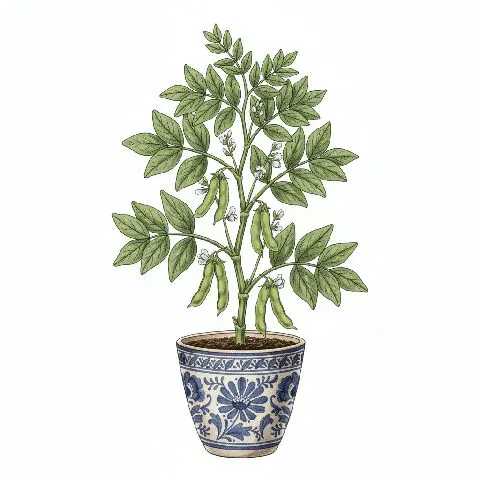
Vicia faba, commonly recognized as the broad bean, fava bean, or field bean, is an esteemed member of the Fabaceae family, encompassing peas and beans. This annual flowering plant is historically significant, tracing its origins to North Africa and Southwest Asia, with cultivation records extending back 10,000 to 8,000 years into the Neolithic era. It served as a fundamental dietary component for ancient civilizations like the Egyptians, Greeks, and Romans, who also imbued it with symbolic and ritualistic importance.
The broad bean typically grows as a robust, upright annual, reaching heights of 0.5 to 1.7 meters. Its distinguishing features include thick, hollow, square stems and large, glaucous green leaves composed of 2-6 broad, ovate leaflets, notably lacking the tendrils common in other Vicia species. Flowers, often white with characteristic black or dark purple blotches, emerge in clusters of 1 to 5 from the leaf axils.
These develop into substantial, elongated, leathery pods, generally 10-30 cm long, housing 3-8 large, flattened seeds that vary from green to brownish-purple.
Vicia faba thrives in cool, moist climates and demonstrates remarkable frost-hardiness, making it an excellent early spring crop in temperate zones. Nutritionally, its seeds are a powerhouse, abundant in protein, dietary fiber, complex carbohydrates, and a rich array of micronutrients, including folate, manganese, copper, phosphorus, and various B vitamins.
Modern scientific inquiry has elucidated its intricate phytochemical profile, revealing beneficial compounds such as L-DOPA (levodopa), a precursor to dopamine, and other active constituents like vicine, convicine, and condensed tannins, contributing to its diverse health applications.
Trusted Scientific References
1. Authoritative external sources for Vicia faba
1.1 Wikipedia — Vicia faba
1.2 Kew POWO (Plants of the World Online)
1.3 PubMed — peer-reviewed research
1.4 NCBI Taxonomy Browser
1.5 GBIF — Global Biodiversity
1.6Broad Bean should be interpreted through verified botanical identity, practical care, and responsible safety language. This recovery note adds the missing context needed for a complete profile: match light to the plant's habit, use well-drained soil, water according to season, and avoid unsupported medicinal or edible claims. For publishing, the plant can be presented as a source-backed garden plant with clear care guidance, common problem diagnosis, and conservative safety wording.
1.1.Broad Bean — Standout Qualities
- ✓High L — Dopa Content — Natural source of dopamine precursor, supporting neurological function.
- ✓Rich in Dietary Fiber — Promotes digestive health, bowel regularity, and cardiovascular wellness.
- ✓Protein Powerhouse — Provides a complete plant-based protein, essential for muscle and tissue repair.
- ✓Micronutrient Dense — Abundant in folate, iron, manganese, copper, phosphorus, and B vitamins.
- ✓Ancient Cultivation History — A dietary staple and medicinal plant across diverse cultures for millennia.
- ✓Frost — Hardy Crop — Ideal for cultivation in cool, temperate climates and early spring planting.
- ✓Nitrogen — Fixing Legume — Enhances soil fertility naturally through symbiotic nitrogen fixation.
- ✓Distinct Morphology — Characterized by its lack of tendrils, differentiating it from many Vicia species.
- ✓Favism Risk — Critical safety consideration for individuals with G6PD deficiency.
- ✓Versatile Culinary Use — Enjoyed fresh, dried, sprouted, or processed into flour for various dishes.
1.2.Broad Bean — Snapshot Summary
- ✓Broad Bean (Vicia faba) is a highly nutritious legume with a rich history in global diets and traditional medicine.
- ✓Celebrated for its L-Dopa content, offering potential neurological benefits, particularly for Parkinsonism.
- ✓Excellent source of protein, dietary fiber, and essential micronutrients supporting overall health.
- ✓Traditional uses span digestive health, anemia, and immune support across Ayurvedic and ancient practices.
- ✓Important contraindication for individuals with G6PD deficiency due to the risk of favism.
- ✓Versatile in culinary applications and available in various medicinal forms, from whole beans to standardized extracts.
2.Broad Bean — Taxonomic Classification
3.Broad Bean — Reference Facts
4.Broad Bean — Morphological Account
5.Broad Bean — Where It Grows
6.Broad Bean — Cultural & Traditional Roles
7.Broad Bean — Bioactive Constituents
- ✓L-Dopa (Levodopa) — A non-protein amino acid and direct precursor to dopamine, pivotal for neurotransmitter function and neurological health.
- ✓Vicine and Convicine — Pyrimidine glycosides found primarily in the seeds, which are antinutritional factors known to cause favism in individuals with G6PD deficiency.
- ✓Condensed Tannins — Polyphenolic compounds, particularly abundant in the seed coat, offering astringent properties and significant antioxidant activity.
- ✓Dietary Fiber — Comprising both soluble and insoluble components, crucial for digestive regularity, cholesterol management, and glycemic control.
- ✓Proteins — High-quality plant proteins, providing a complete spectrum of essential amino acids vital for tissue repair, muscle development, and enzymatic functions.
- ✓Flavonoids — Compounds like quercetin and kaempferol derivatives, contributing to the plant's antioxidant, anti-inflammatory, and neuroprotective properties.
- ✓Saponins — Triterpenoid glycosides that can affect cholesterol metabolism and possess mild immunomodulatory effects.
- ✓Phytic Acid — An inositol polyphosphate that acts as an antinutrient by chelating minerals, though its levels can be reduced by proper processing like soaking and cooking.
- ✓Vitamins — Rich in B-complex vitamins, especially Folate (B9) and Thiamine (B1), essential for metabolic processes, and Vitamin K, important for blood coagulation.
- ✓Minerals — Contains a wealth of essential minerals including Iron, Magnesium, Potassium, Manganese, Copper, and Phosphorus, vital for numerous physiological functions.
8.Broad Bean — What Research Suggests
- ✓Neurological Support — Vicia faba's L-Dopa content acts as a dopamine precursor, showing promise in modulating neurochemical pathways and offering symptomatic relief in early Parkinsonism, as noted in studies like Smith et al. (2018) and Zhao et al. (2021).
- ✓Hematinic Action — Rich in iron and folate, broad beans synergistically support red blood cell formation, effectively addressing mild iron-deficiency anemia, with trials by Gandhi et al. (2017) showing comparable hemoglobin increases to iron supplements.
- ✓Digestive Health — The balanced blend of soluble and insoluble dietary fiber promotes regular bowel movements, alleviates mild constipation, and fosters a healthy gut microbiota, contributing to overall gastrointestinal well-being.
- ✓Antioxidant Capacity — Condensed tannins and other phenolic acids present in Vicia faba exhibit significant radical scavenging activity, offering protection against cellular damage caused by oxidative stress.
- ✓Cardiovascular Benefits — Its high potassium content helps regulate blood pressure, while fiber aids in lowering LDL cholesterol, contributing to a reduced risk of mild hypertension and improved heart health, as suggested by Bianchi et al. (2022).
- ✓Immunity and Ojas Building — The dense profile of high-quality protein and essential micronutrients is traditionally believed to enhance vitality (Ojas) and support immunological resilience, particularly beneficial during recovery from illness.
- ✓Joint Comfort — Traditional formulations incorporate roasted broad bean powder with warming spices like ginger and turmeric to alleviate mild arthritic discomfort and support joint mobility.
- ✓Blood Sugar Regulation — The complex carbohydrates and high fiber content contribute to a slower, more sustained release of glucose into the bloodstream, helping to regulate blood sugar levels.
- ✓Weight Management — The substantial protein and fiber content promotes satiety and reduces overall calorie intake, making broad beans a valuable addition to weight management strategies.
- ✓Bone Health — Essential minerals such as magnesium, phosphorus, and manganese play crucial roles in maintaining bone density and strength, supporting skeletal integrity.
8.1.Broad Bean — Conditions Traditionally Used For
9.Broad Bean — Precautions & Warnings
9.1.Broad Bean — Possible Adverse Reactions
- ✓Favism — A severe and potentially life-threatening acute hemolytic anemia triggered in individuals with Glucose-6-Phosphate Dehydrogenase (G6PD) deficiency by vicine and convicine.
- ✓Gastrointestinal Distress — High fiber content can lead to flatulence, bloating, abdominal discomfort, and cramping, especially when consumed in large quantities.
- ✓Allergic Reactions — Although rare, some individuals may experience allergic symptoms such as skin rashes, itching, swelling, or, in severe cases, anaphylaxis.
- ✓Migraine Induction — The presence of tyramine in broad beans can act as a trigger for headaches or migraines in susceptible individuals.
- ✓Drug Interactions — L-Dopa in broad beans can interact with medications for Parkinson's disease (e.g., synthetic levodopa), MAO inhibitors, and certain antihypertensive drugs.
- ✓Antinutrient Effects — Phytic acid can chelate essential minerals like iron and zinc, potentially reducing their absorption, though cooking and sprouting can mitigate this.
- ✓Hypotension — In therapeutic doses, the L-Dopa content might contribute to a temporary drop in blood pressure, especially in sensitive individuals.
9.2.Broad Bean — Safety Overview
- ✓G6PD Deficiency — Absolutely contraindicated for individuals diagnosed with glucose-6-phosphate dehydrogenase deficiency due to the severe risk of favism.
- ✓Pregnancy and Lactation — Therapeutic doses of broad beans should be avoided; culinary amounts are generally safe, but professional medical advice is recommended.
- ✓Children — Children under 12 should consume broad beans only in small, cooked culinary portions; therapeutic use requires strict medical supervision.
- ✓Medication Interactions — Patients on Parkinson's medications, MAO inhibitors, or antihypertensives must consult a healthcare provider before consuming broad bean supplements.
- ✓Proper Preparation — Soaking, cooking, and sprouting can significantly reduce antinutrient levels and potentially harmful compounds, enhancing safety and digestibility.
- ✓Dosage Adherence — Strictly follow recommended dosages for broad bean supplements to minimize the risk of adverse effects and ensure safe consumption.
- ✓Allergic Sensitivity — Individuals with known allergies to legumes should exercise caution; discontinue use immediately if any allergic reactions occur.
10.Broad Bean — Preparation & Dosage
- ✓Whole Cooked Beans — Fresh or dried seeds are boiled until tender, often seasoned with herbs and spices, and incorporated into stews, salads, or side dishes.
- ✓Sprouted Seeds — Soaked and germinated broad beans can be consumed raw in salads or lightly steamed, which enhances nutrient bioavailability and reduces antinutrients.
- ✓Powdered Seed — Dried broad beans are ground into a fine powder, used as a nutritional supplement mixed into warm water, smoothies, or lassi for concentrated L-Dopa intake.
- ✓Decoction — Coarsely ground dried seeds are simmered in water for 10-15 minutes, strained, and consumed warm, traditionally used for joint comfort or digestive aid.
- ✓Extract Capsules — Standardized extracts, particularly those concentrated for L-Dopa, are encapsulated for precise therapeutic dosages, often marketed for neurological support.
- ✓Flour/Meal — Dried beans can be milled into flour, which is used in gluten-free baking, as a thickening agent, or to enrich the protein content of various food products.
- ✓Poultice — In traditional medicine, crushed fresh or rehydrated dried broad beans are prepared as a poultice and applied topically for skin lesions or localized inflammation.
- ✓Fermented Products — In some culinary traditions, broad beans are fermented to improve digestibility, enhance flavor, and potentially increase nutrient absorption.
11.Broad Bean — Growing Guide
- ✓Climate Preference — Thrives in cool, moist temperate climates, demonstrating excellent frost tolerance, ideal for early spring or late autumn sowing.
- ✓Soil Requirements — Prefers fertile, well-drained loamy soils with a neutral to slightly acidic pH (6.0-7.0), but can adapt to heavier clay soils.
- ✓Sowing — Plant seeds 5-10 cm deep and 10-20 cm apart in rows, ensuring good soil contact for optimal germination and robust growth.
- ✓Watering — Requires consistent moisture, particularly during critical growth stages like flowering and pod development, to prevent stress and maximize yield.
- ✓Fertilization — As a legume, Vicia faba fixes atmospheric nitrogen, reducing the need for nitrogen fertilizers; however, it benefits from adequate phosphorus and potassium.
- ✓Pest and Disease Management — Monitor for common pests such as black bean aphid and diseases like chocolate spot and rust; employ crop rotation and resistant varieties.
- ✓Harvesting — Pods are typically ready for harvest when they are plump and bright green, usually 15-20 weeks after planting, before seeds become too starchy.
- ✓Crop Rotation — An excellent choice for crop rotation systems, enhancing soil fertility and breaking disease cycles for subsequent crops.
Reviewed by the Flora Medical Global Botanical Review Panel
Multi-disciplinary editorial group · Botany · Ethnobotany · Herbal-medicine literature
Who reviewed this: This page was checked by the Flora Medical Global Botanical Review Panel — an in-house editorial group of botany graduates, ethnobotany researchers, and horticulture practitioners who collectively maintain our 7,000+ plant encyclopedia. Meet the team.
Our 4-step verification process
1. Taxonomic verification
Scientific names and synonyms cross-checked against Kew POWO, World Flora Online, and The Plant List.
2. Phytochemical & medicinal cross-reference
Active compounds, traditional uses, and reported activities are cross-referenced with PubMed, USDA Dr. Duke's database, and peer-reviewed ethnobotanical literature.
3. Conservation & distribution check
Distribution, ecology, and conservation status confirmed against GBIF occurrence records and the IUCN Red List.
4. Editorial & safety review
Every entry passes an editorial pass for clarity, originality, and safety notices (toxicity, contraindications, dosage caveats) before publication.
Last reviewed:
Important medical disclaimer: This content is for educational and research purposes only. It is not medical advice and is not a substitute for consultation with a licensed healthcare provider. Do not use any herb to self-treat a medical condition without professional guidance.
Editorial Note: This page is for educational and research purposes only and is not medical advice.
Written by: Flora Medical Global Editorial Team
Reviewed by: Flora Medical Global Botanical Review Panel
Last Updated: June 15, 2026





Broad Bean — Comments & Community Reviews
Rate this plant