
Medical Disclaimer: This content is for educational purposes only. It is not medical advice. Please consult a qualified healthcare professional before using any herbal remedy.
Safety Overview
1.Brooklime — Plant Snapshot
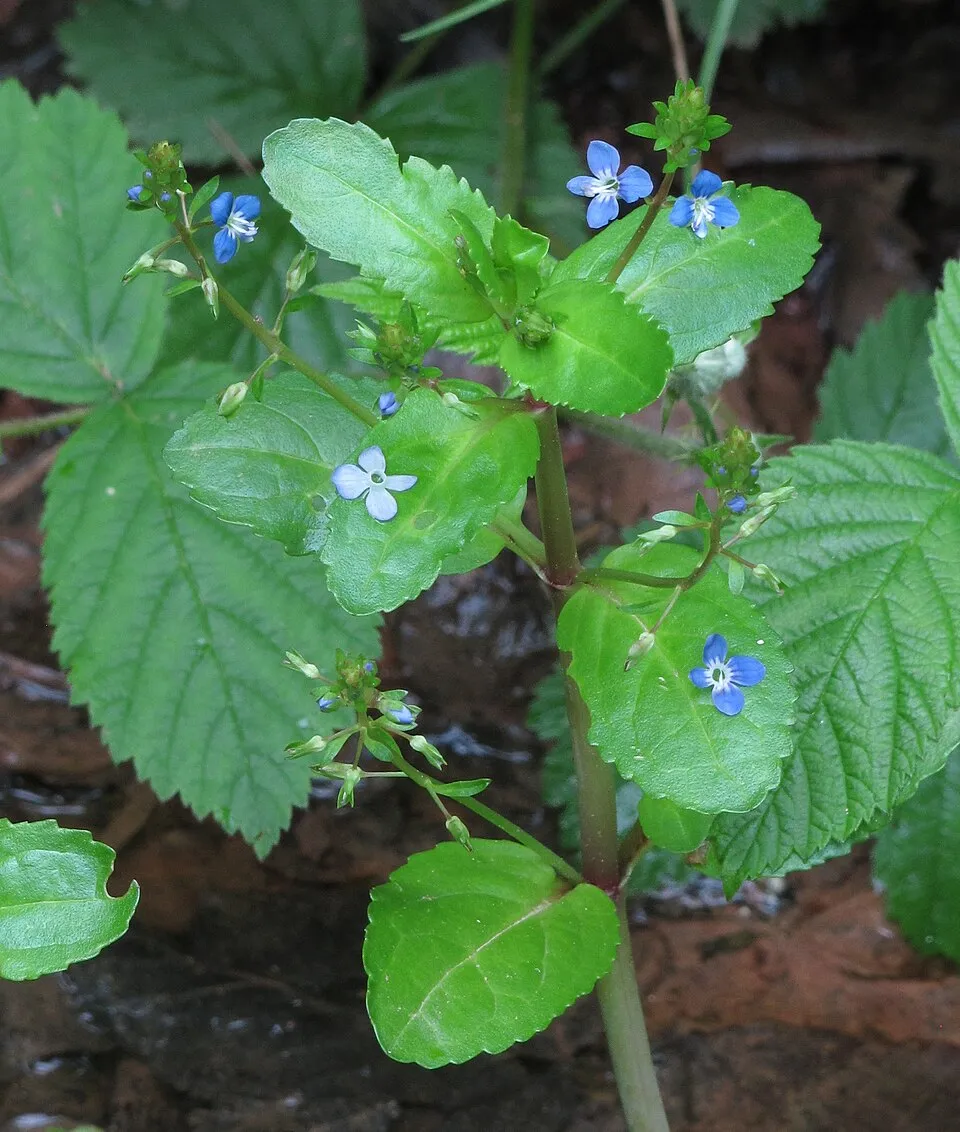
Brooklime, scientifically known as Veronica beccabunga, is an intriguing aquatic perennial herb belonging to the Plantaginaceae family, a lineage celebrated for its diverse medicinal and ornamental species. This resilient plant typically grows to a height of 15 to 50 centimeters, often sprawling across damp environments.
Its distinguishing features include robust, quadrangular stems that are notably smooth and succulent. A remarkable adaptation for its semi-aquatic lifestyle is the stem's ability to root at the nodes when submerged or trailing in water, allowing it to rapidly colonize suitable habitats.
The leaves of Veronica beccabunga are a vibrant, glossy dark green, presenting an ovate to broadly elliptic shape, measuring approximately 3 to 10 cm in length and 1.5 to 5 cm in width. They possess a smooth, entire margin and a slightly leathery texture, contributing to the plant's overall robust appearance. The plant's aesthetic appeal is further enhanced by its delicate yet striking flowers.
These small blossoms, typically ranging from a serene blue to a rich violet, frequently feature a prominent white center, creating a captivating contrast. Each flower measures about 1 to 1.5 cm across and emerges in loose, axillary racemes from the leaf axils, blooming from late spring through early autumn.
Brooklime thrives in specific ecological niches, preferring wet, marshy environments with abundant moisture and nutrient-rich soils. It is commonly found along the banks of slow-moving rivers, streams, ponds, ditches, and in other freshwater margins across its native range.
Geographically, Veronica beccabunga is widely distributed throughout temperate regions of Europe, extending into parts of Asia and North Africa, and has become naturalized in various other temperate zones globally, including parts of North America. Its common name, 'Brooklime,' is thought to derive from Anglo-Saxon words referring to the muddy brooks where it flourishes, while the species epithet 'beccabunga' is believed to come from Flemish 'beckpunge,' meaning 'mouth smart,' alluding to its pungent taste.
Trusted Scientific References
1. Authoritative external sources for Veronica beccabunga
1.1 Wikipedia — Veronica beccabunga
1.2 Kew POWO (Plants of the World Online)
1.3 PubMed — peer-reviewed research
1.4 NCBI Taxonomy Browser
1.5 GBIF — Global Biodiversity
1.1.Brooklime — Key Features
- ✓Semi — aquatic growth habit, preferring wet environments.
- ✓Stems are succulent, — Stems are succulent, smooth, quadrangular, and root at the nodes.
- ✓Leaves are glossy — Leaves are glossy dark green, ovate to broadly elliptic, with smooth margins.
- ✓Produces small, delicate — Produces small, delicate blue to violet flowers with white centers.
- ✓Known for its — Known for its pungent and bitter taste, especially when raw.
- ✓Rich natural source — Rich natural source of Vitamin C and various antioxidants.
- ✓Possesses traditional diuretic, — Possesses traditional diuretic, expectorant, and liver support properties.
- ✓Edible plant, commonly — Edible plant, commonly used in salads (cooked) and as a potherb.
- ✓Widely distributed across — Widely distributed across temperate Europe, Asia, and North Africa.
- ✓Botanical name Veronica — Botanical name Veronica beccabunga signifies its unique characteristics.
1.2.Brooklime — Quick Summary
- ✓Aquatic perennial herb belonging to the Plantaginaceae family.
- ✓Traditionally valued for its diuretic, expectorant, and Vitamin C-rich properties.
- ✓Contains significant levels of antioxidants like flavonoids and phenolic acids.
- ✓Edible leaves and stems, best consumed cooked to mitigate liver fluke risk.
- ✓Thrives in wet, marshy habitats across temperate regions globally.
2.Brooklime — Scientific Profile
3.Brooklime — Quick Facts
4.Brooklime — Plant Morphology
5.Brooklime — Habitat & Distribution
6.Brooklime — Cultural & Traditional Roles
7.Brooklime — Active Compounds
- ✓Flavonoids — Key compounds include quercetin and kaempferol derivatives, which are potent antioxidants and contribute to the plant's anti-inflammatory and vascular protective effects.
- ✓Phenolic Acids — Contains caffeic acid and chlorogenic acid, recognized for their significant antioxidant capacity, protecting against cellular damage and supporting cardiovascular health.
- ✓Iridoid Glycosides — Aucubin is a prominent glucoside found in Brooklime, known for its diuretic, hepatoprotective, and anti-inflammatory properties, supporting kidney and liver function.
- ✓Vitamin C (Ascorbic Acid) — An essential water-soluble vitamin, crucial for immune system strengthening, collagen formation, and its powerful antioxidant role in protecting cells.
- ✓Sulphur Compounds — While not fully elucidated, the presence of sulphur contributes to the plant's traditional use in detoxification and may impart mild antiseptic qualities.
- ✓Saponins — These compounds may contribute to the plant's expectorant actions, helping to thin mucus in the respiratory tract, and also possess mild diuretic effects.
- ✓Tannins — Provide astringent properties, which can be beneficial for reducing inflammation, promoting wound healing, and exhibiting mild antiseptic activity.
- ✓Bitter Principles — Unidentified compounds responsible for the characteristic pungent and bitter taste of Brooklime, which stimulate digestive enzymes and bile flow.
- ✓Protein — Brooklime contains a notable amount of protein (e.g., up to 3.8g/100g fresh weight), providing essential amino acids for cellular repair and metabolic processes.
8.Brooklime — Research Insights
- ✓Diuretic Support — Veronica beccabunga traditionally aids in promoting healthy urine flow, assisting the body in flushing out excess fluids and supporting kidney function.
- ✓Antioxidant Protection — Rich in potent antioxidants like flavonoids and phenolic acids, Brooklime helps combat oxidative stress and protects cells from free radical damage, contributing to overall cellular health.
- ✓Vitamin C Source — Historically recognized for its high vitamin C content, it was used to prevent scurvy and supports immune system function, collagen synthesis, and iron absorption.
- ✓Respiratory Expectorant — Traditionally employed as an expectorant, Brooklime can help thin and expel mucus, offering relief from coughs and mild respiratory congestion associated with colds.
- ✓Digestive Bitter — The inherent bitterness of Brooklime stimulates digestive secretions, which can enhance appetite and improve the efficiency of digestion, particularly when consumed before meals.
- ✓Liver Health Support — Used in traditional European herbalism for conditions like jaundice, suggesting potential hepatoprotective properties that aid in liver detoxification and bile production.
- ✓Anti-inflammatory Potential — The presence of various bioactive compounds, including flavonoids and iridoid glycosides, may contribute to reducing systemic inflammation within the body.
- ✓Urinary Tract Health — Its combined diuretic and potential antiseptic qualities make Brooklime beneficial for maintaining a healthy urinary system and supporting bladder comfort.
- ✓Skin Healing — Applied topically, the plant's soothing properties may aid in the healing of minor skin irritations, cuts, and bruises, promoting skin regeneration.
- ✓General Detoxification — Through its diuretic and antioxidant actions, Brooklime can support the body's natural detoxification pathways, helping to cleanse and purify the system.
8.1.Brooklime — Indications & Uses
9.Brooklime — Adverse Effects
9.1.Brooklime — Caution Notes
- ✓Liver Fluke Risk — Consumption of raw Brooklime from contaminated natural water sources carries a significant risk of parasitic infection (Fasciola hepatica).
- ✓Gastrointestinal Upset — Ingesting large quantities, especially raw, may lead to mild stomach discomfort, nausea, or digestive upset in sensitive individuals due to its strong bitter compounds.
- ✓Allergic Reactions — While uncommon, individuals with known sensitivities to plants within the Plantaginaceae family may experience allergic skin reactions or respiratory symptoms.
- ✓Diuretic Effect — Excessive intake may result in increased urination, potentially affecting electrolyte balance if not accompanied by sufficient fluid intake.
- ✓Drug Interactions — Its diuretic properties could theoretically interact with pharmaceutical diuretics or medications for blood pressure, necessitating caution and professional consultation.
- ✓Bitter Taste Intensity — The pronounced bitter taste may be unpalatable for some, leading to gastric distress or aversion if consumed in high amounts.
9.2.Brooklime — Safety Overview
- ✓Thorough Cooking Recommended — Always cook Brooklime thoroughly before consumption to eliminate the risk of liver fluke parasites, which can be present in raw aquatic plants.
- ✓Source Purity — Harvest Brooklime exclusively from clean, unpolluted water bodies and environments to minimize exposure to heavy metals, pesticides, and other contaminants.
- ✓Pregnancy and Lactation — Due to a lack of sufficient safety data, pregnant and breastfeeding women should avoid Brooklime or consult a qualified healthcare professional before use.
- ✓Children — Administer Brooklime to children only with extreme caution and under the direct guidance of a medical herbalist or pediatrician.
- ✓Pre-existing Conditions — Individuals with kidney disease, liver disorders, or other chronic health conditions should seek medical advice prior to using Brooklime.
- ✓Moderation in Consumption — Consume Brooklime in moderate quantities as a supplementary herb rather than a primary food source, even when cooked.
- ✓Allergic Sensitivity — Discontinue use immediately if any signs of allergic reaction, such as rash, itching, or swelling, occur.
10.Brooklime — How to Use
- ✓Fresh Salad Ingredient — Incorporate young, raw Brooklime leaves sparingly into mixed green salads for a distinctive pungent and bitter flavor, similar to watercress.
- ✓Cooked Potherb — Lightly steam, boil, or sauté the leaves and tender stems as a potherb. It is often mixed with other greens to balance its intense bitterness.
- ✓Herbal Infusion (Tea) — Brew fresh or dried Brooklime leaves and stems in hot water to create a traditional 'European tea,' noted for its mild, green tea-like essence.
- ✓Tincture Preparation — Prepare an alcohol-based extract of the fresh whole herb for a concentrated medicinal application, following established herbalist protocols.
- ✓Topical Poultice — Crush fresh Brooklime leaves to form a poultice, which can be traditionally applied to the skin to soothe minor irritations, cuts, or bruises.
- ✓Soups and Stews — Add chopped Brooklime towards the end of cooking in soups or stews to impart a fresh, herbaceous flavor and boost nutritional content.
- ✓Green Juices/Smoothies — Integrate a small quantity of fresh Brooklime into green juices or smoothies for a detoxifying and nutrient-rich addition to your daily intake.
11.Brooklime — Growth Requirements
- ✓Site Selection — Choose a location with consistently wet to marshy soil conditions, ideally alongside ponds, streams, or in bog gardens, mimicking its natural habitat.
- ✓Light Requirements — Brooklime thrives in full sun to partial shade, with more sun encouraging denser growth and more prolific flowering.
- ✓Propagation — Easily propagated from stem cuttings, which readily root at the nodes, or by dividing established clumps in spring or early autumn.
- ✓Soil Preference — Plant in nutrient-rich, heavy, loamy soils that retain moisture well, as it is adapted to high water content environments.
- ✓Watering — Requires continuous moisture; never allow the soil to dry out. If not in a naturally wet area, regular and abundant watering is essential.
- ✓Container Growing — Can be successfully grown in containers submerged in shallow water, which helps manage its spreading habit and ensures adequate moisture.
- ✓Harvesting — For culinary and medicinal use, harvest young shoots and leaves in spring and early summer when they are most tender and flavorful.
Reviewed by the Flora Medical Global Botanical Review Panel
Multi-disciplinary editorial group · Botany · Ethnobotany · Herbal-medicine literature
Who reviewed this: This page was checked by the Flora Medical Global Botanical Review Panel — an in-house editorial group of botany graduates, ethnobotany researchers, and horticulture practitioners who collectively maintain our 7,000+ plant encyclopedia. Meet the team.
Our 4-step verification process
1. Taxonomic verification
Scientific names and synonyms cross-checked against Kew POWO, World Flora Online, and The Plant List.
2. Phytochemical & medicinal cross-reference
Active compounds, traditional uses, and reported activities are cross-referenced with PubMed, USDA Dr. Duke's database, and peer-reviewed ethnobotanical literature.
3. Conservation & distribution check
Distribution, ecology, and conservation status confirmed against GBIF occurrence records and the IUCN Red List.
4. Editorial & safety review
Every entry passes an editorial pass for clarity, originality, and safety notices (toxicity, contraindications, dosage caveats) before publication.
Last reviewed:
Important medical disclaimer: This content is for educational and research purposes only. It is not medical advice and is not a substitute for consultation with a licensed healthcare provider. Do not use any herb to self-treat a medical condition without professional guidance.
Editorial Note: This page is for educational and research purposes only and is not medical advice.
Written by: Flora Medical Global Editorial Team
Reviewed by: Flora Medical Global Botanical Review Panel
Last Updated: June 15, 2026




Brooklime — Comments & Community Reviews
Rate this plant