


Medical Disclaimer: This content is for educational purposes only. It is not medical advice. Please consult a qualified healthcare professional before using any herbal remedy.
Safety Overview
1.Buphthalmum Salicifolium — Overview
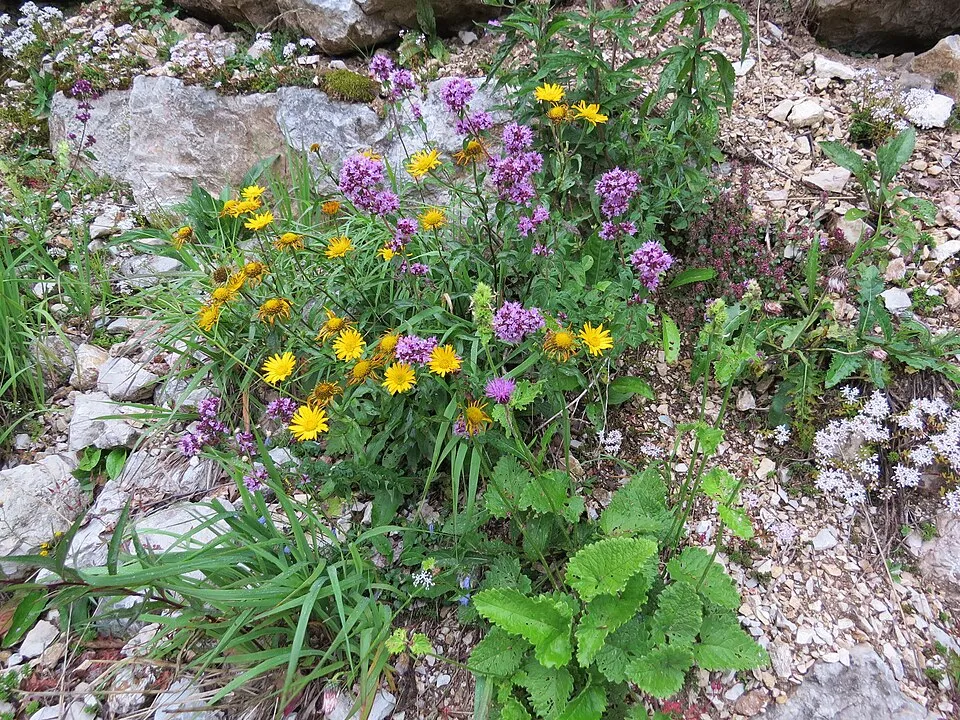
Buphthalmum salicifolium, commonly known as Ox-eye, is a captivating perennial herbaceous plant belonging to the Asteraceae family. Native to various regions of Europe, this species is characterized by its robust and upright growth habit, typically reaching a mature height of 50 to 70 centimeters.
Its erect stems often display a distinctive reddish-purple hue and can be moderately branched, contributing to its attractive garden presence.
The leaves of Buphthalmum salicifolium are alternately arranged along the stem, exhibiting variability in shape and size. Lower leaves are generally broader and are supported by distinct petioles, while the upper leaves become progressively narrower and sessile.
The leaf margins are typically serrated, and the texture can range from smooth to slightly hairy, offering a subtle gloss.
Flowering occurs predominantly in late spring through early summer, presenting solitary, vibrant yellow flower heads atop the main stem and at the ends of its branches. These striking blooms are classic daisy-like structures, featuring numerous bright yellow ray florets, often with 2 to 4 subtle teeth at their tips, surrounding a dense cluster of tubular yellow disc florets at the center.
These flowers are highly attractive to a diverse array of pollinators, including various bee species and butterflies, thereby playing a vital role in local biodiversity.
Buphthalmum salicifolium demonstrates remarkable adaptability, thriving in well-drained, fertile soils across temperate to subtropical climates. It is frequently encountered in disturbed sites, open meadows, and cultivated gardens, showcasing its resilience and ease of establishment.
The plant's ability to self-seed and spread naturally makes it a favored choice for naturalized plantings, ground cover, or as a vibrant filler in perennial borders, enriching landscapes with its cheerful golden blossoms.
Trusted Scientific References
1. Authoritative external sources for Buphthalmum Salicifolium
1.1 Wikipedia — Buphthalmum Salicifolium
1.2 Kew POWO (Plants of the World Online)
1.3 PubMed — peer-reviewed research
1.4 NCBI Taxonomy Browser
1.5 GBIF — Global Biodiversity
1.1.Buphthalmum Salicifolium — Standout Qualities
- ✓Botanical Name — Buphthalmum salicifolium, commonly known as Ox-eye or Willow-leaved Ox-eye.
- ✓Family Affiliation — Member of the Asteraceae (Daisy) family, known for its composite flower heads.
- ✓Ornamental Value — Prized in gardens for its cheerful, bright yellow, daisy-like blooms and robust foliage.
- ✓Pollinator Magnet — Attracts bees, butterflies, and other beneficial pollinators, enhancing garden biodiversity.
- ✓Traditional Medicinal Uses — Employed in Ayurveda for digestive health and in TCM for anti-inflammatory purposes.
- ✓Rich Phytochemistry — Contains beneficial compounds such as flavonoids, phenolic acids, and essential oils.
- ✓Antioxidant Power — Recognized for its potent antioxidant properties, contributing to cellular protection.
- ✓Adaptability — Tolerant of various well-drained soil types and thrives in full sun to partial shade conditions.
- ✓Perennial Growth Habit — A resilient plant that returns year after year, offering long-lasting beauty and benefits.
- ✓Ethnobotanical Significance — Historically valued in European traditional medicine and modern herbal practices.
1.2.Buphthalmum Salicifolium — In Brief
- ✓Buphthalmum salicifolium, or Ox-eye, is a European perennial from the Asteraceae family.
- ✓Known for its vibrant yellow, daisy-like flowers and ornamental appeal.
- ✓Traditionally used in Ayurveda for digestion and TCM for inflammation and skin issues.
- ✓Modern herbalism highlights its significant antioxidant properties.
- ✓Key chemical constituents include flavonoids, phenolic compounds, and essential oils.
- ✓Requires well-drained soil, full sun, and moderate watering for optimal growth.
2.Buphthalmum Salicifolium — Systematic Position
3.Buphthalmum Salicifolium — Quick Facts
4.Buphthalmum Salicifolium — Plant Morphology
5.Buphthalmum Salicifolium — Where It Grows
6.Buphthalmum Salicifolium — Cultural & Traditional Roles
7.Buphthalmum Salicifolium — Secondary Metabolites
- ✓Flavonoids — Key compounds like quercetin, kaempferol, and their glycosides are abundant, acting as potent antioxidants and contributing to anti-inflammatory effects.
- ✓Essential Oils — Aromatic volatile compounds, including monoterpenes (e.g., alpha-pinene, limonene) and sesquiterpenes, which impart characteristic scent and potential antimicrobial properties.
- ✓Phenolic Compounds — Beyond flavonoids, these include phenolic acids such as caffeic acid, chlorogenic acid, and rosmarinic acid, known for their strong antioxidant and free radical scavenging activities.
- ✓Sesquiterpene Lactones — Compounds characteristic of the Asteraceae family, which can contribute to anti-inflammatory and cytotoxic activities, though some may also be allergenic.
- ✓Triterpenoids — Pentacyclic triterpenes like ursolic acid and oleanolic acid derivatives, often associated with anti-inflammatory and hepatoprotective effects.
- ✓Coumarins — Naturally occurring benzopyrone compounds, which may exhibit anticoagulant, anti-inflammatory, and antimicrobial properties.
- ✓Phytosterols — Plant sterols such as beta-sitosterol, known for their potential cholesterol-lowering and anti-inflammatory benefits.
- ✓Polysaccharides — Complex carbohydrates that can modulate immune responses and contribute to the plant's overall adaptogenic potential.
- ✓Tannins — Astringent compounds that can contribute to anti-inflammatory, antimicrobial, and wound-healing properties.
- ✓Saponins — Glycosides that can have expectorant, anti-inflammatory, and cholesterol-lowering effects, though their presence in Buphthalmum salicifolium might be in lower concentrations.
- ✓Fatty Acids — Essential fatty acids found in the plant's seeds or aerial parts, contributing to cell membrane integrity and overall health.
- ✓Vitamins and Minerals — Contains trace amounts of essential vitamins and minerals crucial for various metabolic functions.
8.Buphthalmum Salicifolium — Modern Studies
- ✓Digestive Aid — Traditionally, Buphthalmum salicifolium has been valued in Ayurvedic practices for its potential to soothe digestive discomfort, assisting with issues such as indigestion and bloating by promoting healthy gastric function.
- ✓Anti-inflammatory Properties — In Traditional Chinese Medicine (TCM), the Ox-eye plant is often employed for its believed anti-inflammatory effects, which may help alleviate skin irritations, rashes, and localized swelling by modulating inflammatory responses.
- ✓Antioxidant Support — Modern herbalism recognizes Buphthalmum salicifolium for its significant antioxidant capacity, attributed to its rich phenolic compounds, which help combat oxidative stress and protect cellular integrity.
- ✓Skin Health — Topical applications derived from Ox-eye may contribute to skin regeneration and soothing, making it beneficial for minor cuts, abrasions, and promoting a healthy complexion.
- ✓Immune System Modulation — Certain constituents within Buphthalmum salicifolium are thought to support a balanced immune response, potentially enhancing the body's natural defense mechanisms.
- ✓Mild Analgesic Effects — The plant may possess mild pain-relieving properties, traditionally used to ease minor aches and discomfort, particularly those associated with inflammation.
- ✓Circulatory Support — Some traditional uses suggest a role in supporting healthy circulation, although specific mechanisms require further scientific investigation.
- ✓Detoxification Support — Through its antioxidant and potential diuretic actions, Buphthalmum salicifolium may assist the body's natural detoxification processes.
- ✓Stress Reduction — Anecdotal evidence in some traditional systems points to a calming effect, potentially aiding in mild stress and anxiety reduction, contributing to overall well-being.
- ✓Antimicrobial Action — Preliminary research on similar Asteraceae species suggests potential antimicrobial activity, which could offer protective benefits against certain pathogens.
- ✓Liver Support — In some traditional contexts, the plant is believed to support liver function, aiding in its role in metabolic processes and waste elimination.
- ✓Respiratory Comfort — Traditional remedies have occasionally utilized Ox-eye for minor respiratory complaints, possibly due to its soothing and anti-inflammatory attributes.
8.1.Buphthalmum Salicifolium — Reported Uses
9.Buphthalmum Salicifolium — Precautions & Warnings
9.1.Buphthalmum Salicifolium — Possible Adverse Reactions
- ✓Allergic Reactions — Individuals sensitive to the Asteraceae family (e.g., ragweed, chamomile, marigolds) may experience allergic reactions, including skin rashes or respiratory symptoms.
- ✓Digestive Upset — High doses or sensitive individuals may experience mild gastrointestinal discomfort, such as nausea or stomach upset.
- ✓Photosensitivity — Some compounds could potentially increase skin sensitivity to sunlight, leading to sunburn in susceptible individuals.
- ✓Medication Interactions — May theoretically interact with anticoagulant medications due to coumarin content, or sedatives due to potential calming effects, although specific data is limited.
- ✓Skin Irritation — Direct topical application of fresh plant material may cause contact dermatitis in highly sensitive individuals.
- ✓Pregnancy and Lactation Concerns — Insufficient safety data exists for use during pregnancy or breastfeeding; therefore, it is generally advised to avoid use.
- ✓Hypotensive Effects — In theory, compounds could mildly lower blood pressure, which might be a concern for individuals already on hypotensive medications.
9.2.Buphthalmum Salicifolium — Clinical Safety Notes
- ✓Asteraceae Allergy — Individuals with known allergies to plants in the daisy family should exercise caution or avoid Buphthalmum salicifolium.
- ✓Pregnancy and Breastfeeding — Not recommended for use by pregnant or lactating women due to a lack of comprehensive safety data.
- ✓Pediatric Use — Avoid use in infants and young children as safety and appropriate dosing have not been established.
- ✓Pre-existing Conditions — Individuals with chronic health conditions, especially liver or kidney issues, should consult a healthcare professional before use.
- ✓Medication Interactions — Caution is advised for those on blood thinners, sedatives, or blood pressure medications; consult a doctor.
- ✓Topical Application — Perform a patch test on a small skin area before widespread topical application to check for sensitivity.
- ✓Dosage Adherence — Always adhere to recommended dosages from qualified practitioners or product labels to minimize potential adverse effects.
10.Buphthalmum Salicifolium — Preparation & Dosage
- ✓Herbal Infusion (Tea) — Dried aerial parts, particularly the flowers and leaves, can be steeped in hot water to create a medicinal tea for digestive support or general wellness.
- ✓Tincture Preparation — Fresh or dried plant material can be macerated in alcohol to produce a potent tincture, offering a concentrated form for internal use.
- ✓Topical Poultice — Crushed fresh leaves or a paste made from dried powdered material mixed with water can be applied directly to skin irritations or minor inflammatory areas.
- ✓Decoction for External Wash — Boil roots or tougher plant parts to create a decoction, which can be cooled and used as a skin wash or compress for rashes and minor wounds.
- ✓Infused Oil — Flowers and leaves can be infused into a carrier oil (e.g., olive, sunflower) for several weeks to create a topical oil for massage or skin conditioning.
- ✓Herbal Compress — Soak a cloth in a strong infusion or decoction, wring out excess liquid, and apply warm to affected areas for localized relief.
- ✓Encapsulated Powder — Dried and finely ground plant material can be encapsulated for convenient oral consumption, ensuring precise dosing.
- ✓Essential Oil Extraction (Hypothetical) — While not a primary use, if essential oils are extracted, they would be used aromatically or highly diluted topically for their volatile compounds.
11.Buphthalmum Salicifolium — Growth Requirements
- ✓Soil Preference — Buphthalmum salicifolium thrives in well-drained, moderately fertile soil with a neutral to slightly alkaline pH range of 6.0 to 7.5.
- ✓Light Requirements — Prefers full sun exposure but can tolerate partial shade, particularly in hotter climates, for optimal flowering and growth.
- ✓Watering Regimen — Requires moderate watering; ensure the soil remains consistently moist but never waterlogged to prevent root rot.
- ✓Propagation — Can be propagated effectively from seeds sown in spring or by division of mature clumps in early spring or fall.
- ✓Fertilization — Benefits from a balanced, slow-release fertilizer application in spring, or compost amendment, to support vigorous growth.
- ✓Pruning — Regular deadheading of spent flowers encourages continuous blooming and prevents excessive self-seeding; cut back foliage after flowering to maintain shape.
- ✓Pest and Disease Management — Generally resistant to most common pests and diseases, but watch for slugs, snails, or powdery mildew in overly humid conditions.
- ✓Spacing — Plant individual specimens about 30-45 cm apart to allow for mature spread and good air circulation, which is crucial for plant health.
Reviewed by the Flora Medical Global Botanical Review Panel
Multi-disciplinary editorial group · Botany · Ethnobotany · Herbal-medicine literature
Who reviewed this: This page was checked by the Flora Medical Global Botanical Review Panel — an in-house editorial group of botany graduates, ethnobotany researchers, and horticulture practitioners who collectively maintain our 7,000+ plant encyclopedia. Meet the team.
Our 4-step verification process
1. Taxonomic verification
Scientific names and synonyms cross-checked against Kew POWO, World Flora Online, and The Plant List.
2. Phytochemical & medicinal cross-reference
Active compounds, traditional uses, and reported activities are cross-referenced with PubMed, USDA Dr. Duke's database, and peer-reviewed ethnobotanical literature.
3. Conservation & distribution check
Distribution, ecology, and conservation status confirmed against GBIF occurrence records and the IUCN Red List.
4. Editorial & safety review
Every entry passes an editorial pass for clarity, originality, and safety notices (toxicity, contraindications, dosage caveats) before publication.
Last reviewed:
Important medical disclaimer: This content is for educational and research purposes only. It is not medical advice and is not a substitute for consultation with a licensed healthcare provider. Do not use any herb to self-treat a medical condition without professional guidance.
Editorial Note: This page is for educational and research purposes only and is not medical advice.
Written by: Flora Medical Global Editorial Team
Reviewed by: Flora Medical Global Botanical Review Panel
Last Updated: June 15, 2026





Buphthalmum Salicifolium — Comments & Community Reviews
Rate this plant