


Medical Disclaimer: This content is for educational purposes only. It is not medical advice. Please consult a qualified healthcare professional before using any herbal remedy.
Safety Overview
1.Butea Superba — Botanical Snapshot
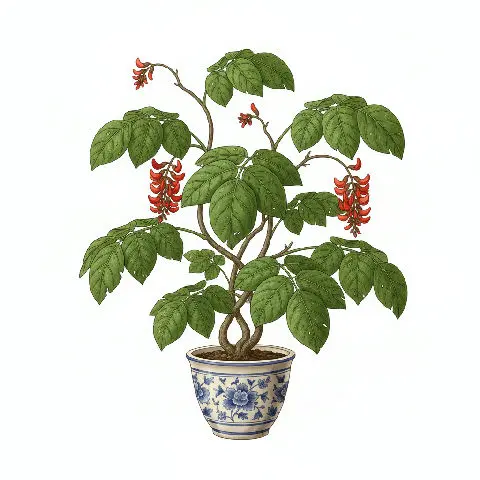
Butea superba, commonly known as Red Kwao Krua or Butea Superba, is a robust perennial flowering climber belonging to the diverse Fabaceae family, renowned for its leguminous members. This remarkable botanical specimen is indigenous to the lush ecosystems of Southeast Asia, thriving particularly in the tropical and subtropical zones of Thailand, Myanmar, Laos, India, China, and Vietnam.
It predominantly inhabits dry and moist deciduous forest environments, showcasing significant adaptability to various soil matrices, though it expresses a distinct preference for well-drained, sandy loam soils generously enriched with organic matter, which supports its extensive root system.
Morphologically, Butea superba presents as a substantial vine with stout, often intricately twisted stems that can ascend supporting trees or structures, reaching impressive lengths of up to 10 meters. Its characteristic bushy appearance is underpinned by a prominent, woody trunk. The foliage is distinctly compound and trifoliate, with each leaf measuring up to 25 cm in length, comprising ovate leaflets that exhibit a deep, lustrous green hue and a leathery texture.
A striking feature of this plant is its vibrant inflorescence: breathtaking orange to reddish, pea-shaped flowers that emerge in showy racemes. These spectacular blooms typically appear between February and April, acting as a powerful magnet for a variety of pollinators, most notably bees and butterflies, contributing significantly to the ecological tapestry of its native habitat. Following the flowering period, Butea superba develops elongated, flattened pods containing several seeds, which are efficiently dispersed by wind currents.
Taxonomically, it falls under the Faboideae subfamily, with 'Butea' possibly from a Persian word for 'tree' and 'superba' from Latin, denoting its splendid nature.
Trusted Scientific References
1. Authoritative external sources for Butea superba
1.1 Wikipedia — Butea superba
1.2 Kew POWO (Plants of the World Online)
1.3 PubMed — peer-reviewed research
1.4 NCBI Taxonomy Browser
1.5 GBIF — Global Biodiversity
1.1.Butea Superba — Highlights
- ✓Indigenous to Southeast — Indigenous to Southeast Asia, particularly Thailand and surrounding regions.
- ✓Perennial climbing vine — Perennial climbing vine with robust, woody stems and trifoliate leaves.
- ✓Produces striking orange to reddish pea — shaped flowers in racemes.
- ✓Tuberous roots are — Tuberous roots are the primary medicinal part, rich in bioactive compounds.
- ✓Traditionally known as — Traditionally known as Red Kwao Krua, distinct from White Kwao Krua (Pueraria mirifica).
- ✓Revered in traditional — Revered in traditional Thai medicine and Ayurvedic practices for male vitality.
- ✓Contains unique flavonoids — Contains unique flavonoids like butrin and isobutrin, and phytosterols.
- ✓Explored for its — Explored for its vasodilatory, aphrodisiac, and antioxidant properties.
- ✓Exhibits adaptability to — Exhibits adaptability to diverse forest environments, preferring well-drained soils.
- ✓Pollinator — friendly, attracting bees and butterflies to its vibrant blooms.
1.2.Butea Superba — Snapshot Summary
- ✓Red Kwao Krua (Butea superba) is a potent Southeast Asian vine from the Fabaceae family.
- ✓Traditionally revered for male sexual health, vitality, and aphrodisiac properties.
- ✓Contains flavonoids (butrin, isobutrin) and phytosterols (beta-sitosterol) influencing hormonal balance and blood flow.
- ✓Used in traditional Thai medicine and Ayurveda, primarily from its tuberous roots.
- ✓Research suggests potential for erectile dysfunction and libido enhancement, but more human trials are needed.
- ✓Safety concerns exist due to limited clinical data, especially for pregnancy and drug interactions.
2.Butea Superba — Nomenclature & Classification
3.Butea Superba — Vital Statistics
4.Butea Superba — Botanical Features
5.Butea Superba — Origin & Spread
6.Butea Superba — Traditional Uses
7.Butea Superba — Chemical Profile
- ✓Flavonoids — Key compounds include Butrin and Isobutrin, which are O-glycosidic flavonoids thought to stimulate testosterone synthesis in Leydig cells and possess antioxidant properties.
- ✓Phytosterols — Notably Beta-Sitosterol, a plant sterol implicated in improving endothelial function and contributing to healthy blood flow, particularly relevant for vascular health.
- ✓Flavonoid Glycosides — A broad category of compounds exhibiting significant antioxidant activity, helping to protect cells from oxidative damage and support cellular integrity.
- ✓Polysaccharides — Complex carbohydrates that may contribute to immunomodulatory effects, potentially enhancing the body's resilience and adaptive responses to stress.
- ✓Saponins — These glycosides are known for their surfactant properties and diverse biological activities, including potential for cholesterol-lowering and immune-boosting effects.
- ✓Isoflavonoids — A subgroup of flavonoids with estrogenic or anti-estrogenic activities, though their specific roles in Butea superba's mechanism are still being investigated.
- ✓Glycosides — Various other glycosides are present, contributing to the plant's overall pharmacological profile and synergistic effects.
- ✓Fatty Acids — Essential fatty acids and their derivatives can be found, playing roles in cellular structure and signaling pathways.
- ✓Triterpenes — These compounds are often associated with anti-inflammatory, antiviral, and adaptogenic properties, contributing to the plant's traditional uses.
- ✓Phenolic Compounds — General phenolic acids and compounds contribute to the plant's antioxidant capacity and may have astringent or antimicrobial actions.
8.Butea Superba — Evidence-Based Benefits
- ✓Male Sexual Health Enhancement — Butea superba is traditionally valued for supporting male sexual function, with research suggesting potential for improved erectile response through enhanced nitric oxide pathways and vasodilation.
- ✓Aphrodisiac Properties — Historically used as a 'Vajikarana dravya' in Ayurveda and a 'maha utta prawatt' in Thai tradition, it is believed to increase libido and sexual desire.
- ✓Hormonal Balance Support — Some evidence suggests that its chemical constituents, particularly flavonoids, may influence testosterone synthesis by stimulating Leydig cells, contributing to hormonal equilibrium.
- ✓Improved Blood Circulation — Bioactive compounds like beta-sitosterol may enhance endothelial function, leading to better blood flow, particularly to the penile vasculature, which is crucial for erectile function.
- ✓Antioxidant Activity — Flavonoid glycosides present in Butea superba exhibit antioxidant properties, helping to neutralize free radicals and protect cells, including spermatozoa, from oxidative stress.
- ✓Energy and Stamina Boost — Traditional uses by warriors and soldiers highlight its role in enhancing physical strength and endurance, suggesting adaptogenic-like qualities.
- ✓Anti-inflammatory Effects — While not extensively studied, some plant sterols and flavonoids often possess mild anti-inflammatory properties that could contribute to overall wellness.
- ✓Potential for Cognitive Support — Preliminary screening in some studies has explored its acetylcholinesterase inhibitory activity, hinting at potential neurotonic or rejuvenating effects, though more research is needed.
- ✓Diuretic Properties — Traditional applications include use for painful or difficult urination, suggesting a mild diuretic or urinary tract supportive action.
- ✓Antipyretic Action — In some traditional systems, Butea superba has been employed to alleviate fever, indicating potential antipyretic qualities.
8.1.Butea Superba — Therapeutic Indications
9.Butea Superba — Safety Considerations
9.1.Butea Superba — Caution Notes
- ✓Insufficient Safety Data — Limited scientific information means potential side effects are not fully understood.
- ✓Hormonal Fluctuations — Due to its potential influence on sexual hormones, it may cause unintended hormonal shifts.
- ✓Gastrointestinal Upset — Some individuals might experience mild digestive issues such as stomach discomfort or diarrhea.
- ✓Allergic Reactions — As with any plant product, allergic reactions like skin rash or itching are possible.
- ✓Unknown Drug Interactions — Lack of research means potential interactions with prescription medications are largely unknown.
- ✓Cardiovascular Effects — Given its potential vasodilatory effects, caution is advised for individuals with heart conditions or blood pressure issues.
- ✓Overstimulation — High doses could potentially lead to overstimulation or restlessness in some sensitive individuals.
9.2.Butea Superba — Safety Profile
- ✓Pregnancy and Breastfeeding — Avoid use during pregnancy and breastfeeding due to insufficient safety information.
- ✓Medical Conditions — Individuals with pre-existing medical conditions, especially hormone-sensitive cancers or cardiovascular issues, should consult a healthcare professional.
- ✓Drug Interactions — Exercise caution when taking alongside prescription medications, particularly hormone therapies, blood thinners, or blood pressure medications.
- ✓Dosage Adherence — Follow recommended dosages on product labels, as optimal and safe dosing ranges are not yet firmly established scientifically.
- ✓Quality and Purity — Source Butea superba from reputable suppliers to ensure product purity and avoid adulteration.
- ✓Children and Adolescents — Not recommended for use in children or adolescents due to lack of safety data and potential hormonal effects.
- ✓Long-Term Use — Long-term safety data is limited; periodic breaks from use may be advisable.
10.Butea Superba — Usage Guide
- ✓Traditional Decoction — Dried root slices are simmered in water to create a tea, often consumed daily for vitality.
- ✓Powdered Root — Dried tuberous roots are ground into a fine powder, which can be encapsulated or mixed with liquids.
- ✓Tinctures — Alcoholic extracts of the root are prepared, offering a concentrated form for easy dosing.
- ✓Topical Application — In some traditional practices, root extracts or pastes are applied externally, often for localized support.
- ✓Herbal Infusions — Less common, but sometimes fresh or dried leaves and flowers are used for milder infusions.
- ✓Combination Formulas — Frequently combined with other synergistic herbs in traditional Thai and Ayurvedic formulations to enhance specific effects.
- ✓Capsule Formulations — Modern supplements often provide standardized extracts of Butea superba root in convenient capsule form.
- ✓Culinary Use (Limited) — While primarily medicinal, some cultures might incorporate parts of the plant, though this is less common for the roots.
11.Butea Superba — Garden Cultivation
- ✓Climate Preference — Thrives in tropical and subtropical climates with high humidity and consistent warmth.
- ✓Soil Requirements — Prefers well-drained, sandy loam soils rich in organic matter; pH range of 5.5 to 7.0 is ideal.
- ✓Light Exposure — Requires full sun to partial shade, with full sun promoting more vigorous growth and flowering.
- ✓Propagation — Primarily propagated from seeds, which should be scarified before planting, or via root cuttings for faster establishment.
- ✓Watering — Needs consistent moisture, especially during dry periods, but avoids waterlogging to prevent root rot.
- ✓Support Structure — As a climbing vine, it requires a robust trellis, fence, or host tree for support to climb and spread.
- ✓Fertilization — Benefits from periodic application of balanced organic fertilizers, particularly during the growing season.
- ✓Pest and Disease Management — Generally robust, but monitor for common vine pests and fungal diseases in humid conditions.
Reviewed by the Flora Medical Global Botanical Review Panel
Multi-disciplinary editorial group · Botany · Ethnobotany · Herbal-medicine literature
Who reviewed this: This page was checked by the Flora Medical Global Botanical Review Panel — an in-house editorial group of botany graduates, ethnobotany researchers, and horticulture practitioners who collectively maintain our 7,000+ plant encyclopedia. Meet the team.
Our 4-step verification process
1. Taxonomic verification
Scientific names and synonyms cross-checked against Kew POWO, World Flora Online, and The Plant List.
2. Phytochemical & medicinal cross-reference
Active compounds, traditional uses, and reported activities are cross-referenced with PubMed, USDA Dr. Duke's database, and peer-reviewed ethnobotanical literature.
3. Conservation & distribution check
Distribution, ecology, and conservation status confirmed against GBIF occurrence records and the IUCN Red List.
4. Editorial & safety review
Every entry passes an editorial pass for clarity, originality, and safety notices (toxicity, contraindications, dosage caveats) before publication.
Last reviewed:
Important medical disclaimer: This content is for educational and research purposes only. It is not medical advice and is not a substitute for consultation with a licensed healthcare provider. Do not use any herb to self-treat a medical condition without professional guidance.
Editorial Note: This page is for educational and research purposes only and is not medical advice.
Written by: Flora Medical Global Editorial Team
Reviewed by: Flora Medical Global Botanical Review Panel
Last Updated: June 15, 2026





Butea Superba — Comments & Community Reviews
Rate this plant